Larry Sultan made his most important work in the place that most artists spend their careers trying to escape: his parents' house. Born in Brooklyn in 1946, raised in the San Fernando Valley of Southern California, and educated at the University of California, Berkeley, and the San Francisco Art Institute during the ferment of the late 1960s and early 1970s, he had every reason to direct his camera outward toward the political upheavals and cultural experiments of his generation. Instead, he turned it inward, toward the ordinary domestic spaces of suburban America, and in doing so produced a body of work that is among the most psychologically rich and formally inventive in contemporary photography.
Sultan's earliest significant work was a collaboration with his friend and fellow photographer Mike Mandel. Together they produced Evidence, published in 1977, a book that appropriated photographs from the archives of government agencies, research laboratories, and industrial corporations, recontextualising them without captions or explanation. Stripped of their original informational purpose, the images became strange, surreal, and darkly funny. Evidence was a conceptual masterstroke, a book that anticipated the postmodern interrogation of photographic meaning by more than a decade and that remains a touchstone for artists working with found imagery.
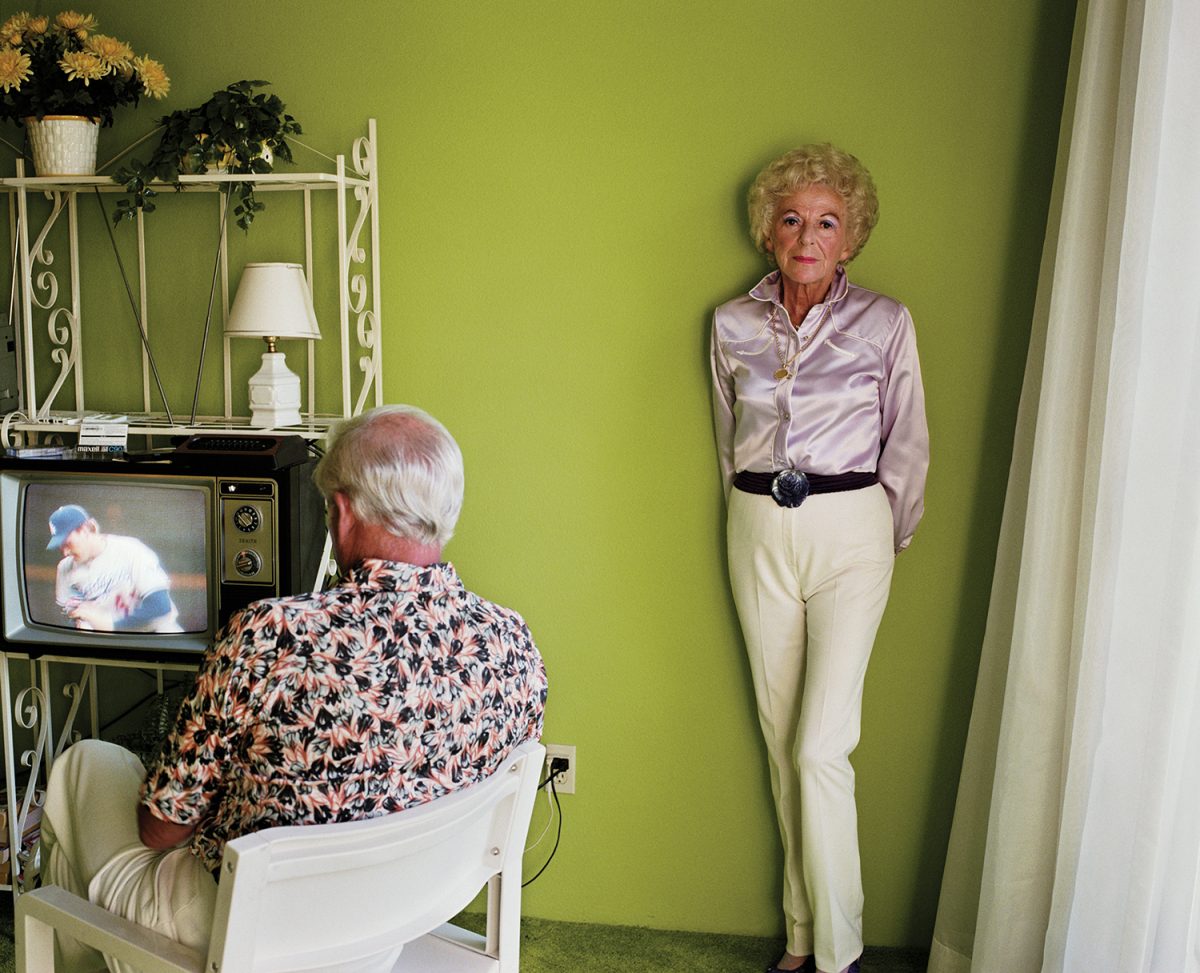
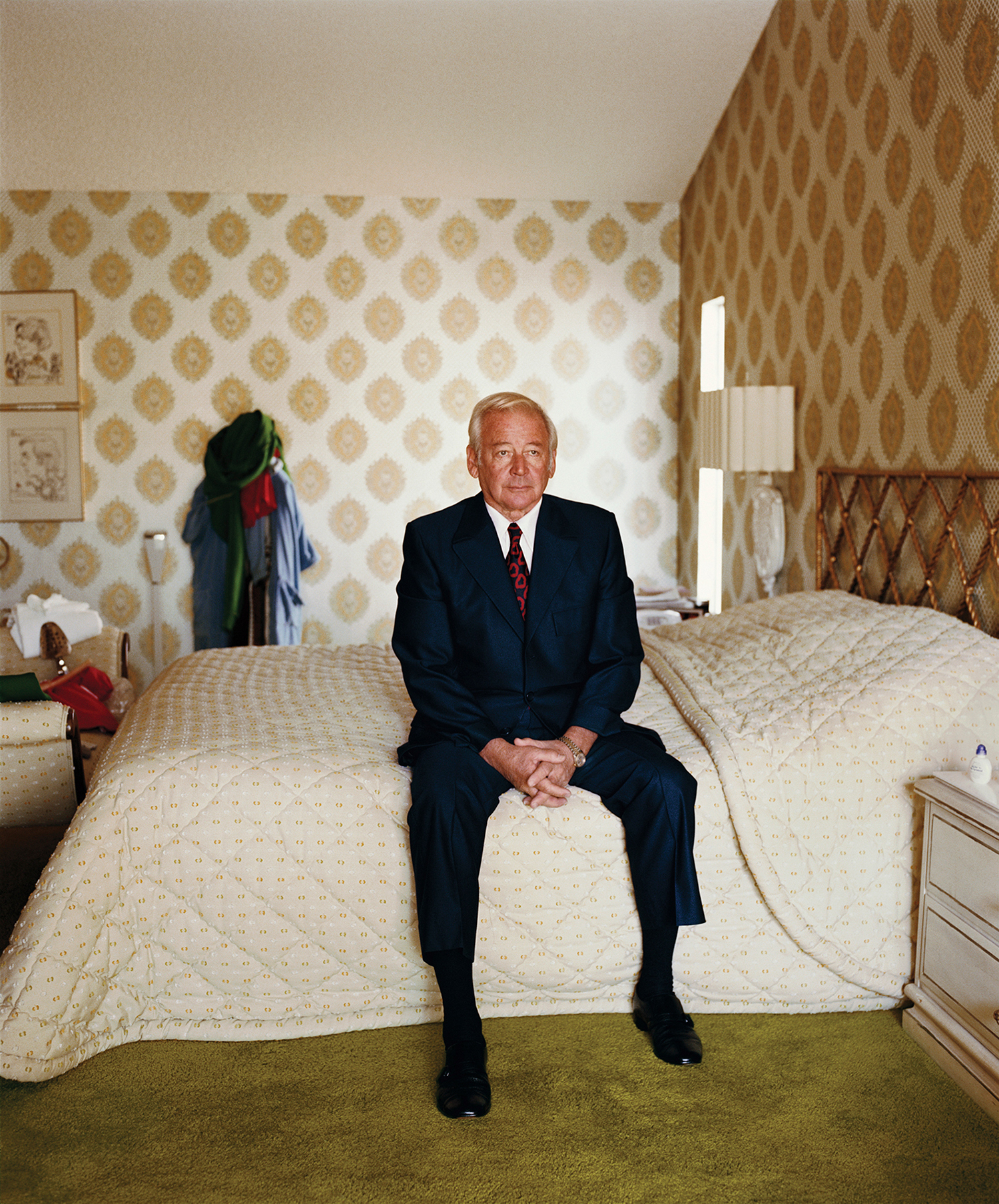
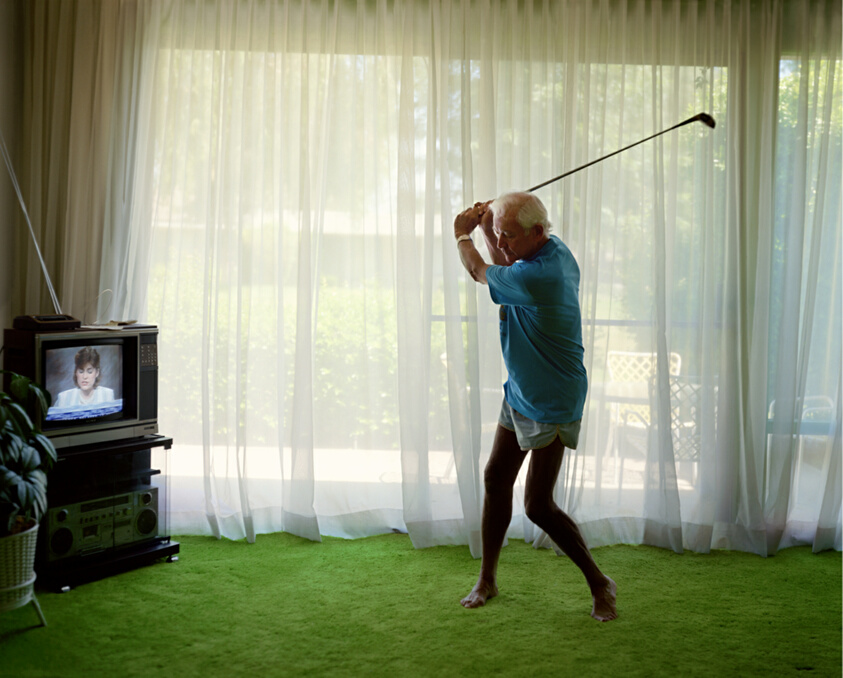
But it was Pictures from Home, produced between 1983 and 1992 and published as a book in 1992, that established Sultan as one of the essential photographers of his generation. The project centred on his parents, Irving and Jean Sultan, in their home in the San Fernando Valley. Over nearly a decade, Sultan returned repeatedly to photograph them in their daily routines: his father napping on the sofa, his mother standing in the kitchen, the swimming pool glittering in the California light, the television glowing in the den. The images were made with a large-format camera and lit with the saturated warmth of a Hollywood cinematographer, lending the domestic scenes a strange grandeur that elevated them beyond mere documentation.
What made Pictures from Home extraordinary was not just the photographs but the architecture of the project as a whole. Sultan interleaved his own images with family snapshots, stills from his father's home movies, and passages of text drawn from conversations with his parents and from his own reflections on the process of photographing them. The result was a layered meditation on family, memory, the American Dream, and the impossibility of ever fully knowing the people closest to you. His father, a former salesman who had moved the family west in pursuit of California prosperity, became a figure of both tenderness and mystery, a man whose inner life remained opaque despite his son's relentless looking.
The book asked questions that documentary photography had rarely confronted with such honesty. What does it mean to photograph your own parents? Where does observation end and performance begin? When Sultan's mother poses for the camera, fully aware of her son's project and its intentions, is the resulting image a document or a fiction? Sultan refused to resolve these tensions, and the ambiguity gave the work its extraordinary depth. Pictures from Home is now regarded as one of the most important photography books of the late twentieth century, a work that expanded the possibilities of the photobook as a narrative form.
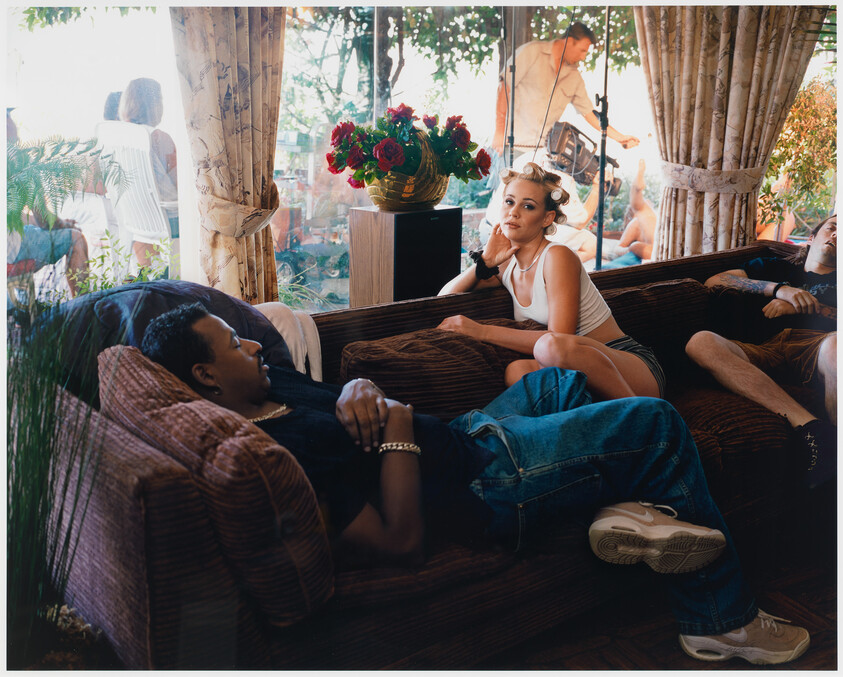
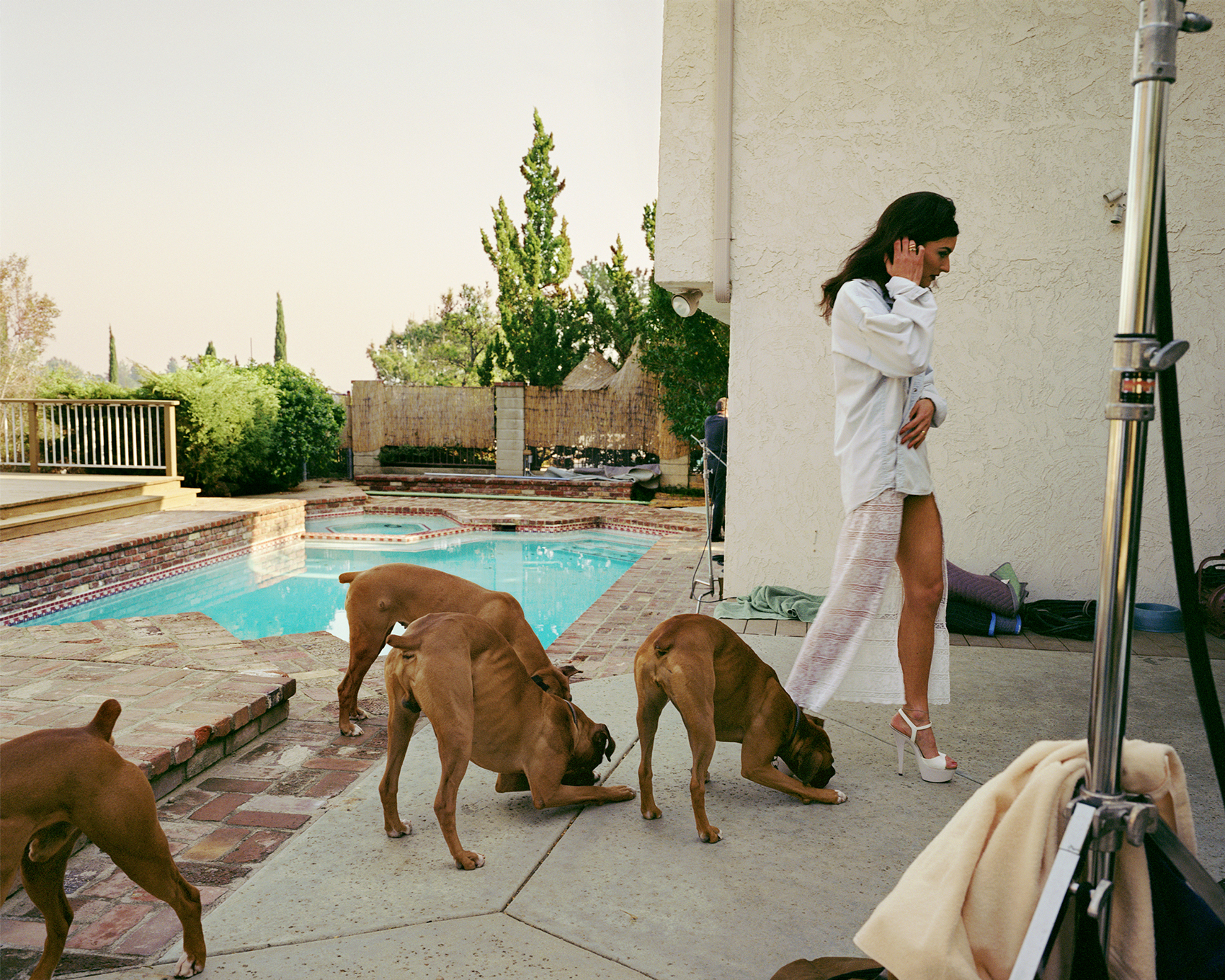
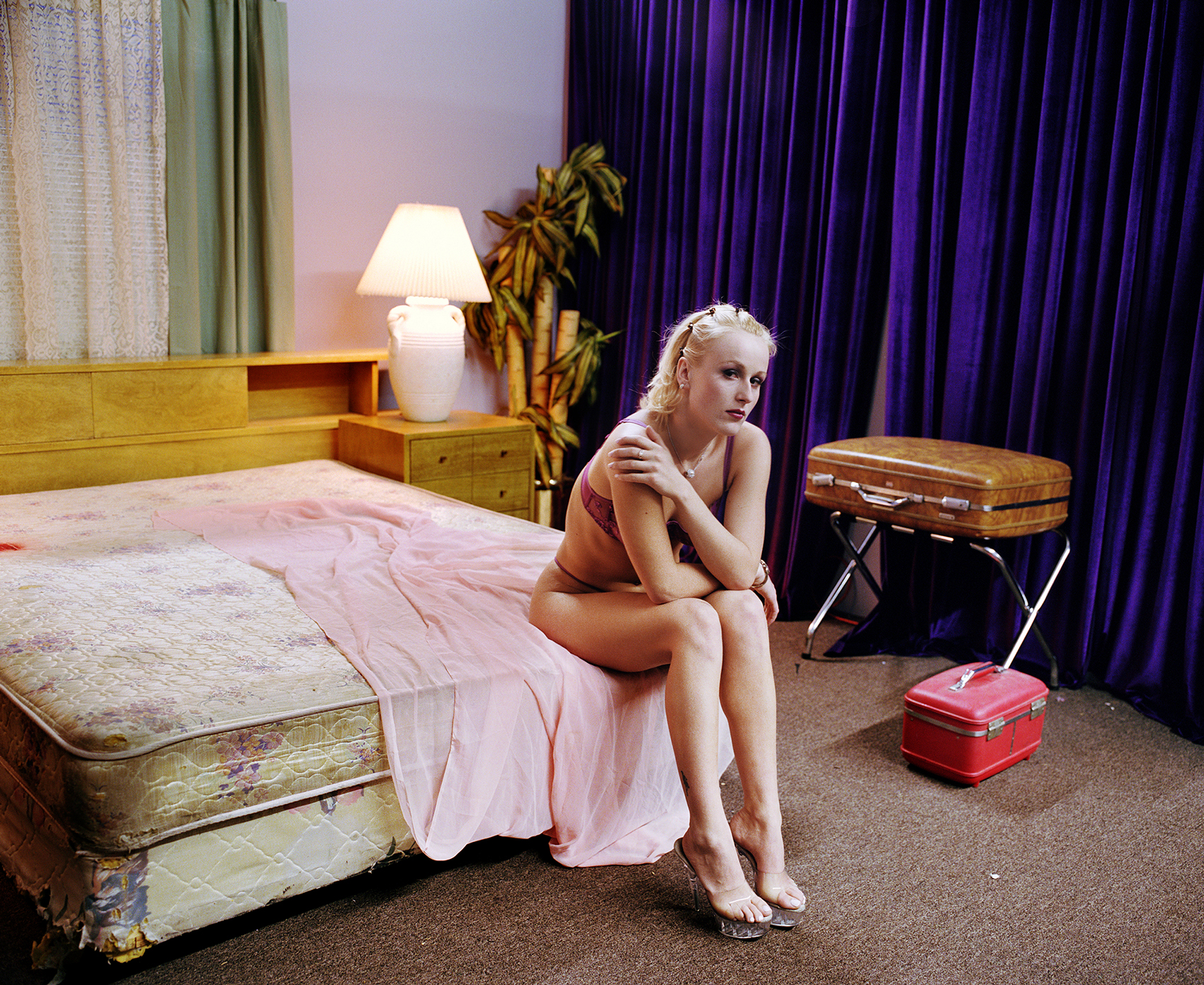
In the early 2000s, Sultan embarked on another project that explored the collision between domestic space and something altogether more unsettling. The Valley, published in 2004, documented the pornography industry operating inside the rented suburban homes of the San Fernando Valley. Sultan gained access to film sets and photographed the scenes between scenes: performers waiting on beige sofas, crew members eating lunch in kitchens indistinguishable from his parents', the bizarre normalcy of an industry conducted in the most ordinary of American interiors. The work was not sensationalist. It was, characteristically, more interested in the spaces than the spectacle, in the strange way that the markers of suburban domesticity persisted even when the activity taking place inside them was anything but domestic.
Sultan taught at the California College of the Arts in San Francisco for over two decades, and his influence as an educator was as significant as his influence as an artist. He shaped the thinking of a generation of photographers who learned from him that the personal and the political are not separate categories, that the family home is as worthy of sustained artistic attention as the battlefield or the street, and that ambiguity is not a failure of clarity but a form of truthfulness.
Larry Sultan died of cancer in 2009 at the age of sixty-three. His final project, Homeland, remained unfinished, though the images that survive reveal an artist whose curiosity and formal intelligence were undiminished. He left behind a body of work that insists, with quiet authority, that the most profound photographs are not always made in the most dramatic places. Sometimes the deepest mysteries are found in the living room, in the space between a father and a son, in the light falling through a suburban window onto a life that looks, from the outside, entirely unremarkable.