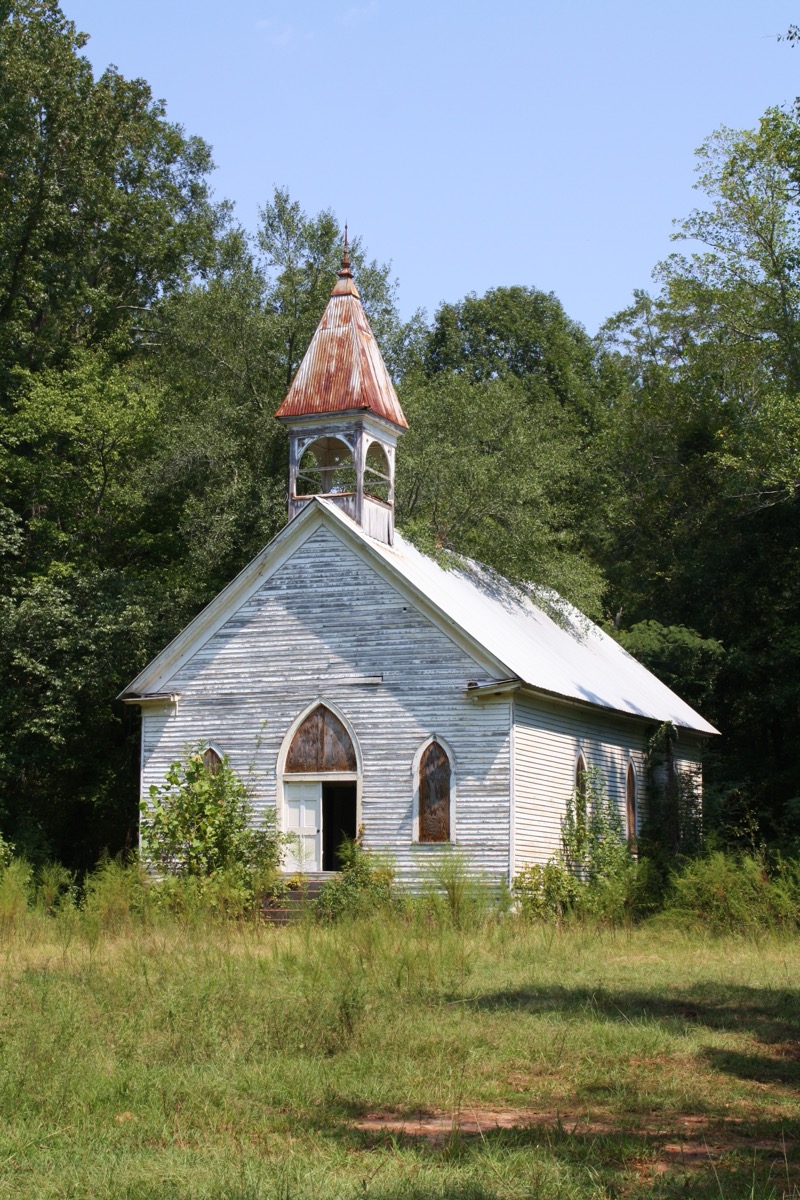
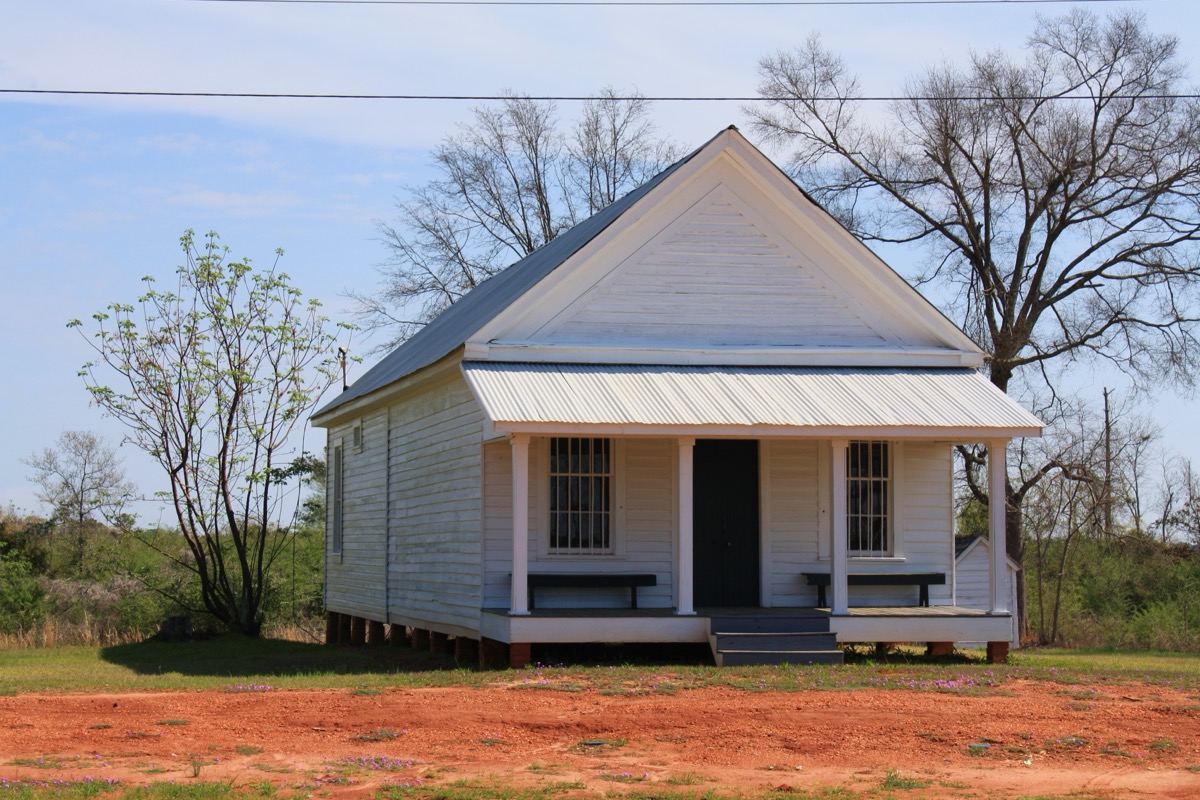
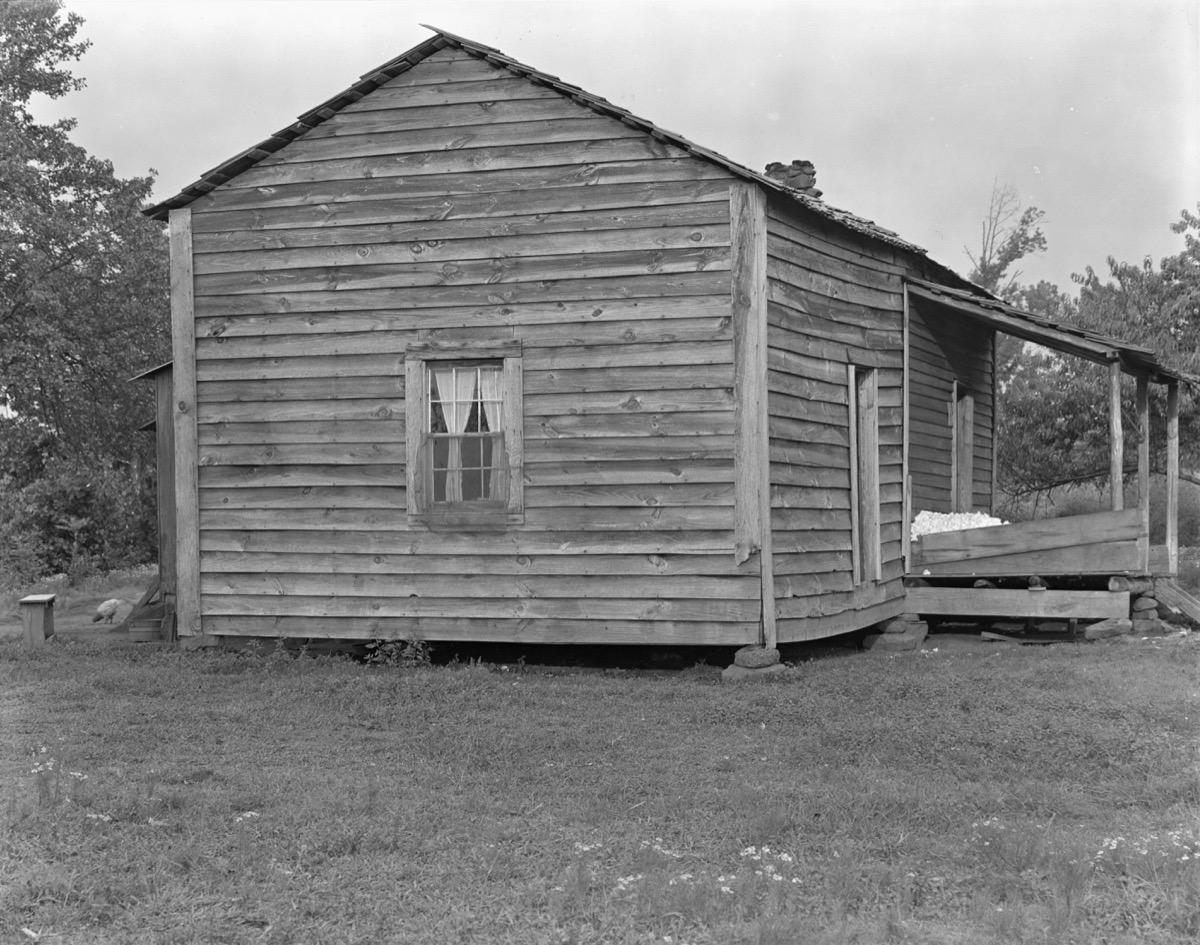
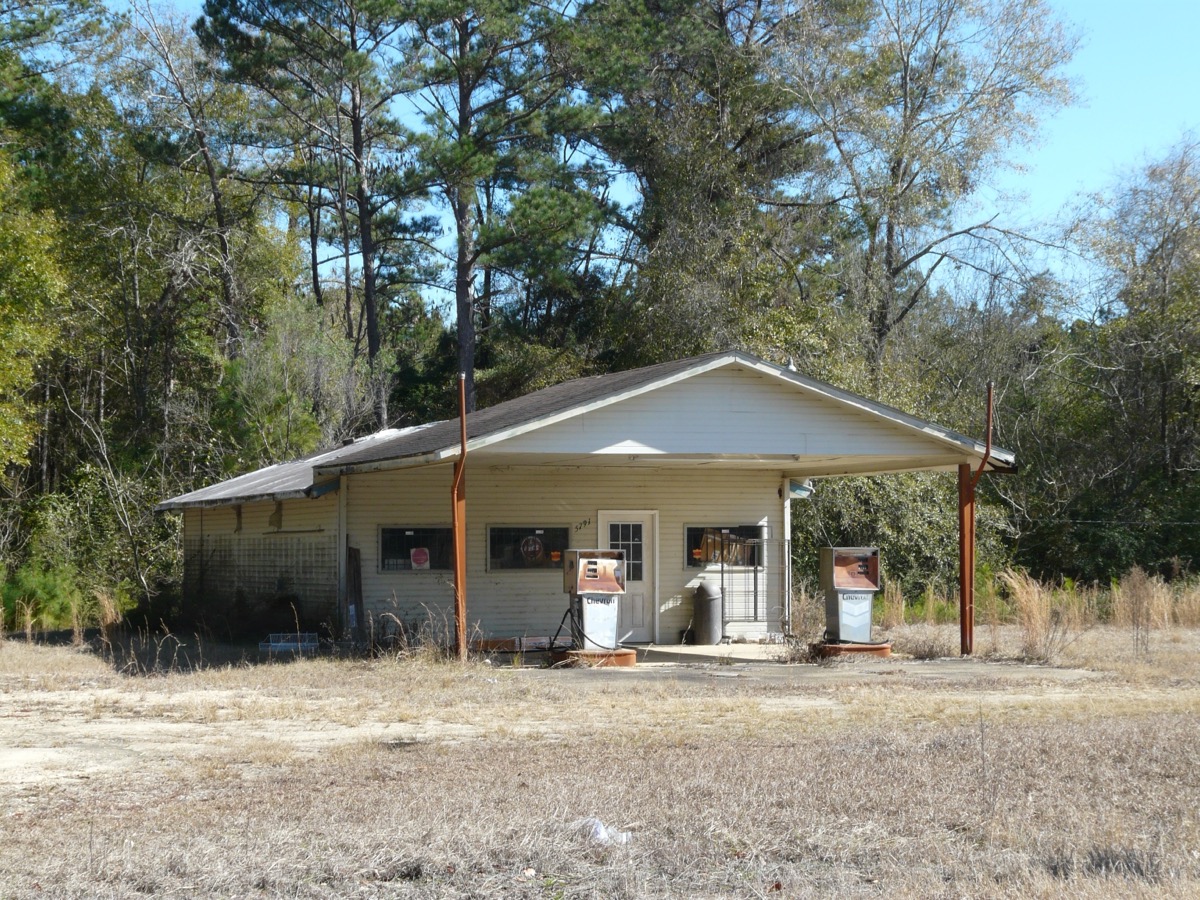
William Christenberry was born in 1936 in Tuscaloosa, Alabama, and raised in the rural landscape of Hale County, a place that would become the central subject and abiding obsession of his life's work. His family had farmed the red clay soil of west-central Alabama for generations, and the tenant houses, country churches, roadside stores, and weathered barns that dotted the countryside formed the visual grammar of his childhood. He studied painting and sculpture at the University of Alabama, earning his bachelor's degree in 1958 and his master's in 1959, but it was an encounter with Walker Evans's photographs in Let Us Now Praise Famous Men — James Agee's account of three Hale County sharecropper families — that would redirect the course of his artistic life.
Evans's images of the very landscape Christenberry had grown up in struck him with the force of revelation. Here was a great artist who had found, in the humble structures and worn faces of Hale County, subjects worthy of the most serious attention. Christenberry began photographing the same territory in the early 1960s, initially with a simple Brownie camera that produced small, jewel-like colour snapshots. These modest images, taken during annual summer pilgrimages back to Alabama from his teaching positions in the North, became the foundation of an extraordinary project that would span more than five decades.
Unlike Evans, who had photographed Hale County in black and white during a single extended visit, Christenberry returned year after year, documenting the same buildings, crossroads, and landscapes as they changed over time. His method was one of patient, almost devotional repetition. He would photograph a particular structure — a green warehouse in Newbern, a palmist's building at Havana Junction, a tin-roofed church in Sprott — from the same vantage point, in the same season, decade after decade, creating sequences that revealed not dramatic transformations but the slow, inexorable work of weather, gravity, vegetation, and neglect. Paint fades, roofs sag, walls lean, kudzu advances, and eventually the structure surrenders to the earth. These serial photographs became meditations on mortality and impermanence, rendered in the saturated colours of the Alabama summer.
Christenberry's decision to work in colour was itself a significant artistic choice. In the early 1960s, colour photography was widely regarded as the province of commercial and amateur work, unfit for serious artistic expression. William Eggleston, a fellow Southerner and close friend, was simultaneously developing his own revolutionary approach to colour, and the two artists encouraged and influenced each other. Christenberry's palette — the deep reds of Alabama clay, the faded greens of weathered clapboard, the brilliant blues of rural sky — was inseparable from his subject matter. Colour was not decoration but meaning: the visible evidence of time's passage written on the surfaces of the built environment.
In 1968, Christenberry joined the faculty of the Corcoran College of Art and Design in Washington, D.C., where he would teach painting, sculpture, and photography for more than four decades. The distance between Washington and Alabama became a generative tension in his work. Each summer he returned South, camera in hand, to continue his documentation of the landscape he carried within him. The annual journey became a ritual of homecoming and loss, for each return revealed new evidence of decay, demolition, and disappearance. The buildings he photographed were not preserved as historical monuments; they were the ordinary, unregarded structures of a rural economy in decline, and their gradual dissolution mirrored the larger story of the American South in the second half of the twentieth century.
Photography was only one dimension of Christenberry's practice. He was also a painter, sculptor, and builder of remarkable constructions. Inspired by the buildings he photographed, he created small-scale sculptural models — meticulous reconstructions of Alabama structures built from found materials, tin, wood, and soil. These constructions, which he called simply buildings, occupied a territory between sculpture, architecture, and memory. They were not miniatures in the conventional sense but independent works of art that distilled the essence of their subjects into concentrated form. Alongside these, he assembled a haunting body of work confronting the legacy of the Ku Klux Klan in Alabama, incorporating found Klan memorabilia into sculptural installations that addressed the region's history of racial violence with unflinching directness.
Christenberry's photographs were championed early on by Walter Hopps at the Corcoran and by curators at the Smithsonian American Art Museum, which holds a major collection of his work. His photographs, sculptures, paintings, and drawings have been exhibited at institutions including the Museum of Modern Art, the Whitney Museum of American Art, and the Aperture Foundation. In 1996, he was elected to the American Academy of Arts and Letters. Despite this recognition, Christenberry remained modest about his achievements, insisting that his art was simply a natural extension of his love for a particular place and the people who had lived there.
William Christenberry died in Washington, D.C., in November 2016. His legacy is that of an artist who demonstrated that the deepest truths can be found not in the exotic or the spectacular but in the faithful, lifelong attention to a single place. His Hale County photographs stand as one of the most sustained and moving bodies of work in American photography — a record of time passing through the landscape, and a testament to the power of returning, again and again, to the ground that made you.