Trent Parke was born in 1971 in Newcastle, New South Wales, and grew up in the relentless light of the Australian coast. His mother gave him his first camera, a Pentax Spotmatic, when he was twelve years old, and from that moment he was consumed. He began photographing everything around him with an intensity and obsessiveness that would characterise his entire career. His mother's death when he was a teenager deepened his engagement with the camera as a means of grappling with loss, memory, and the passage of time — themes that would run through all his subsequent work. He studied photography at the Queensland College of Art in Brisbane, and by his early twenties he was working as a press photographer for the Sydney Morning Herald and as a freelancer for other Australian newspapers.
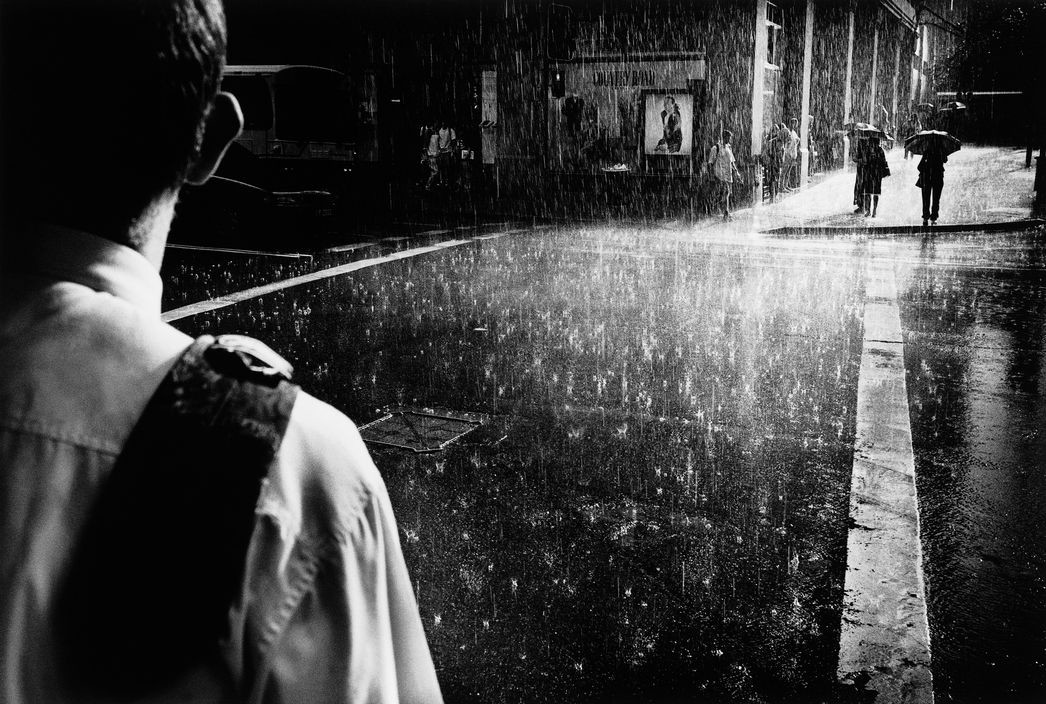
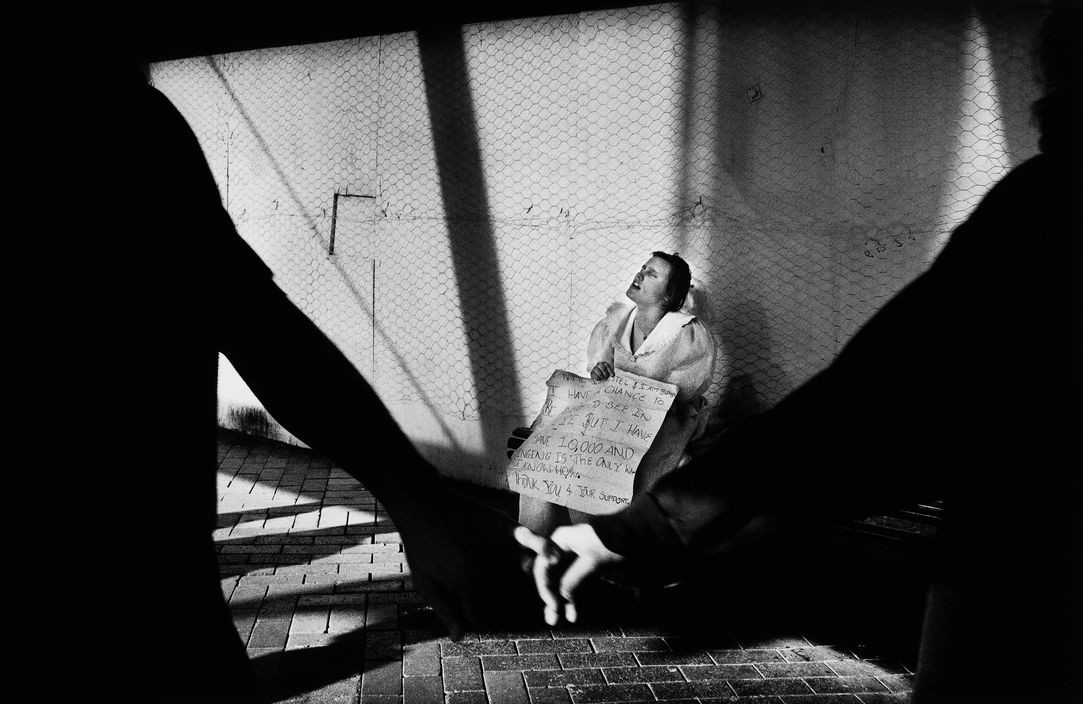
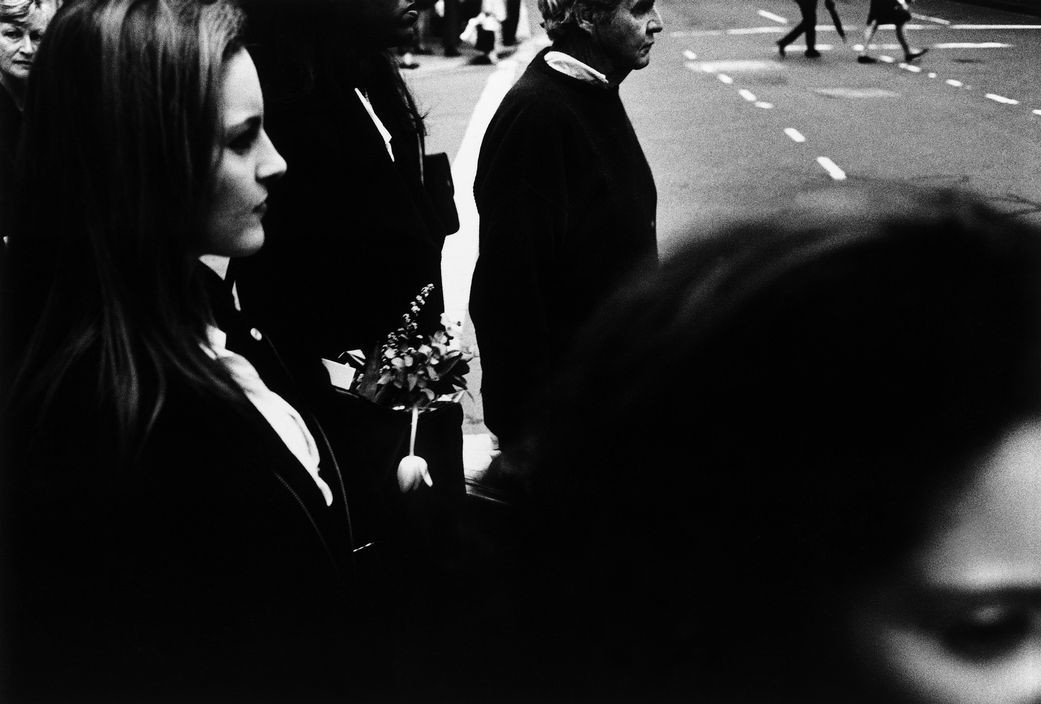
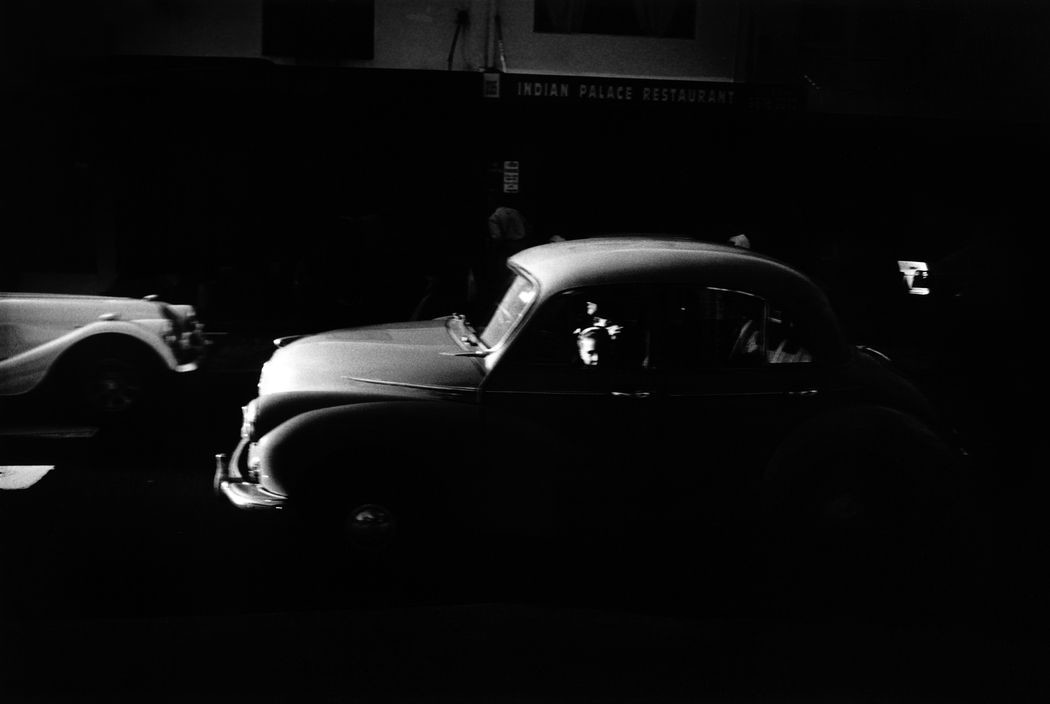
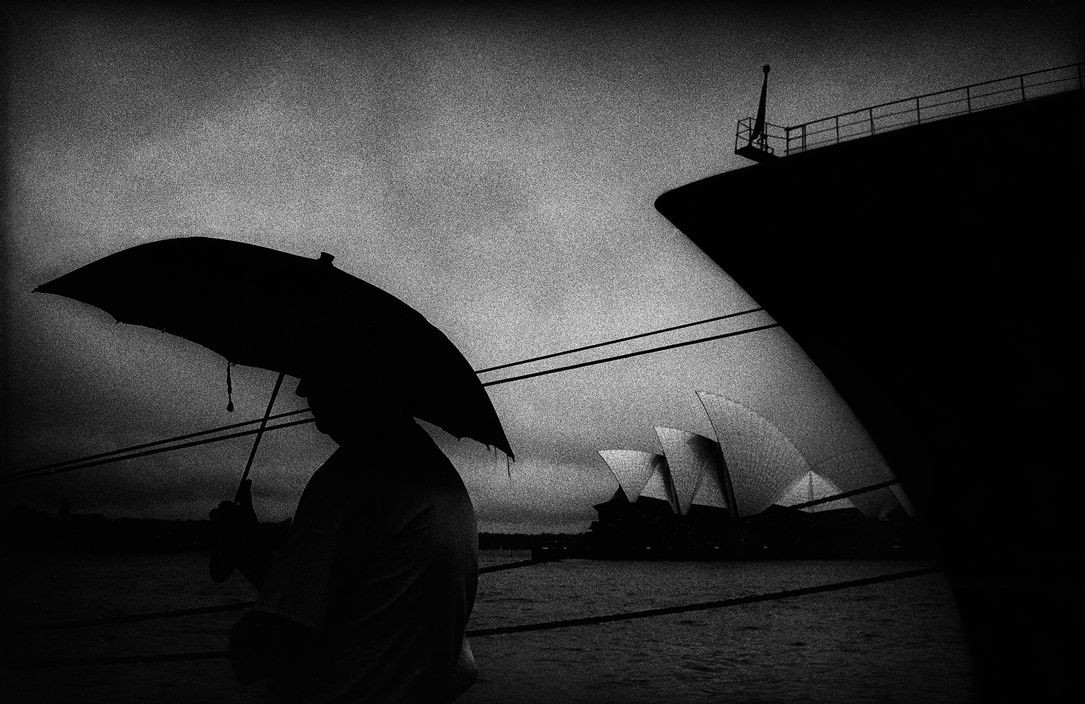
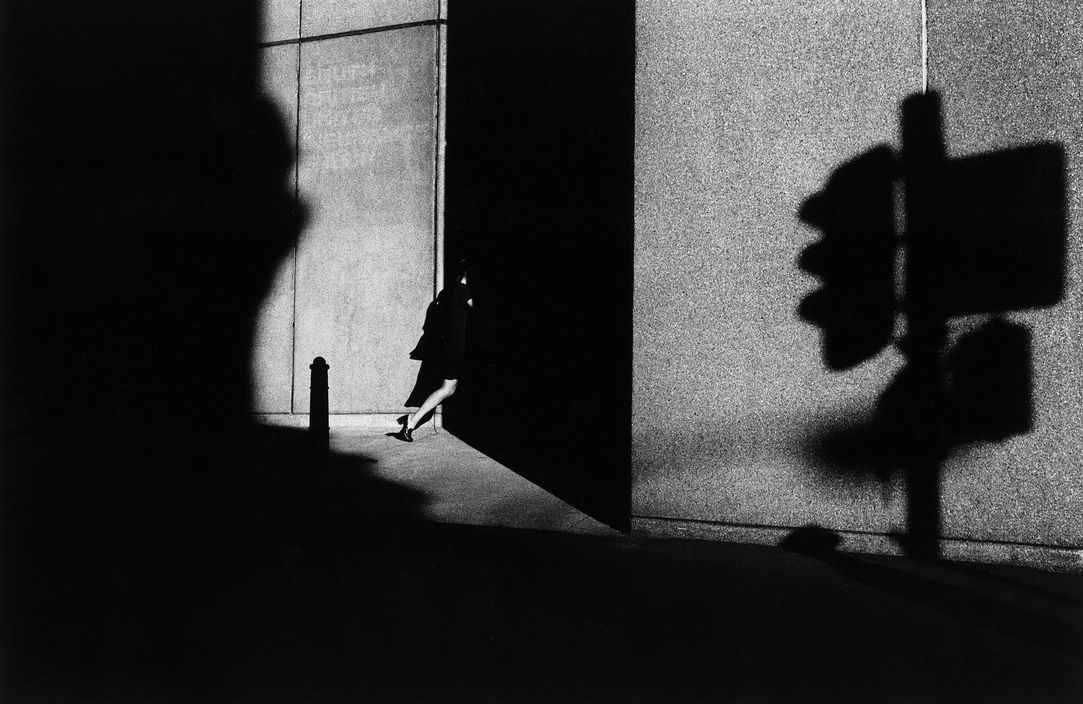
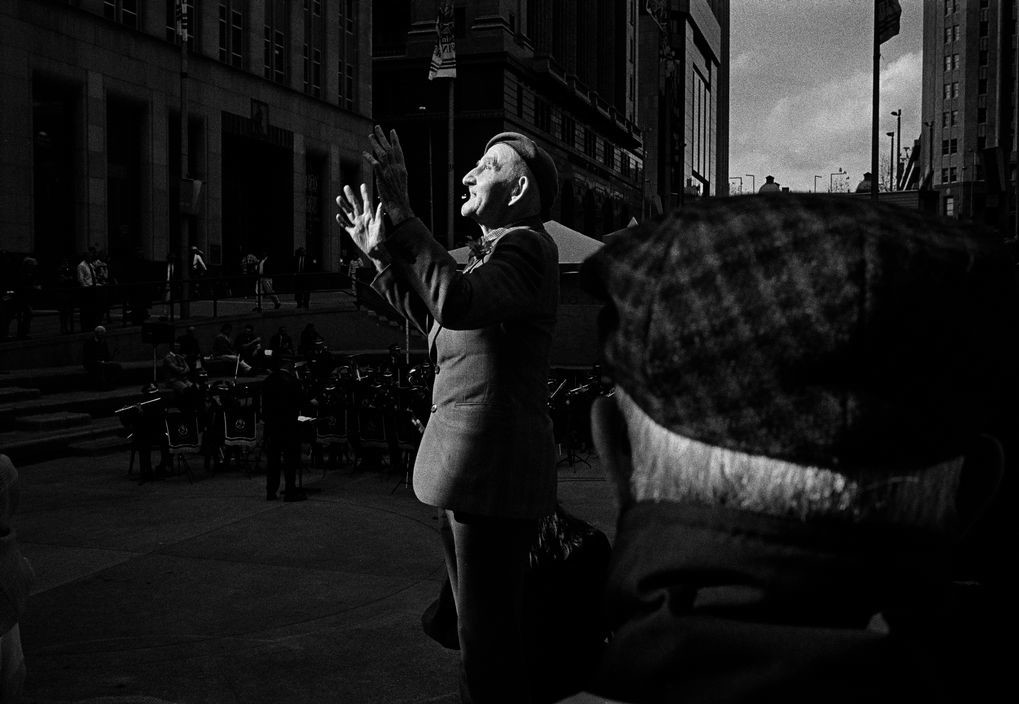
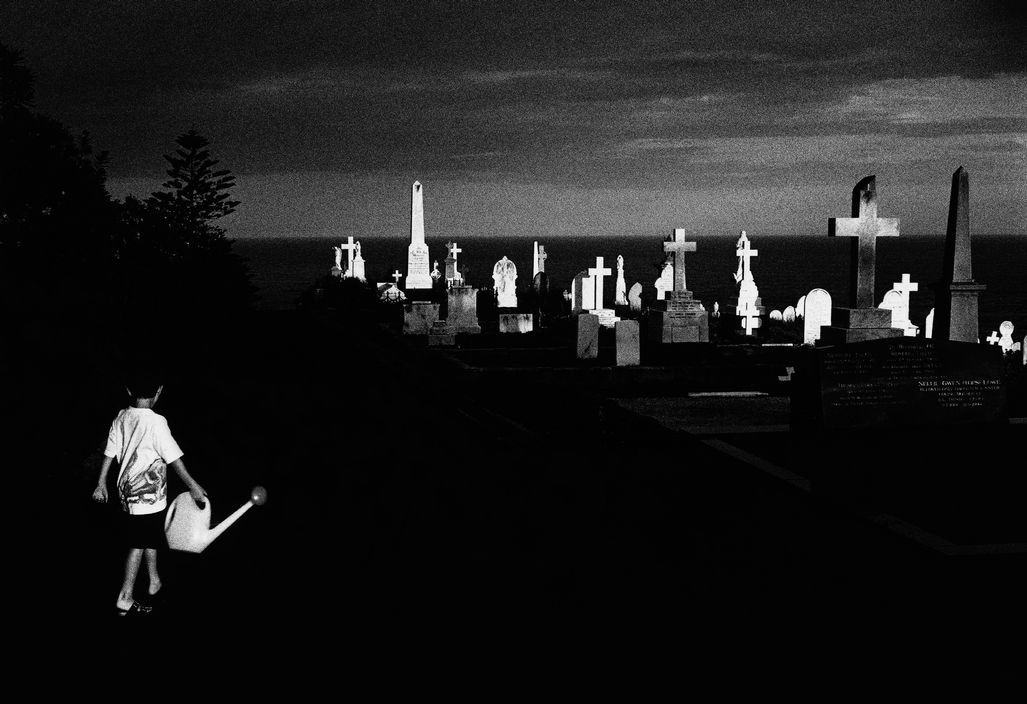
It was in Sydney in the late 1990s that Parke produced Dream/Life, the body of work that would establish him as one of the most original photographic voices of his generation. Over several years, he photographed the streets of Sydney — particularly the canyon-like corridors of the central business district — in the extreme conditions of high-contrast Australian light. The resulting black-and-white images are unlike anything in the tradition of street photography. Pedestrians are caught in shafts of blinding sunlight that burn out their features, their shadows stretching across pavements like dark doubles; figures emerge from tunnels of darkness into pools of white; rain-soaked streets reflect the city back upon itself in shimmering distortions. These are not observational records of urban life but visionary transformations of it, images in which the everyday is rendered strange, luminous, and charged with a dreamlike intensity.
In 2003, Parke became a full member of Magnum Photos, the only Australian photographer to hold that distinction. That same year, he and his wife, the photographer Narelle Autio, embarked on a ninety-thousand-kilometre road trip around the perimeter of Australia, a journey that would produce Minutes to Midnight, one of the most ambitious photographic projects ever undertaken in the country. Shot over two years, the series documents the Australian continent with a hallucinatory intensity: dust storms swallowing outback towns, lightning splitting desert skies, ghostly figures moving through the shimmering heat, suburban streets bathed in the eerie amber light of approaching bushfires. The work is not a survey of Australia but an encounter with its elemental forces — heat, light, distance, drought, fire — and with the lives of the people who endure them.
Parke's relationship to light is the defining characteristic of his work and the quality that sets him apart from virtually every other contemporary photographer. He does not use light as a tool of illumination; he photographs light itself, treating it as a physical substance — a force that sculpts, dissolves, blinds, and transfigures. His images are studies in the behaviour of photons, in the way light falls across surfaces, penetrates shadows, and transforms the mundane into the extraordinary. This obsession gives his photographs their distinctive visual signature: images of extreme tonal contrast, of figures burning white against black backgrounds or dissolving into pools of radiance, of landscapes in which the sky seems to press down upon the earth with palpable weight.
In subsequent projects, Parke has continued to push photography toward its expressive limits. The Christmas Tree Bucket (2013) is an intimate, deeply personal project about his family — his wife and two sons — photographed over several years in their home and garden in Adelaide. The images, shot in colour with a warm, golden palette, capture the textures of domestic life with a tenderness and an attention to the poetry of the ordinary that recalls the best work of Emmet Gowin and Sally Mann. The Black Rose (2015) returned to black and white and to the streets, producing images of Adelaide that combine the formal ambition of Dream/Life with a darker, more existential register.
Parke's work has been exhibited at major institutions worldwide, including the Art Gallery of New South Wales, the National Gallery of Victoria, the Art Gallery of South Australia, and internationally through Magnum Photos exhibitions. He has won numerous awards, including four World Press Photo Awards, the W. Eugene Smith Grant in Humanistic Photography, and multiple Walkley Awards for photojournalism. His books are among the most sought-after in contemporary photography publishing.
Based in Adelaide, Parke continues to work on long-term projects that explore the Australian landscape, Australian light, and the human condition with an intensity and a visual imagination that remain unmatched. His body of work stands as proof that documentary photography, when pursued with sufficient ambition and artistic vision, can achieve the emotional and aesthetic power of any art form.