Thomas Struth was born in 1954 in Geldern, a small town in the Lower Rhine region of northwestern Germany. He grew up in the quiet, orderly landscape of the postwar Rhineland, a visual environment that would leave its mark on the measured, analytical quality of his mature work. In 1973, he enrolled at the Kunstakademie Düsseldorf, initially studying painting under Gerhard Richter, whose own rigorous interrogation of the image — the relationship between painting and photography, between representation and abstraction — proved formative. Struth soon transferred to the photography class of Bernd and Hilla Becher, joining a cohort that included Thomas Ruff, Andreas Gursky, and Candida Höfer, students who would collectively redefine the possibilities of the photographic medium.
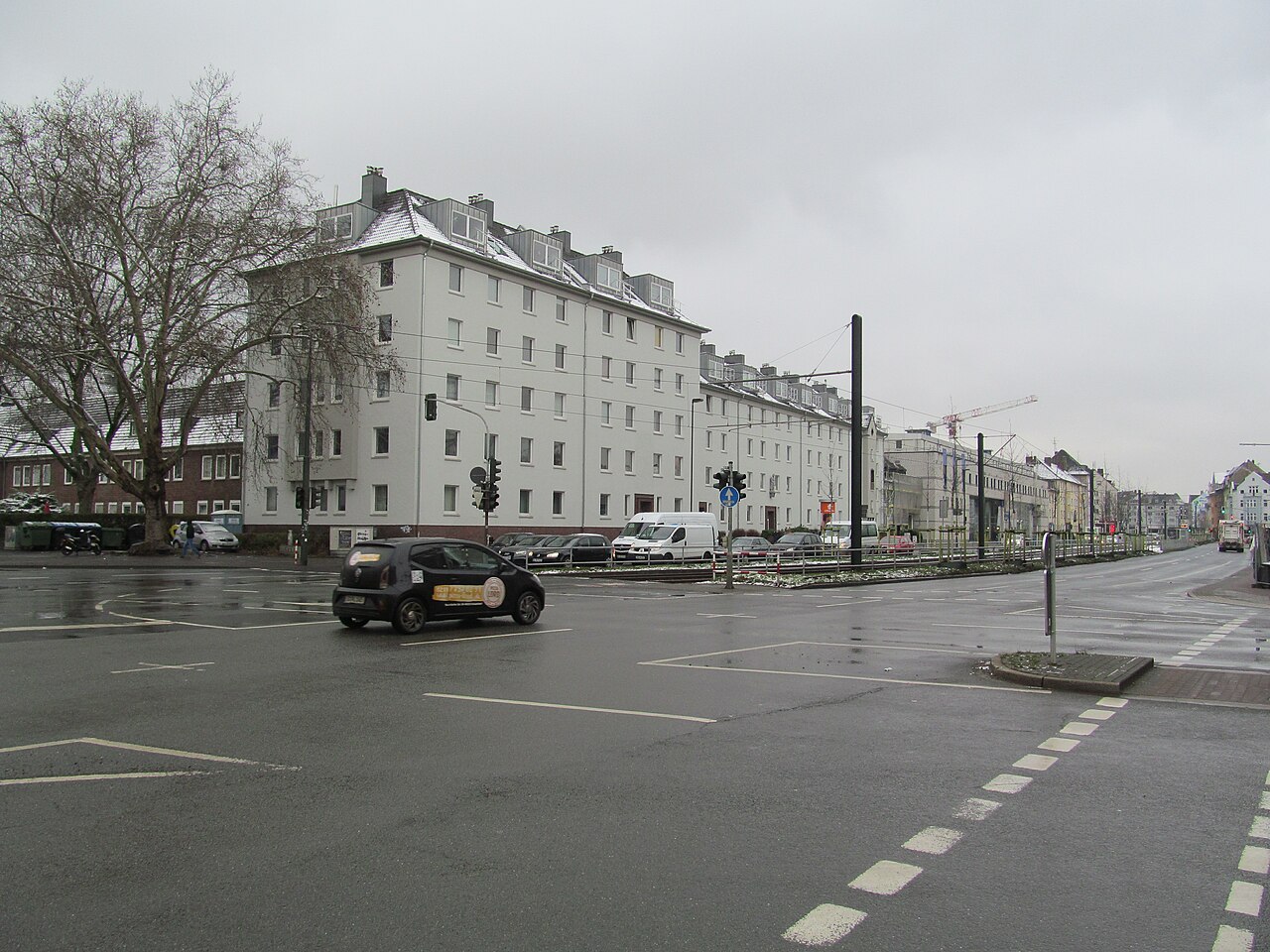
Struth's earliest important body of work, the Unconscious Places series begun in the late 1970s, consisted of large-format photographs of urban streets — in Düsseldorf, New York, Tokyo, Edinburgh, and elsewhere — shot from a central perspective with the camera positioned at eye level in the middle of the road. These images, made in natural light and printed at a monumental scale, presented the built environment as a legible text, each building facade, street sign, and parked car contributing to a cumulative portrait of a city's character and history. The photographs were not picturesque or dramatic; they were forensically descriptive, inviting the viewer to read the street as one might read a page, discovering in its layers of signage, architecture, and wear the unconscious self-expression of a society.
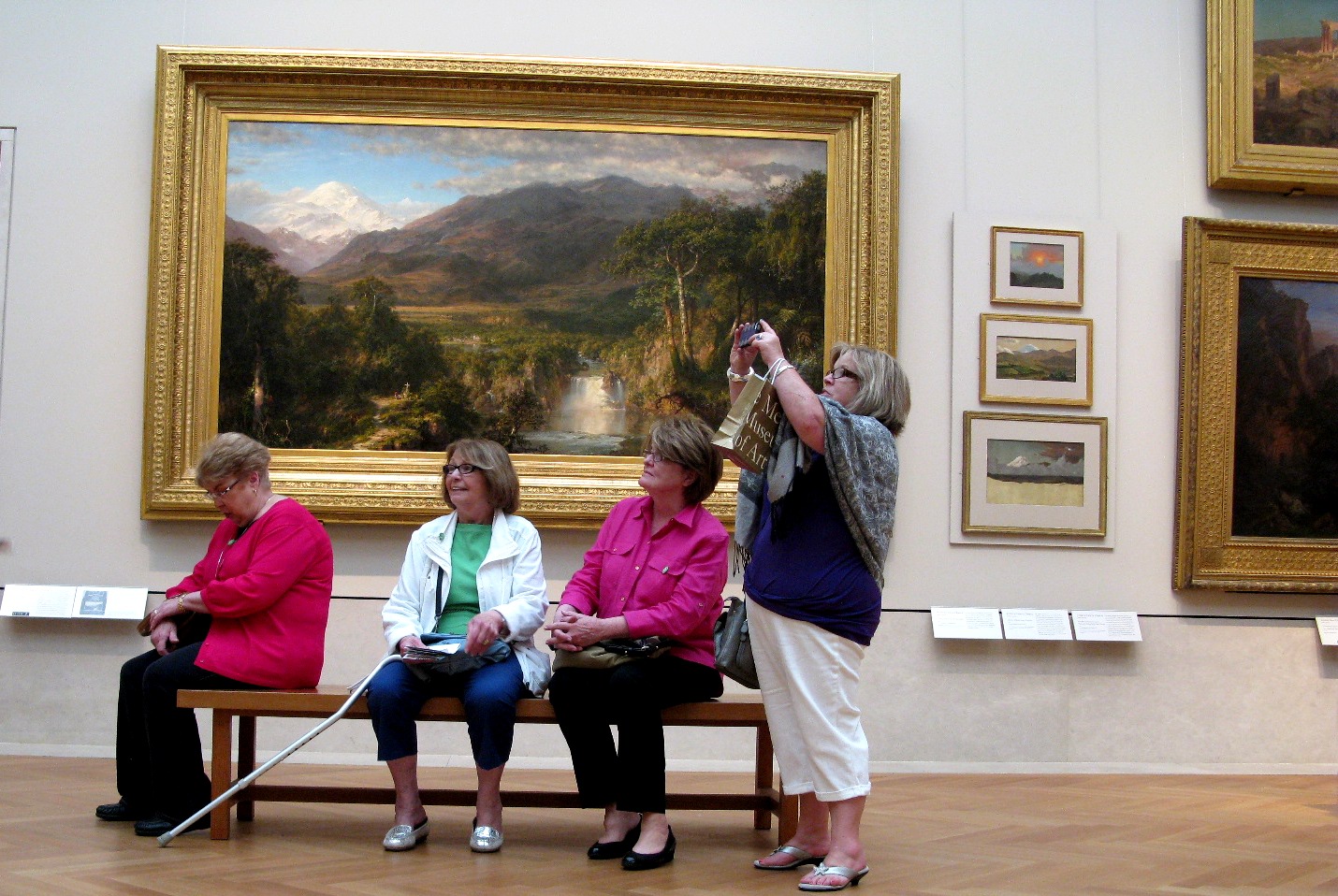
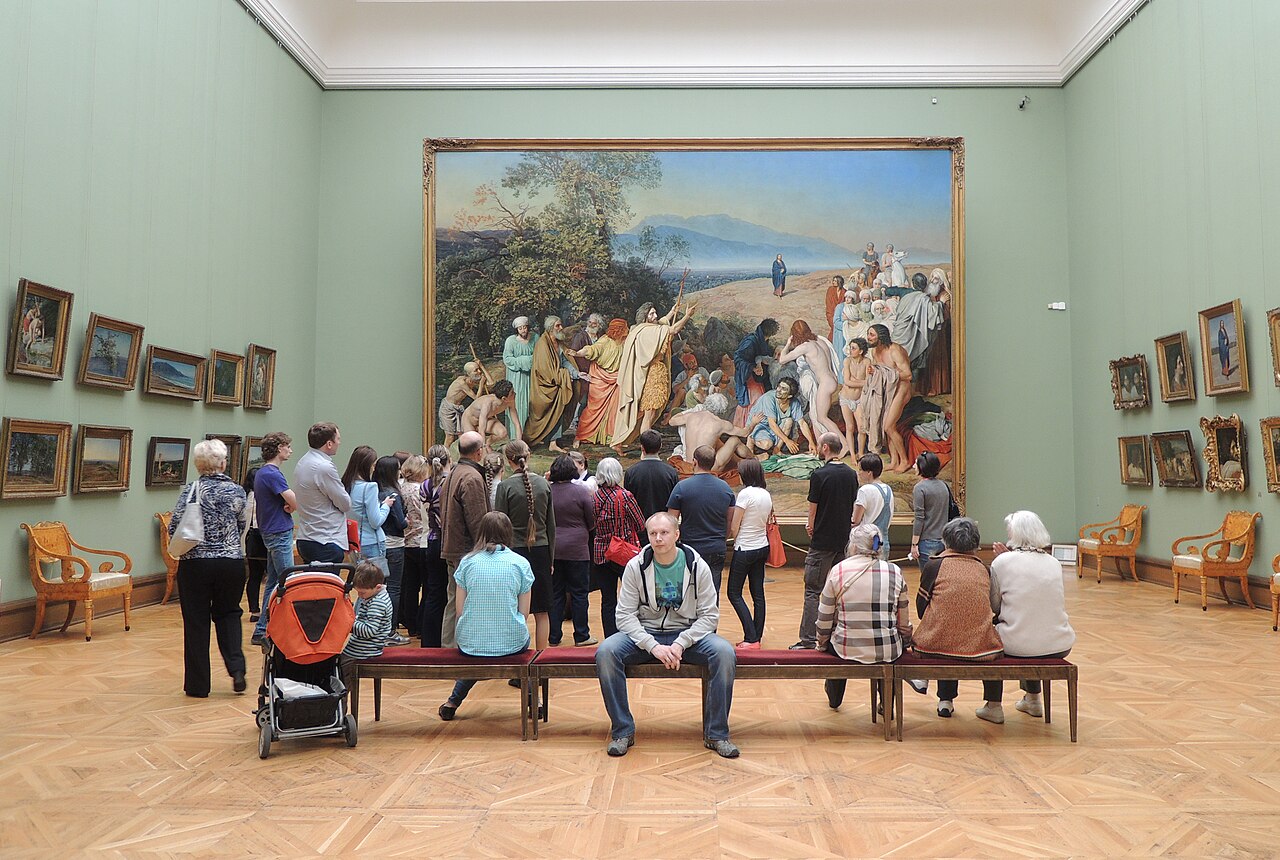
In the late 1980s, Struth began the work for which he would become most widely celebrated: the Museum Photographs. Positioning his large-format camera in the galleries of the world's greatest museums — the Louvre, the Prado, the National Gallery in London, the Galleria dell'Accademia in Florence — he photographed visitors in the act of looking at paintings. The resulting images are double portraits: of the viewers and of the artworks they contemplate. A group of tourists stands transfixed before Velázquez; a solitary figure gazes at a Bellini altarpiece; a crowd jostles before the Mona Lisa. The photographs reveal the museum as a theatre of attention, a space in which the ritual of looking is itself the subject, and in which the relationship between the contemporary viewer and the historical artwork becomes visible as a complex negotiation of reverence, boredom, distraction, and genuine engagement.
The Museum Photographs established Struth as one of the most intellectually ambitious artists of his generation, and their influence on subsequent gallery-based photography has been enormous. But Struth's ambitions extended well beyond the museum. In the 1990s, he produced the Family Portraits series, large-scale formal portraits of families in their homes, commissioned by the subjects themselves. These images, influenced by Struth's study of psychoanalytic theory, treat the family as a structure — a system of relationships, hierarchies, and tensions made visible through the spatial arrangements, body language, and expressions of its members. They are neither flattering nor critical; they are descriptive, with a precision that can be unsettling in its refusal to simplify or sentimentalise.
Around the same period, Struth undertook New Pictures from Paradise, a series of monumental photographs of dense forest and jungle environments — in Brazil, Japan, China, Germany, and Australia — that presented nature as an impenetrable tangle of visual information, a space in which the human eye could find no focal point, no compositional hierarchy, no narrative. These images, printed at an enormous scale, were a deliberate challenge to the traditions of landscape photography, offering neither the sublime panorama of Ansel Adams nor the ironic detachment of the New Topographics, but rather an immersive encounter with visual complexity that pushed the viewer's perceptual apparatus to its limits.
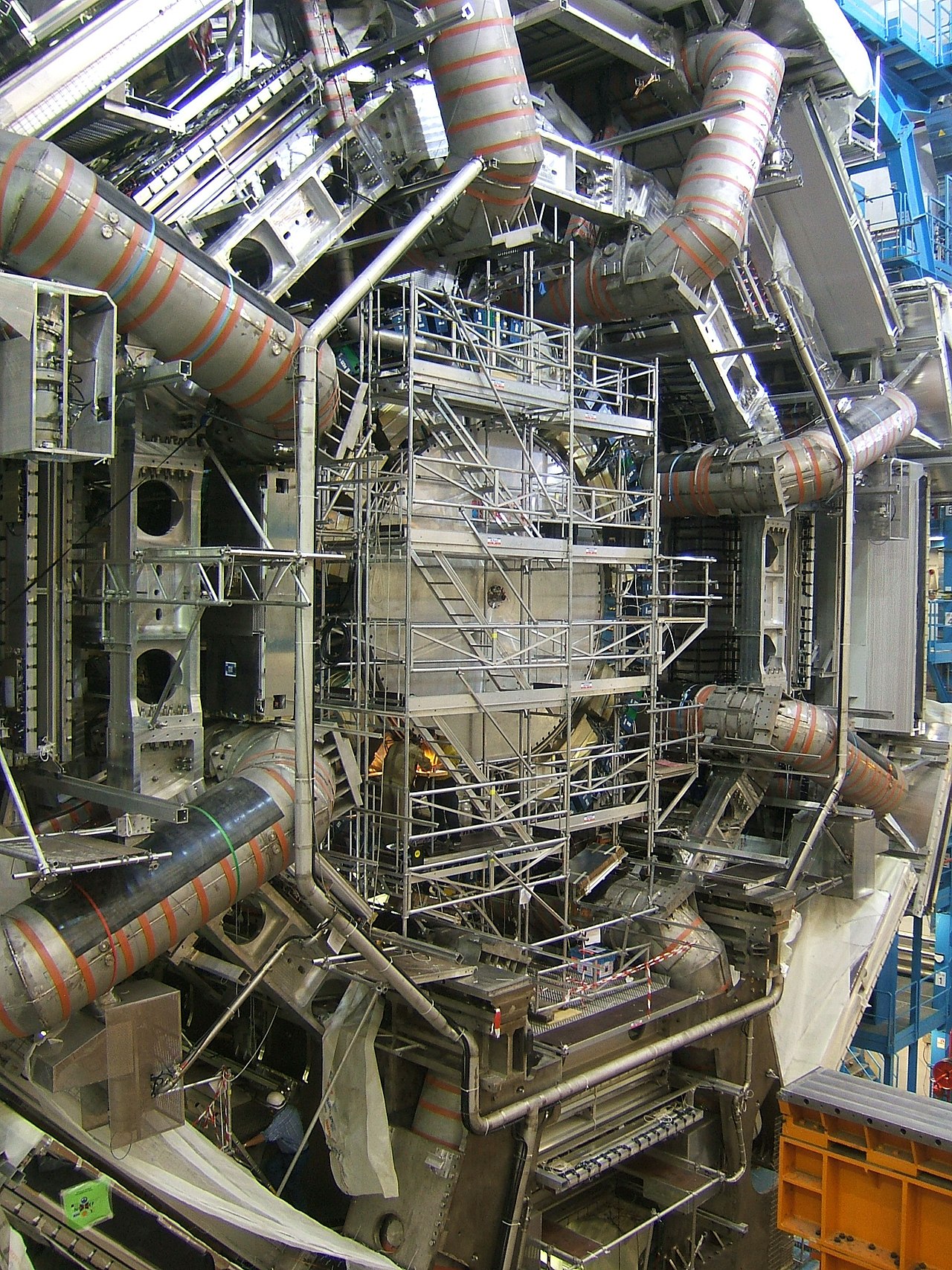
In more recent decades, Struth has turned his attention to the spaces of advanced technology and scientific research. His photographs of particle accelerators, operating theatres, shipyards, rocket assembly halls, and nuclear fusion reactors — collected under the title Nature & Politics — document the vast, intricate machines and environments through which humanity attempts to master the natural world. These images are composed with the same frontal clarity and monumental scale that characterise all of Struth's work, but their subject matter introduces a new dimension of awe and anxiety, confronting the viewer with the sheer complexity and ambition of modern technological enterprise.
Struth's work has been exhibited in major retrospectives at the Metropolitan Museum of Art in New York, the Museo del Prado in Madrid, the Haus der Kunst in Munich, and the Guggenheim Museum in Bilbao. His photographs are held in the permanent collections of virtually every major museum of contemporary art in the world. He has received the Spectrum International Prize for Photography, and his influence on the field — particularly in establishing large-format colour photography as a serious art form capable of sustained intellectual inquiry — has been immeasurable.
Now in his early seventies, Struth continues to work from his studio in Düsseldorf and Berlin, pursuing projects that extend his lifelong investigation of how human beings relate to the spaces, images, and structures they create. His body of work, taken as a whole, constitutes one of the most rigorous and far-reaching examinations of visual culture undertaken by any artist of the late twentieth and early twenty-first centuries.