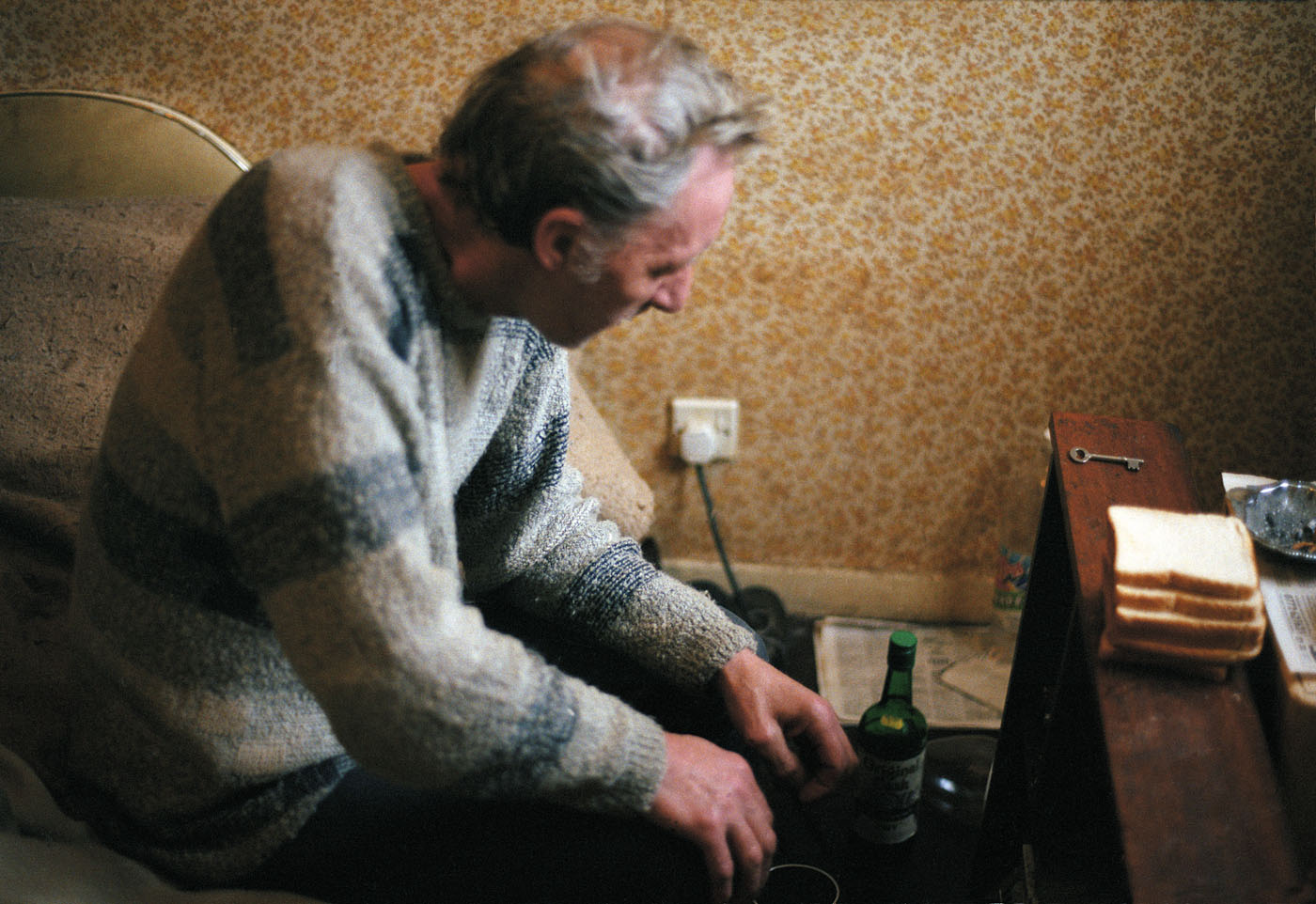
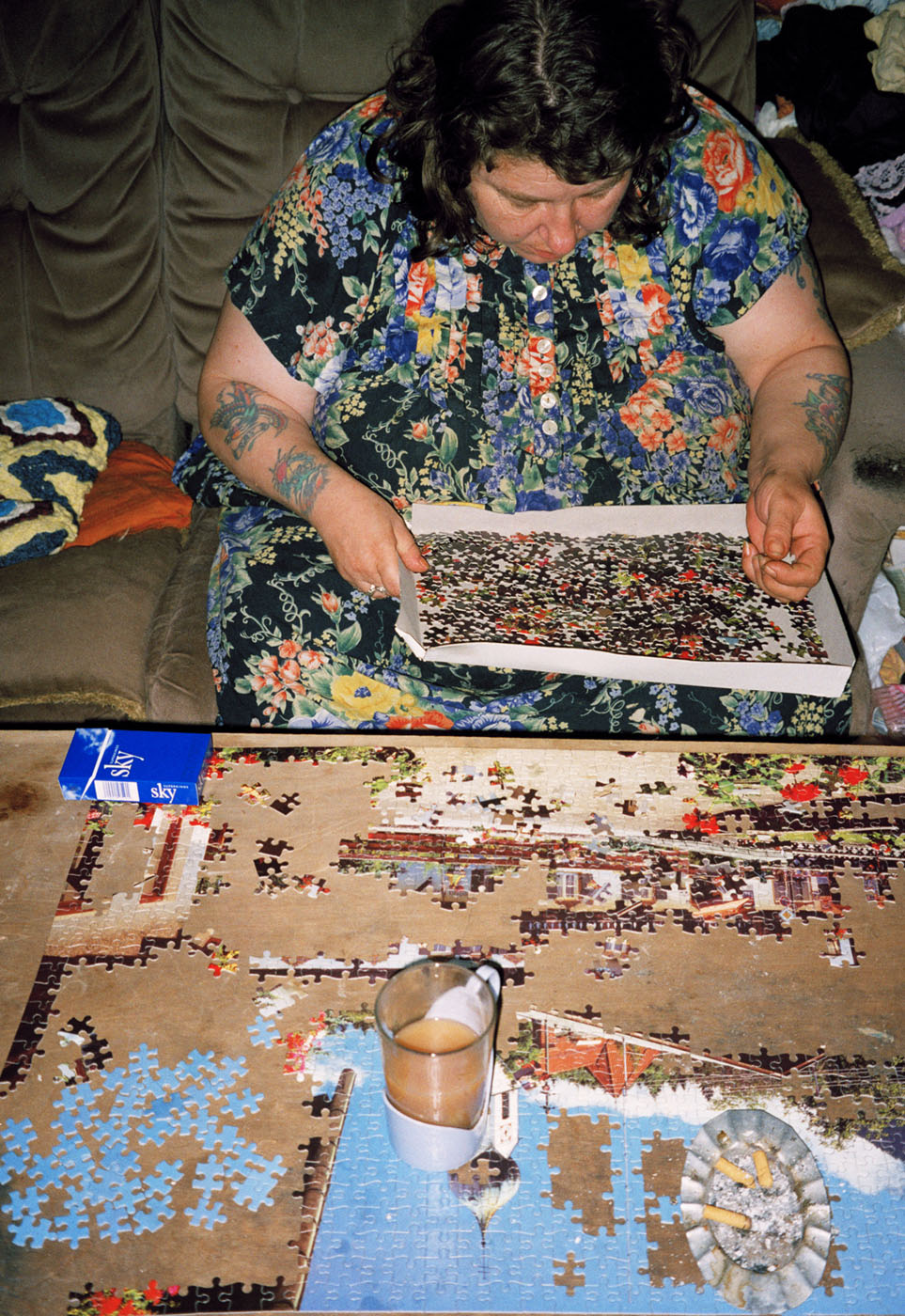
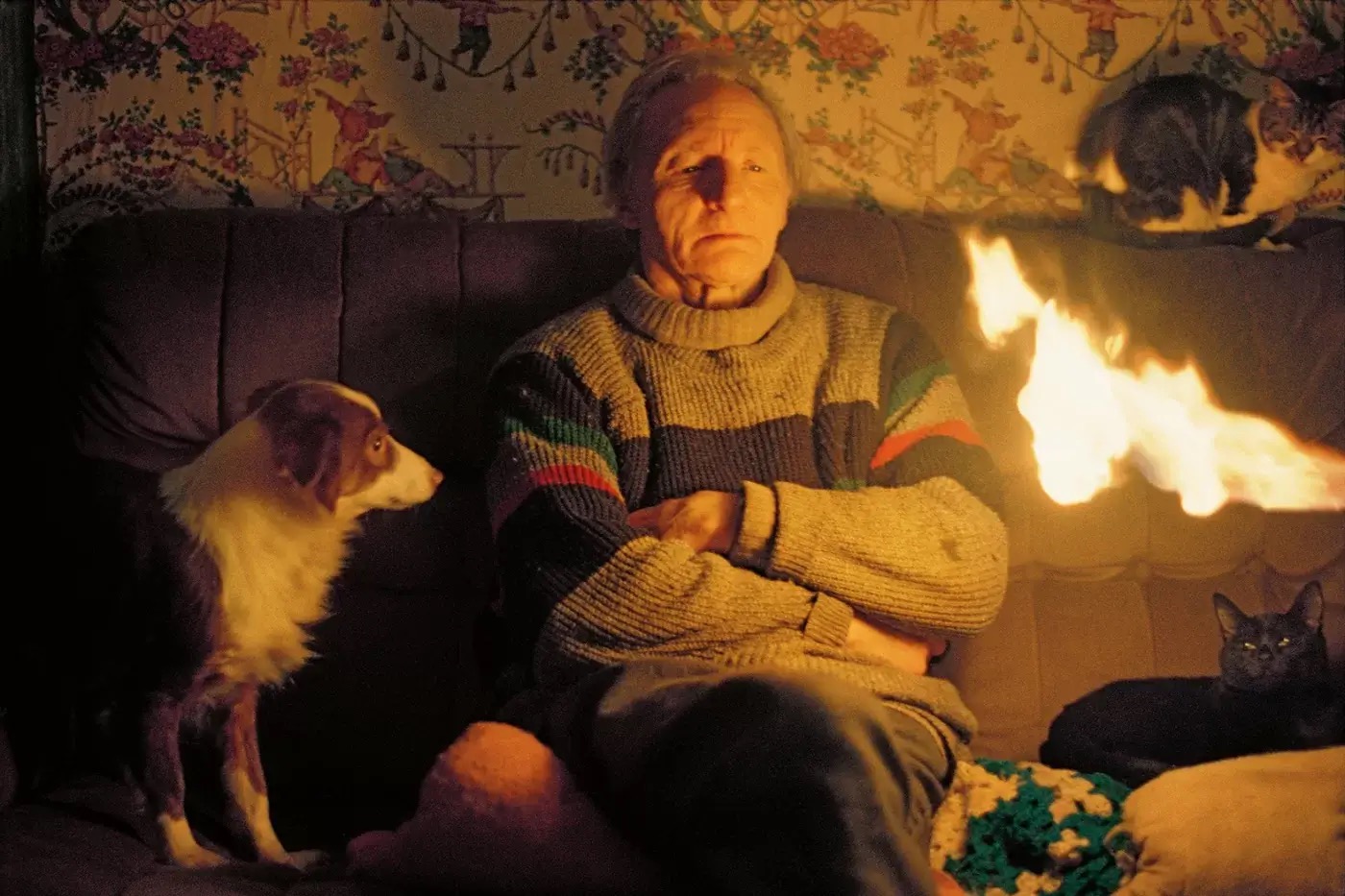
Richard Billingham was born in 1970 in Birmingham and grew up in a council tower block in the Cradley Heath area of the Black Country, in the industrial West Midlands. His father, Ray, was an alcoholic who brewed his own drink and spent most of his time confined to the flat. His mother, Liz, was a large, forceful woman with prominent tattoos who filled the small rooms with ornaments, animals, and the volatile energy of her personality. The family lived in conditions of considerable poverty and disorder. It was this environment — chaotic, claustrophobic, at once deeply dysfunctional and unmistakably alive — that Billingham would transform into art.
Billingham arrived at photography by accident. He had enrolled at Bournville College of Art in the early 1990s, intending to study painting. Needing reference material for his canvases, he began taking snapshots of his parents at home, using cheap film and a simple camera. The resulting photographs were not composed in any traditional sense; they were grabbed, reactive, often blurred or harshly lit by the flash of the automatic camera. But they possessed a raw immediacy and emotional intensity that his tutors recognised as something extraordinary. Encouraged to pursue photography rather than painting, Billingham continued to document his family's daily life with an unflinching directness that would prove revolutionary.
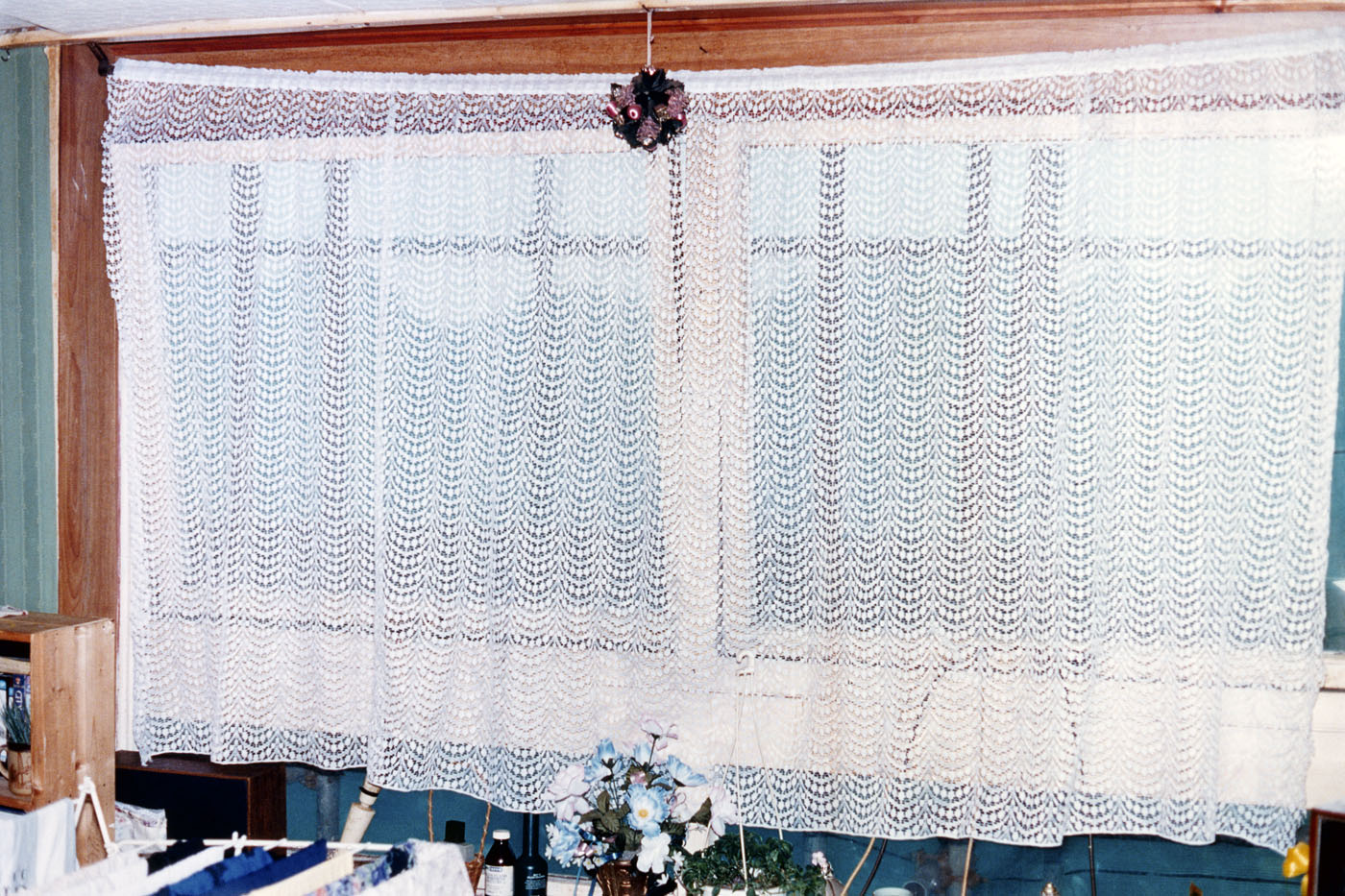
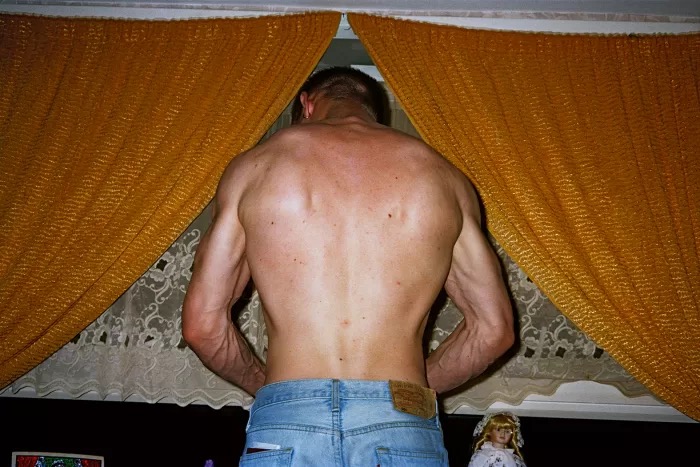
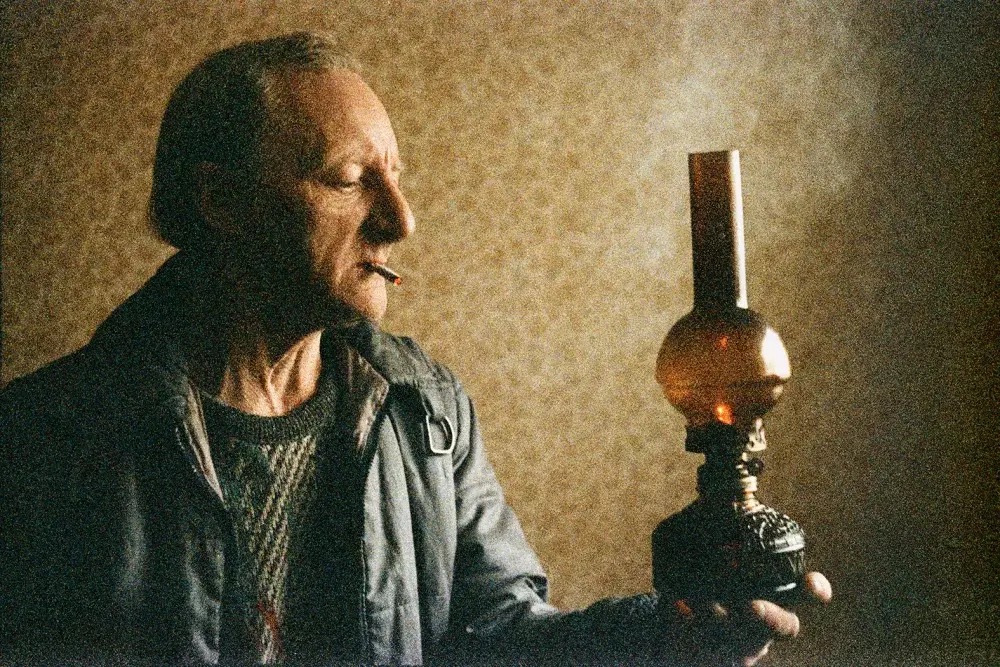
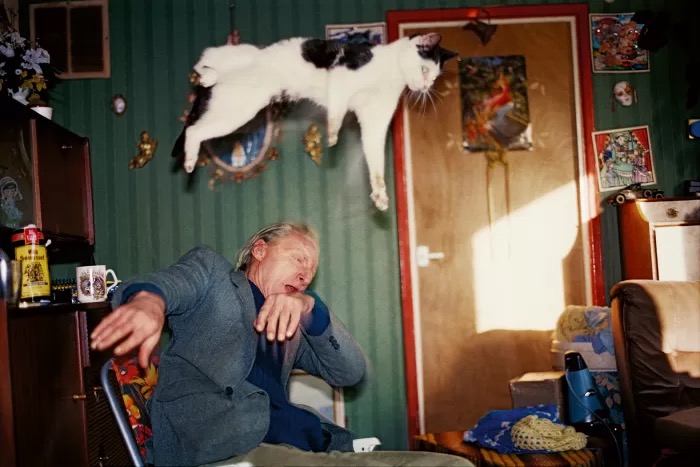
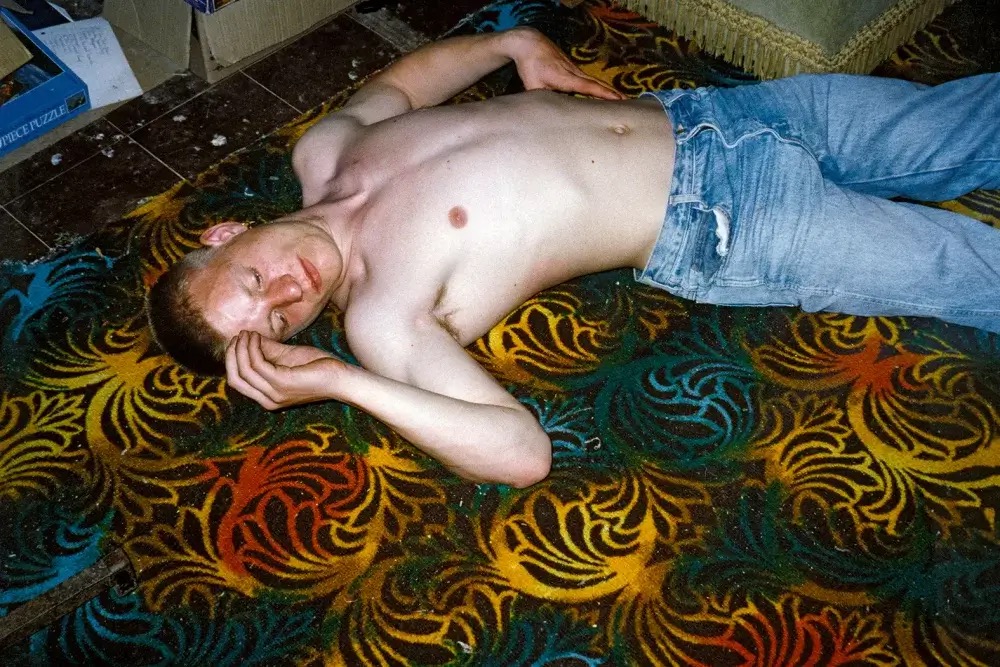
The photographs were published in 1996 as Ray's a Laugh, a book that detonated in the British art world with the force of a confession. The images showed Ray slumped in his chair, surrounded by homebrew bottles and cigarette smoke; Liz raging, laughing, tattooing herself, feeding the cats and dogs that overran the flat; the walls stained, the carpets worn, the rooms dense with clutter and the residue of lives lived without pretension or self-consciousness. The photographs were saturated with colour — the garish tones of cheap film under fluorescent light — and possessed a visceral energy that made the viewer feel physically present in the room.
The reception of Ray's a Laugh was intense and divided. Some critics hailed it as a masterpiece of raw honesty, a work that shattered the genteel conventions of British art photography and confronted the viewer with a reality that polite culture preferred to ignore. Others accused Billingham of exploiting his family's poverty and dysfunction, of turning private suffering into a spectacle for the gallery-going middle classes. The debate went to the heart of questions about ethics, authenticity, and the power dynamics of representation that remain central to contemporary photography.
What distinguished Billingham's work from mere voyeurism was the quality of his attention and the complexity of his feeling. These were not the photographs of an outsider looking in with horror or pity; they were the images of a son who loved his parents and saw them with a clarity that only intimacy could produce. Ray emerges not as a pathetic figure but as a man of peculiar dignity, his quietness and passivity a form of withdrawal from a world he could not navigate. Liz, for all her ferocity, is rendered as a woman of enormous vitality and warmth. The photographs refuse to reduce their subjects to types or symbols; they insist on the irreducible particularity of these lives.
Following the success of Ray's a Laugh, Billingham was shortlisted for the Turner Prize in 2001, cementing his position as one of the most significant British artists of his generation. He continued to photograph, producing series on the landscapes and animals of the Black Country that extended his interest in the natural world's presence within urban and industrial environments. His video work explored similar territories, using slow, contemplative sequences that contrasted sharply with the kinetic energy of his early photographs.
In 2018, Billingham directed the feature film Ray & Liz, a fictionalised account of his parents' lives that drew on his memories and photographs to create a work of austere, devastating power. The film was acclaimed at international festivals and demonstrated that Billingham's vision could translate across media while retaining its emotional authenticity. His work continues to challenge assumptions about class, family, and the boundaries of art, standing as one of the most important contributions to British photography in the late twentieth century.