René Burri was born in Zurich in 1933 and grew up in a Switzerland that, for all its neutrality, was surrounded by the convulsions of the Second World War. He studied at the Zurich School of Arts and Crafts under Hans Finsler, a pioneer of the New Photography whose emphasis on formal rigour and clean, graphic composition left a lasting impression on the young photographer. Burri completed his studies in 1955 and almost immediately began the peripatetic life that would characterise his entire career, travelling with an insatiable curiosity that would take him to every continent and into the presence of some of the century's most significant figures.
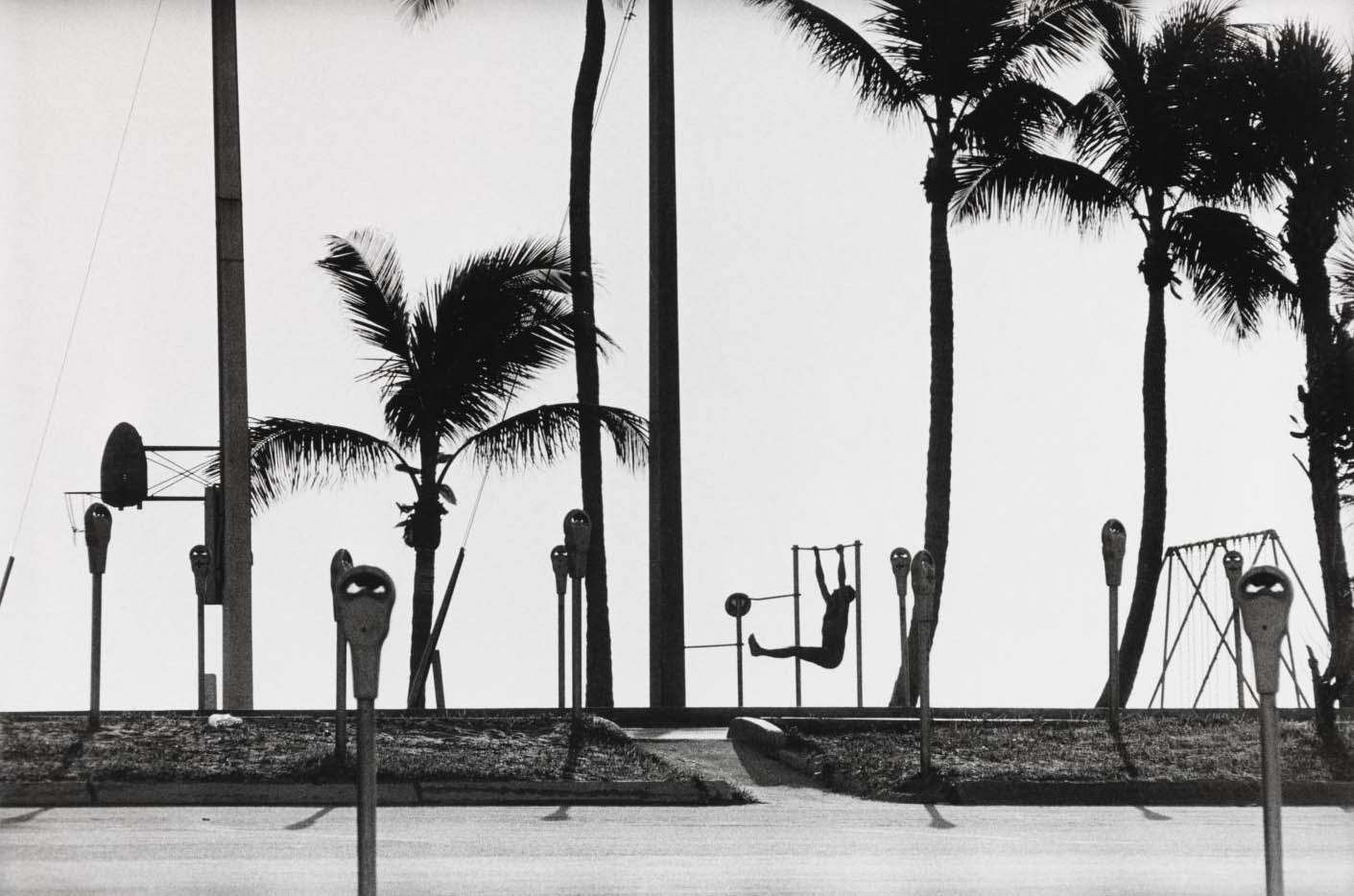
In 1955, Burri produced his first major photographic essay, documenting deaf-mute children in Zurich with a sensitivity that caught the attention of Magnum Photos. He became an associate member in 1955 and a full member in 1959, beginning a lifelong association with the cooperative that would provide the framework for his most important work. Magnum's ethos — the independence of the photographer, the primacy of the personal vision, the commitment to bearing witness — suited Burri's temperament perfectly. He was never content to be a mere recorder of events; he sought always to impose a graphic order on the chaos of the world, to find the composition within the confusion.
The late 1950s and early 1960s were the most productive period of Burri's career. In 1960, he travelled to Brazil to document the construction of Brasília, the new capital designed by Oscar Niemeyer and Lucio Costa. The resulting images are among the finest architectural photographs of the twentieth century: bold, geometric compositions that capture the utopian ambition and surreal beauty of Niemeyer's buildings rising from the red earth of the central plateau. Burri's eye for strong graphic shapes — the sweeping curves of the National Congress, the stark silhouettes of the ministry buildings against empty skies — transformed documentary reportage into something approaching visual poetry.
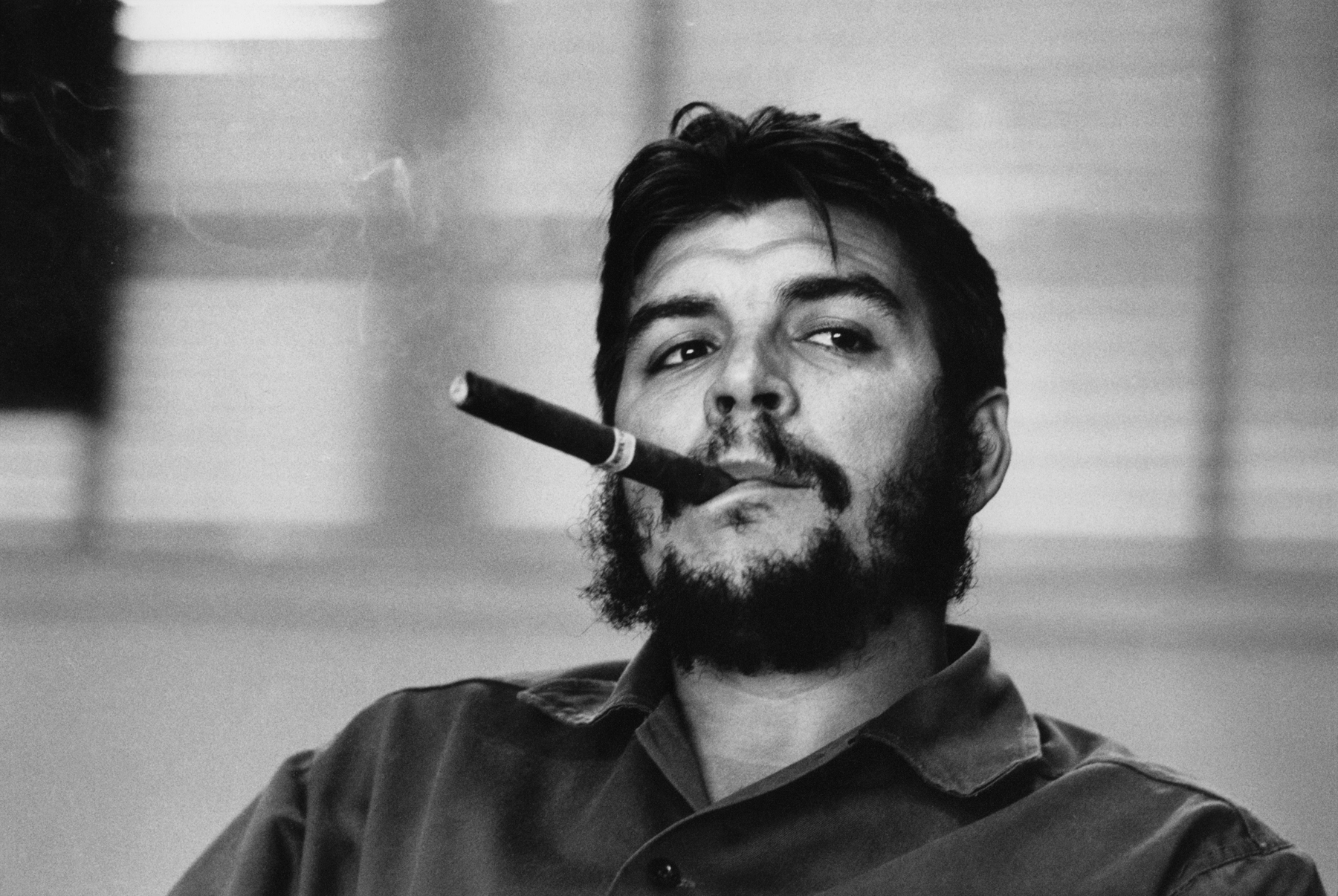
In 1963, Burri travelled to Havana and secured an interview with Ernesto “Che” Guevara at his office in the Ministry of Industries. The resulting portrait — Guevara leaning back, cigar clenched between his teeth, his gaze simultaneously defiant and contemplative — became one of the most reproduced photographs of the twentieth century. Unlike Alberto Korda's famous image, which captured Guevara as a romantic icon, Burri's portrait conveys the complexity of the man: the intellectual, the bureaucrat, the revolutionary, all present in a single frame. The image exemplifies Burri's gift for portraiture, his ability to capture not merely a likeness but a psychological state.
Throughout the 1950s and 1960s, Burri also built an extraordinary portfolio of portraits of artists and architects, including Picasso, Giacometti, Le Corbusier, and Luis Barragán. These images succeeded because Burri understood that a portrait of a creative figure must somehow convey the nature of their work. His photographs of Le Corbusier at Chandigarh place the architect within the geometry of his own creation; his images of Giacometti in his studio capture the sculptor surrounded by the thin, spectral figures that defined his vision.
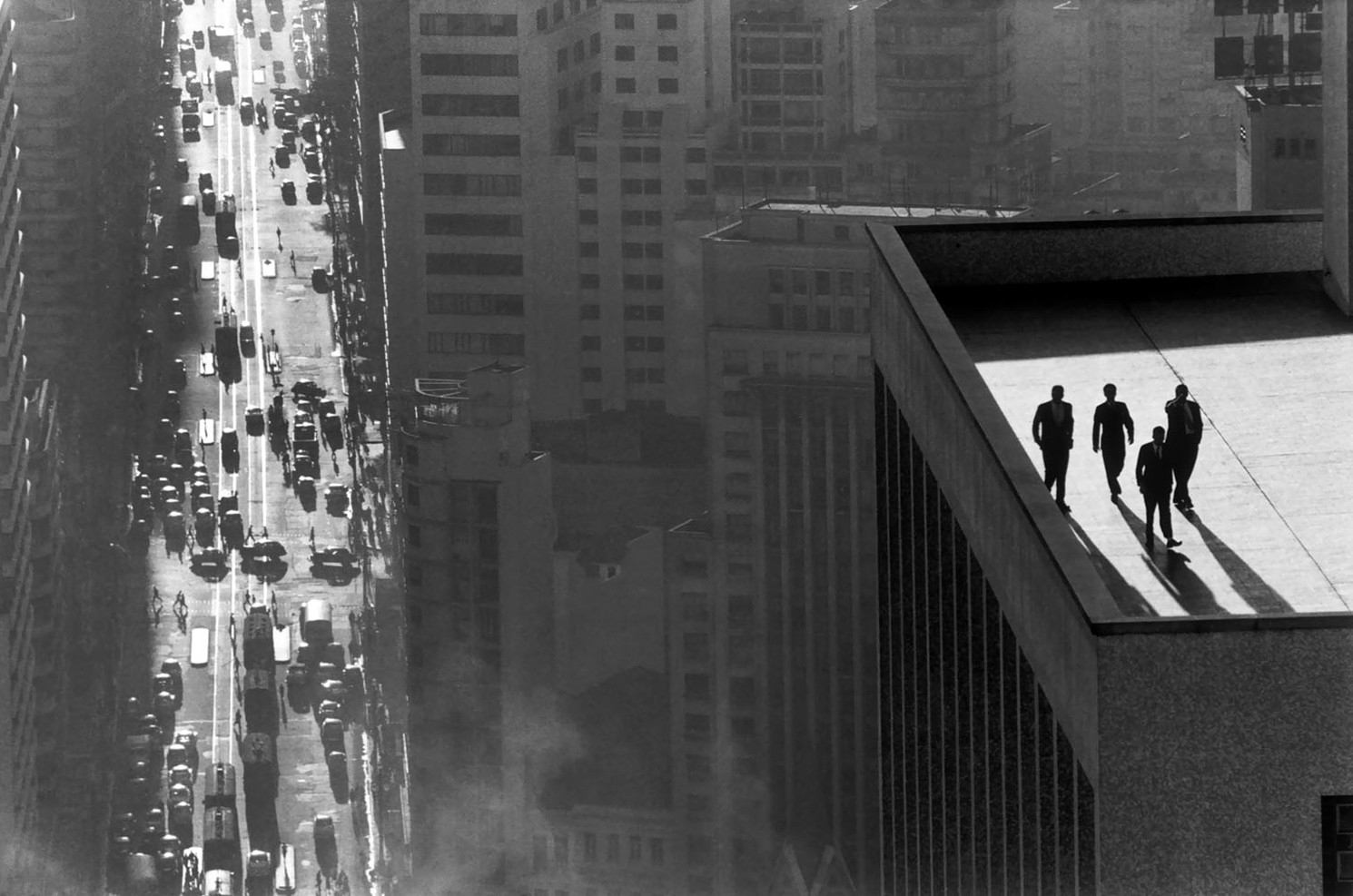
Burri was equally at home covering conflict and political upheaval. He reported from the Suez Crisis, the construction of the Berlin Wall, the wars in Vietnam and Lebanon, and the Iranian Revolution. His war photography, while less celebrated than that of some of his Magnum colleagues, possessed the same graphic strength that characterised all his work. Even in moments of chaos and violence, Burri found formal coherence, producing images that functioned simultaneously as documents and as compositions of considerable visual power.
In his later years, Burri increasingly experimented with colour photography and collage, producing vibrant, layered works that combined photographic fragments with paint and found materials. He also devoted considerable energy to filmmaking, producing documentaries on artists and architects that extended his photographic interests into the moving image. He died in Zurich in 2014, leaving behind an archive of extraordinary breadth and quality. His work remains a testament to the power of graphic intelligence and restless curiosity, a body of images that demonstrates how a photographer's eye can impose order and meaning on the tumult of the world.