Paul Graham was born in 1956 in Stafford, a quiet market town in the English Midlands, and grew up in an era when British photography was largely divided between the black-and-white social documentary tradition and the colour work of commercial advertising. Graham would spend his career dismantling that division, demonstrating through book after book that colour photography could be as intellectually rigorous and emotionally profound as anything produced in monochrome, and that the most radical subject in photography was not the exotic or the extraordinary but the texture of everyday existence itself. He was largely self-taught, picking up a camera in his late teens and learning through practice rather than formal instruction, absorbing the lessons of Walker Evans, William Eggleston, and Stephen Shore while developing a vision that was unmistakably his own.
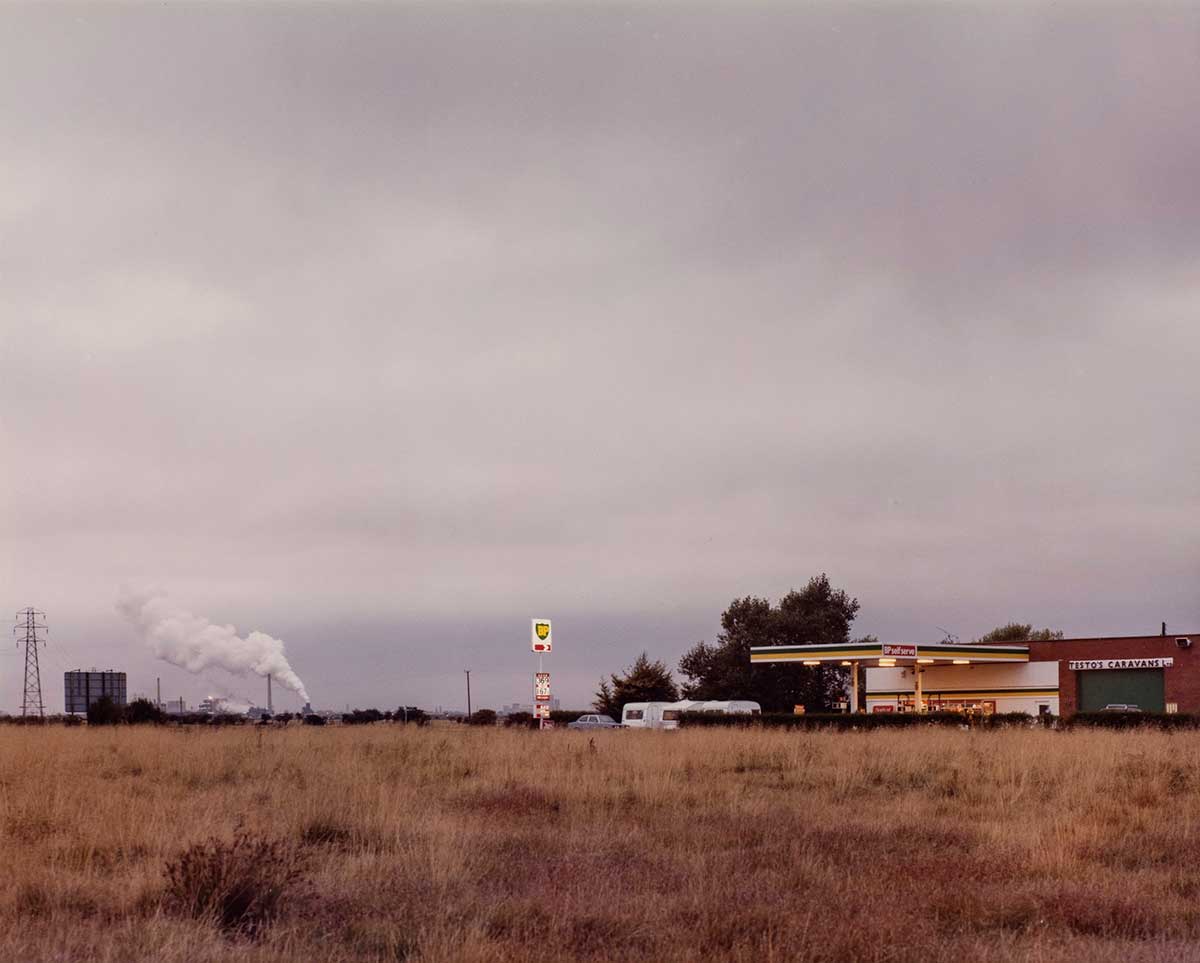
His first major body of work, A1 — The Great North Road, published in 1983, established his reputation overnight. Graham drove the length of the A1 motorway, from London to Edinburgh, photographing the roadside landscape and the people he encountered along the way — lorry drivers in transport cafes, hitchhikers, petrol stations, and the faded grandeur of roadside England. The book was shot entirely in colour at a time when serious British documentary photography was still overwhelmingly monochrome, and its critical success helped legitimise colour as a medium for art photography in Britain, much as Eggleston's work had done in America a few years earlier.
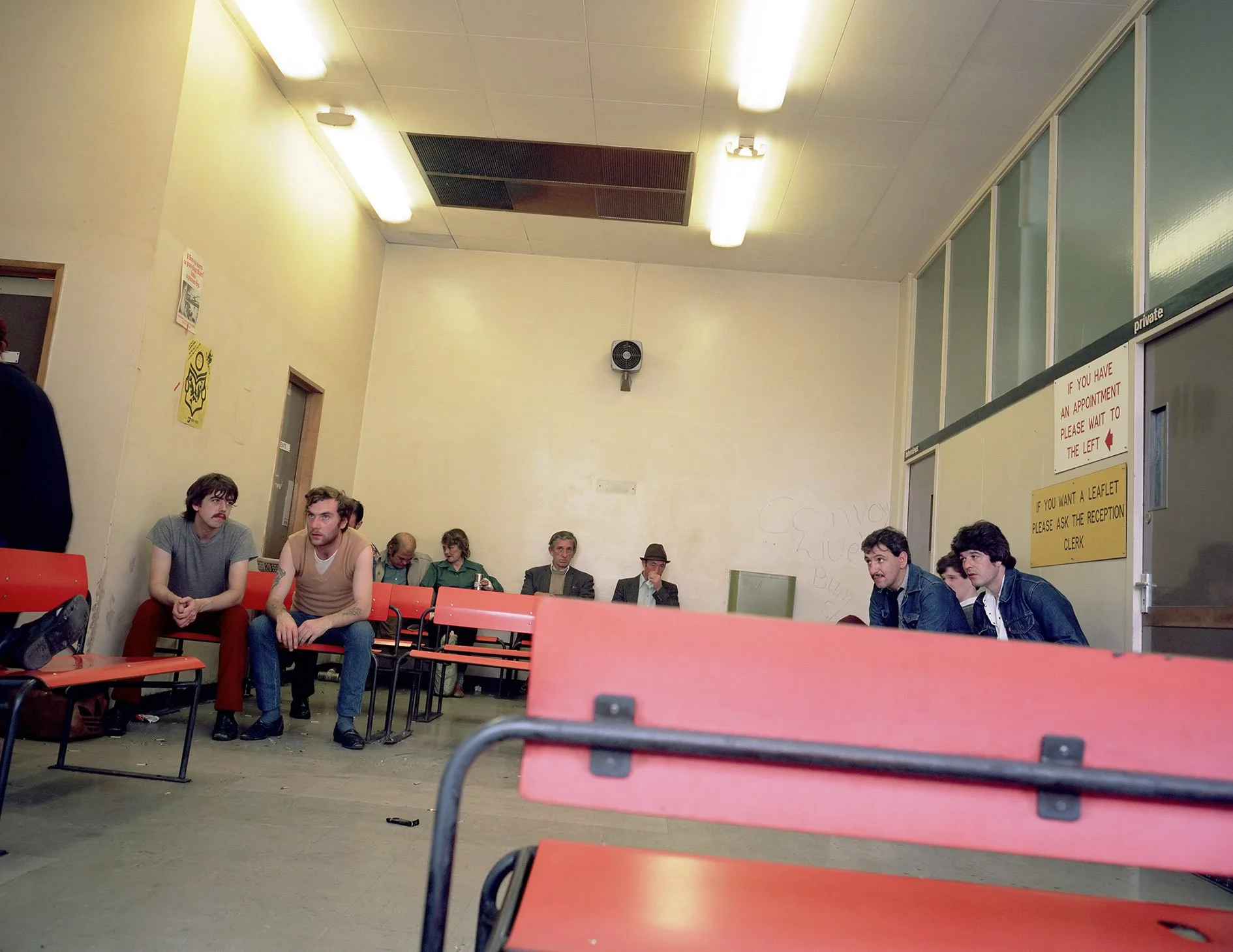
Graham followed this with Beyond Caring in 1986, a devastating portrait of Thatcher-era Britain photographed in the waiting rooms of Department of Health and Social Security offices across the country. The images showed people sitting in institutional spaces of numbing banality — plastic chairs, strip lighting, scuffed linoleum floors — waiting for their benefits to be processed. Graham used a concealed camera, and the resulting photographs have the quality of surveillance footage: flat, uninflected, almost brutally matter-of-fact. The work was exhibited at the Institute of Contemporary Arts in London and at the Museum of Modern Art in New York, establishing Graham as one of the most important documentary photographers of his generation.
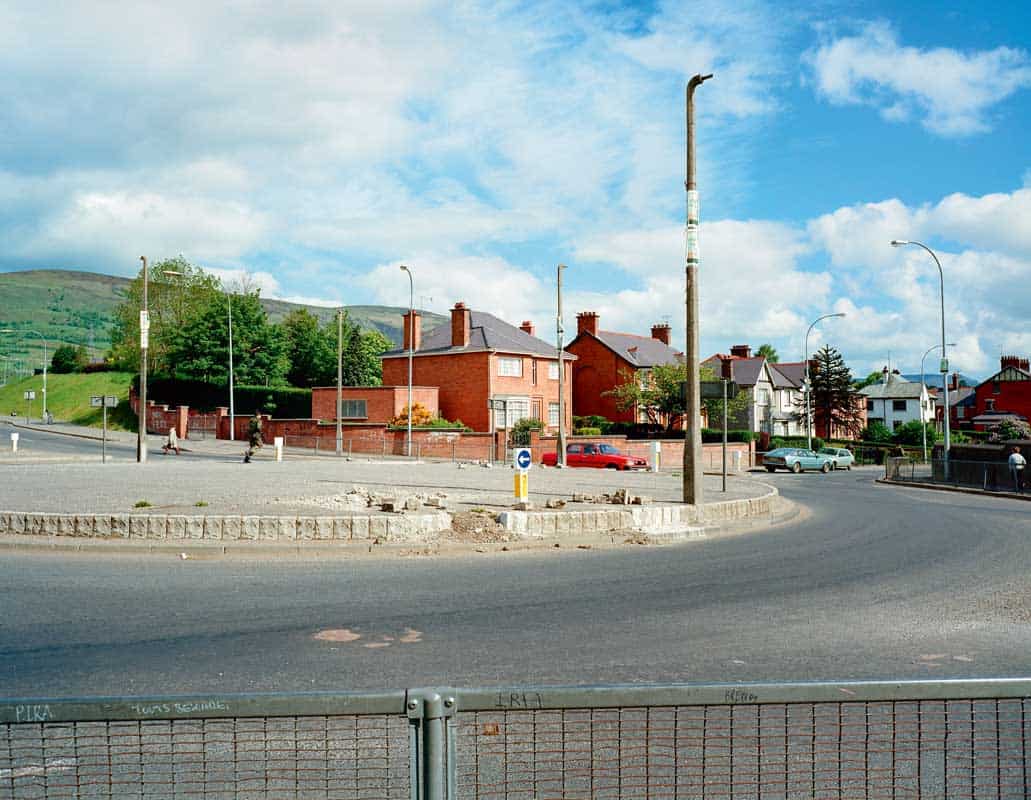
In 1984, Graham also began working in Northern Ireland, producing Troubled Land, a series that approached the conflict not through images of violence or political confrontation but through the landscape itself. He photographed fields, housing estates, roads, and hedgerows in which the political tensions of the Troubles were encoded in subtle visual details: a Union Jack fluttering from a distant lamppost, a kerb painted in the colours of the tricolour, a British Army watchtower on a distant hillside. The work was a masterclass in photographic implication, demonstrating that the most politically charged photograph need not depict a single act of aggression.
Through the 1990s, Graham expanded his geographical range, working in Japan for Empty Heaven and across Europe for End of an Age, but it was his move to the United States that catalysed the most radical phase of his career. Settling in New York, he began producing work that pushed further and further from conventional documentary, embracing strategies of repetition, sequencing, and extreme subtlety that aligned his photography more closely with contemporary art than with photojournalism.
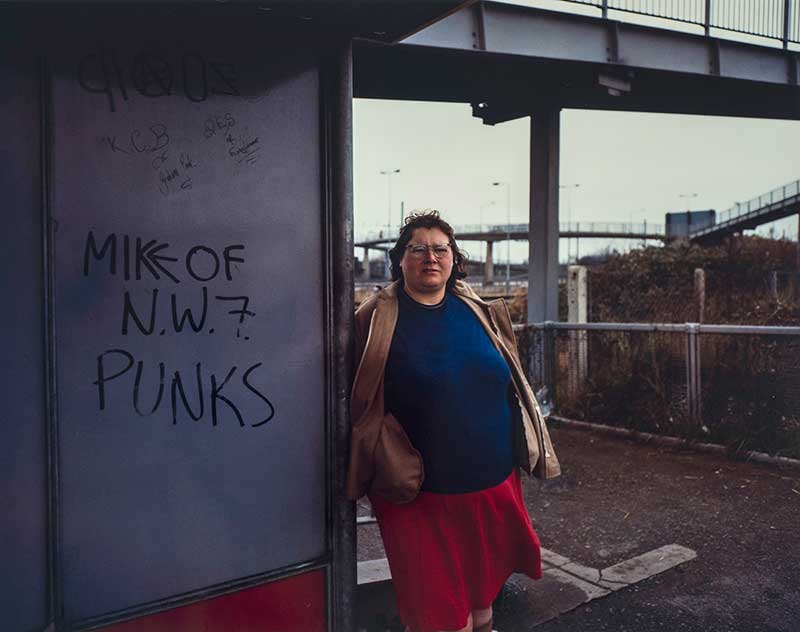
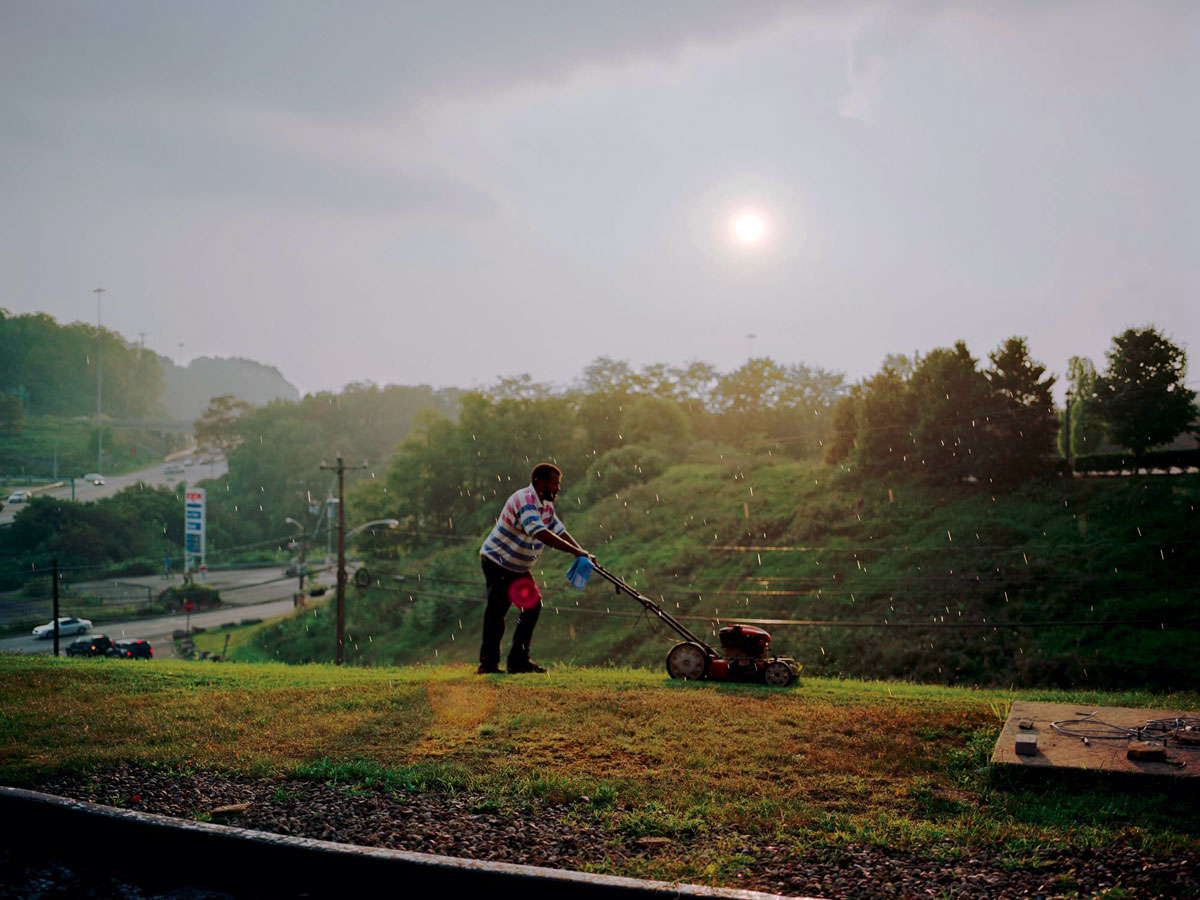
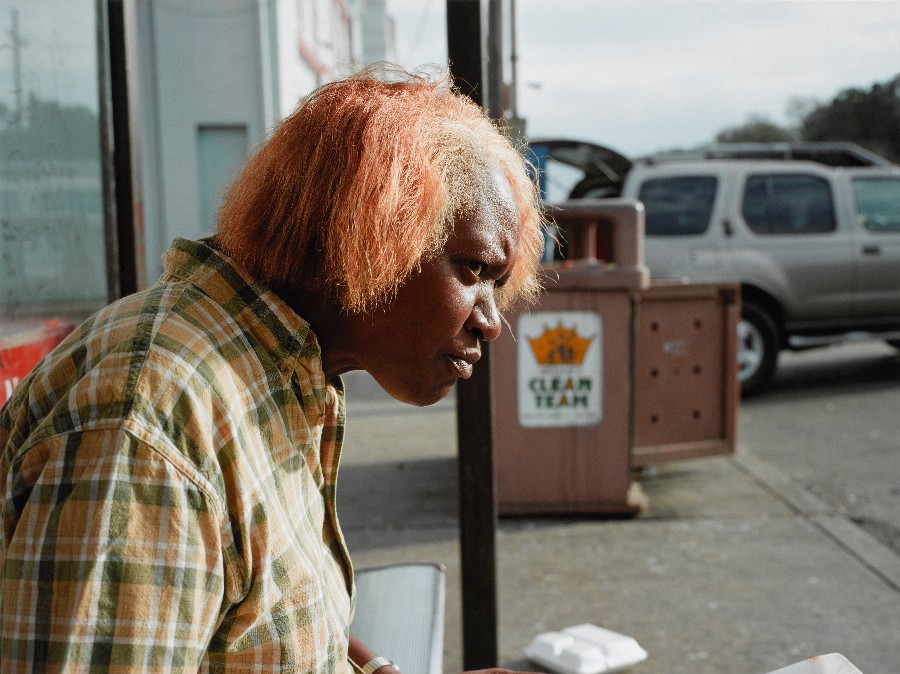
The culmination of this American period was a shimmer of possibility, published in 2007 as a set of twelve slim volumes, each depicting a brief, seemingly inconsequential moment in an ordinary American day. A man watering his lawn. A woman waiting at a bus stop. A teenager walking along a road at dusk. The sequences unfold slowly, image by image, with a rhythm borrowed from Chekhov's short stories — Graham has acknowledged the debt explicitly. Nothing dramatic happens; the drama is in the looking itself, in the insistence that these fleeting moments of human existence deserve the same quality of attention that a painter might lavish on a landscape or a portrait. The work won the Deutsche Börse Photography Foundation Prize in 2009 and is now widely regarded as one of the landmark photobooks of the twenty-first century.
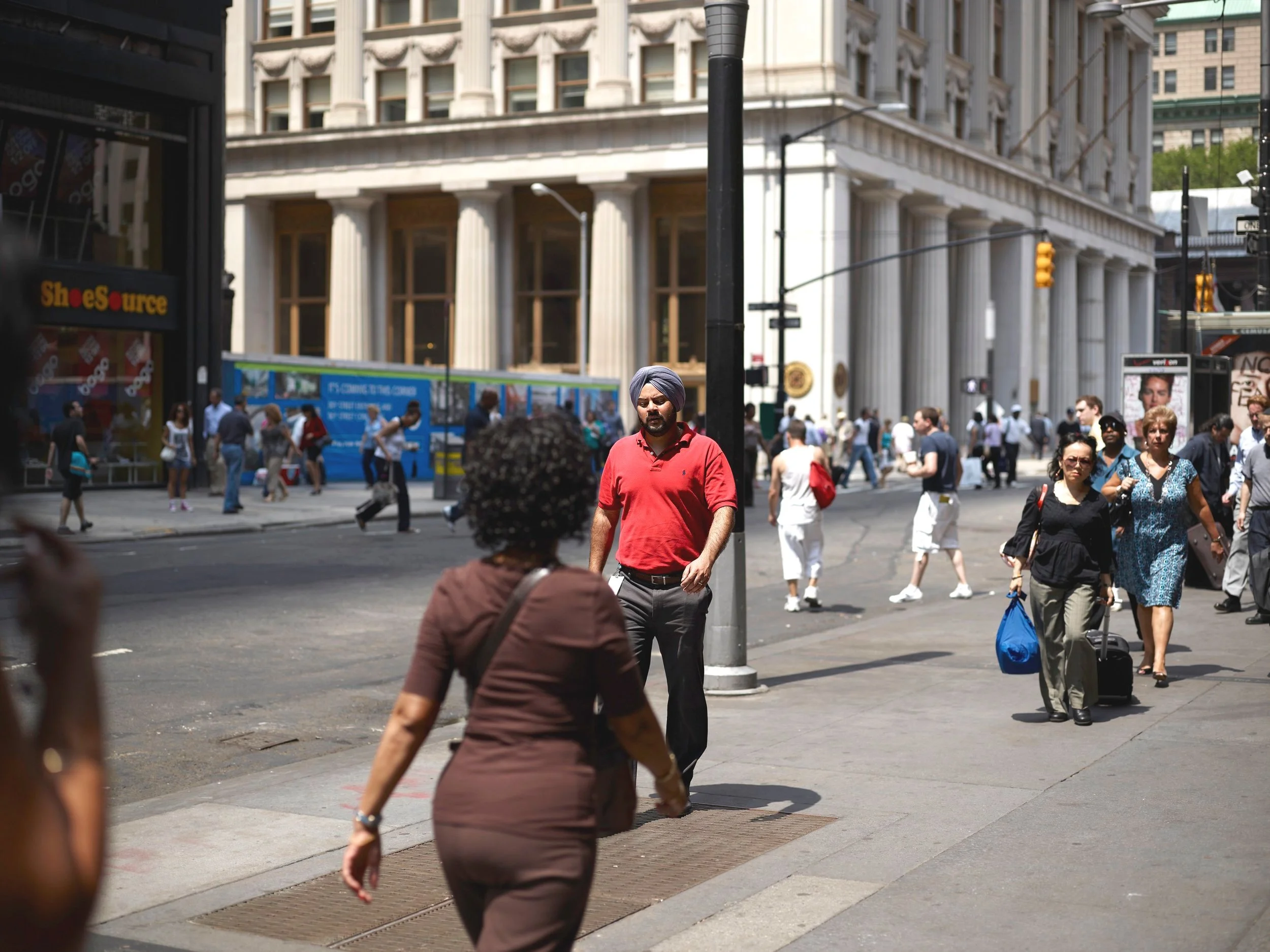
Graham followed this with The Present (2012) and Does Yellow Run Forever? (2014), both of which extended his investigation into the phenomenology of everyday perception. The Present used pairs of images taken moments apart on the streets of New York, highlighting the tiny shifts in attention and incident that separate one instant from the next. Does Yellow Run Forever? explored the persistence of colour itself, isolating moments where a particular hue — the yellow of a taxi, a raincoat, a flower — burns through the mundane surface of the everyday.
Paul Graham's influence on contemporary photography is difficult to overstate. He was among the first to insist that colour photography was not a lesser medium but a different one, with its own possibilities and its own poetry. His refusal to chase spectacle, his faith in the significance of the ordinary, and his increasingly radical experiments with the photobook form have inspired a generation of photographers on both sides of the Atlantic. His work is held in the collections of the Museum of Modern Art, the Tate, the Guggenheim, and dozens of other institutions worldwide.