Nobuyoshi Araki was born in 1940 in the Minowa district of Tokyo, near the Yoshiwara pleasure quarter, and the geography of his birth would prove prophetic. He grew up in a neighbourhood saturated with the history of desire, entertainment, and the floating world, and from his earliest years he absorbed the visual culture of a city that would become the inexhaustible subject of his life's work. He studied photography and film at Chiba University, graduating in 1963 with a thesis on the photography of children, and took a position as a commercial photographer at the advertising agency Dentsu, where he would work for the next decade while developing the personal vision that would make him Japan's most famous — and most controversial — photographer.
Araki's breakthrough came in 1971 with Sentimental Journey, a privately published photobook documenting his honeymoon with his wife Yoko. The book was unprecedented in its intimacy: it included photographs of Yoko sleeping, bathing, making love, and simply existing in the ordinary moments of their first days as a married couple. The images were tender, raw, and unflinchingly personal, and they established the autobiographical mode that would define Araki's practice. For Araki, the boundary between art and life was not merely blurred — it was non-existent. Photography was not an act of representation but of living itself, and the camera was not a tool of observation but an organ of experience.
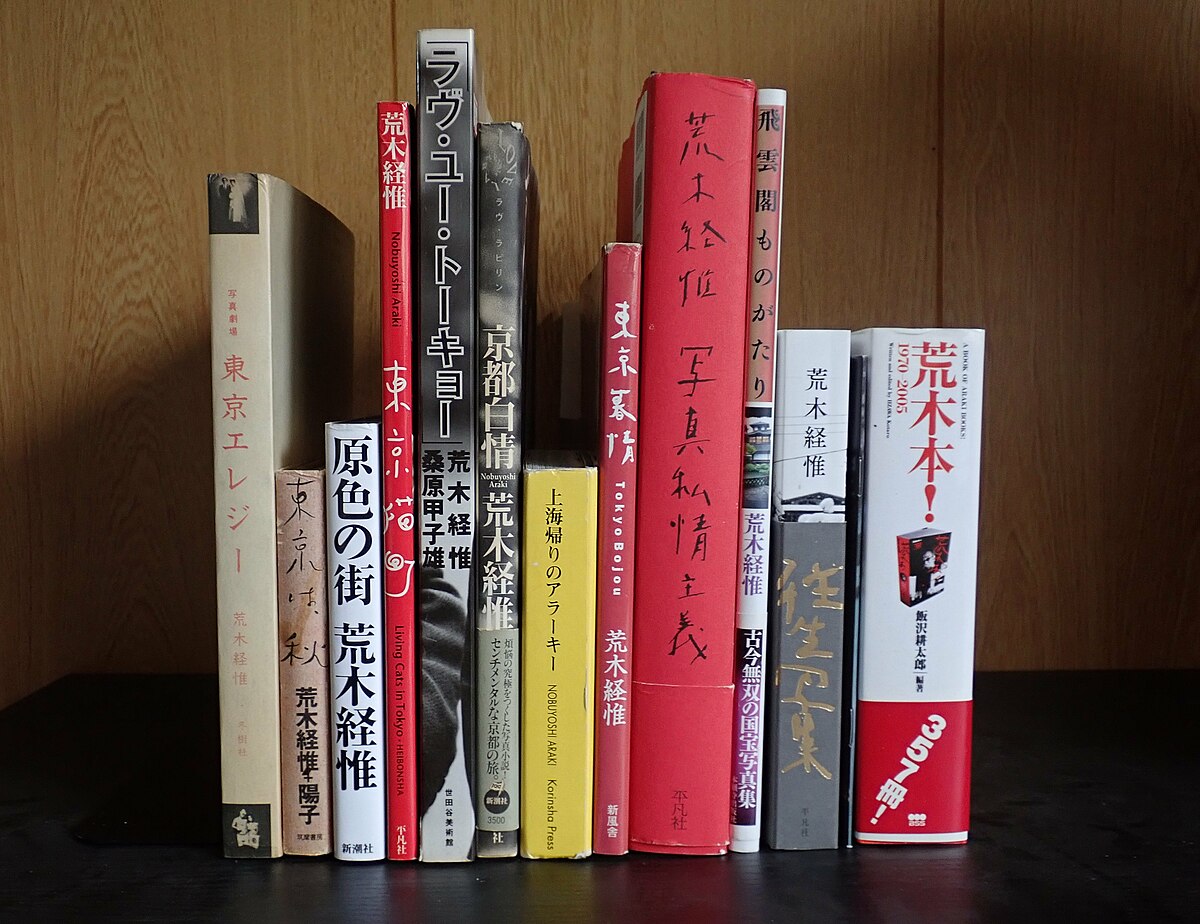
Throughout the 1970s and 1980s, Araki produced work at a pace that beggared belief. He photographed Tokyo obsessively — its streets, its bars, its rooftops, its sky, its citizens, its flowers, its food, its cats, its lovers, its nightlife — accumulating images with the compulsive energy of a diarist who cannot stop writing. His output during these decades ran to dozens of photobooks, and the sheer volume of his production became itself a defining characteristic of his art. Araki has published well over five hundred books — some estimates place the number closer to six hundred — making him arguably the most prolific photographer in the history of the medium.
His images of women, often posed in the traditional Japanese rope bondage known as kinbaku, generated intense controversy from the beginning. Araki's defenders argued that his images of bound figures were continuous with a long tradition of Japanese erotic art and that they represented a collaborative encounter between photographer and subject characterised by mutual trust and aesthetic purpose. His critics charged that the images objectified and exploited women, and that the photographer's persona — the sunglasses, the moustache, the relentless self-mythologising — served to legitimise a practice of domination disguised as art. This debate has never been resolved and probably never will be; it is part of the essential complexity of Araki's legacy.
The death of Yoko in 1990 from ovarian cancer transformed both Araki's life and his work. He documented her illness and death in Winter Journey, a sequel to Sentimental Journey that stands as one of the most devastating artist's books ever published. The combined work, later reissued as Sentimental Journey / Winter Journey, traces the arc of a marriage from its first passionate days through its final hours with an honesty that is almost unbearable. The flowers that appear throughout Araki's oeuvre — always lush, always overripe, always on the verge of decay — acquired after Yoko's death a new and darker resonance, becoming memento mori that speak to the inseparability of beauty and death.
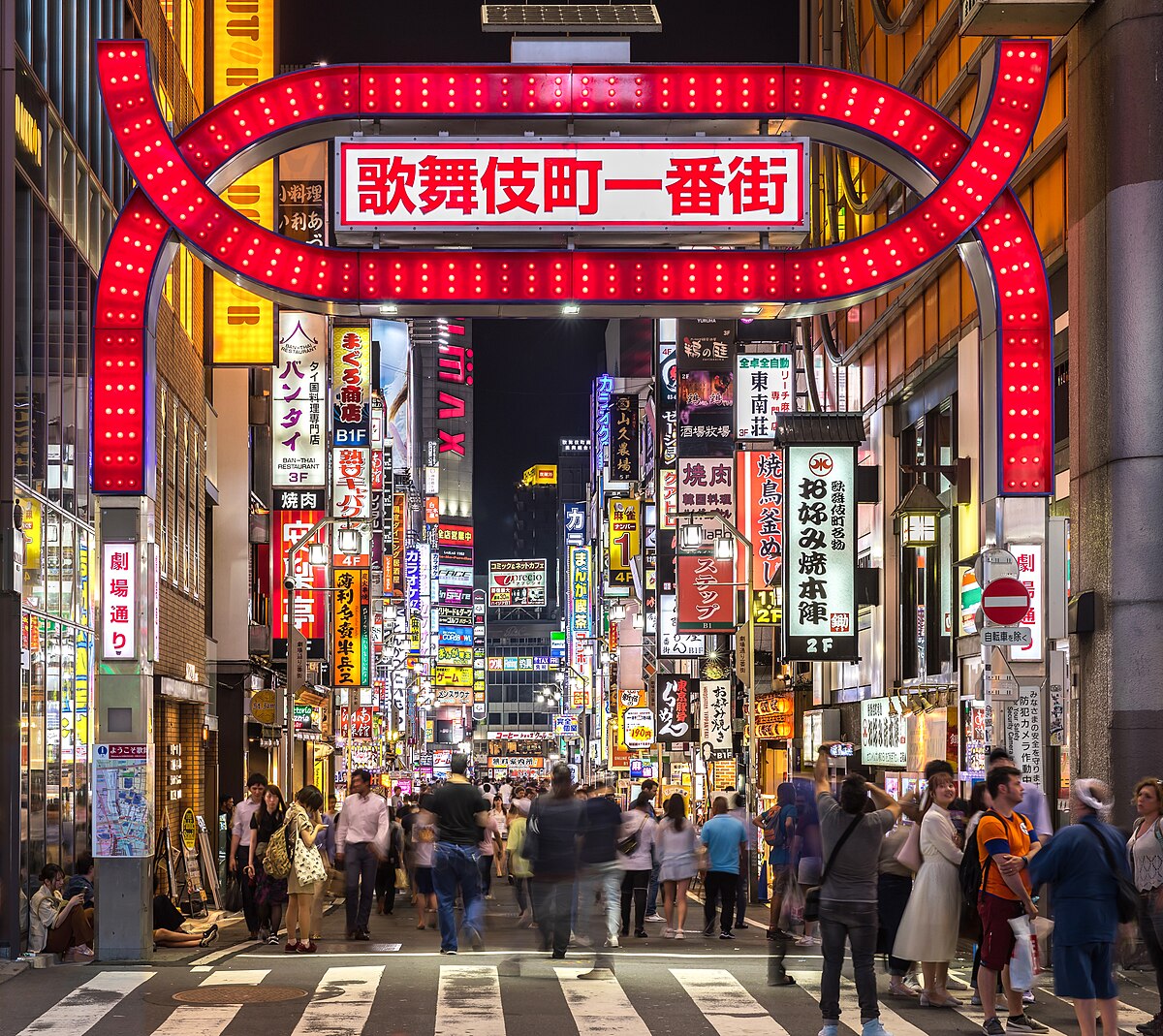
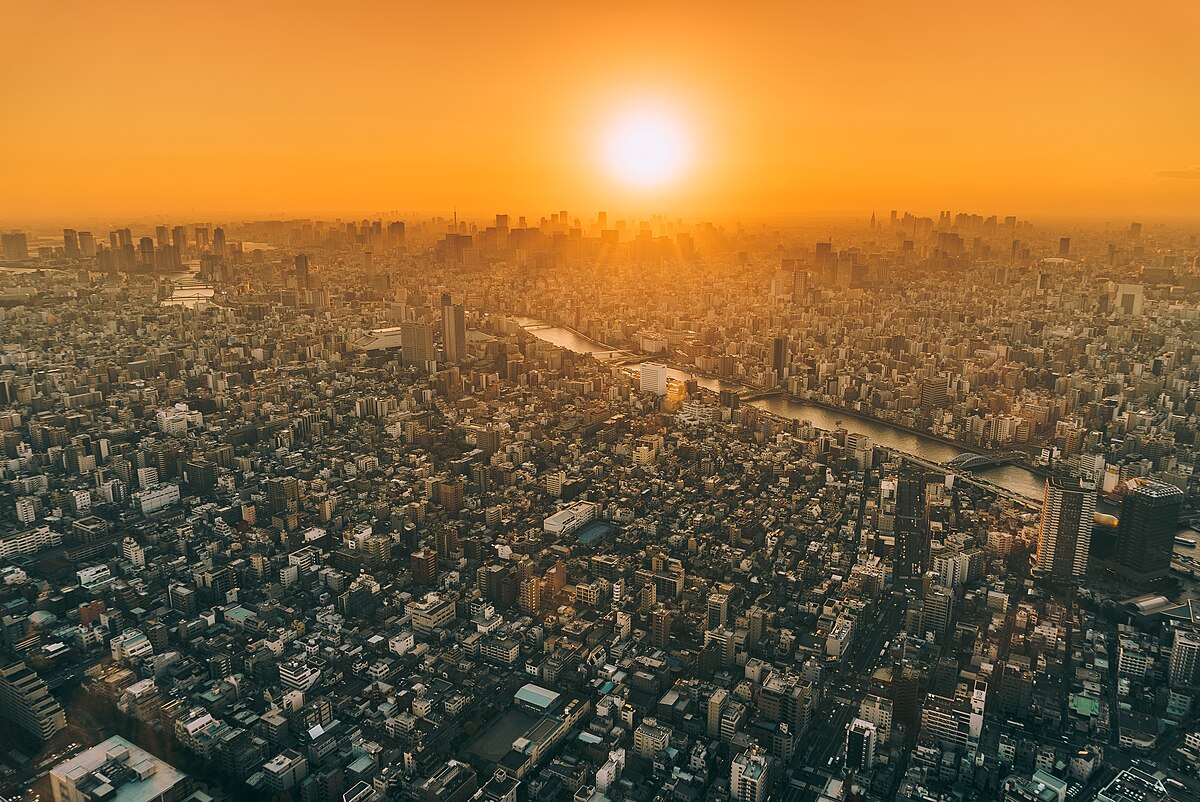
Araki's photographs of Tokyo constitute an encyclopaedic portrait of the city that is without parallel in photography. From the neon-lit entertainment districts to the quiet residential streets, from the crowded trains to the empty balconies, from the construction sites to the flower shops, Araki has documented every aspect of his city's life with a comprehensiveness that approaches the condition of a visual archive. His Tokyo is a city of appetite and melancholy, of ceaseless energy and profound loneliness, and his photographs capture both its surface spectacle and its emotional undertow.
In more recent years, Araki has continued to produce work at an extraordinary rate, even as declining health — he lost the sight in his right eye in 2013 — has altered the character of his imagery. His later photographs of flowers, often painted over with vivid colours in a practice he calls Painting Photographs, combine photographic precision with painterly gesture in a way that is entirely new in his oeuvre. His sky photographs, taken from his Tokyo balcony, reduce the world to colour and light, and there is in these late images a quality of contemplation that was always present in Araki's work but is now foregrounded.
Araki's influence on contemporary photography and visual culture is immense and complex. He demonstrated that the photobook could be a primary artistic medium, not merely a vehicle for reproducing gallery work. He showed that autobiography and art could be fused so completely that the distinction lost all meaning. And he confronted the viewer with the full range of human desire and grief with a directness that, whatever one's ethical judgements, cannot be dismissed as anything other than the expression of a singular and uncompromising artistic vision.