Gaspard-Félix Tournachon was born in Paris in 1820 and would become known to the world simply as Nadar — a name he adopted in his youth and that would come to stand for an entire era of French cultural life. Before he ever picked up a camera, Nadar had already established himself as a journalist, caricaturist, and man-about-town, moving with conspicuous ease through the literary and artistic circles of mid-nineteenth-century Paris. His Panthéon Nadar, an enormous lithographic caricature featuring over three hundred contemporary celebrities, demonstrated both his draftsmanship and his extraordinary breadth of personal acquaintance with the luminaries of his age.
Nadar turned to photography in the early 1850s, initially as an adjunct to his caricature work — he needed portrait references for his drawings. But the camera quickly became his primary instrument, and within a few years he had established one of the most celebrated portrait studios in Paris. What distinguished Nadar's portraiture from that of his contemporaries was his understanding that the photograph could reveal character. While most studio photographers of the period relied on elaborate backdrops, props, and costumes to construct an image, Nadar stripped his compositions to essentials: the sitter, a plain background, and the play of natural light. The result was a body of portraits of extraordinary psychological penetration.
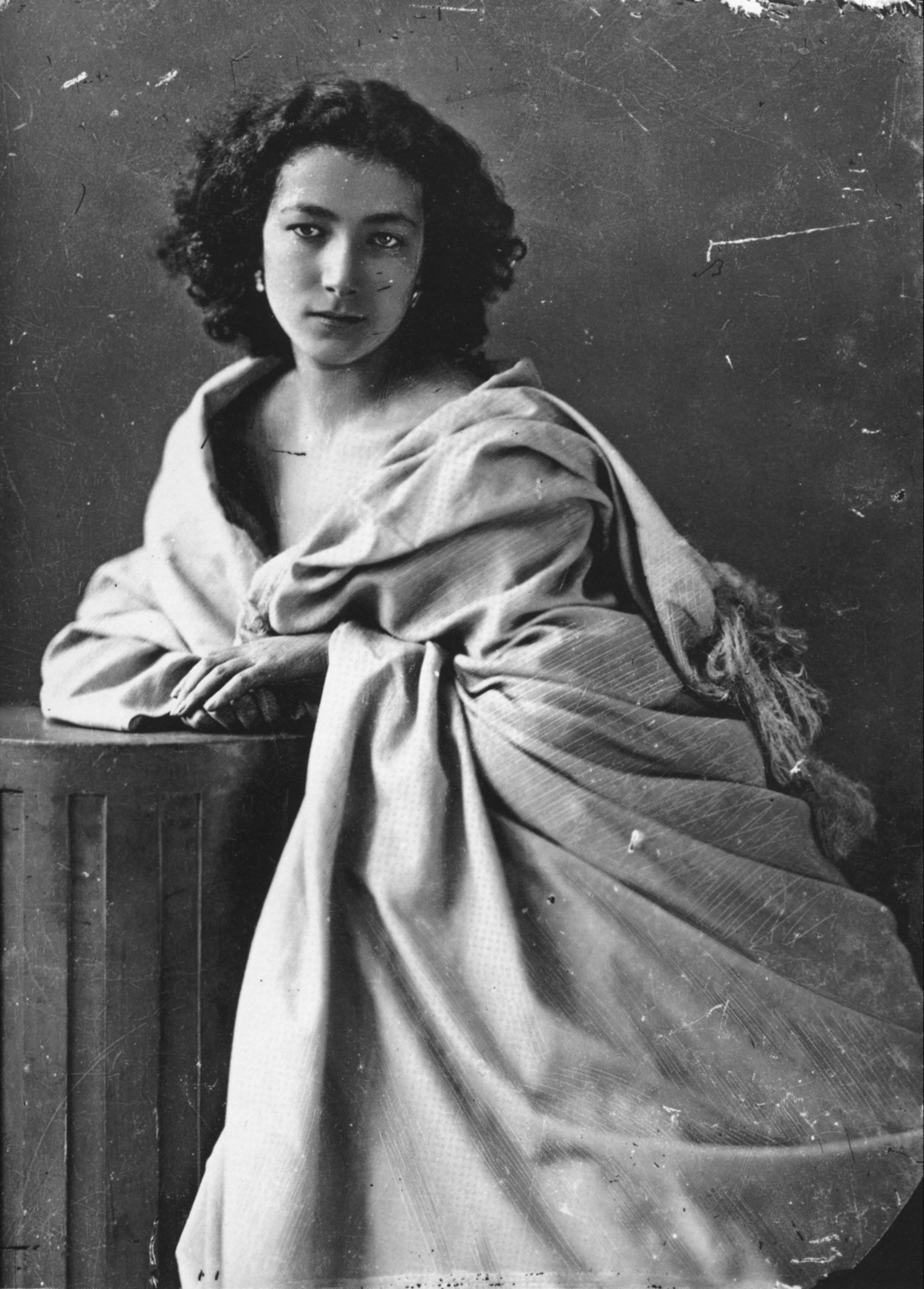
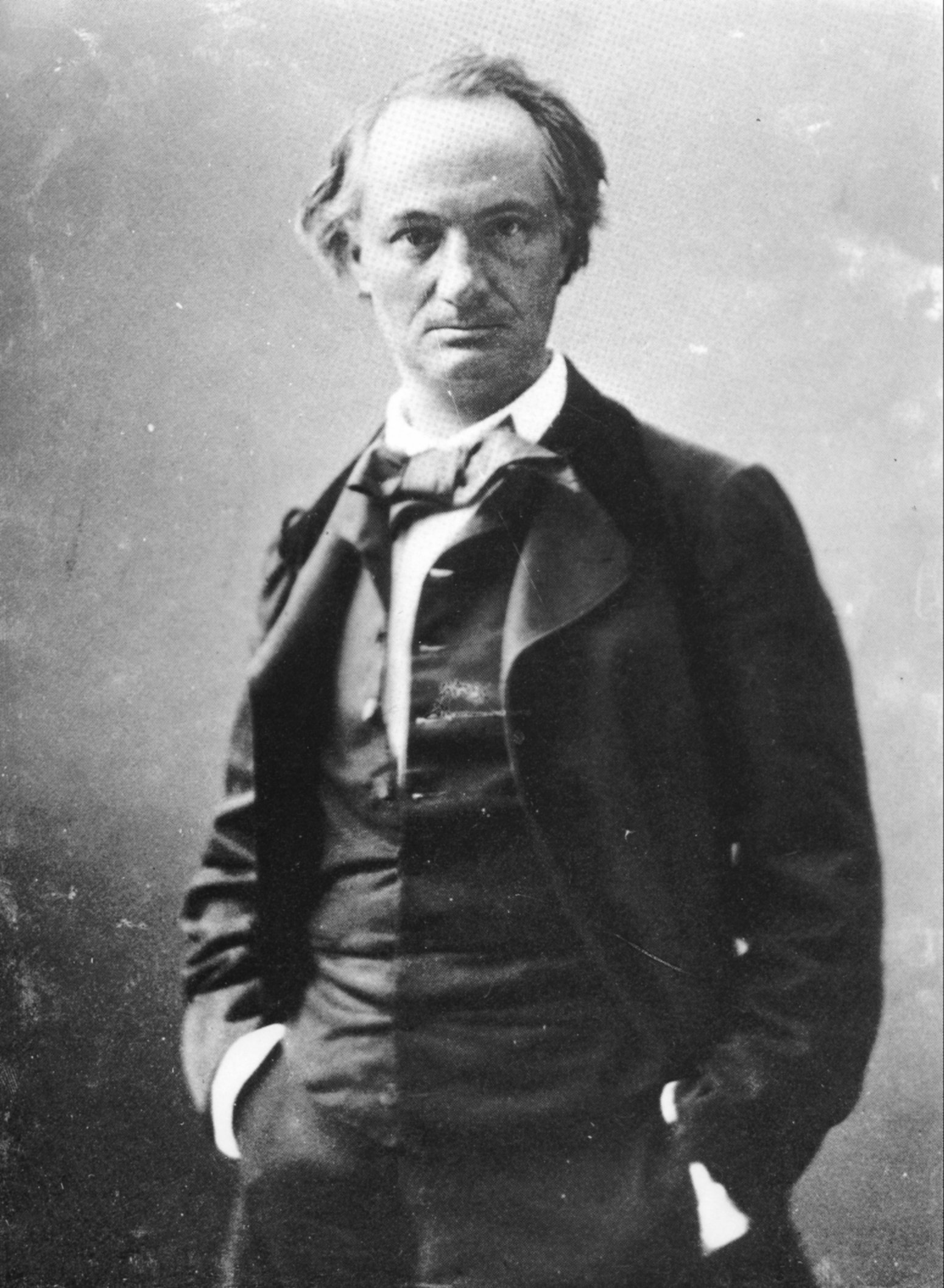
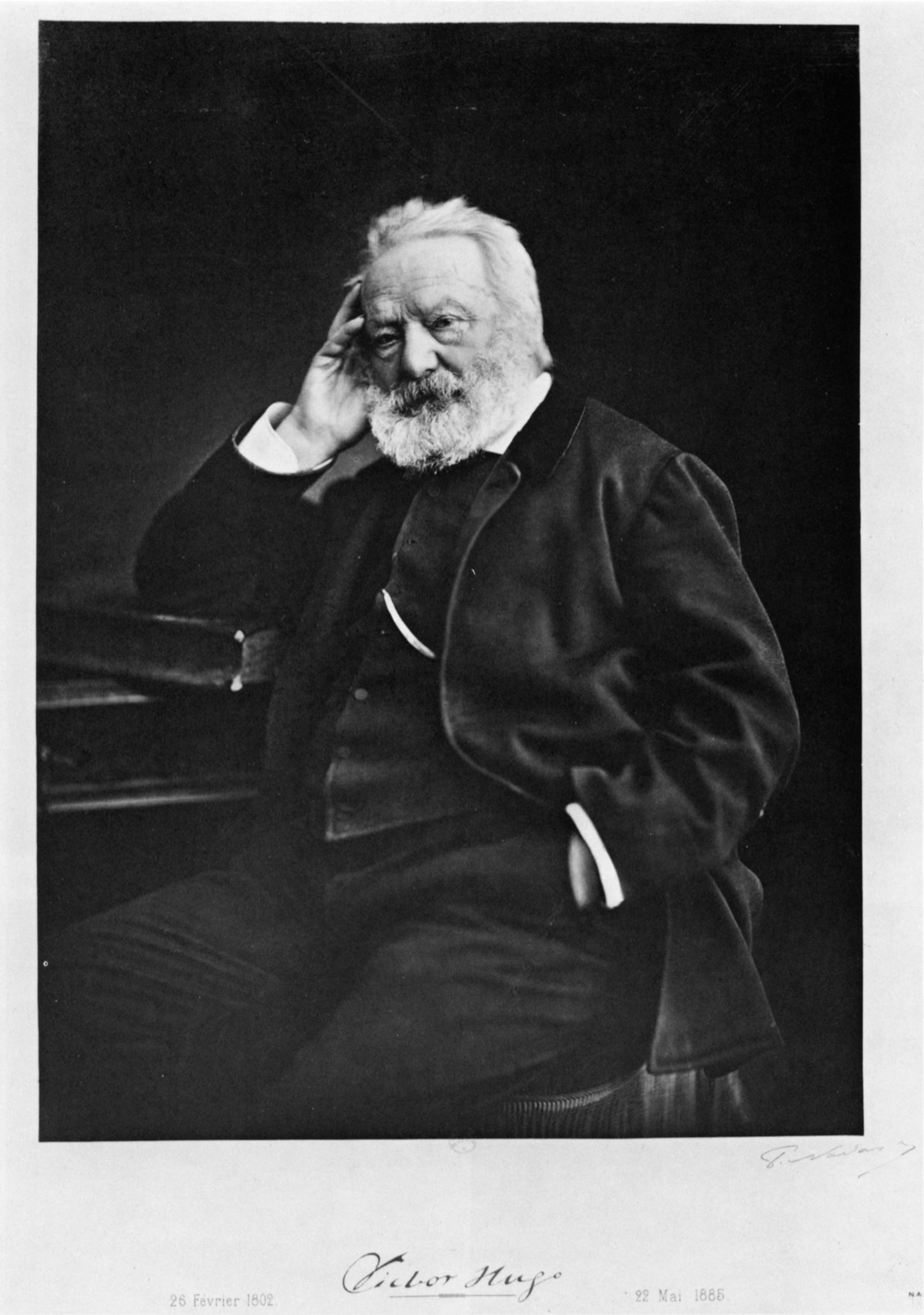
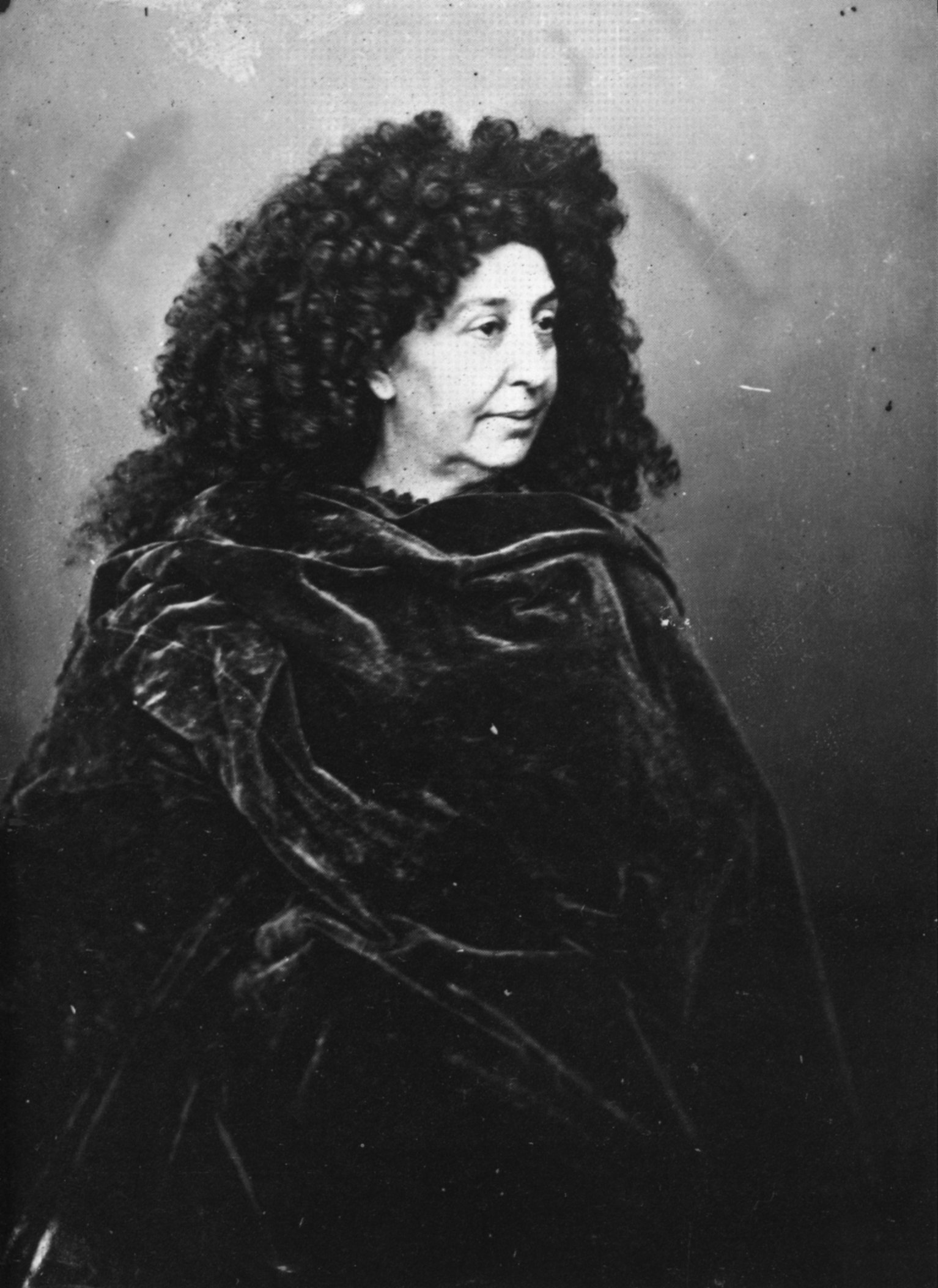
His studio at 35 Boulevard des Capucines became a gathering place for the intellectual and artistic elite of Paris. Charles Baudelaire, Victor Hugo, George Sand, Eugène Delacroix, Sarah Bernhardt, Gustave Doré, Gioacchino Rossini, and Jules Verne all sat before his camera. Nadar's gift was his ability to put his subjects at ease, to engage them in conversation and wait for the moment when the social mask slipped and something of the inner person became visible. His portraits of Baudelaire, with their brooding intensity, and of Sarah Bernhardt, draped in white fabric with an almost sculptural grace, remain among the most iconic photographic portraits ever made.
Nadar's restless ambition extended far beyond the portrait studio. In 1858, he became the first person to take an aerial photograph, ascending above Paris in a balloon and exposing a plate of the village of Petit-Bicêtre. The technical difficulties were immense — the gas from the balloon contaminated his wet-plate chemicals, and the wind made focusing nearly impossible — but Nadar persevered, and his aerial views of Paris inaugurated an entirely new way of seeing the world. His passion for ballooning became legendary; he built Le Géant, one of the largest balloons ever constructed, and his aerial adventures inspired his friend Jules Verne to write several novels.
In 1861, Nadar achieved another technical breakthrough when he became one of the first photographers to make images using artificial light. Descending into the catacombs and sewers of Paris with battery-powered arc lamps, he produced a series of subterranean photographs that were both technically remarkable and eerily beautiful. The long exposures required — sometimes lasting eighteen minutes — meant that human figures had to be represented by mannequins, lending the images a spectral quality that anticipated the Surrealists by half a century.
The studio on the Boulevard des Capucines played a pivotal role in art history when, in April 1874, Nadar lent his premises to a group of artists who had been rejected by the official Salon. The exhibition included works by Claude Monet, Pierre-Auguste Renoir, Edgar Degas, and Camille Pissarro, among others. A hostile critic, seizing on the title of Monet's painting Impression, Sunrise, dubbed the group the Impressionists — and the name stuck. That the first Impressionist exhibition took place in a photographer's studio was an irony not lost on anyone: the new painters were accused of merely reproducing reality, like a camera, while the photographer in whose rooms they showed had demonstrated that his medium could achieve artistic depth equal to any canvas.
In his later years, Nadar's studio was taken over by his son Paul, and Nadar himself turned increasingly to writing, producing memoirs that offered vivid accounts of Parisian cultural life and the personalities he had known. He continued photographing into old age, and in 1886 he created a remarkable series with the scientist Michel Eugène Chevreul, who was then approaching his hundredth birthday. The resulting interview, accompanied by photographs, is considered one of the earliest examples of photojournalism.
Nadar died in Paris in 1910, at the age of eighty-nine. His legacy is vast: he established the portrait photograph as a medium of psychological insight rather than mere likeness; he pioneered aerial and underground photography; and he fostered the relationship between photography and the other arts that would shape the medium's development for generations. Above all, he demonstrated that the photographer is not a passive recorder of appearances but an active interpreter of character, and that the camera, in the hands of an artist of sufficient intelligence and sympathy, can reveal what the naked eye alone cannot see.