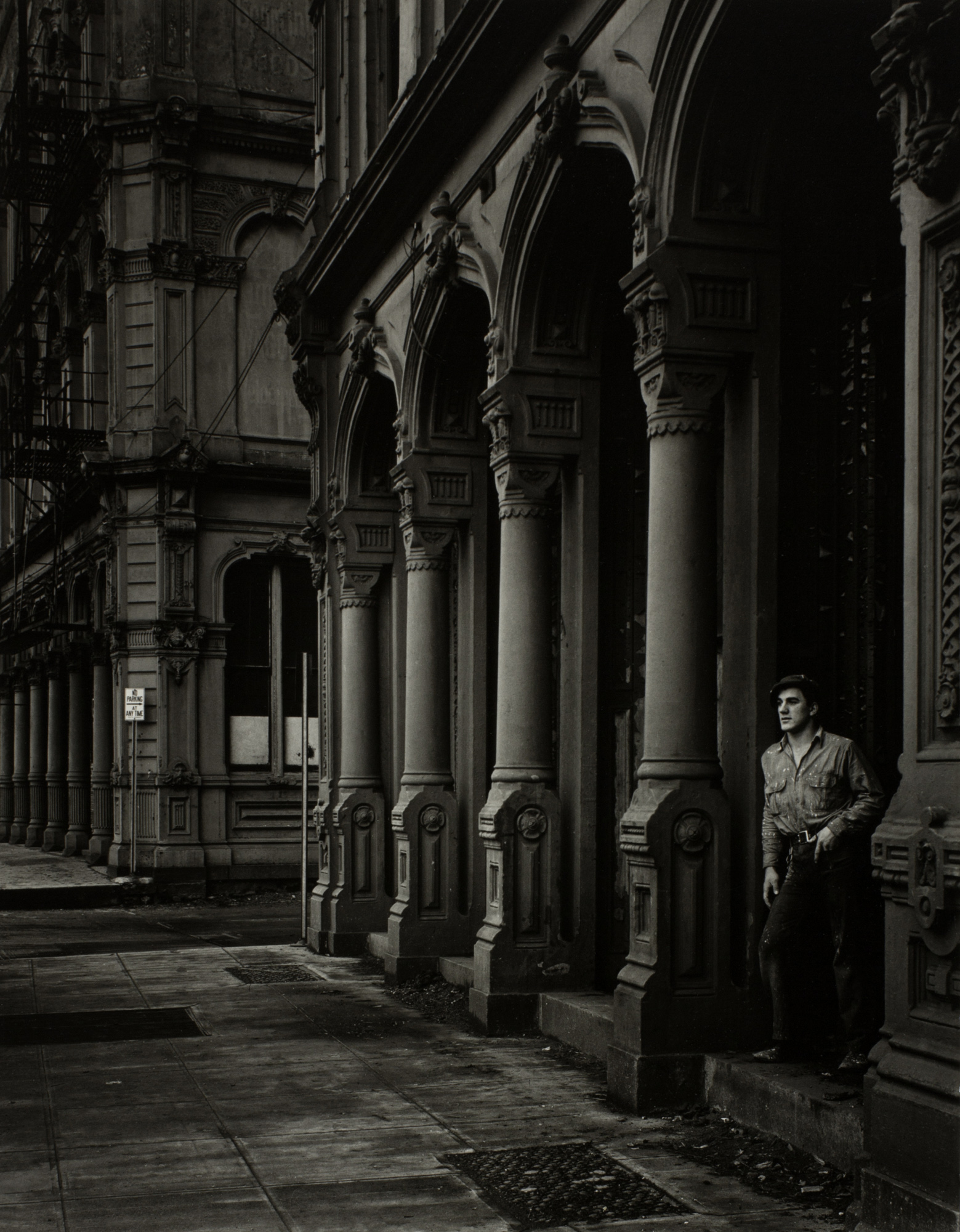
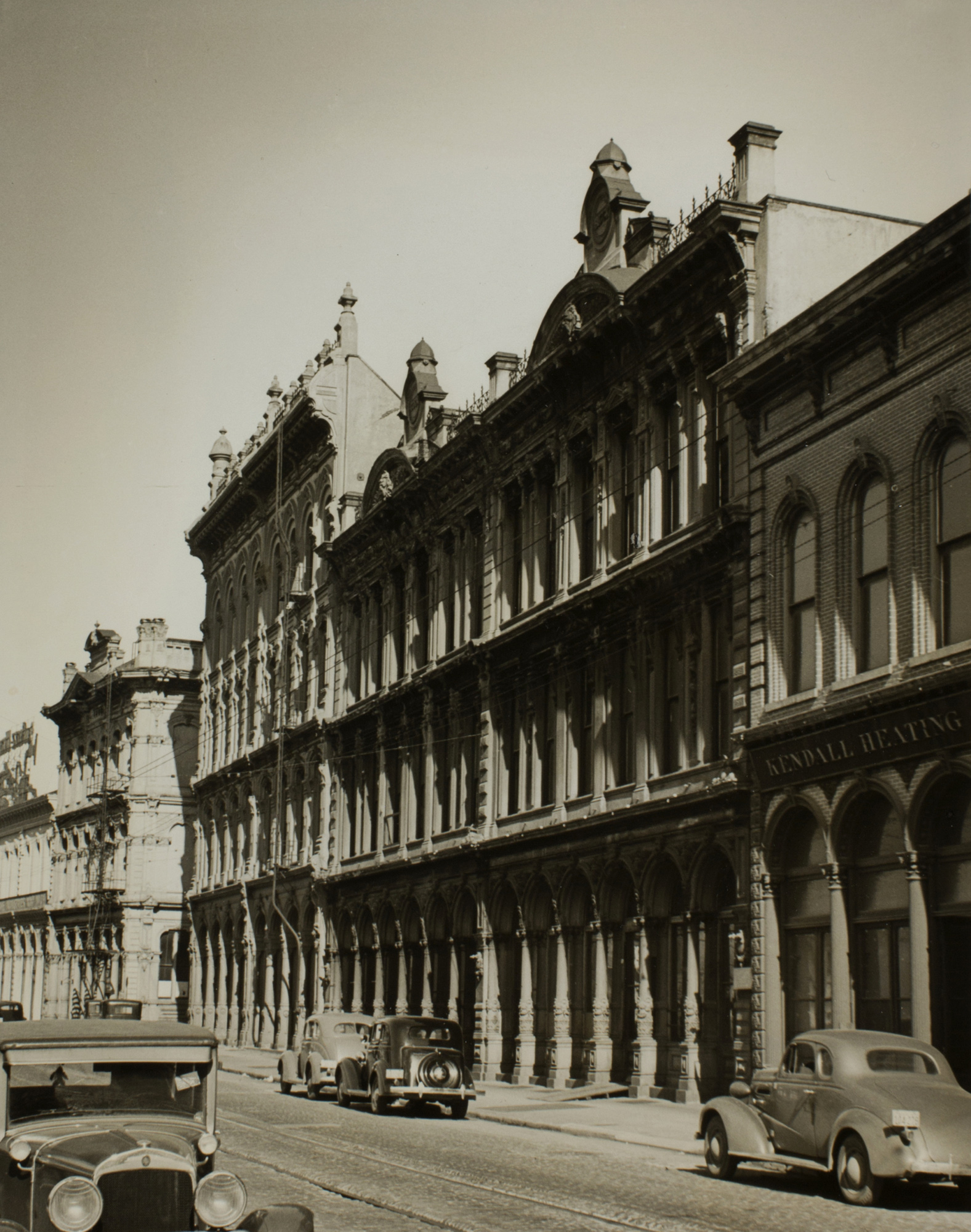
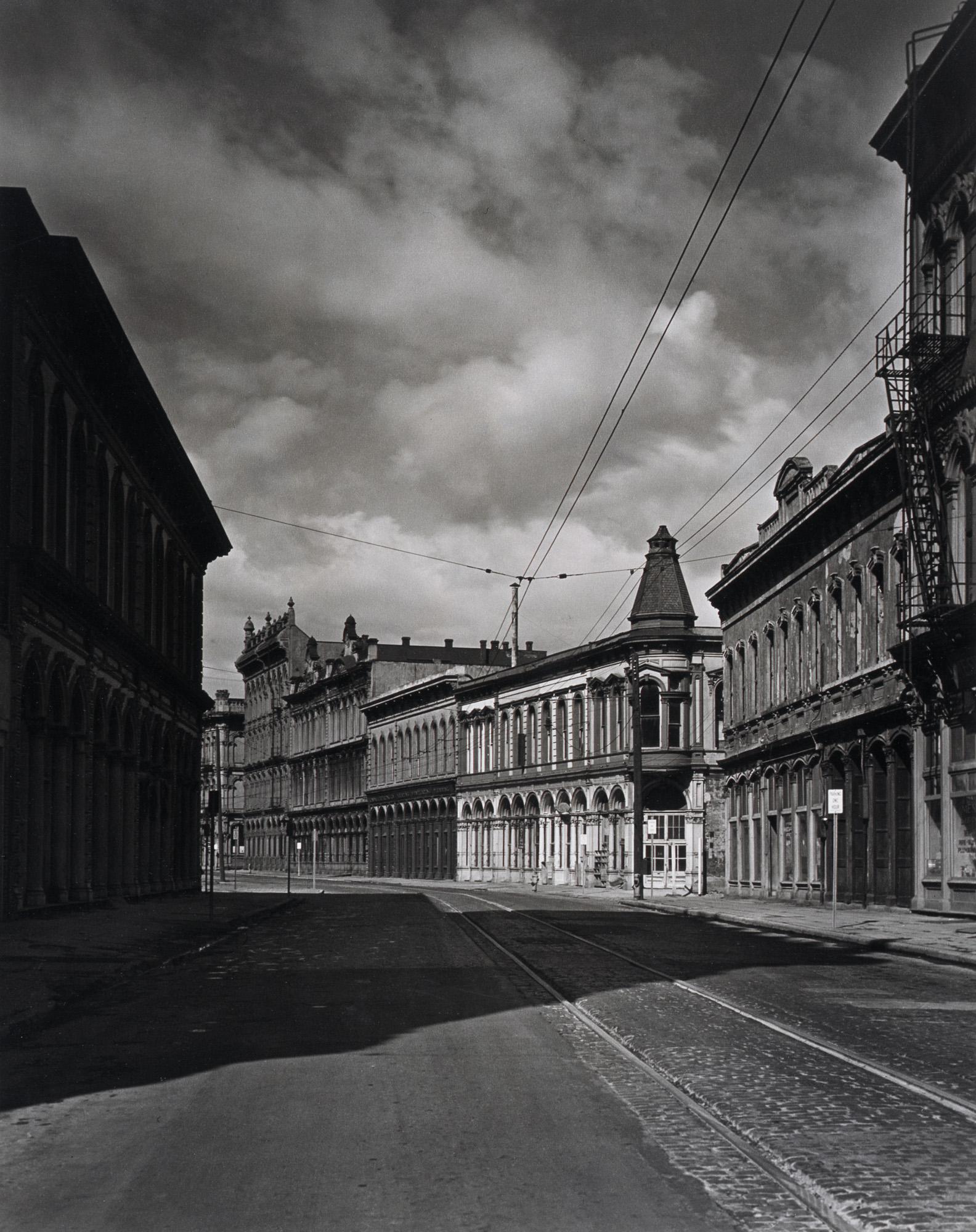
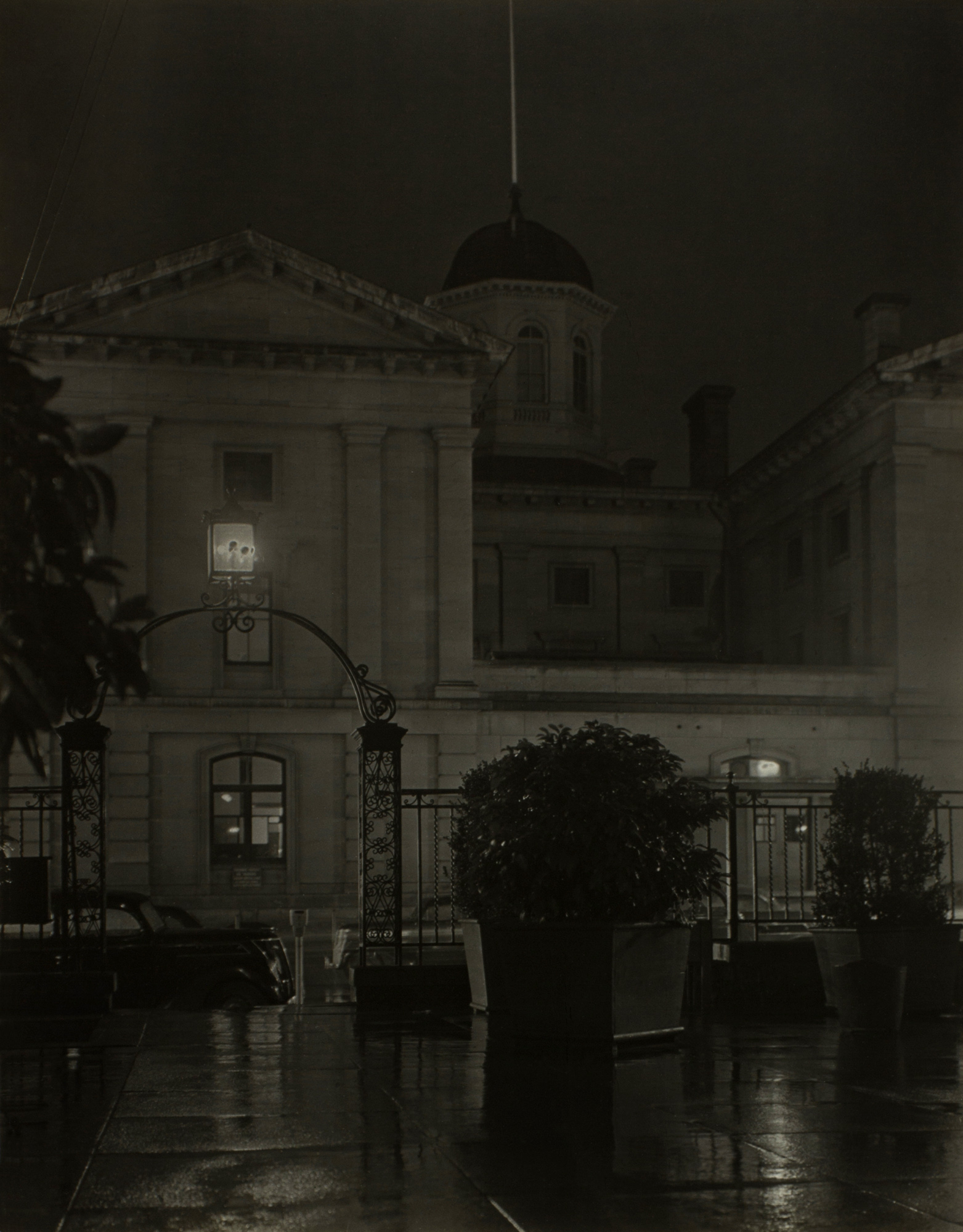
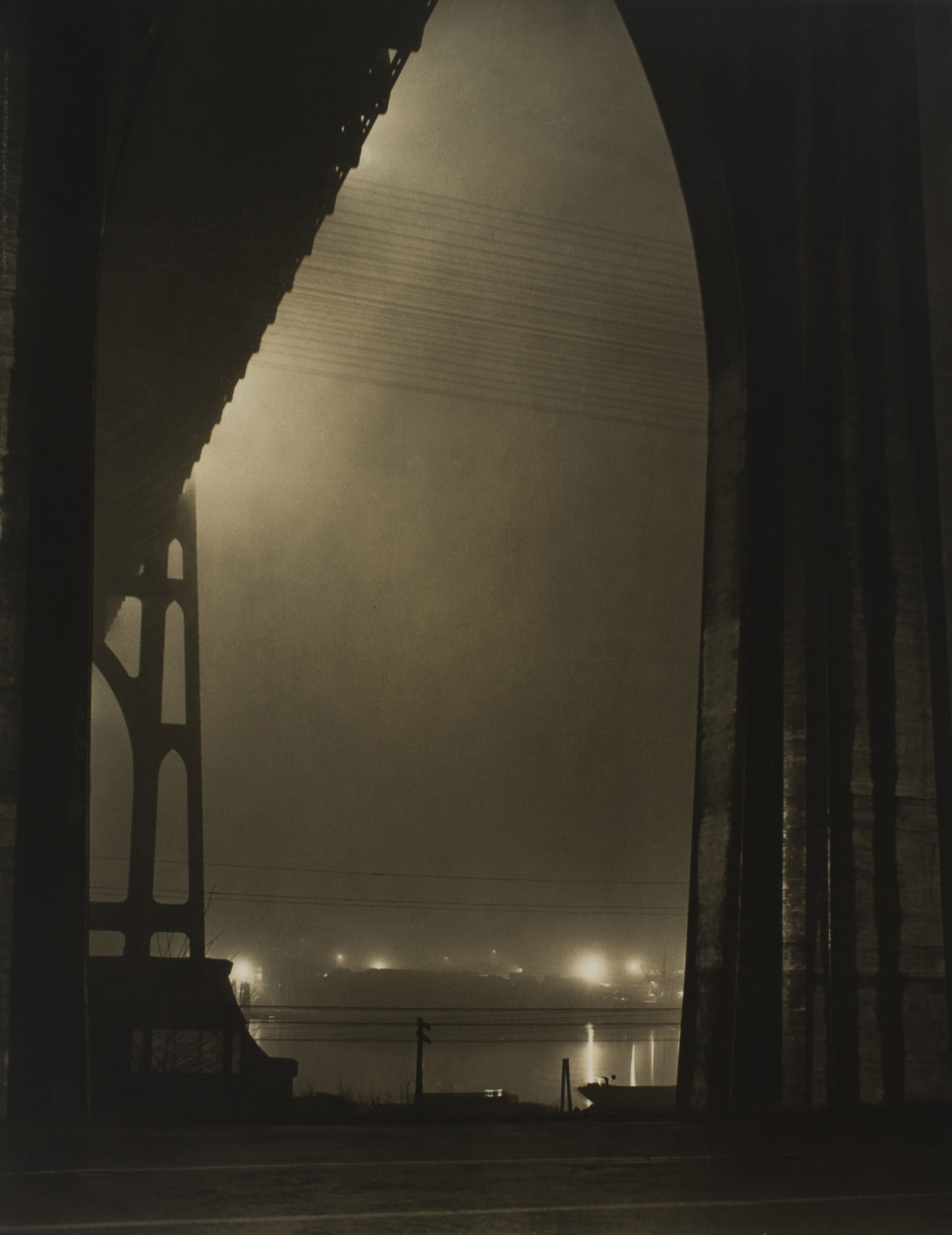
Minor White was born in Minneapolis, Minnesota, in 1908, and from his earliest years displayed a temperament drawn equally to science and to poetry. He studied botany at the University of Minnesota, graduating in 1933, but the Depression left few opportunities in the sciences, and White turned instead to writing and to the camera. His first serious photographic work, made in Portland, Oregon, in the late 1930s, documented the city's waterfront and iron-front architecture for the Works Progress Administration. These early images were accomplished but conventional — careful studies in light and form that gave little hint of the deeply personal and spiritual direction his work would soon take.
The Second World War interrupted White's development. He served in the Army from 1942 to 1945, seeing action in the Pacific theatre, and the experience of combat left psychological wounds that would shape the rest of his life. After the war, he moved to New York and studied at Columbia University, where he encountered the aesthetics of Alfred Stieglitz for the first time. Stieglitz's concept of the Equivalent — the idea that a photograph of a cloud, a tree, or a wave could function as an expression of the photographer's inner emotional state — struck White with the force of revelation. Here was a theoretical framework that united his twin impulses toward precise observation and spiritual seeking, and he would spend the remaining three decades of his life exploring and extending the implications of that idea.
In 1946, White moved to San Francisco, where he joined the faculty of the California School of Fine Arts alongside Ansel Adams and Edward Weston. The association with these two masters proved decisive. From Adams he absorbed the discipline of the Zone System, the rigorous method of exposure and development control that allowed a photographer to previsualize the final print with extraordinary precision. From Weston he learned the power of the close-up, the ability to find in a pepper or a rock formation a form that transcended its literal identity. But White brought to these influences something entirely his own: a commitment to photography as a vehicle for inner transformation, a practice closer to meditation than to reportage.
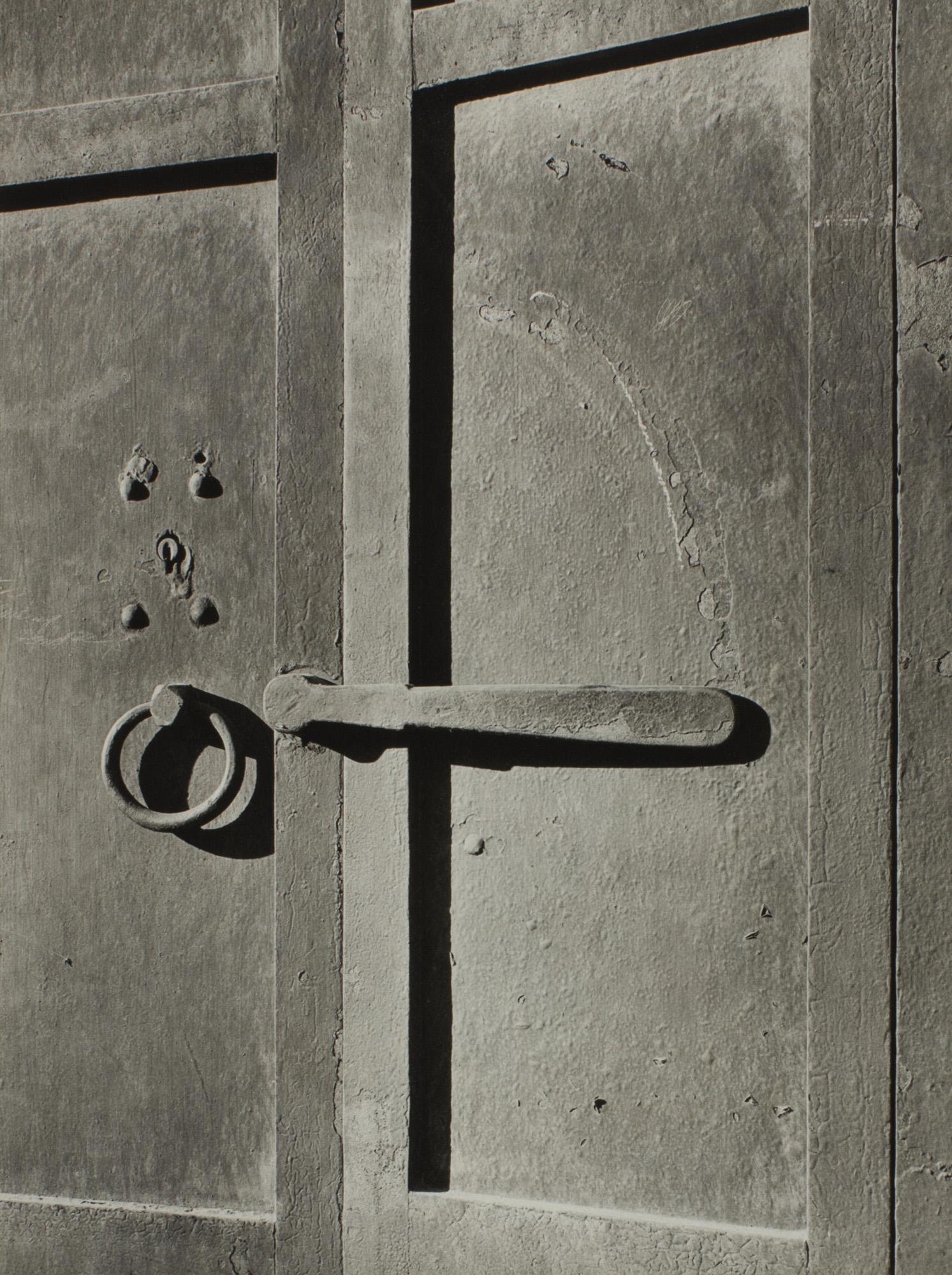
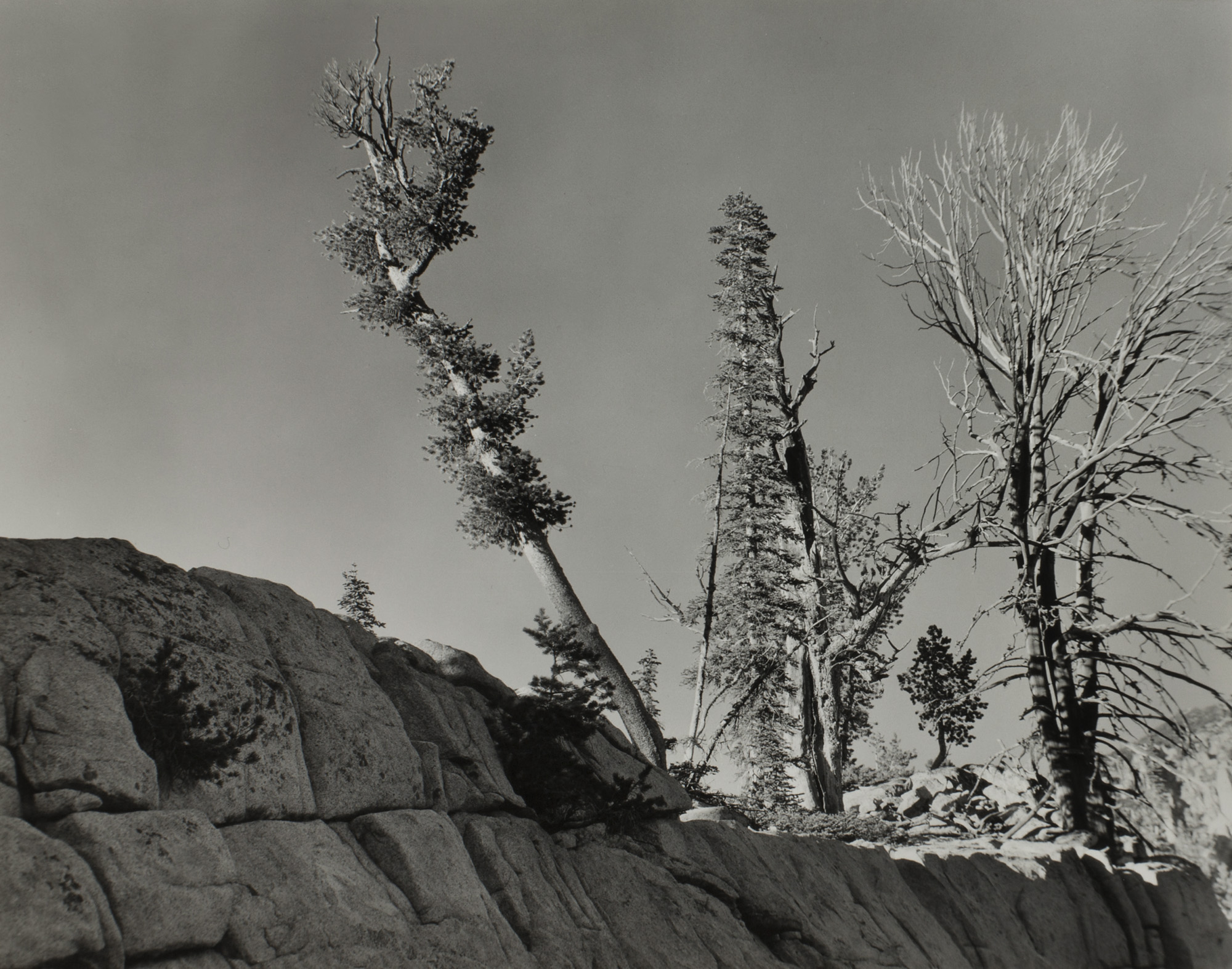
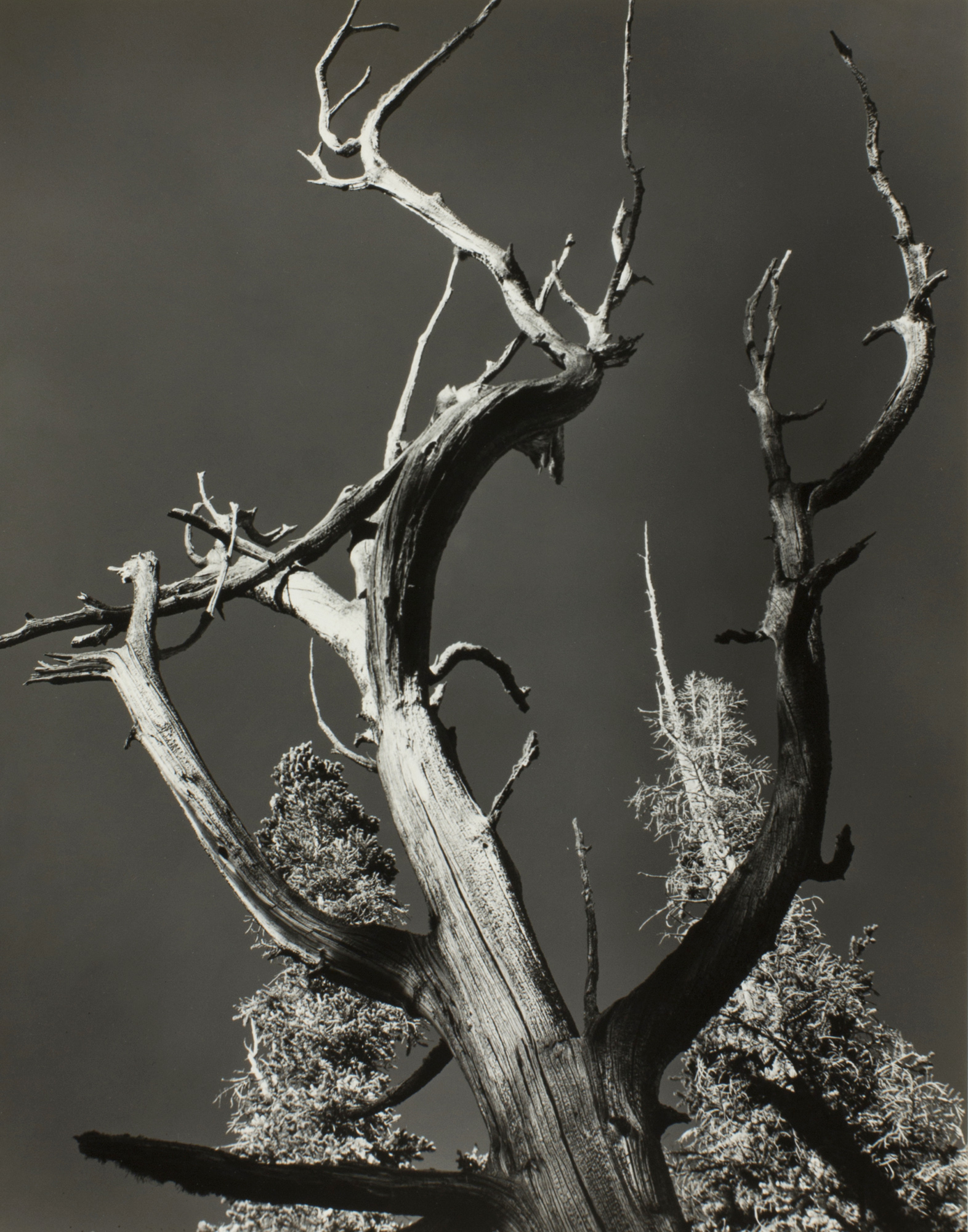
White's mature work, produced from the late 1940s onward, is characterised by its intensity of seeing. His images of rock faces, ice formations, peeling paint, weathered wood, and breaking surf are rendered with the crystalline precision of the Zone System, every tonal gradation calibrated to serve the image's emotional and spiritual resonance. He called these images Equivalents, following Stieglitz, but his understanding of the term was more expansive and more mystical. For White, the equivalent was not merely a metaphor — it was a literal correspondence between the external world and the photographer's state of consciousness at the moment of exposure. The camera, in his hands, became an instrument of self-knowledge.
In 1952, White co-founded Aperture magazine with Dorothea Lange, Ansel Adams, Beaumont Newhall, and Barbara Morgan, and served as its editor for the next twenty-three years. Under his stewardship, Aperture became the most important forum for serious photographic discourse in the United States, publishing work by established masters and unknown newcomers alike, and providing a space for the kind of sustained critical engagement that photography had long lacked. White's editorial vision was eclectic, rigorous, and uncompromising, and Aperture remains his most enduring institutional legacy.
White was also one of the most influential photography teachers of the twentieth century. At the California School of Fine Arts, at the Rochester Institute of Technology (where he taught from 1955 to 1964), and at the Massachusetts Institute of Technology (where he joined the faculty in 1965), he developed a pedagogy that was as much about self-awareness as about technique. His workshops were legendary — intense, sometimes confrontational sessions in which students were asked not merely to make photographs but to examine the psychological and spiritual conditions under which they saw. He drew freely on Zen Buddhism, Gurdjieff's teachings, and gestalt psychology, integrating these into a practice of looking that demanded total presence and radical honesty.
The concept of the sequence was central to White's artistic practice. Influenced by Stieglitz's serial presentations and by the cinematic principles of Eisenstein's montage theory, White arranged his photographs not as individual images but as carefully ordered progressions in which each picture gained meaning from its relationship to those that preceded and followed it. Sequences such as Amputations, Sound of One Hand Clapping, and Ritual Branch unfold like visual poems, their rhythms of light and dark, hardness and softness, tension and release creating an emotional arc that no single image could achieve alone.
Minor White died in Boston in 1976, at the age of sixty-seven. His legacy is complex and occasionally contentious — his mysticism alienated some critics, his teaching methods could be intense to the point of coercion, and his insistence on the photograph as a spiritual document placed him at odds with the cooler, more conceptual directions that art photography would take in the decades after his death. Yet his influence on the medium has been profound. He demonstrated that photography could be a practice of contemplation as well as observation, that the camera could serve as an instrument of inner as well as outer exploration, and that the act of seeing, pursued with sufficient discipline and attention, could become a path to understanding.