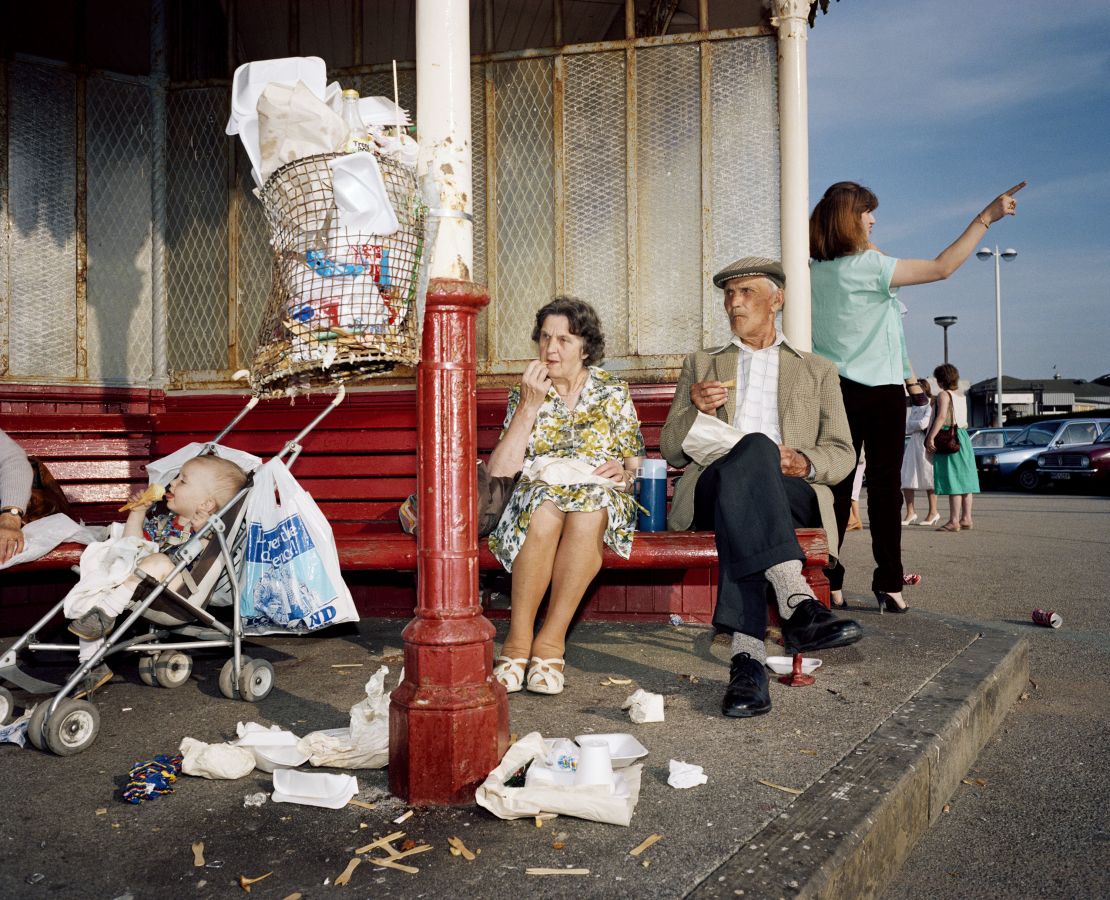
Martin Parr has spent five decades turning his camera on the rituals, vanities, and absurdities of modern life, producing a body of work that is at once hilarious and deeply uncomfortable. Born in Epsom, Surrey, in 1952, he was introduced to photography by his grandfather, George Parr, an enthusiastic amateur whose influence steered the young Martin toward Manchester Polytechnic, where he studied photography from 1970 to 1973. Those years in Manchester exposed him to the documentary tradition that would form the foundation of his practice, though the direction he would eventually take it was something nobody could have predicted.
His early work was firmly rooted in the black-and-white social documentary tradition of Bill Brandt and Tony Ray-Jones. Projects such as Home Sweet Home and Bad Weather, produced during the late 1970s and early 1980s in the north of England, depicted working-class communities with the grainy warmth characteristic of British humanist photography. But even in these early pictures there were hints of something sharper, a willingness to observe human behaviour at its most unguarded and a dry wit that would later become his signature.
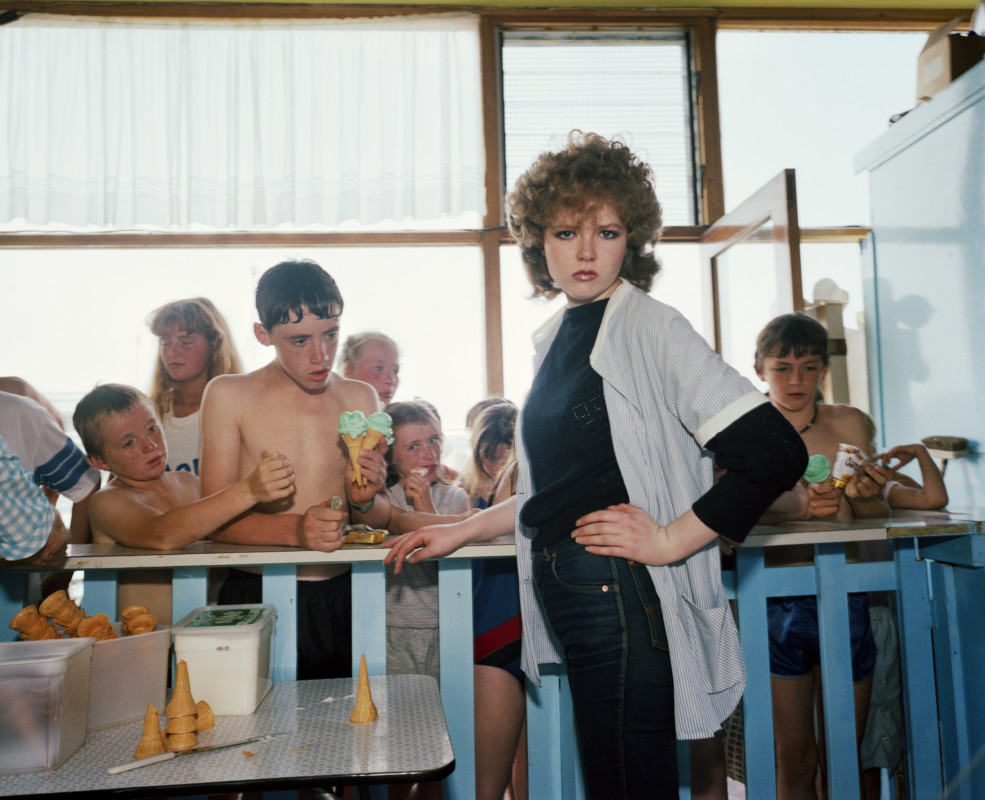
The transformation came with The Last Resort, photographed at the faded seaside town of New Brighton on Merseyside between 1983 and 1985. Parr abandoned black and white for saturated colour and swapped his quiet observational distance for the garish, confrontational immediacy of a ring flash at close range. The resulting images of sunburnt families, overflowing rubbish bins, and children eating chips in the wind were simultaneously celebratory and critical, affectionate and appalled. The series caused an uproar when it was exhibited and published in 1986. Some critics accused Parr of condescension toward his working-class subjects. Others recognised something more complex: a photographer holding up a mirror to a consumer society that was both seductive and grotesque.
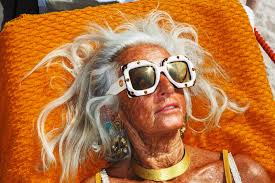
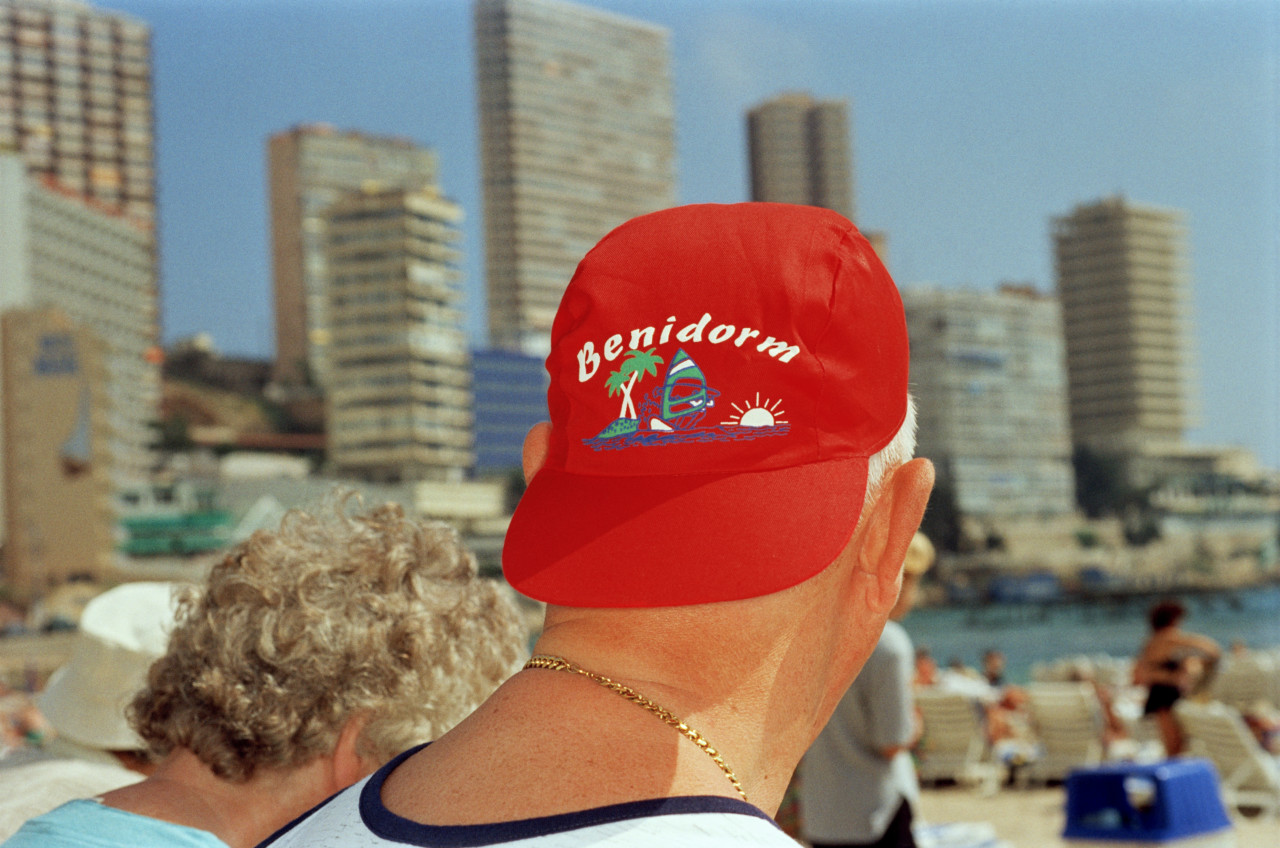
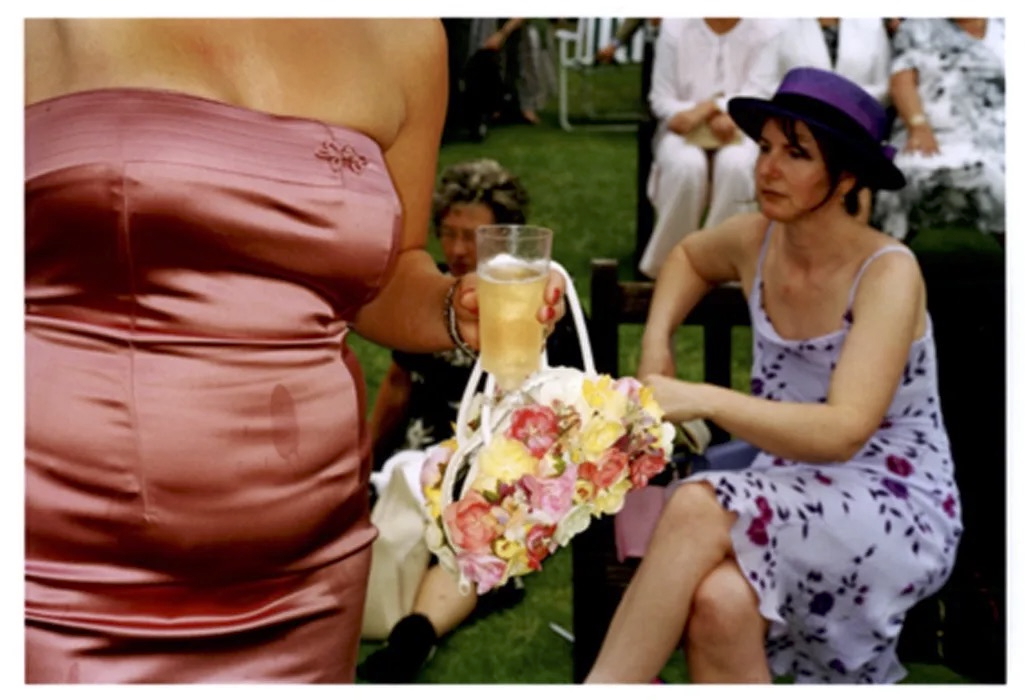
The Last Resort established the visual language that would define the rest of Parr's career. The close-up, the ring flash, the hyper-saturated colour, the unflinching attention to food, souvenirs, sunburn, and other markers of leisure and consumption became his unmistakable toolkit. Over the following decades, he deployed it across the globe, producing an extraordinary sequence of books and exhibitions that mapped the spread of consumer culture from Benidorm to Beijing.
Small World, published in 1995, turned the lens on mass tourism, capturing holidaymakers at the Leaning Tower of Pisa, the Acropolis, and Niagara Falls with a combination of empathy and absurdist humour. Common Sense, exhibited in 1999 as a vast installation of over a thousand images, reduced modern life to a dizzying mosaic of close-up details: painted fingernails, greasy food, plastic toys, and branded packaging. The effect was overwhelming, a sensory assault that replicated the visual excess of the world it depicted.
In 1994, Parr became a full member of Magnum Photos, the prestigious cooperative agency, though his nomination was not without controversy. His application divided the membership. Traditionalists within Magnum viewed his saturated, ironic style as a betrayal of the agency's humanist documentary heritage. Henri Cartier-Bresson reportedly told Parr that his pictures were from a different planet. The debate over Parr's membership became a proxy for larger questions about the direction of documentary photography itself. His eventual election signalled a decisive shift in the medium's self-understanding.
Beyond his own practice, Parr has been one of the most energetic advocates for photography as a cultural form. He has curated major exhibitions, built one of the world's largest collections of photobooks, co-authored the three-volume The Photobook: A History with Gerry Badger, and established the Martin Parr Foundation in Bristol, dedicated to championing photography from the United Kingdom and beyond. He has produced over one hundred books, making him one of the most published photographers in the history of the medium.
What makes Parr's work endure is its refusal to settle into a single emotional register. His photographs are funny but never merely jokes. They are critical but never contemptuous. They document the surface of things with such relentless precision that they become, cumulatively, a portrait of an entire civilisation and its relationship to pleasure, display, and material excess. Whether photographing a plate of sausages in Salford or a luxury handbag in Dubai, Parr sees the same forces at work, and he photographs them with an energy and delight that is entirely his own.