Margaret Bourke-White was born in the Bronx on 14 June 1904, the daughter of an engineer-inventor father and a progressive, intellectually ambitious mother who encouraged her daughter's curiosity about the natural and mechanical world. Her father, Joseph White, worked in the printing industry and took young Margaret to factories and foundries, instilling in her a fascination with industrial processes and the beauty of machinery that would define the first phase of her photographic career. She studied at several universities, including the University of Michigan, Columbia University, and Cornell University, where she first began to photograph seriously, using a second-hand Ica Reflex camera to capture the campus architecture.
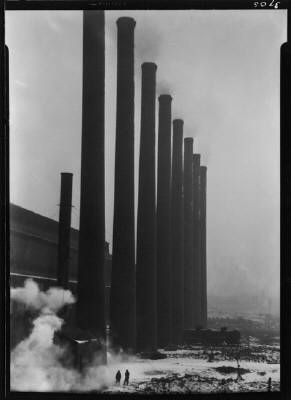
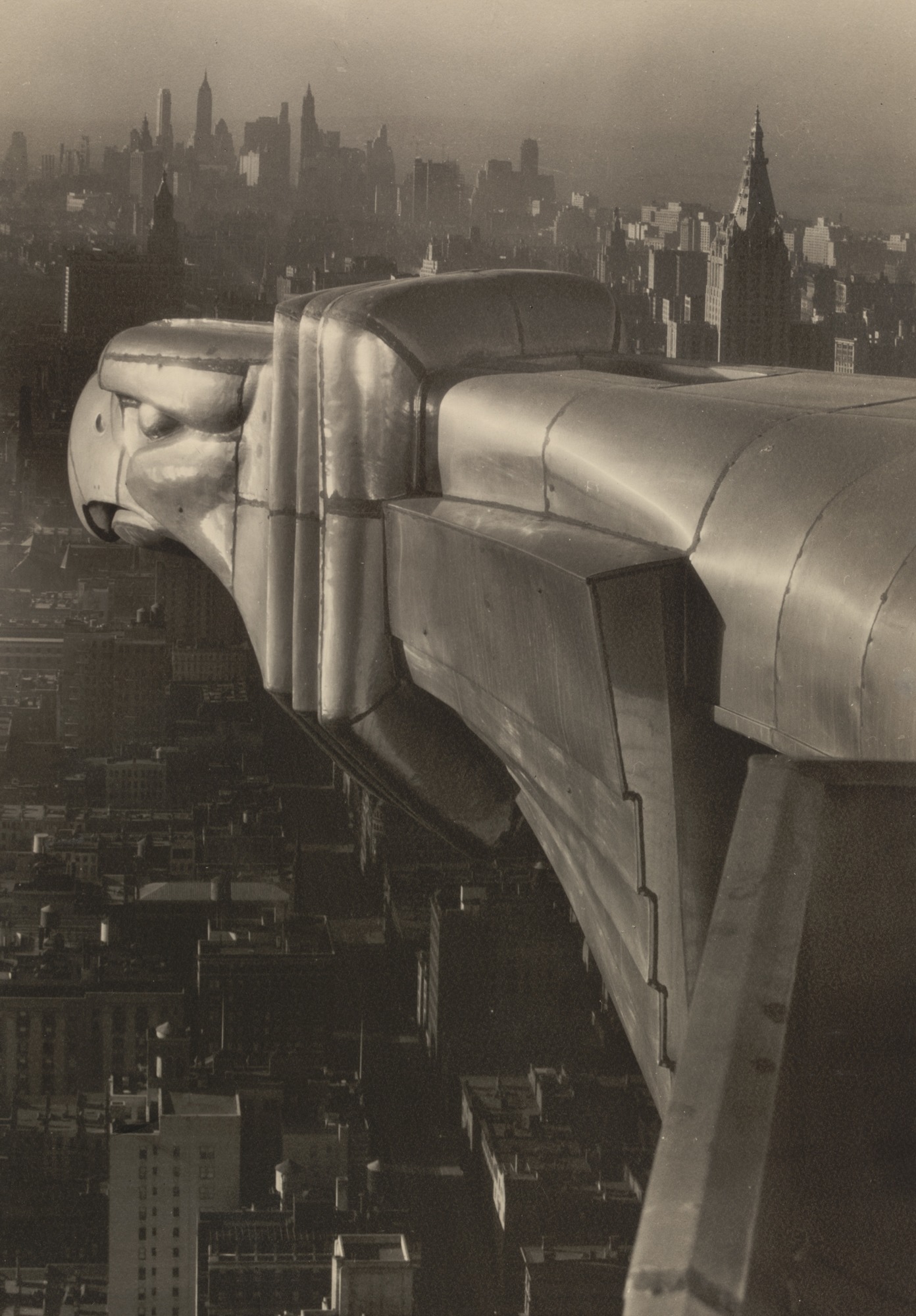
After graduating from Cornell in 1927, Bourke-White moved to Cleveland, Ohio, and began photographing the steel mills, blast furnaces, and industrial plants of the city with a dramatic, modernist sensibility that was entirely new to American photography. Her images of molten steel and towering smokestacks possessed a heroic grandeur that owed something to the machine aesthetic of the European avant-garde but was filtered through a distinctly American sense of scale and power. Henry Luce, the publishing magnate, saw her industrial photographs and hired her as the first photographer for his new magazine, Fortune, in 1929. She was twenty-five years old.
At Fortune, Bourke-White's reputation grew rapidly. She was granted unprecedented access to Soviet industry in 1930, becoming one of the first Western photographers to document the factories, collective farms, and construction sites of the Five-Year Plan. The resulting images were published to enormous interest in the West and established her as a photographer of international stature. Her willingness to travel to places other photographers would not go, and her determination to gain access to subjects that seemed beyond reach, became defining characteristics of her career.
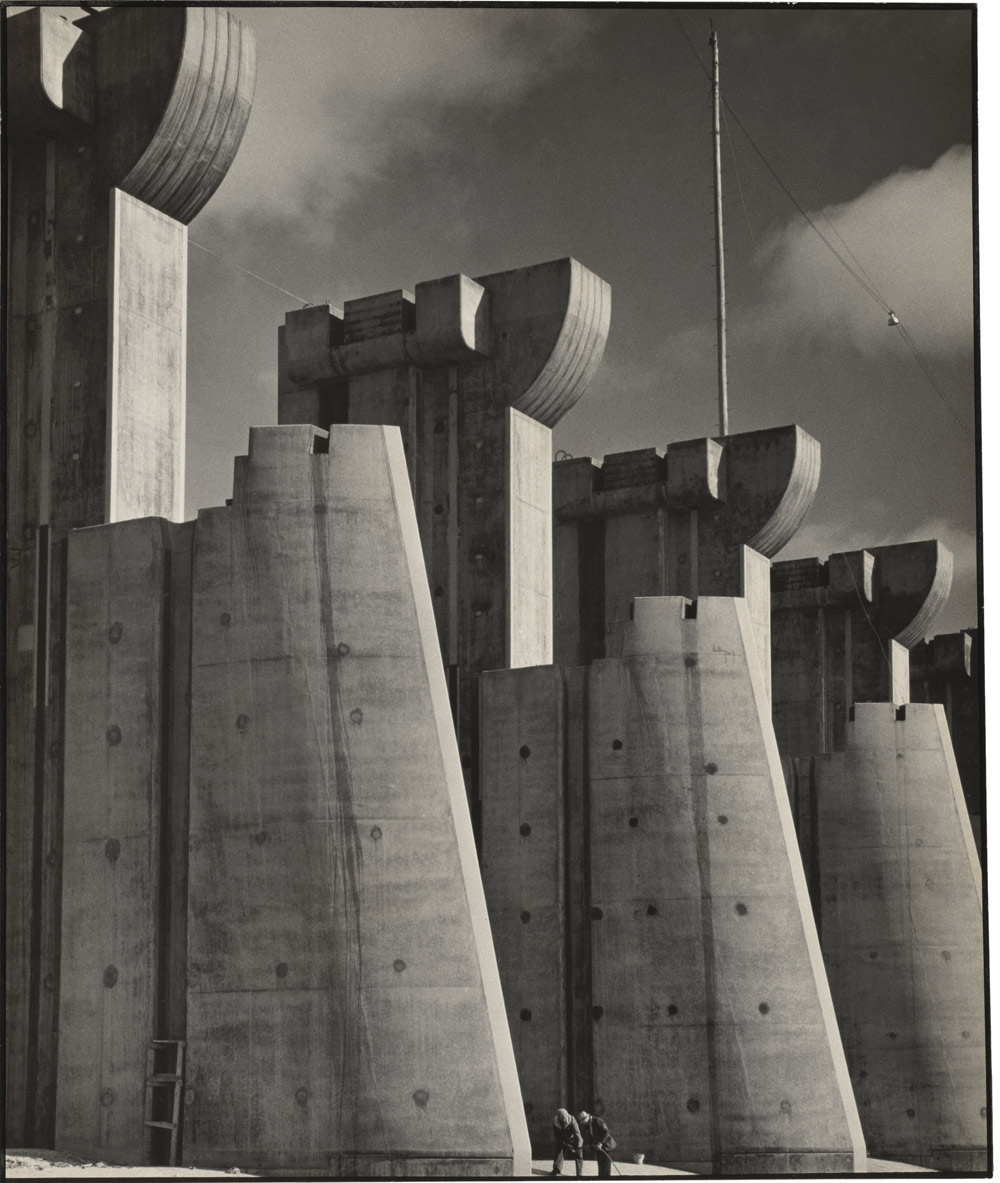
In 1936, Henry Luce launched Life magazine, and Bourke-White's photograph of the Fort Peck Dam in Montana appeared on the first cover. The image — a monumental view of the dam's concrete buttresses — announced the magazine's visual ambitions and confirmed Bourke-White's status as the most prominent photojournalist in America. Her work for Life over the following decades would take her from the American South to the Soviet Union, from the battlefields of North Africa and Italy to the concentration camps of Germany, from the partition of India to the gold mines of South Africa.
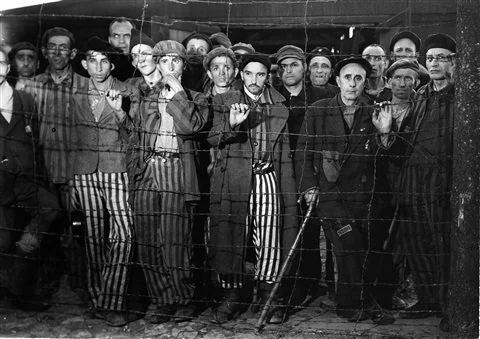
During the Second World War, Bourke-White became the first female war correspondent accredited to the United States Army. She was present at the siege of Moscow in 1941, survived a torpedo attack on a troop ship in the Mediterranean, and flew combat missions over North Africa. In April 1945, she was among the first photographers to enter the Buchenwald concentration camp, producing images of such devastating power that they helped define the world's understanding of the Holocaust. She later wrote that the horror was so great she could only bear to look at it through her camera's viewfinder.
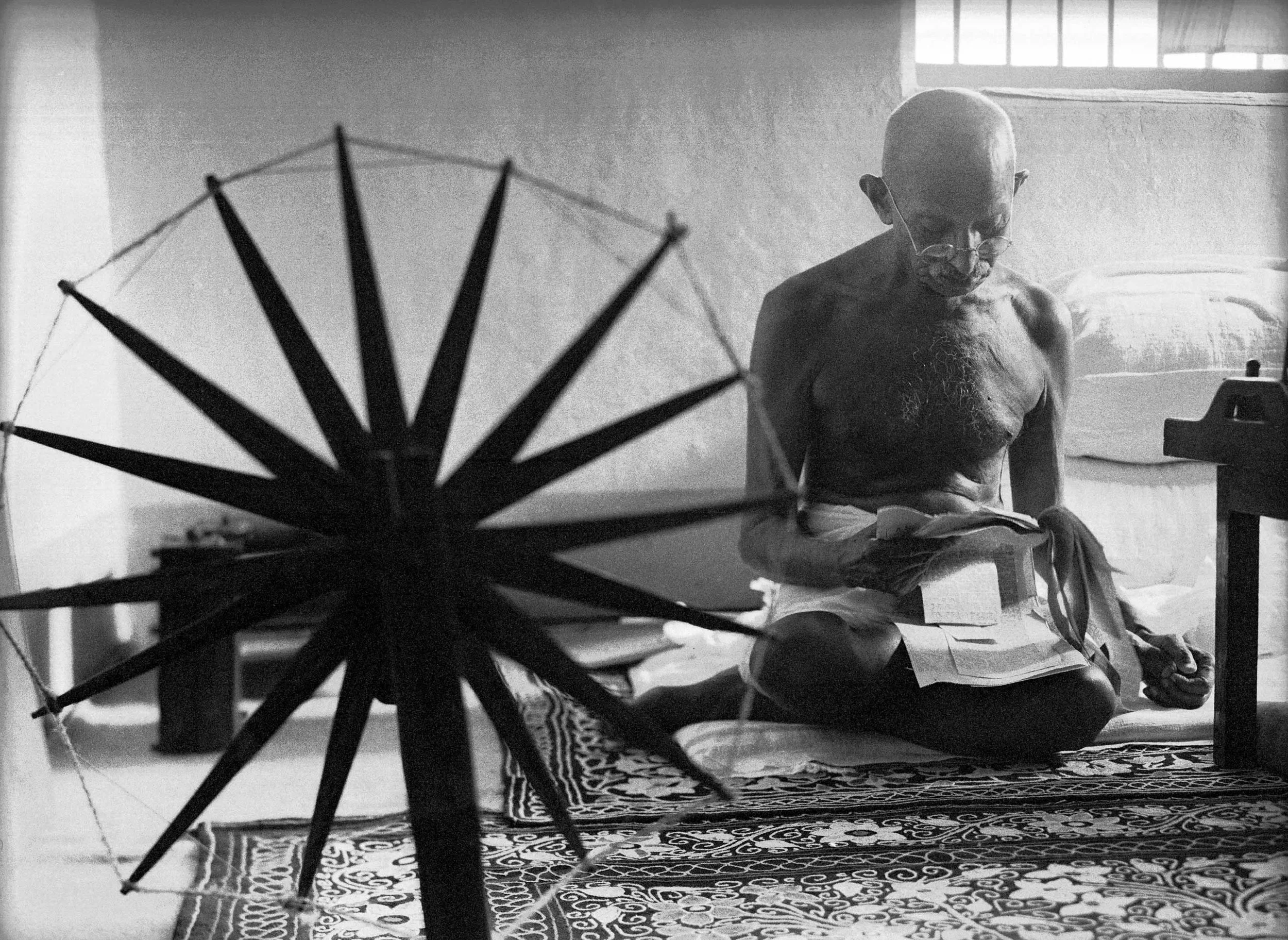
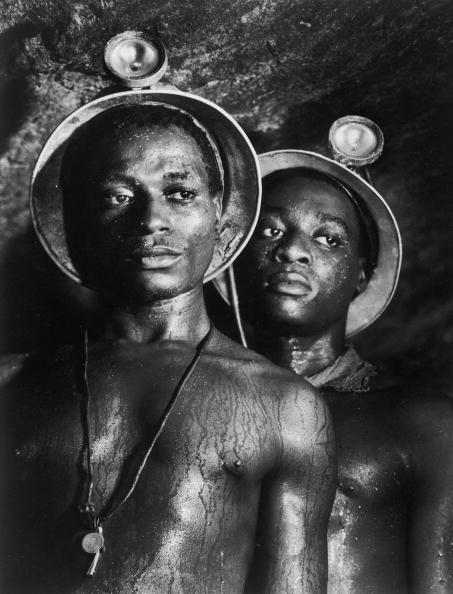
After the war, Bourke-White travelled to India to document the country's struggle for independence and the catastrophic violence of Partition. Her portrait of Mahatma Gandhi at his spinning wheel, taken in 1946, became one of the most iconic photographs of the twentieth century. She was the last photographer to photograph Gandhi before his assassination in January 1948. Her work in India and later in South Africa, where she documented the conditions of gold miners and the apartheid system, demonstrated a deepening engagement with social justice that went far beyond the industrial aesthetics of her early career.
In the early 1950s, Bourke-White was diagnosed with Parkinson's disease, a condition that gradually robbed her of the physical abilities she had always relied upon. She fought the disease with the same determination she had brought to her photographic career, undergoing experimental brain surgery and continuing to work for as long as she was able. She published her autobiography, Portrait of Myself, in 1963, and spent her final years in Stamford, Connecticut, where she died on 27 August 1971.
Bourke-White's legacy resides not only in the images themselves but in the precedents she set. She was the first in so many categories — first female staff photographer at Fortune, first female war correspondent, first Western photographer in the Soviet Union, first photographer on the cover of Life — that the word pioneering, so often applied loosely, describes her career with absolute precision. She demonstrated that a woman could work at the highest levels of photojournalism, in conditions of extreme danger and difficulty, and produce images of lasting power. Her influence extends through every female photojournalist who followed her into the field.