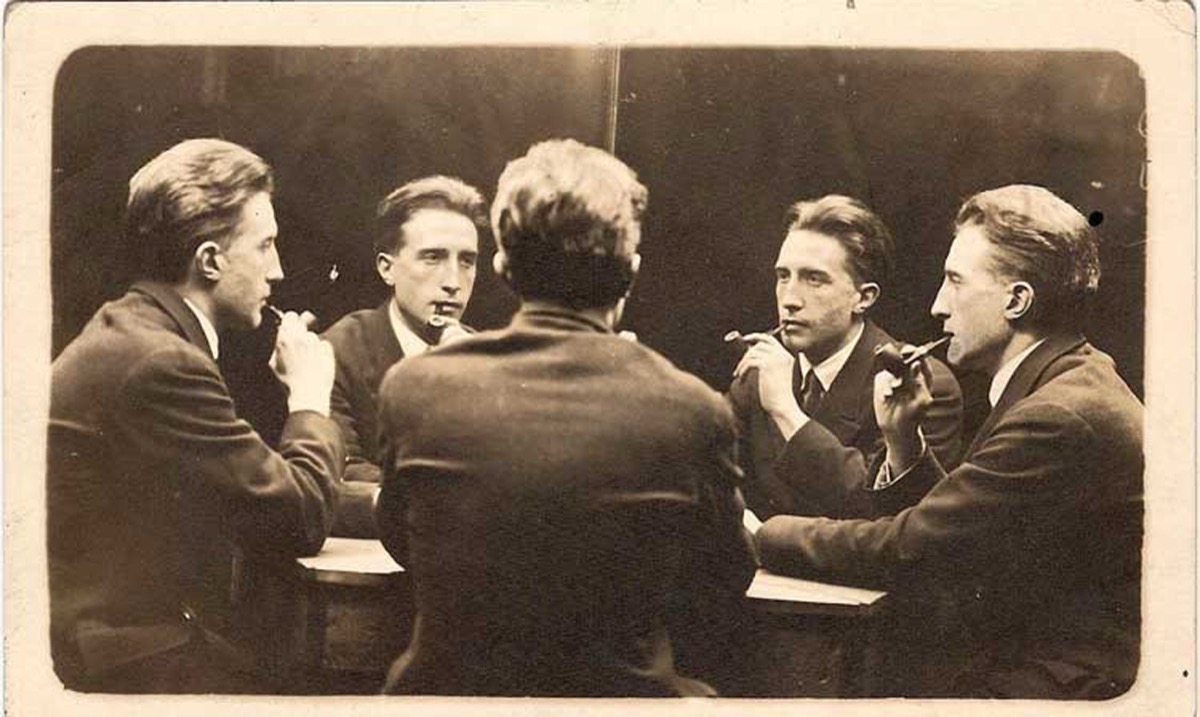
Marcel Duchamp was born on 28 July 1887 in Blainville-Crevon, a small town in Normandy, into a family of remarkable artistic accomplishment. His elder brothers, Jacques Villon and Raymond Duchamp-Villon, were both established artists; his sister Suzanne Duchamp would become a painter of note. The young Marcel studied at the Académie Julian in Paris from 1904, passing through the obligatory stations of Post-Impressionism, Fauvism, and Cubism with a speed that suggested restlessness rather than mastery. He was intelligent enough to absorb any style and too intelligent to be satisfied with any of them.
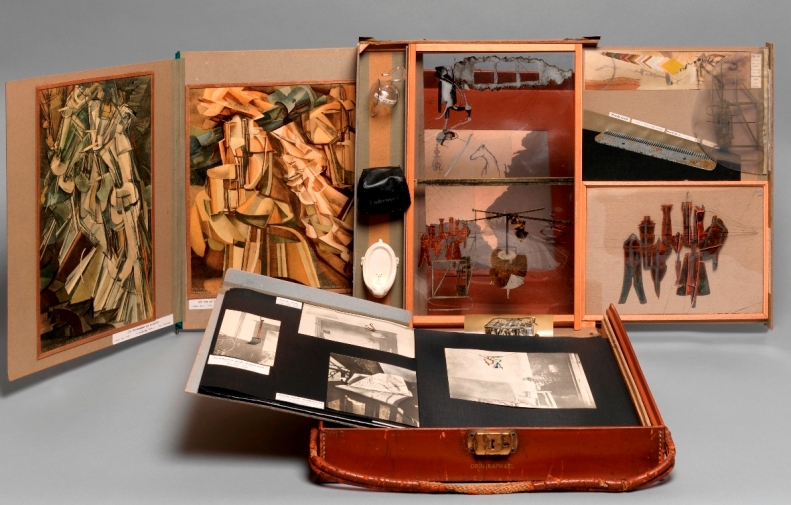
The painting that first brought Duchamp notoriety was Nude Descending a Staircase, No. 2, completed in 1912. It fused the fragmented planes of Cubism with the sequential motion studies of Eadweard Muybridge and Étienne-Jules Marey, producing an image that scandalized the Parisian avant-garde and caused a sensation when it was shown at the Armory Show in New York in 1913. American critics ridiculed it, the public flocked to see it, and Duchamp found himself famous in a country he had never visited — a circumstance that would shape the rest of his career.
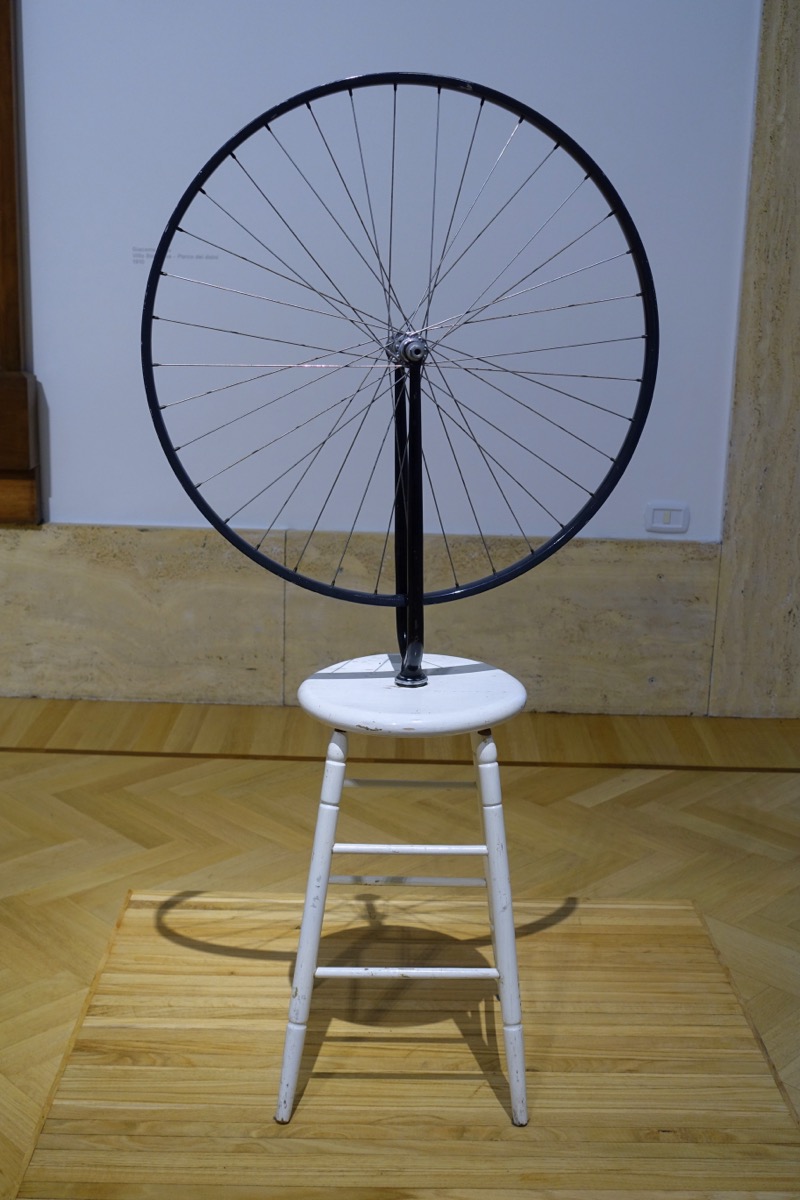
Between 1913 and 1917, Duchamp effected the most consequential revolution in the history of modern art. He began by presenting ordinary manufactured objects — a bicycle wheel mounted on a stool, a bottle rack, a snow shovel — as works of art, a gesture he called the readymade. The readymade did not depend on the artist's skill, taste, or craft. It depended solely on the artist's choice: the act of selecting an object and designating it as art was sufficient to make it so. This was not an aesthetic proposition but an ontological one. It asked not what art looks like but what art is, and the question proved so destabilising that the art world has been grappling with its implications ever since.
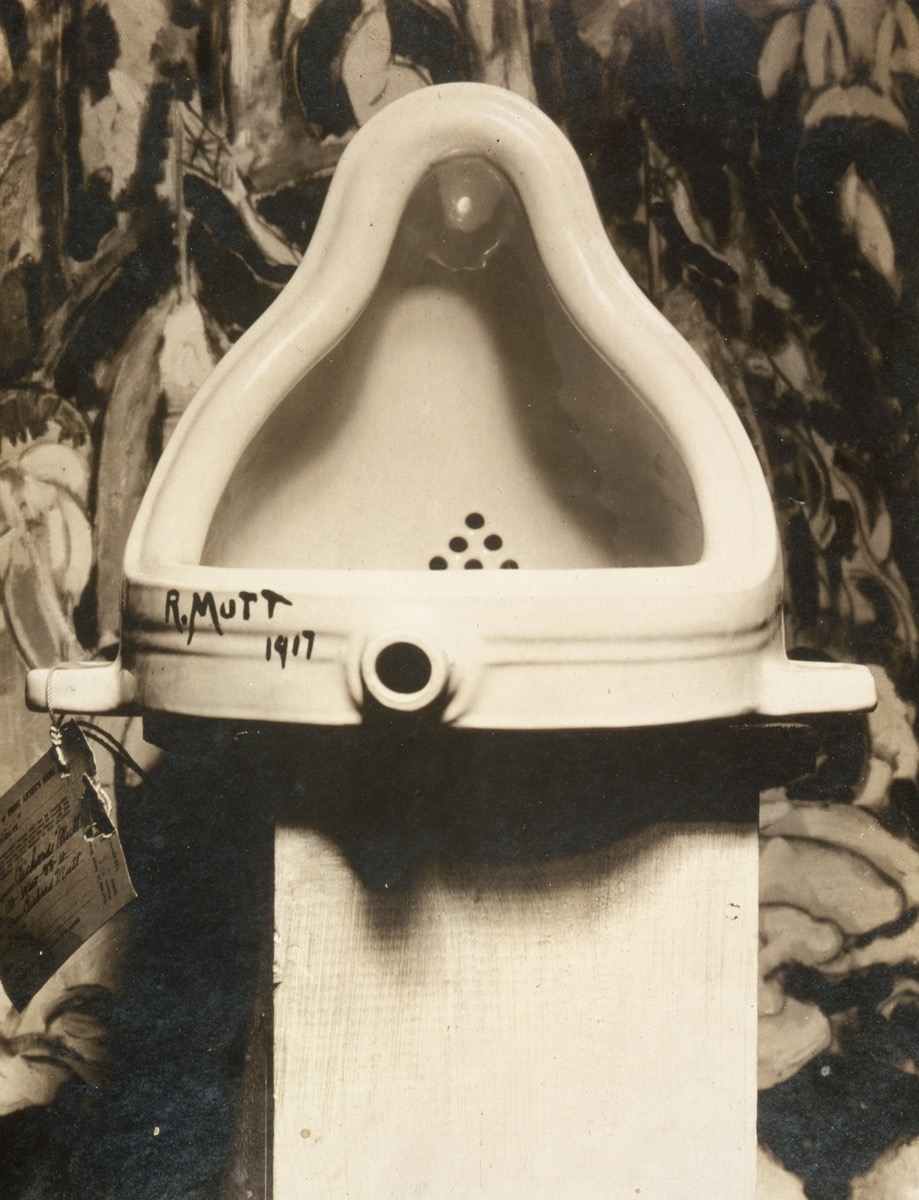
The most notorious of the readymades was Fountain, a porcelain urinal signed with the pseudonym R. Mutt and submitted to the exhibition of the Society of Independent Artists in New York in 1917. The work was rejected, sparking a debate that became one of the foundational controversies of modern art. Duchamp's argument was devastatingly simple: if the Society had pledged to accept all submitted works, then to reject this one was to impose a criterion of taste — precisely the kind of aesthetic gatekeeping the Society had been formed to abolish. Fountain remains, more than a century later, the single most discussed artwork of the twentieth century.
Throughout the 1920s and 1930s, Duchamp moved between Paris and New York, ostensibly retired from art but in reality engaged in a vast, secret project. The Bride Stripped Bare by Her Bachelors, Even — commonly known as The Large Glass — was a work of extraordinary complexity: two panes of glass on which Duchamp applied oil paint, lead foil, dust, and varnish over the course of eight years. He declared it definitively unfinished in 1923. The piece was accompanied by extensive notes, published as The Green Box, which functioned as a kind of instruction manual, transforming the artwork into something closer to a philosophical proposition than a visual experience.
Duchamp devoted much of his later life to chess, which he played at competition level. His friends and critics often interpreted this as further evidence of his retirement from art, but the choice was consistent with his deepest convictions. Chess, like the readymade, was an activity of pure mental selection — a game in which every move was a choice among possibilities, uncontaminated by manual skill or emotional expression. In this sense, Duchamp's chess playing was the logical extension of his art, not a departure from it.
When Duchamp died in 1968, it was discovered that he had spent the previous twenty years secretly constructing a final work: Étant donnés, a mixed-media assemblage visible only through two peepholes in an old wooden door, now permanently installed in the Philadelphia Museum of Art. The piece — an elaborate tableau of a nude figure in a landscape — confounded everyone who had taken Duchamp at his word that he had given up art. It was his last joke, and his most profound: the man who had spent a lifetime questioning the nature of art had been quietly making it all along.
Duchamp's influence on contemporary art is incalculable. Andy Warhol, Joseph Beuys, John Cage, Yoko Ono, Jeff Koons, and Damien Hirst are among the countless artists who have worked in the space he opened. Conceptual art, performance art, installation art, appropriation art — all trace their lineage to his readymades and his insistence that the idea behind a work matters more than its physical form. He did not merely change what art could look like; he changed what art could be.