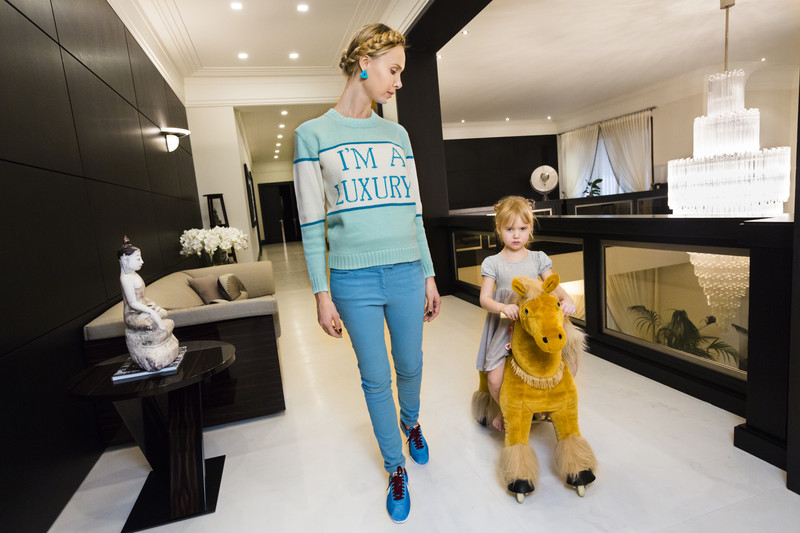
Lauren Greenfield was born in 1966 in Boston, Massachusetts, and grew up in Los Angeles, a city whose culture of surfaces, aspiration, and reinvention would become the central subject of her life's work. Her father was a professor and her mother worked in education, and the family lived in Venice Beach, a neighbourhood where affluence and poverty existed in sharp proximity. Greenfield attended the exclusive Crossroads School in Santa Monica alongside the children of Hollywood executives and entertainment industry families, an experience that gave her an early and formative awareness of the distance between wealth and ordinary life, and of the powerful role that money played in shaping identity, self-image, and social belonging.
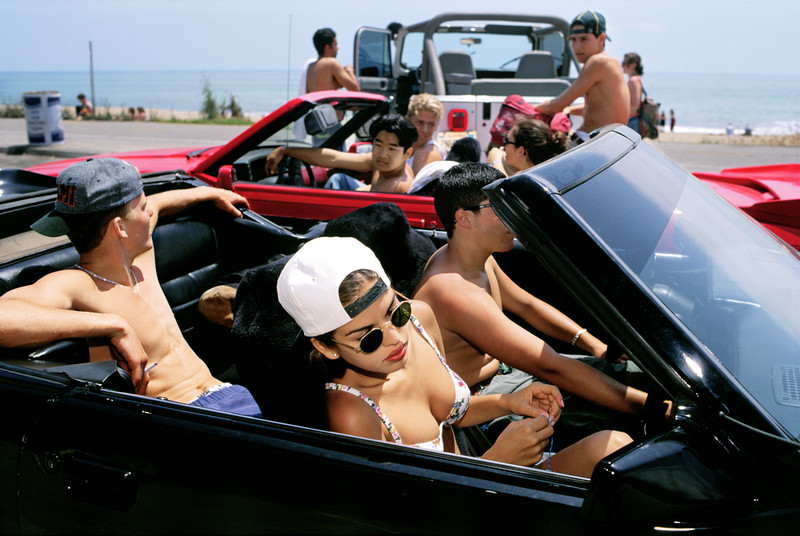
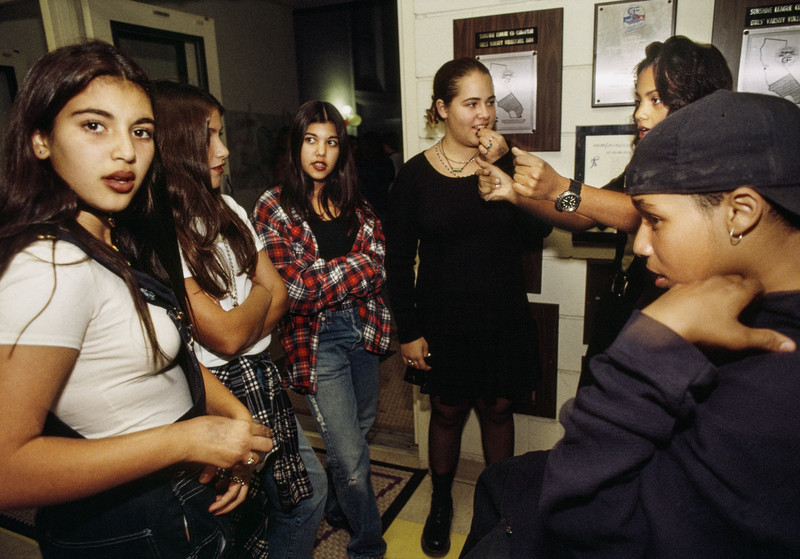
She studied visual arts at Harvard University, where she was mentored by documentary photographer Susan Meiselas, and graduated in 1987. After working as a photojournalist for several years, Greenfield returned to Los Angeles in the early 1990s and began photographing the city's youth culture with a focus on affluence, image-consciousness, and the pressures of growing up in a society saturated by media, advertising, and consumer aspiration. The resulting body of work, published as Fast Forward: Growing Up in the Shadow of Hollywood in 1997, established her reputation as a photographer of uncommon access and social insight.
What distinguished Greenfield's approach from the outset was her refusal to photograph from a position of either condemnation or fascination. Her images of wealthy teenagers, beauty pageant participants, spring breakers, and cosmetic surgery patients were neither satirical nor celebratory but something more unsettling: empathetic, intimate, and deeply observant. She spent years gaining the trust of her subjects, and the resulting photographs had a quality of psychological closeness that made the viewer complicit in what they were seeing. The camera did not judge, but it did not look away either.
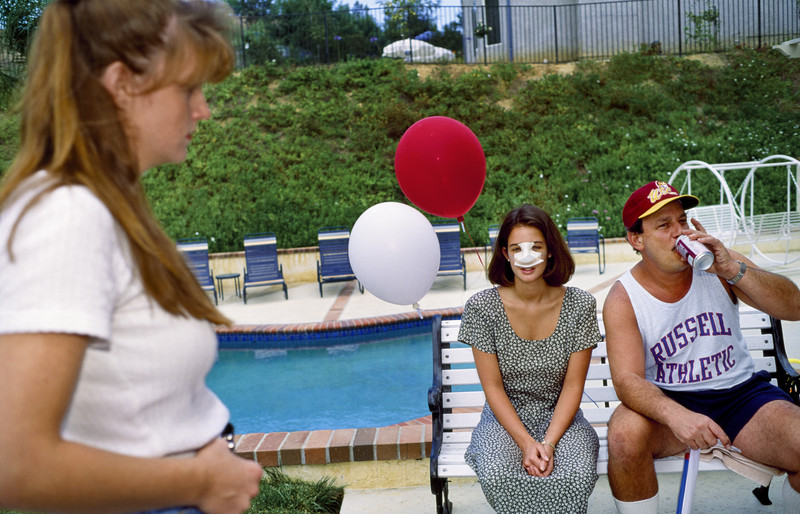
Her second major book, Girl Culture, published in 2002, expanded the investigation to the relationship between femininity, body image, and consumer culture across American society. The project documented girls and women from a wide range of backgrounds — from four-year-old beauty pageant contestants to anorexia patients, from cheerleaders to exotic dancers — and the images collectively revealed the extraordinary pressures that a commercial culture of idealised bodies and relentless self-improvement placed upon women of every age and class. Girl Culture was exhibited internationally and became one of the most discussed photography projects of its decade.
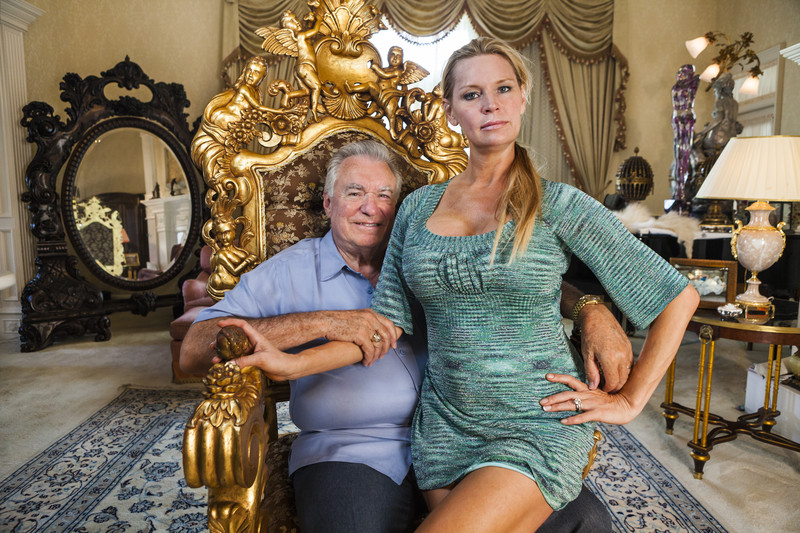
In 2012, Greenfield released The Queen of Versailles, a documentary film following billionaire timeshare mogul David Siegel and his wife Jackie as they attempted to build the largest house in America — a 90,000-square-foot mansion modelled on the Palace of Versailles — only to see their fortunes collapse in the 2008 financial crisis. The film was a critical and commercial success, winning the directing award at Sundance, and it demonstrated Greenfield's ability to work across media while maintaining the same probing intelligence and narrative sophistication that characterised her still photography.
The culmination of Greenfield's decades-long investigation came with Generation Wealth, published as a book and released as a documentary film in 2017 and 2018 respectively. The project drew together twenty-five years of work to argue that the worship of wealth had become a global phenomenon, transforming cultures from Los Angeles to Dubai, from Moscow to Shanghai. By revisiting subjects she had first photographed years or even decades earlier, Greenfield was able to show not merely a moment but a trajectory — the long-term consequences of a culture built on aspiration, display, and the relentless pursuit of more.
Greenfield continues to work as a photographer and filmmaker, and her influence on contemporary documentary practice has been substantial. She demonstrated that long-term projects rooted in genuine relationships with subjects could achieve both artistic depth and broad public engagement, and that the documentary photographer's role was not simply to record the world but to make visible the forces — economic, cultural, psychological — that shape it.