László Moholy-Nagy was born in 1895 in the small town of Bácsborsód in southern Hungary, the son of a farming family. His father abandoned the family when Moholy-Nagy was young, and he was raised by an uncle in the town of Mohács, whose name he later adopted as part of his own. He studied law in Budapest, but his education was interrupted by the First World War, during which he served in the Austro-Hungarian army and was seriously wounded. During his convalescence he began to draw and paint, and by the end of the war he had resolved to abandon law for art. He moved to Vienna briefly and then to Berlin in 1920, where he immersed himself in the city's febrile avant-garde culture.
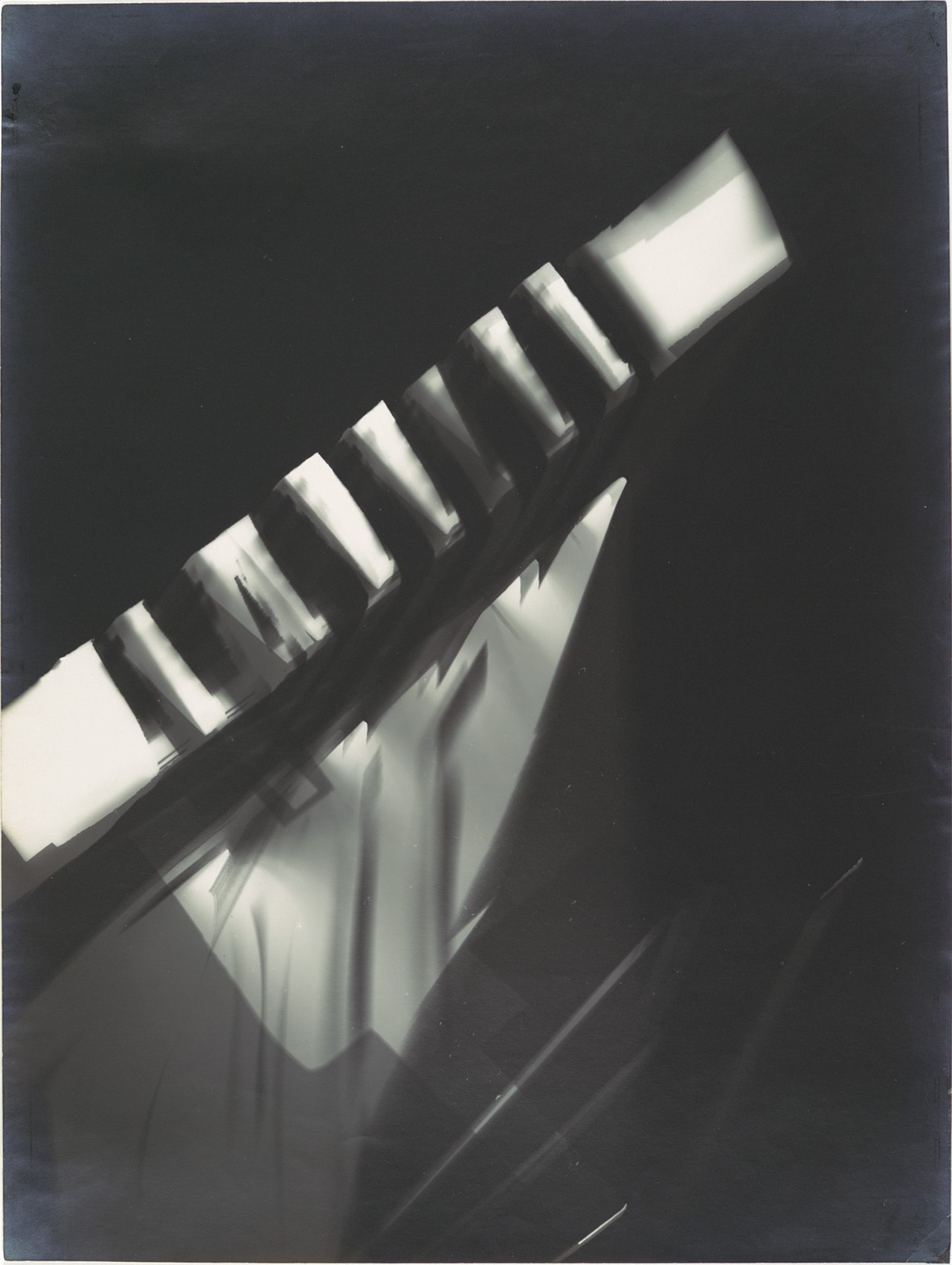
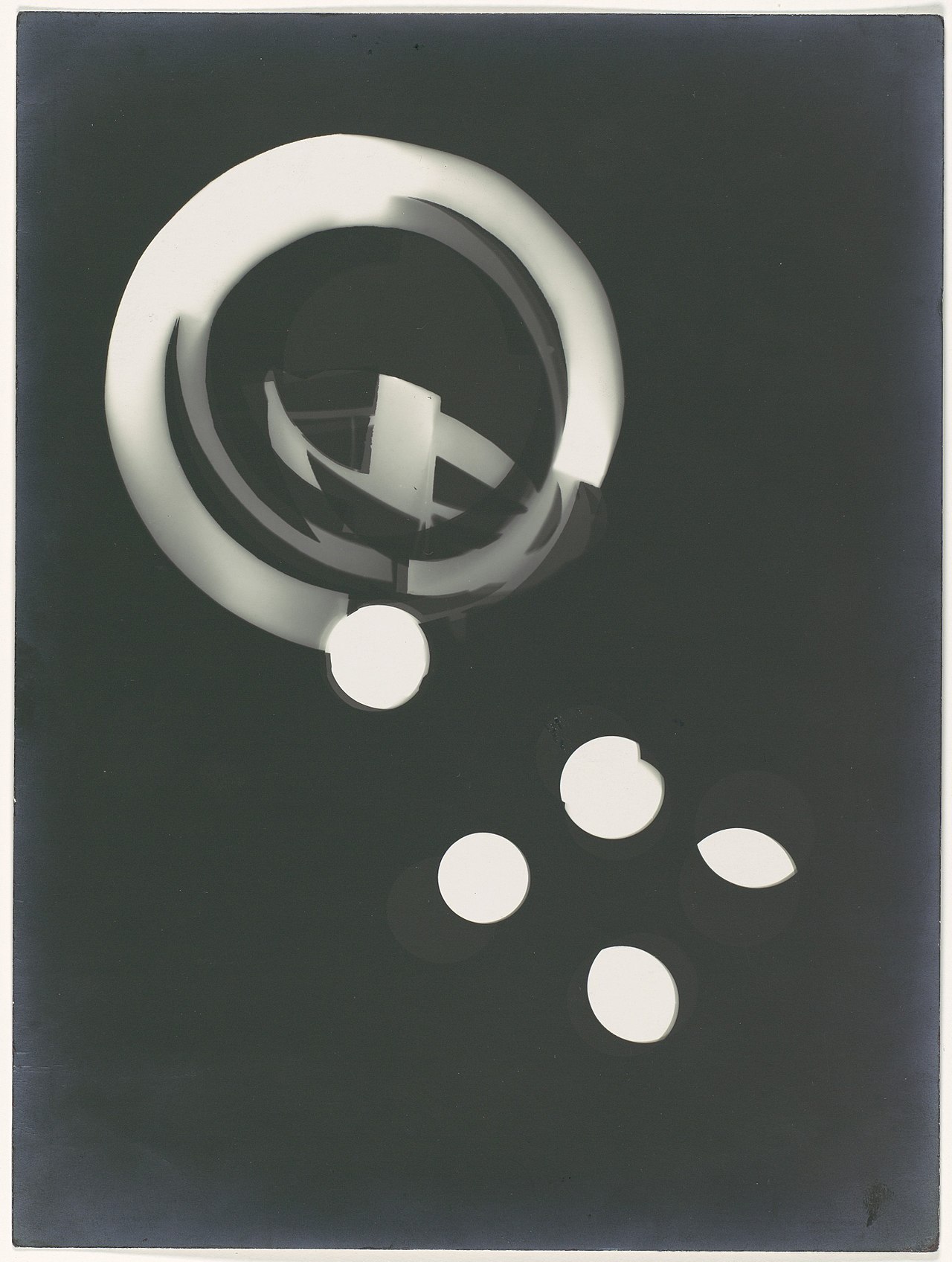
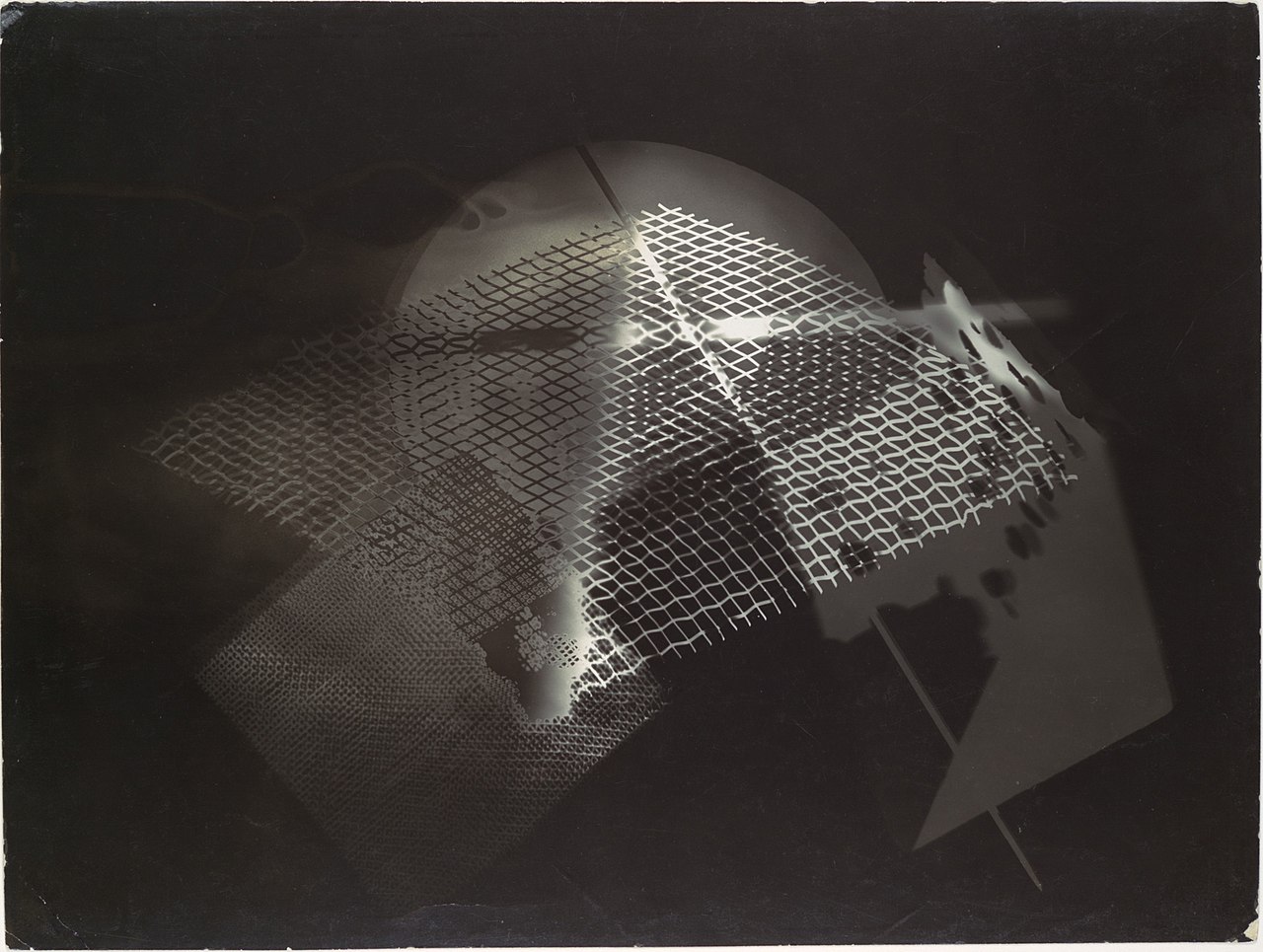
In Berlin, Moholy-Nagy encountered Constructivism, Dadaism, and the De Stijl movement, and he rapidly absorbed their lessons about abstraction, industrial materials, and the social function of art. He was introduced to photography and film, and it was here that he began his lifelong investigation into light as both medium and subject. His first photograms — images made by placing objects directly onto light-sensitive paper and exposing them without a camera — date from around 1922, and they immediately signalled a radical departure from conventional photographic thinking. Where a camera records what already exists, the photogram creates something new: a direct imprint of light, shadow, and translucency that belongs to no world outside the darkroom.
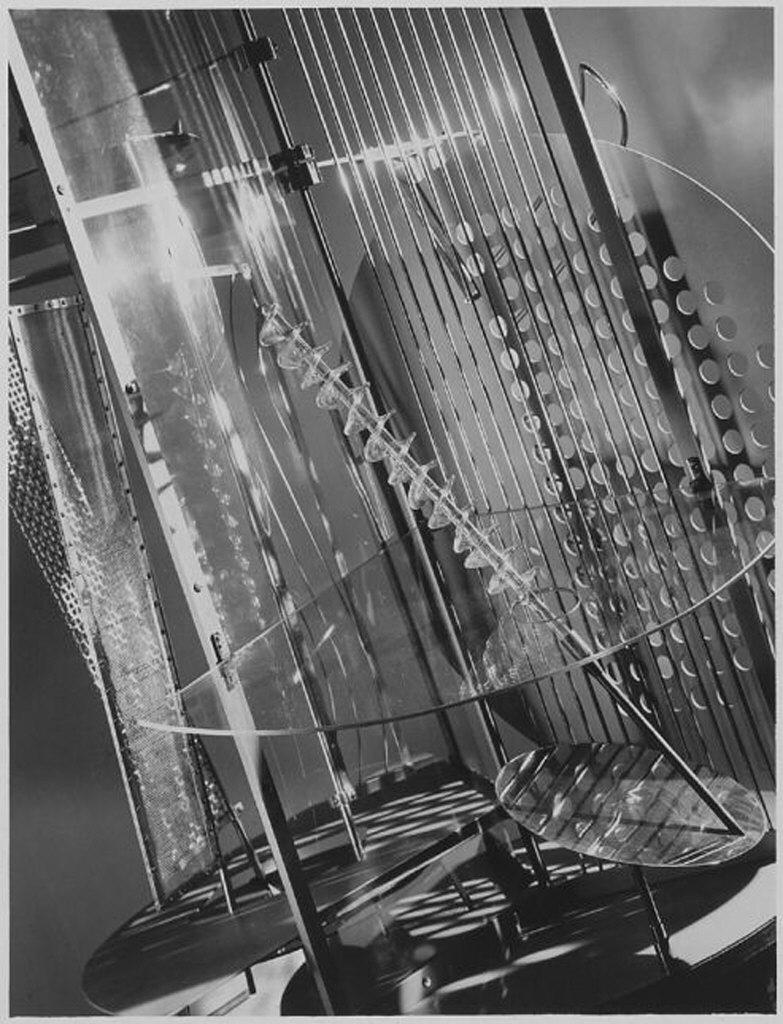
In 1923, Walter Gropius invited Moholy-Nagy to join the Bauhaus in Weimar as head of the metal workshop and the preliminary course. It was a transformative appointment, both for the school and for Moholy-Nagy himself. At the Bauhaus, he pursued a vision of art as fundamentally interdisciplinary, refusing the boundaries between painting, sculpture, photography, film, typography, and industrial design. He redesigned the Bauhaus books, introducing bold typographic layouts that integrated photography and text in ways that anticipated modern graphic design by decades. He made films, constructed kinetic sculptures, designed stage sets, and continued his photographic experiments with an energy that astonished his colleagues.
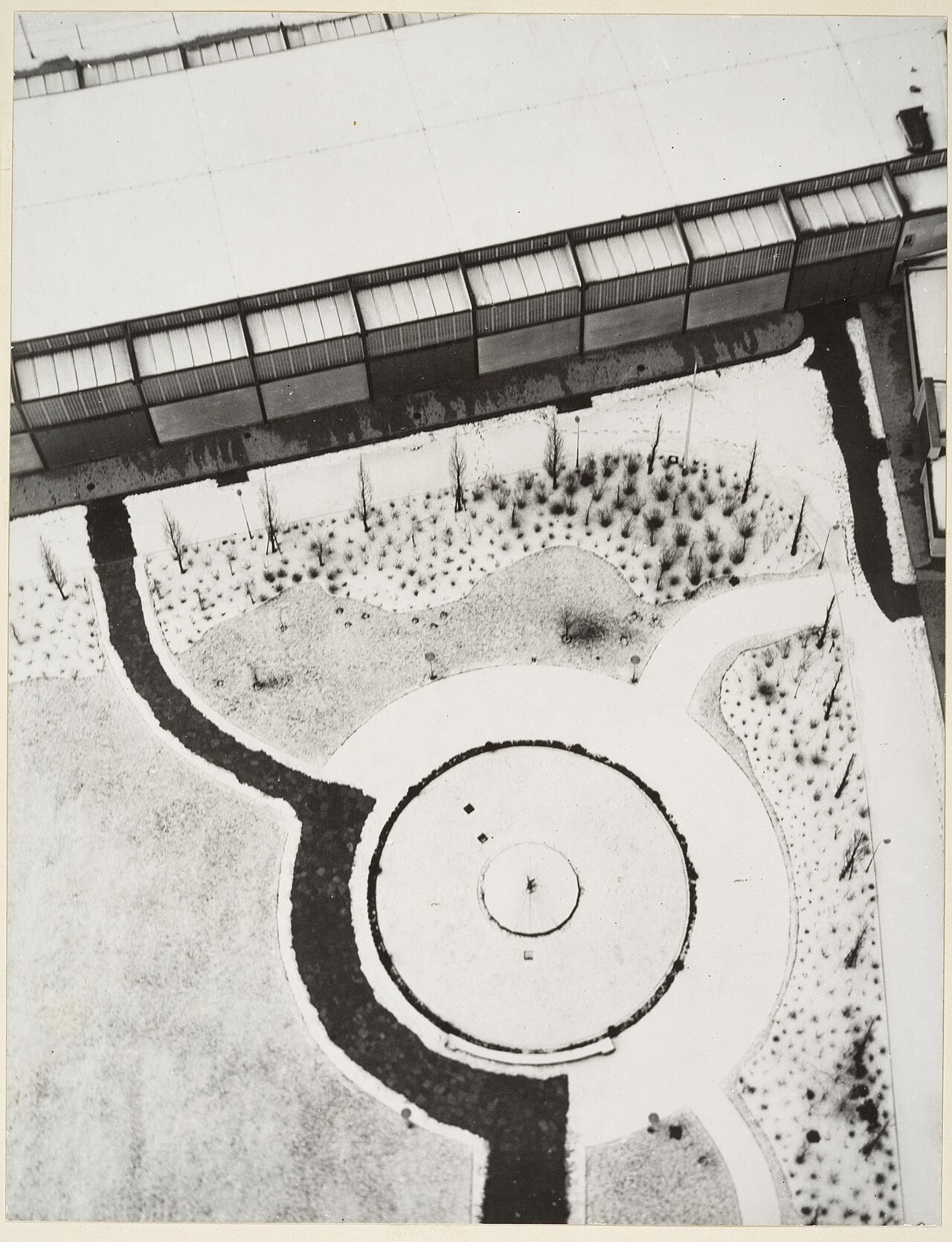
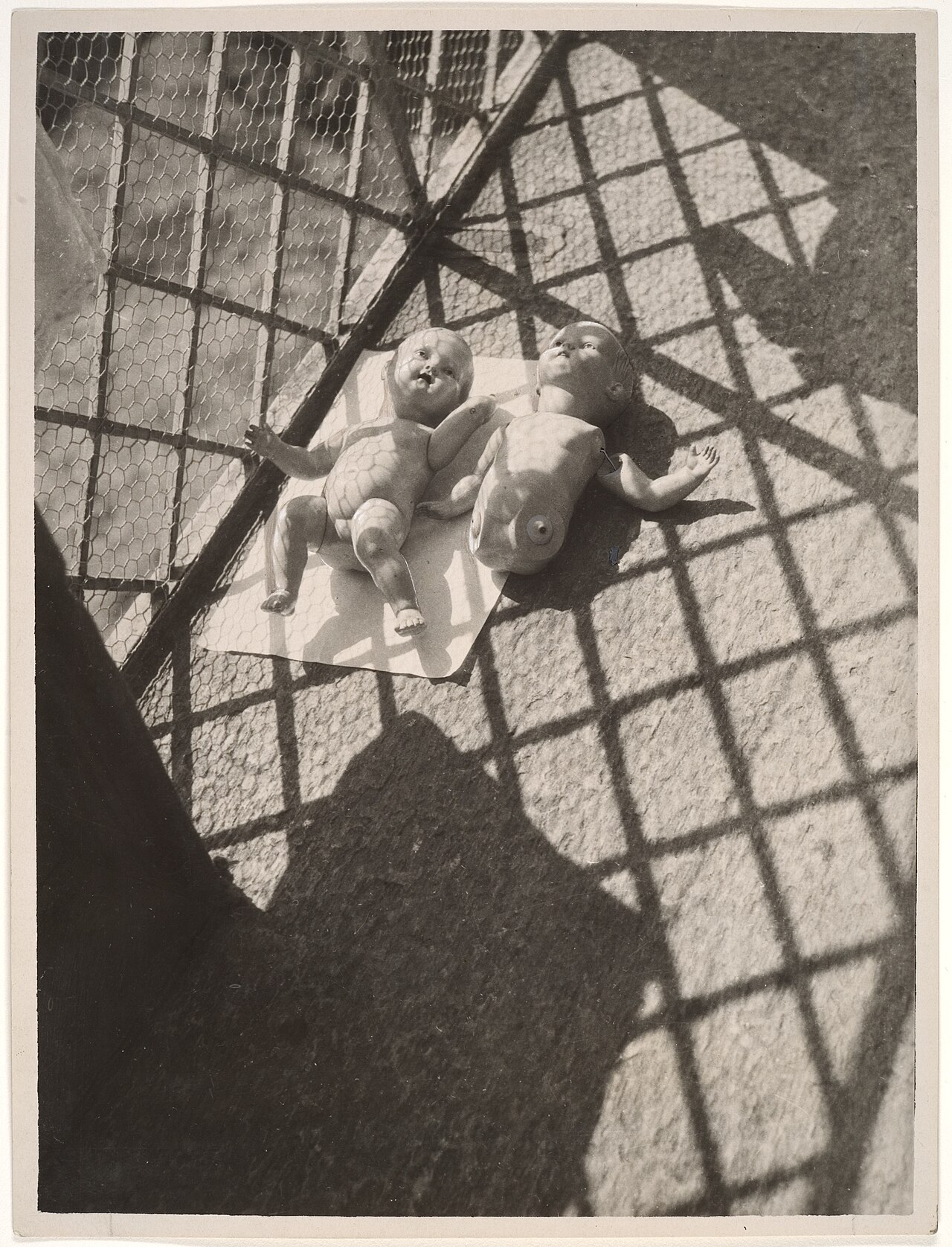
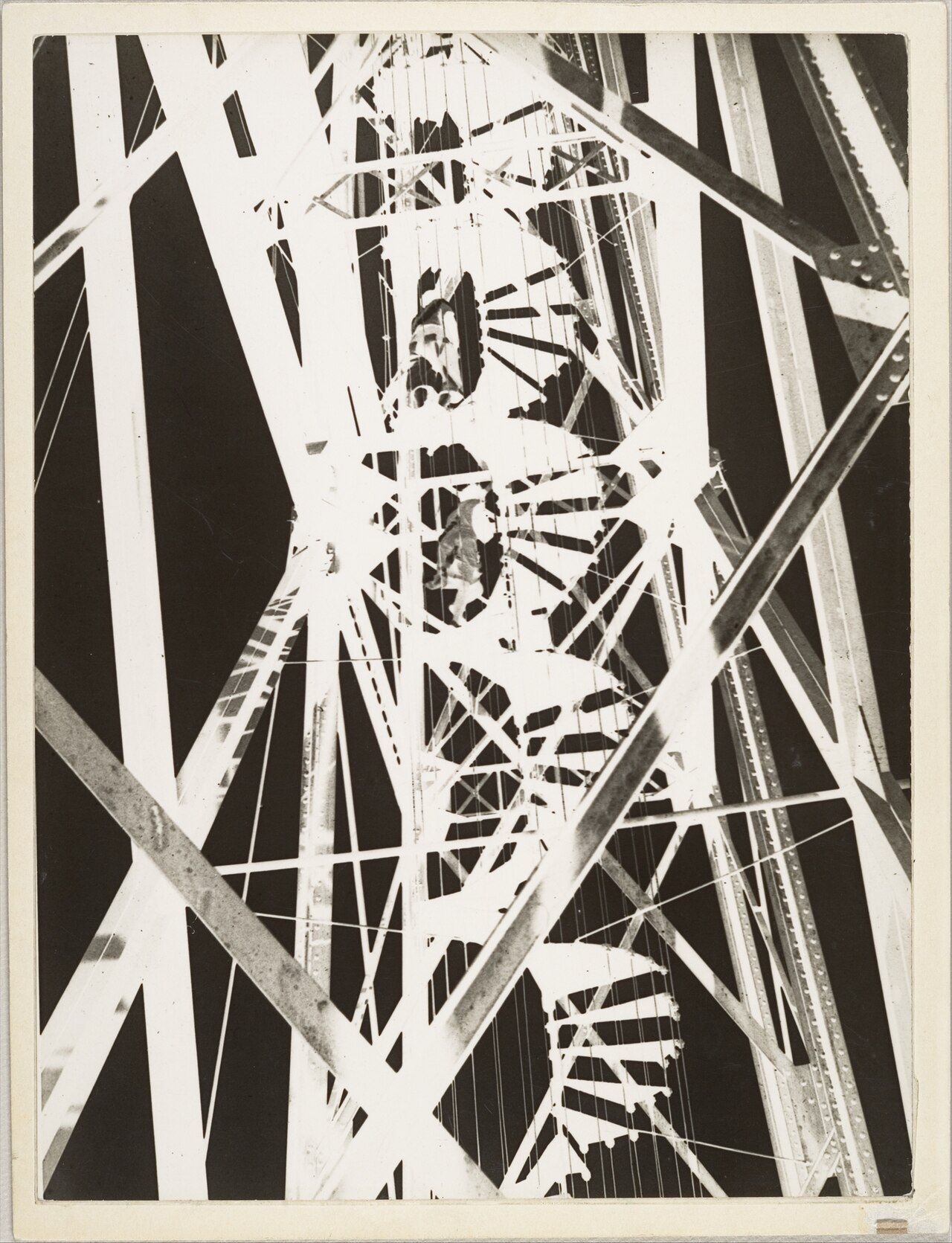
His photographic work at the Bauhaus developed along two parallel tracks. The photograms grew increasingly sophisticated, exploiting transparency, refraction, and the interaction of multiple light sources to create images of extraordinary spatial ambiguity. Simultaneously, he pursued what he called the New Vision — a programme for camera-based photography that emphasised extreme angles, vertiginous perspectives, close-ups, and the view from above and below. His photographs from the Berlin Radio Tower, shot looking straight down at the street below, became emblematic of this approach: the familiar world defamiliarised through the simple act of changing the angle of vision.
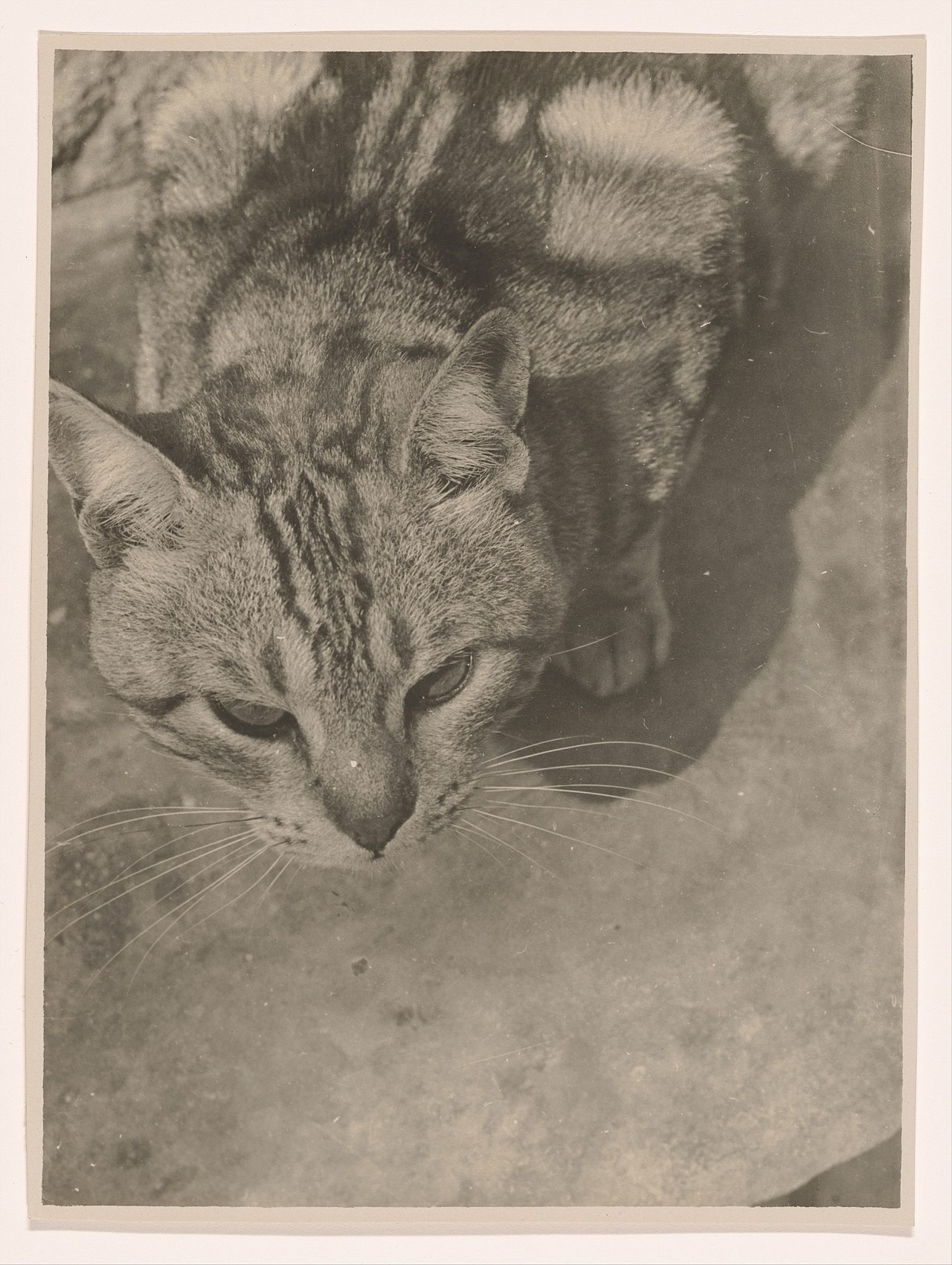
Moholy-Nagy left the Bauhaus in 1928, along with Gropius, and spent the next years in Berlin working in commercial design, film, and stage production. When the Nazis came to power in 1933, he fled Germany, first to Amsterdam and then to London, where he worked in commercial design and made a series of striking documentary photographs of the city's streets, markets, and working-class neighbourhoods. In 1937, he was invited to Chicago to establish the New Bauhaus, an American successor to the German school. The institution struggled financially and was reorganised as the School of Design and later the Institute of Design, but under Moholy-Nagy's leadership it became the most important centre for experimental art and design education in the United States.
His book Vision in Motion, published posthumously in 1947, synthesised his ideas about art, technology, education, and the role of the artist in industrial society. It argued that the new media of photography, film, and light required a new kind of seeing — not the fixed, perspectival vision inherited from the Renaissance, but a dynamic, multi-directional awareness suited to the speed and complexity of modern life. The book became a foundational text for postwar art and design education and its influence extended far beyond photography into architecture, industrial design, and media theory.
Moholy-Nagy was diagnosed with leukaemia in 1945 and died in Chicago on 24 November 1946, at the age of fifty-one. He left behind a body of work that defies easy categorisation — paintings, sculptures, photographs, photograms, films, stage designs, books, and a pedagogical legacy that transformed art education on two continents. His insistence that photography was not merely a reproductive technology but a creative medium in its own right, capable of producing visual experiences impossible by any other means, remains one of the most consequential ideas in the history of the medium.