Karen Knorr was born in 1954 in Frankfurt am Main, Germany, to an American father and a Puerto Rican mother, and grew up in San Juan, Puerto Rico, before moving to England in the 1970s. This transnational upbringing gave her an outsider's perspective on British culture that would prove invaluable when she began photographing the rituals, spaces, and social codes of the English upper classes. She studied at the Polytechnic of Central London (now the University of Westminster), where she was exposed to the theoretical ferment of British cultural studies, feminist theory, and the semiotics-influenced approaches to photography that were transforming the medium in the late 1970s and early 1980s.
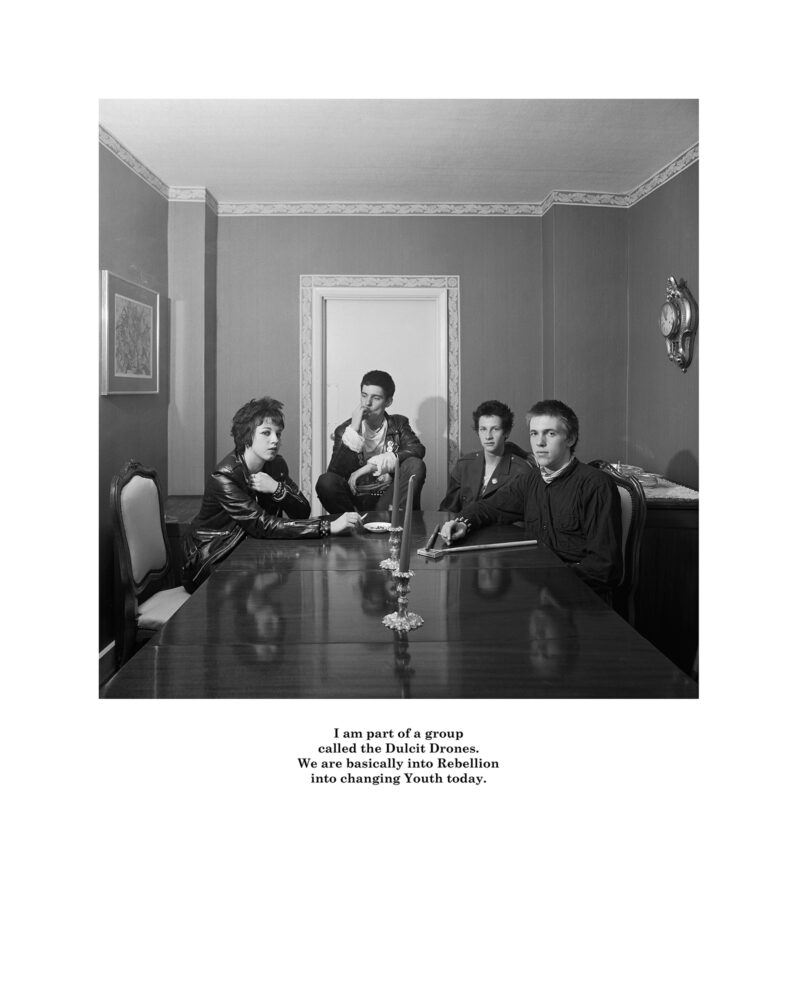
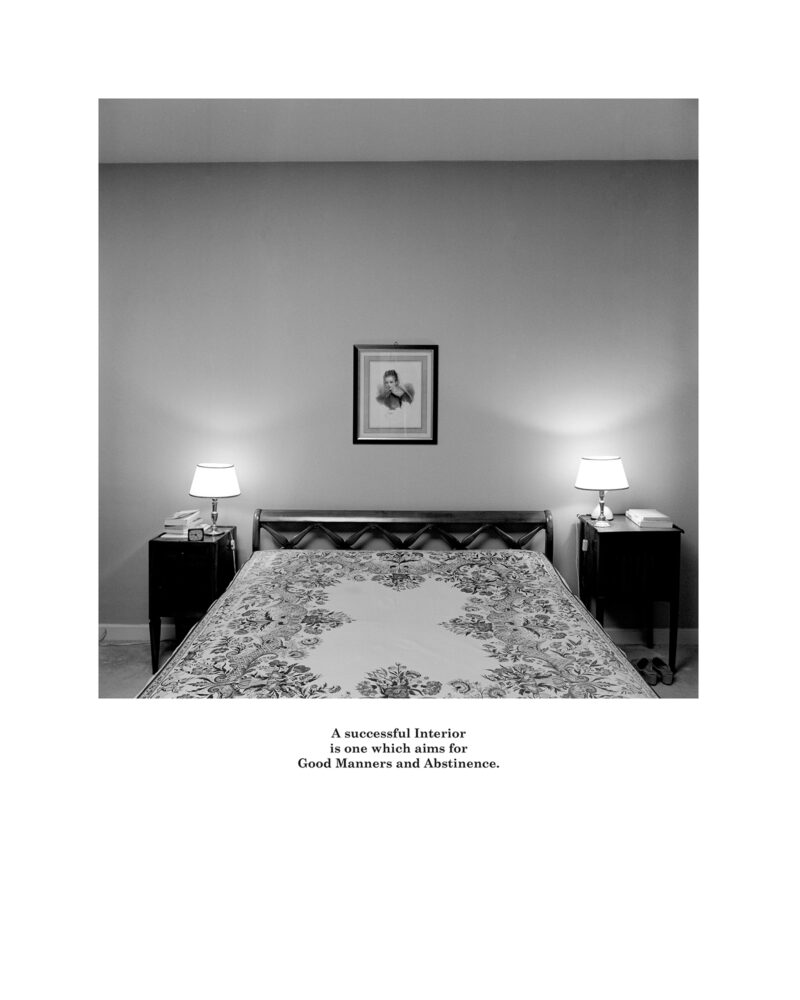
Knorr's first major body of work, Belgravia (1979–1981), documented the private clubs, drawing rooms, and social gatherings of London's wealthiest borough. Combining photographs of these rarefied interiors with text panels drawn from overheard conversations and published opinions, Knorr created a sharp, witty, and intellectually precise critique of class privilege, cultural authority, and the invisible structures of power that sustained the British establishment. The work owed debts to Victor Burgin's text-and-image practice, to the tradition of British social satire, and to the feminist critique of representation, yet it possessed a visual elegance and dry humour that were entirely Knorr's own.
The Belgravia series was followed by Gentlemen (1981–1983), which turned its attention to the all-male London clubs — the Athenaeum, the Reform, the Carlton — photographing their leather armchairs, panelled walls, and elderly members with a combination of anthropological detachment and barely concealed irony. These images of privilege at rest, accompanied by texts that ventriloquised the complacent worldview of their inhabitants, remain among the sharpest photographic commentaries on English class culture ever produced. Together, Belgravia and Gentlemen established Knorr as a photographer who could work simultaneously as an artist and a social critic, producing images that were aesthetically compelling and politically engaged.
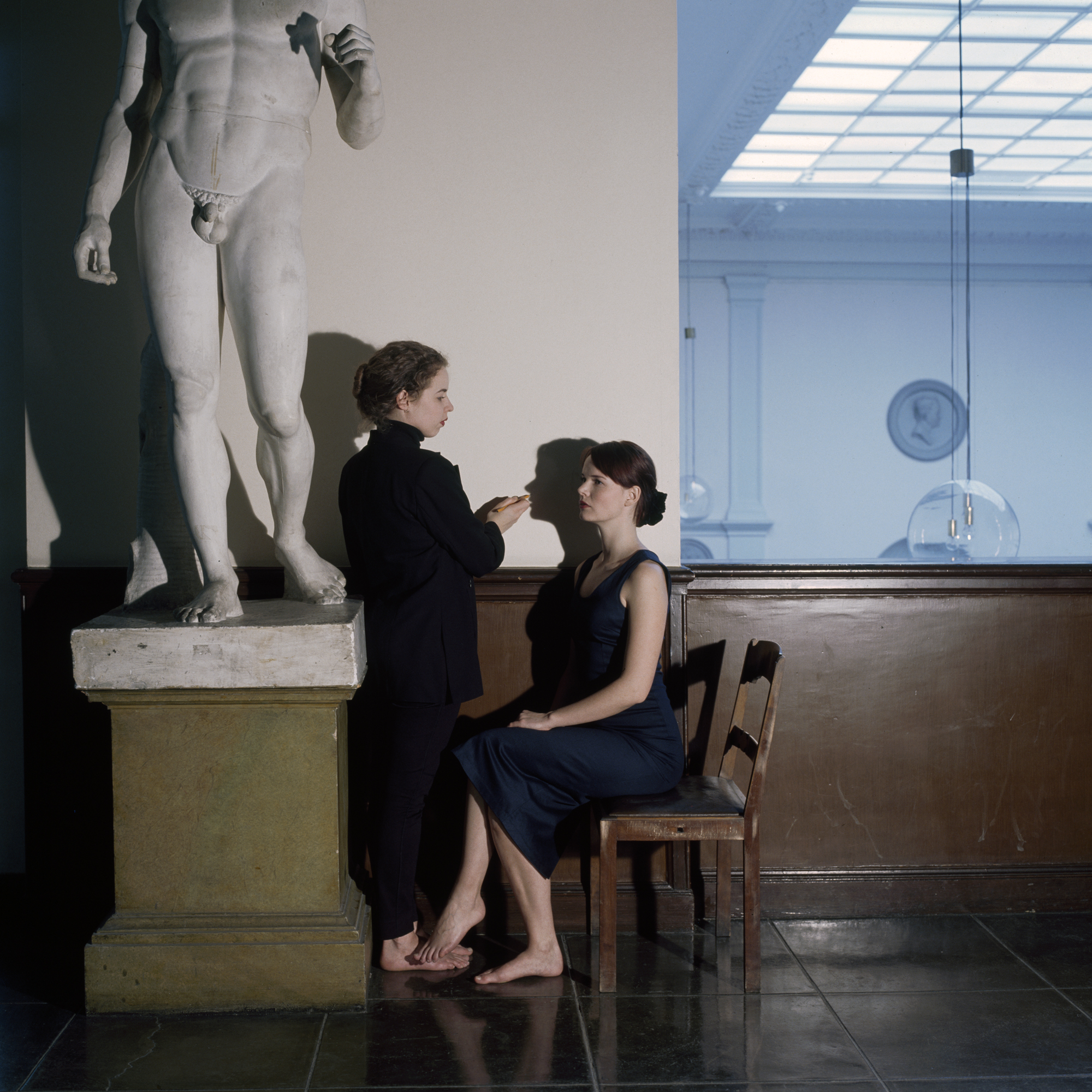
In the 1990s, Knorr shifted her focus from the social spaces of the living to the institutional spaces of culture. The Academies series (1994–2001) photographed the interiors of major European museums and galleries — the National Gallery, the Louvre, the Uffizi — examining how these institutions construct and display cultural authority. The photographs attend to the architecture of display: the gilt frames, the marble floors, the calibrated lighting, and the spatial hierarchies that determine how art is encountered. By photographing the museums as spaces rather than as repositories of individual artworks, Knorr revealed the mechanisms through which culture is curated, canonised, and presented to the public.
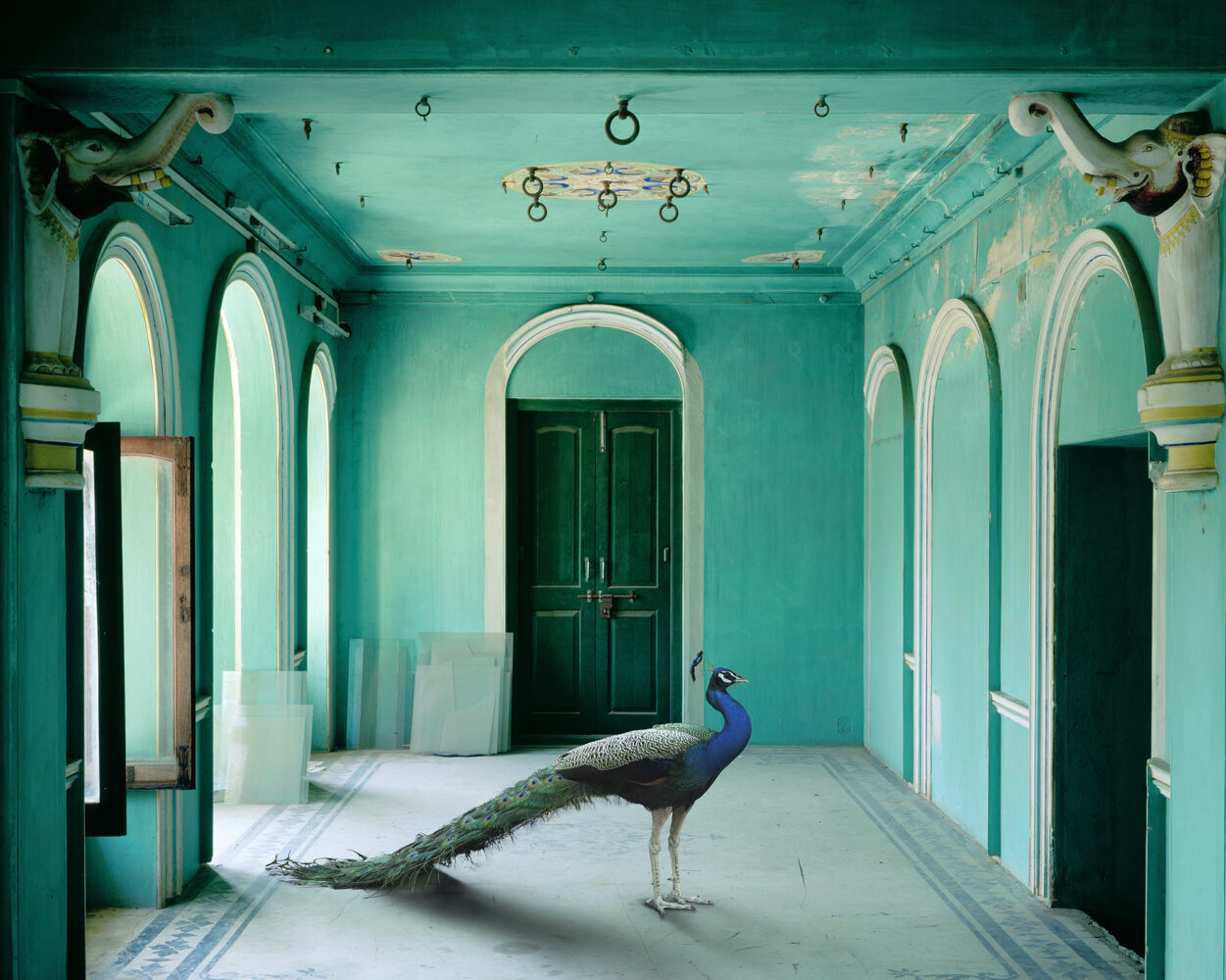
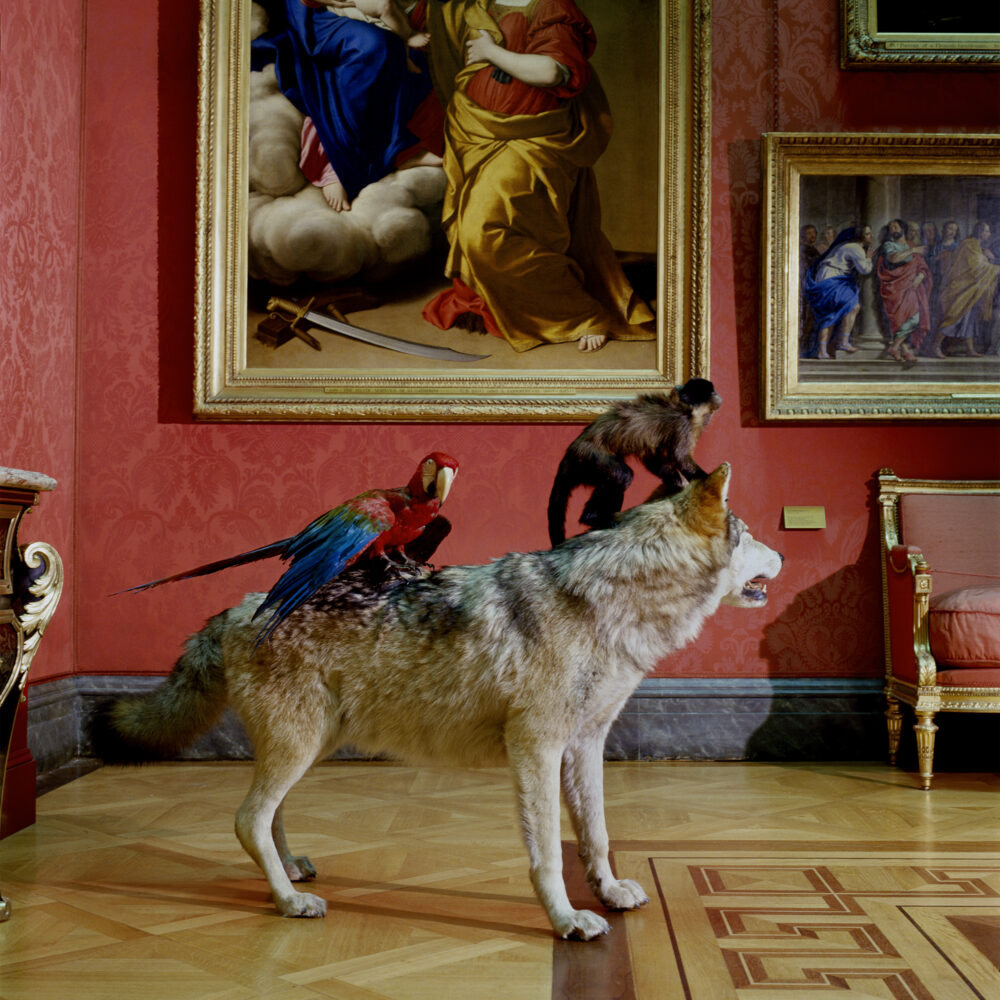
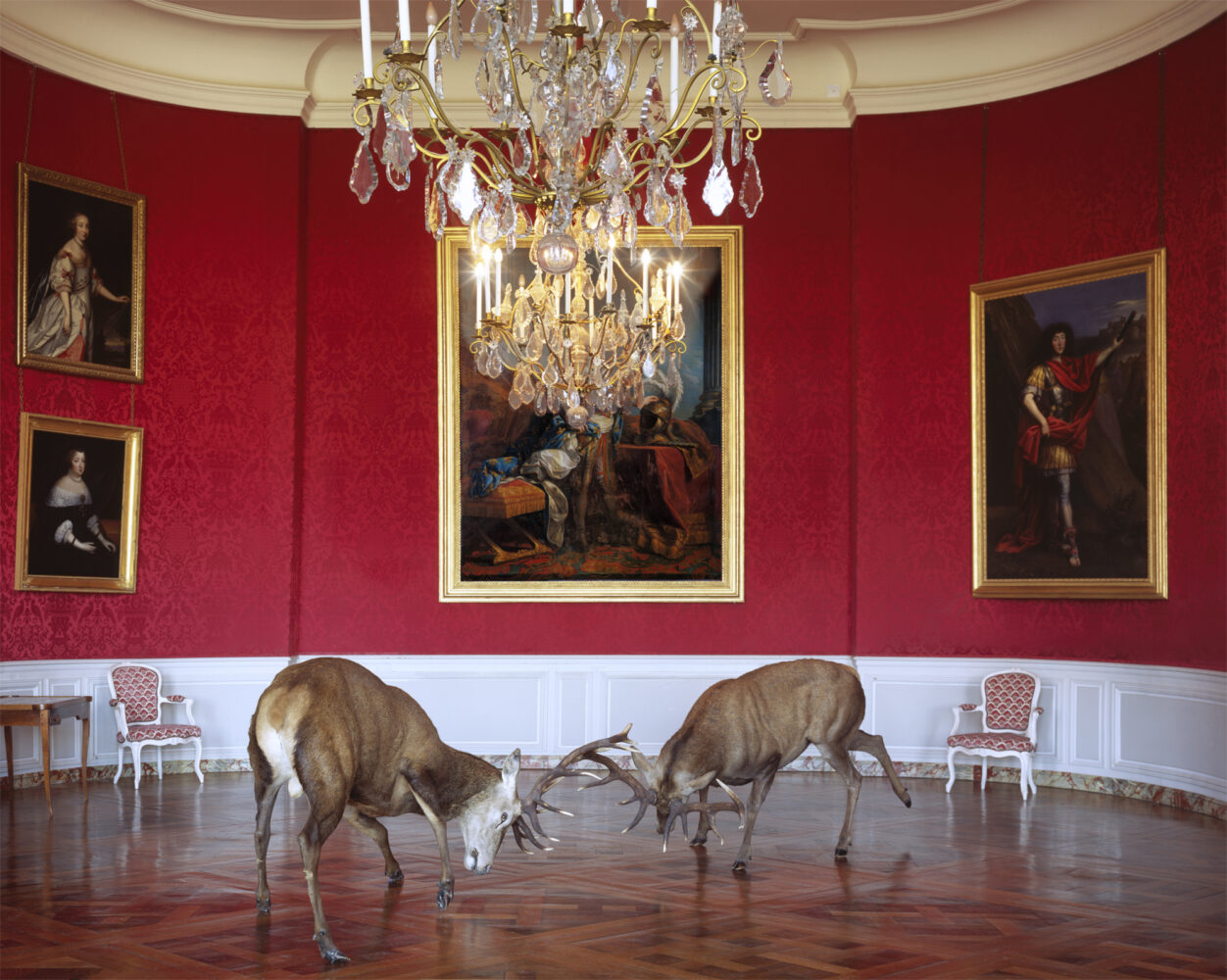
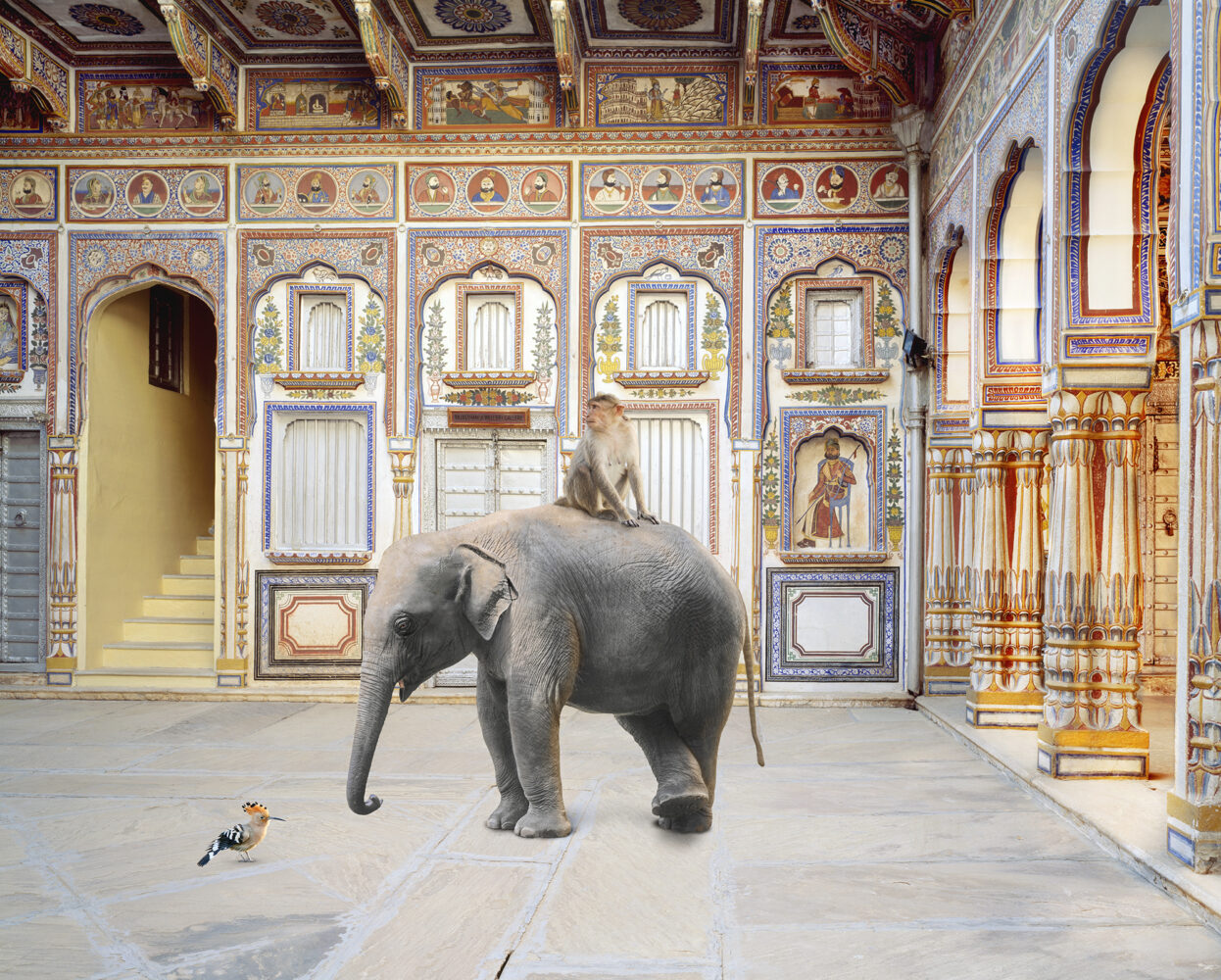
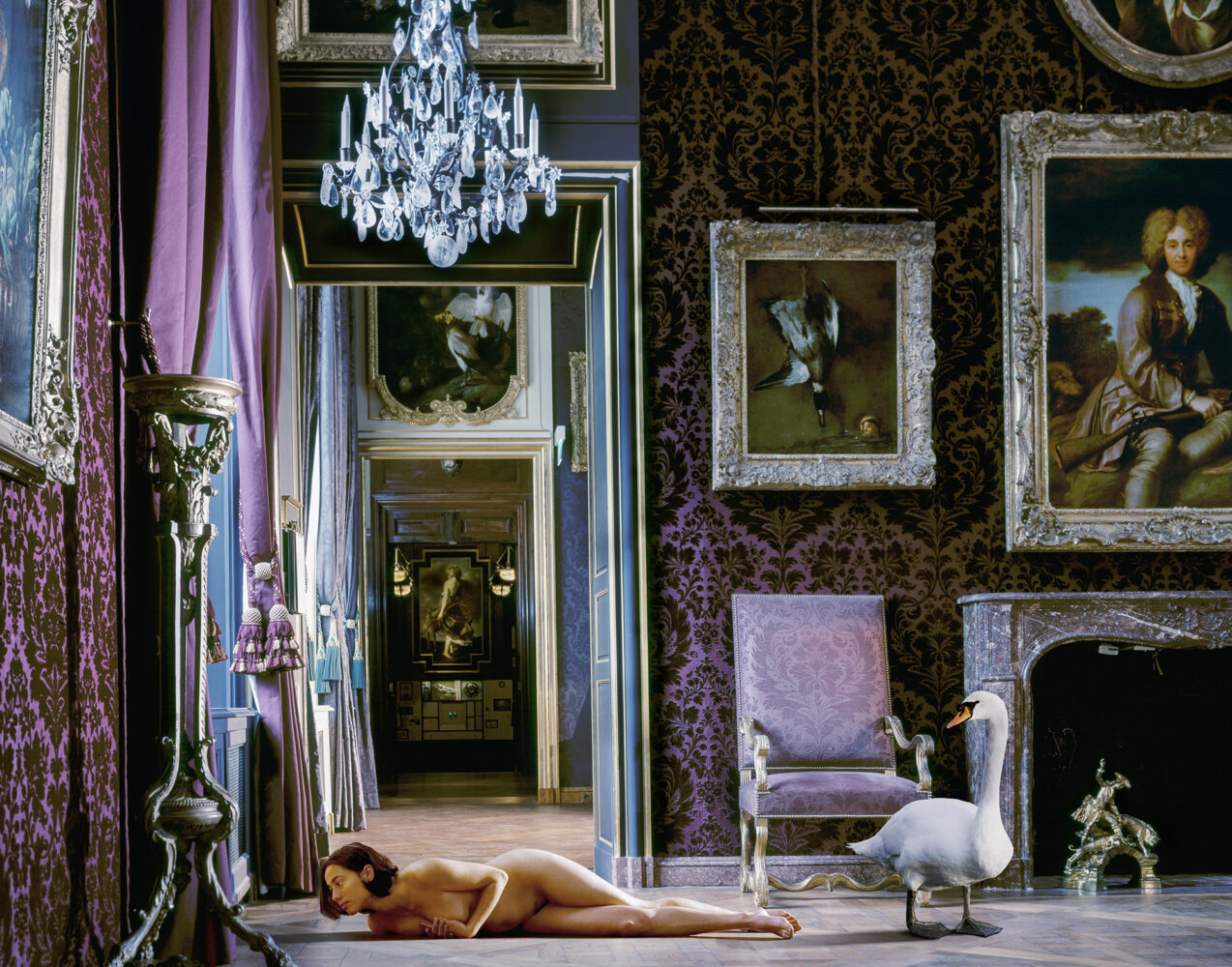
The most visually spectacular phase of Knorr's career began in the mid-2000s with the Fables series, which she has continued to develop across multiple countries and cultural contexts. In these large-format colour photographs, Knorr places digitally composited animals — herons, peacocks, deer, monkeys, cranes, leopards — into the opulent interiors of European châteaux, Indian palaces, and Asian temples. A white stag stands in the Hall of Mirrors at Versailles. A peacock spreads its tail feathers in a Rajasthani palace. A crane contemplates a Buddhist shrine. The images are visually ravishing, technically masterful, and conceptually rich, drawing on traditions of fable, allegory, and animal symbolism to interrogate the relationships between nature and culture, the sacred and the secular, the coloniser and the colonised.
The India Song series, a subset of the broader Fables project, brought Knorr's practice to the palaces, temples, and havelis of Rajasthan and other Indian states. Here, the animals she introduced into the spaces — often sacred or symbolically significant in Hindu, Jain, or Buddhist traditions — served as a means of exploring the spiritual and cultural meanings embedded in architectural spaces that European eyes might read only as exotic or decorative. The work demonstrated Knorr's capacity to engage with cultures beyond her own with intellectual seriousness and aesthetic sensitivity, avoiding the pitfalls of both exoticism and appropriation.
Throughout her career, Knorr has maintained parallel commitments to practice and to education. She is Professor of Photography at the University for the Creative Arts in Farnham, and her teaching has influenced a generation of photographers working at the intersection of conceptual practice and visual beauty. Her work has been exhibited at Tate Britain, the Photographers' Gallery, the Musée de la Chasse et de la Nature in Paris, and museums across Asia and Europe.
Knorr's contribution to contemporary photography lies in her demonstration that conceptual rigour and visual pleasure need not be opposed. Her images are simultaneously beautiful and critical, seductive and analytical, drawing viewers in through their formal elegance while prompting reflection on the structures of power, privilege, and cultural authority that the spaces they depict embody. In an era when the boundaries between documentary, conceptual, and fine art photography have largely dissolved, Knorr's practice stands as a model of how these traditions can be combined to produce work that is both intellectually substantial and visually unforgettable.