Joel Sternfeld was born in 1944 in New York City and grew up on the Upper West Side of Manhattan. He studied painting at Dartmouth College, graduating in 1965, and it was during his undergraduate years that he began to experiment with photography. His early interest in the medium was shaped less by the prevailing photojournalistic tradition than by a fascination with colour itself — the way that light, weather, and season could transform the meaning of a place. After Dartmouth, he pursued graduate work at the Tyler School of Art in Philadelphia, and by the early 1970s he had committed fully to photography, working exclusively in colour at a time when the art world still regarded black and white as the serious medium.
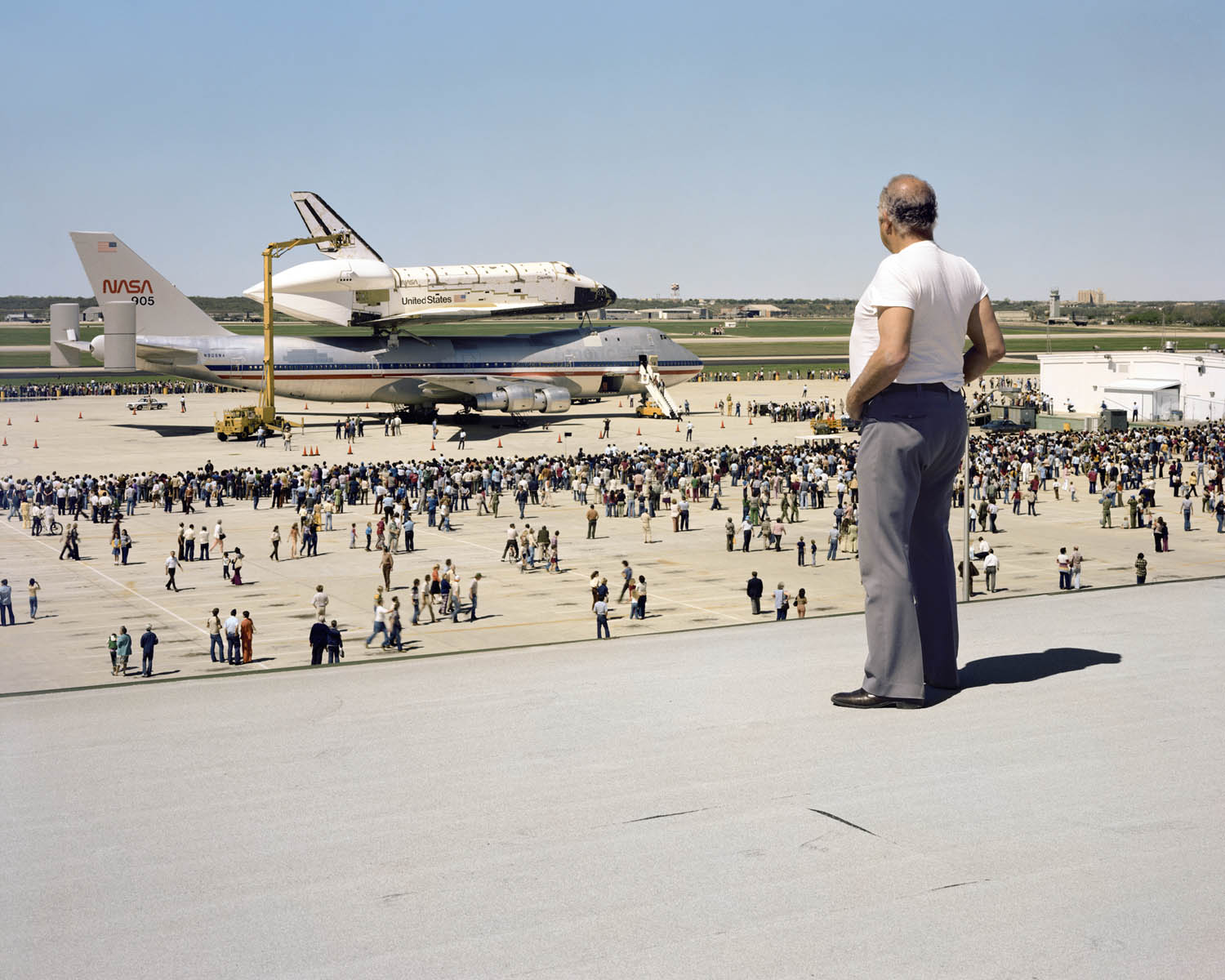
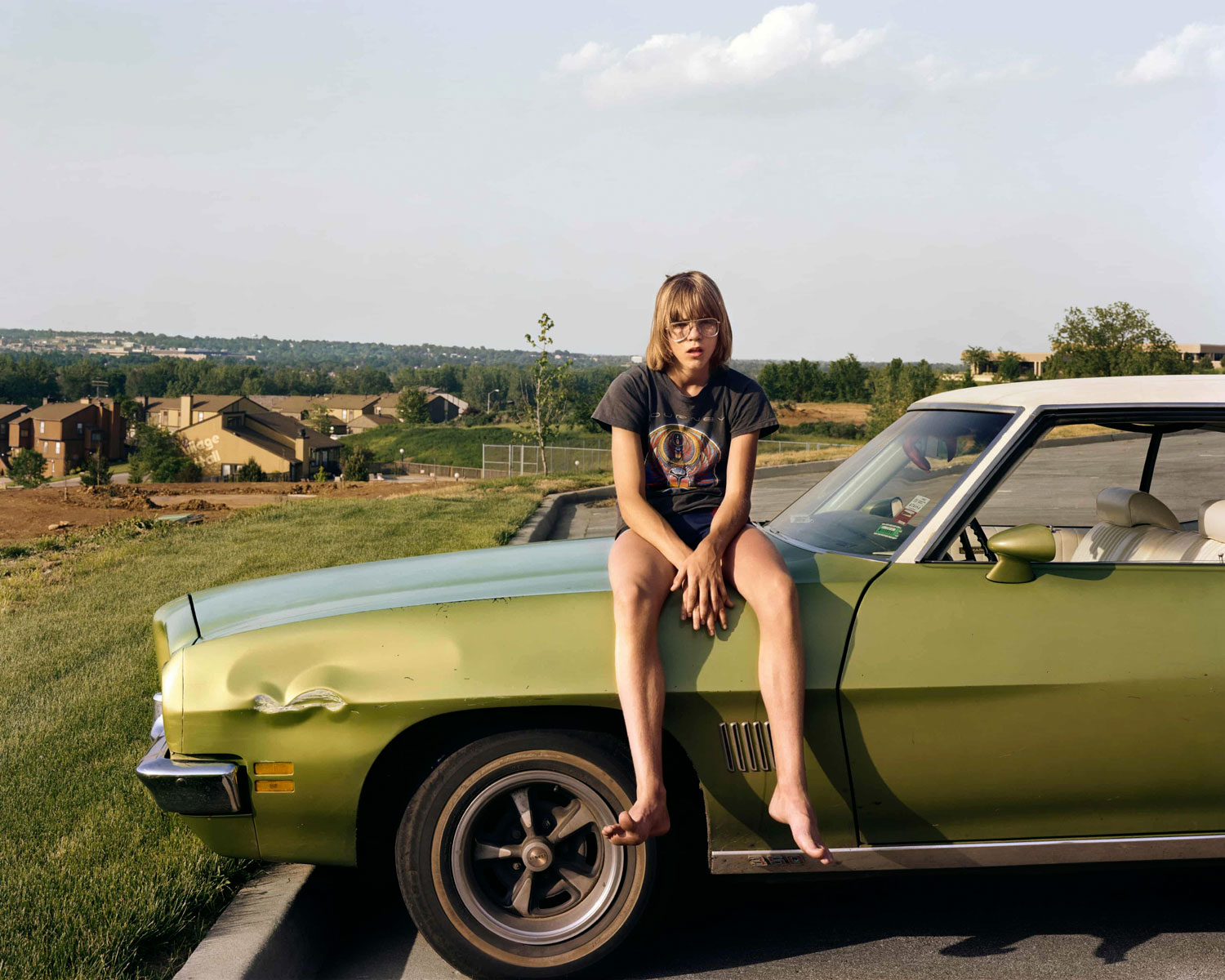
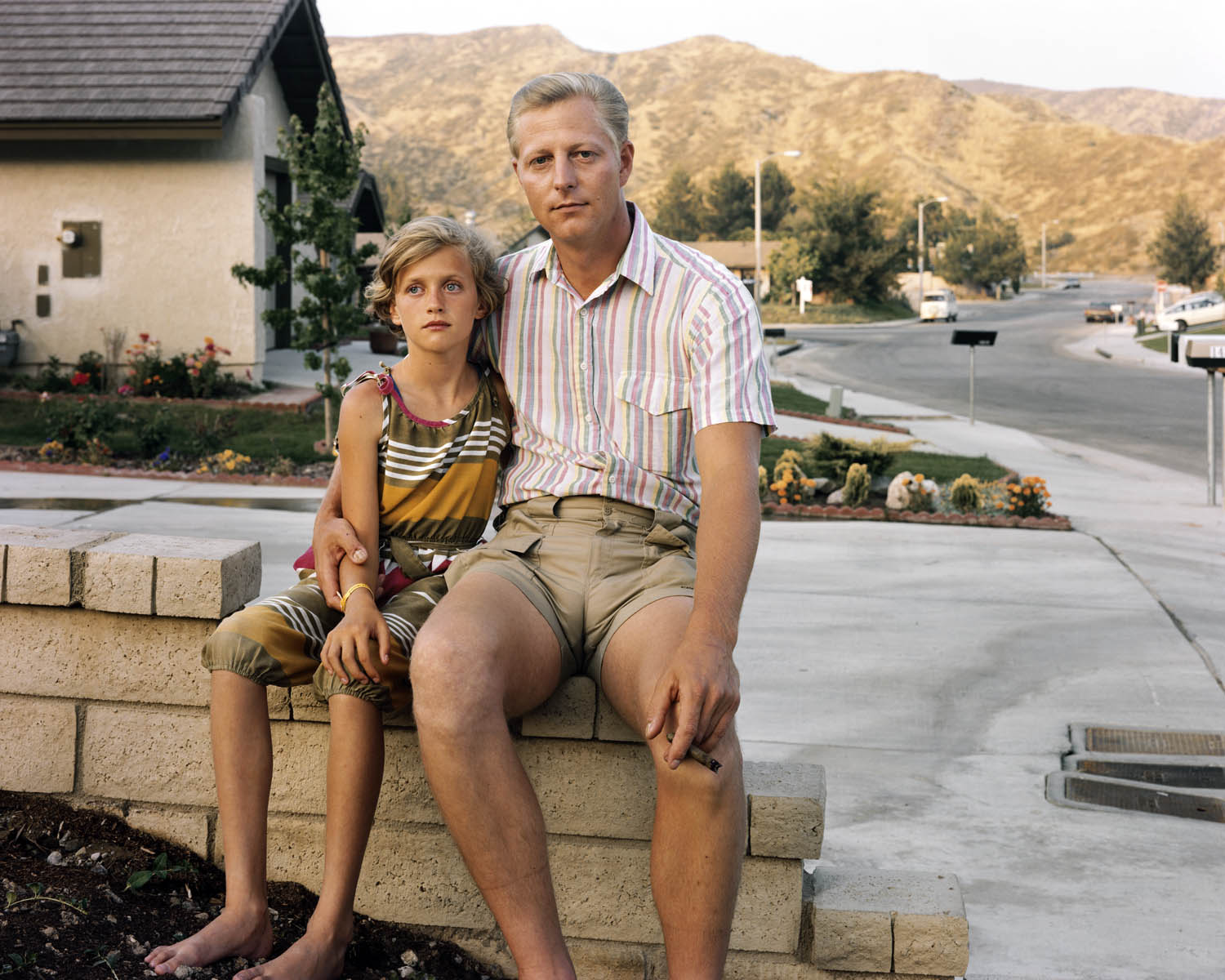
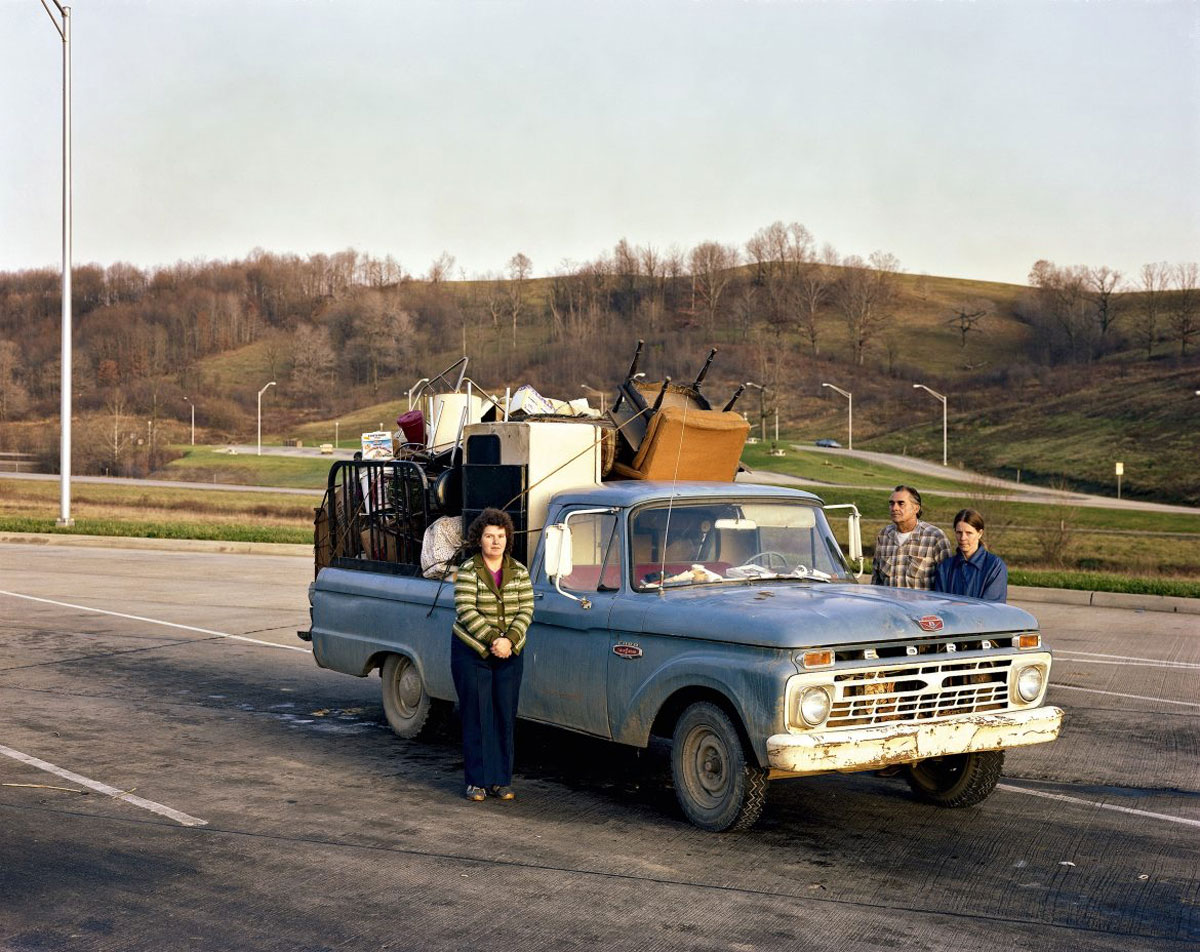
Sternfeld's early street photographs, made with a small-format camera in New York, Chicago, and other American cities, demonstrated his sensitivity to the accidental collisions of colour, gesture, and narrative that occur in public space. But it was his decision, in 1978, to acquire an 8x10 large-format view camera and set out across America in a Volkswagen camper van that would produce the work for which he is best known. Over the next several years, Sternfeld traversed the country, photographing not the iconic landmarks of the American road trip but the ordinary, overlooked, and frequently strange intersections of nature and culture that define the contemporary landscape.
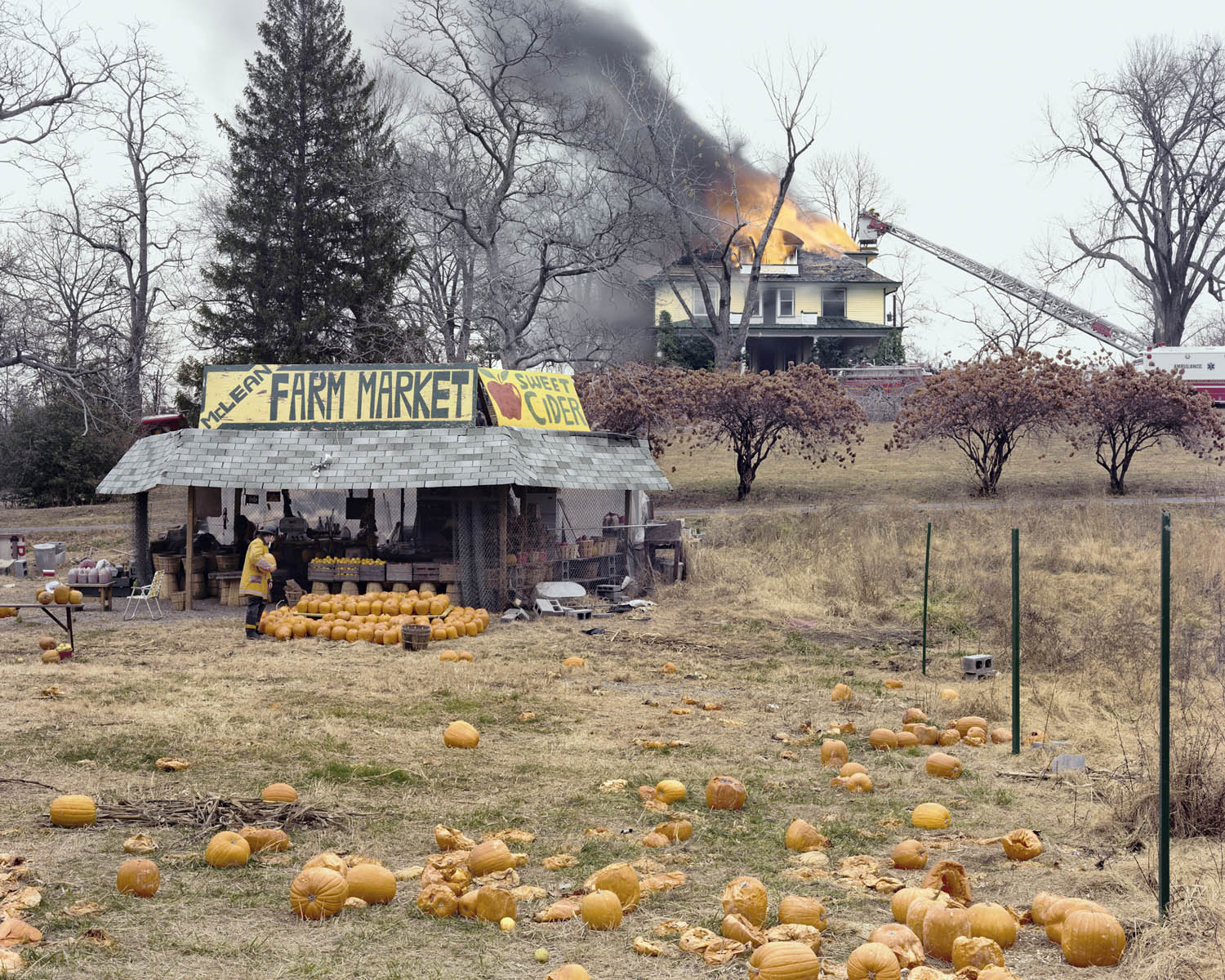
The resulting body of work, published in 1987 as American Prospects, is one of the defining photobooks of the late twentieth century. Its images are united not by geography or theme but by a sensibility — a way of seeing in which beauty and unease coexist without resolution. The famous photograph of a fireman shopping for pumpkins while a house burns in the background exemplifies Sternfeld's method: the image presents two simultaneous realities, inviting the viewer to hold them both without rushing to judgement. The large-format camera's extraordinary descriptive power ensures that every detail is available for scrutiny, while Sternfeld's feeling for colour — the golden light of autumn, the acid greens of Florida, the bleached whites of the desert — gives each image an almost painterly richness.
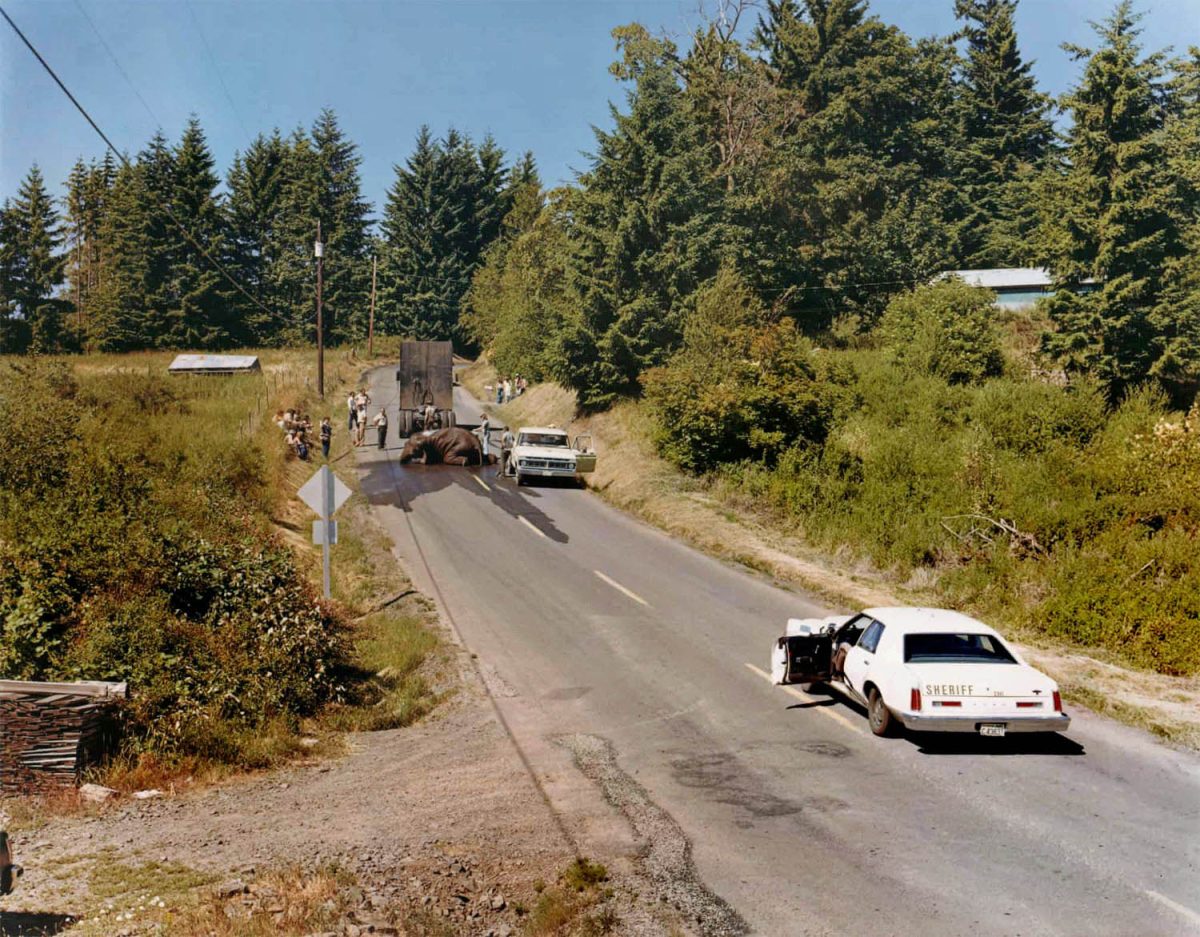
Where William Eggleston had demonstrated that colour could be art and Stephen Shore had shown that the banal could be beautiful, Sternfeld brought to colour photography a narrative complexity that was entirely his own. His images tell stories, or rather, they suggest stories whose beginnings and endings remain tantalizingly out of reach. A man carrying a Christmas tree down a desolate street, a beached whale surrounded by onlookers, a solitary figure on a park bench as autumn leaves drift — each photograph is a fragment of a larger, unknowable narrative, and it is this quality of suspended meaning that gives American Prospects its enduring power.
Following American Prospects, Sternfeld pursued a series of thematically focused projects that expanded his practice while retaining its core commitment to the photograph as a vehicle for social and political inquiry. On This Site (1996) documented places across America where acts of violence had occurred — lynchings, shootings, bombings — photographing the locations as they appeared decades later, peaceful and unremarkable, the horror erased from the visible surface. The project demonstrated photography's capacity to engage with absence and memory, with what is not visible in the frame being as important as what is.
In the early 2000s, Sternfeld turned his attention to the High Line, the abandoned elevated railway on Manhattan's West Side that had become an unlikely wilderness above the streets. His photographs of the rusted tracks overgrown with wildflowers and grasses, made over the course of several seasons, were instrumental in the campaign to preserve the structure as a public park. The resulting book, Walking the High Line (2001), demonstrated the power of photography to intervene directly in the life of a city, transforming public perception of a derelict structure into a vision of urban possibility.
Throughout his career, Sternfeld has maintained a parallel commitment to teaching, holding positions at Sarah Lawrence College, Yale University, and the International Center of Photography. His influence on subsequent generations of colour photographers has been profound, extending through students and through the example of a practice that refuses to separate aesthetic pleasure from moral and political engagement. His photographs insist that the world is simultaneously beautiful, absurd, heartbreaking, and strange, and that the task of the photographer is not to resolve these contradictions but to hold them in the frame, inviting the viewer to see more than they expected.
Now in his eighties, Sternfeld continues to photograph and to exhibit work that engages with the social and environmental questions of the present moment. His contribution to the medium extends far beyond any single body of work. He demonstrated that colour photography could be as intellectually rigorous and emotionally complex as any other art form, and that the large-format camera, far from being an anachronism, was the ideal instrument for recording the layered, contradictory texture of American life at the turn of the millennium.