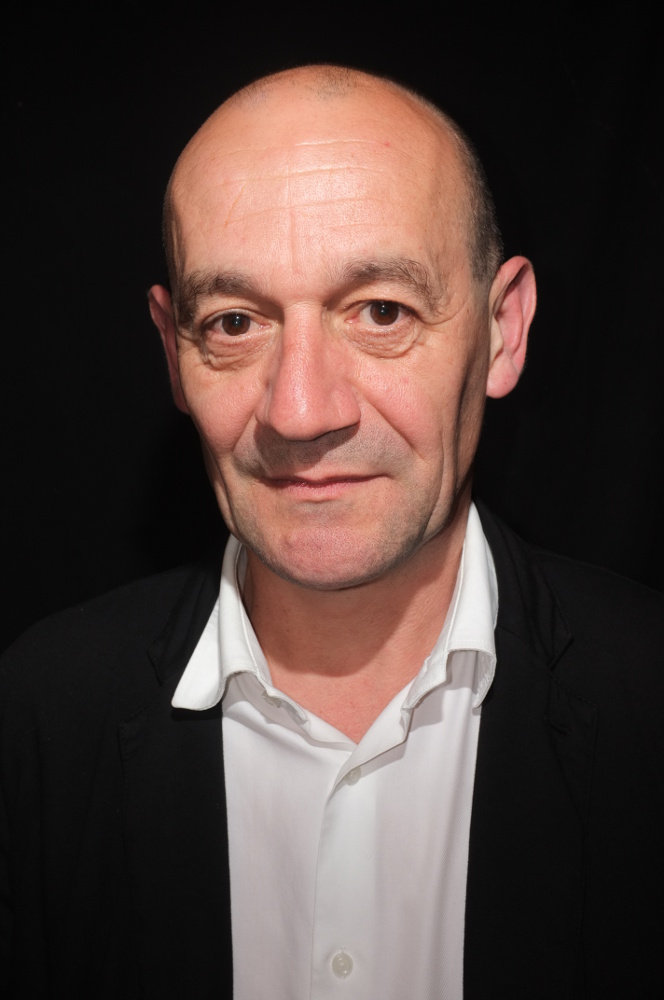
Joachim Schmid was born in 1955 in Balingen, a small town in Baden-Württemberg, Germany, and has devoted his career to one of the most radical and sustained interrogations of photography's nature and purpose ever undertaken. Since the early 1980s, working from Berlin, Schmid has produced an enormous body of work without ever — or almost ever — pressing a shutter button himself. Instead, he collects, sorts, recombines, and recontextualises the photographs that already exist in overwhelming abundance: found prints picked up from city streets, discarded snapshots recovered from flea markets and rubbish bins, and, in more recent decades, the billions of images uploaded daily to the internet.
Schmid's foundational project, Bilder von der Straße (Pictures from the Street), began in 1982 and continued for thirty years, finally concluding in 2012. Over three decades, Schmid systematically collected torn, crumpled, and discarded photographic prints found on the streets of cities around the world — Berlin, Paris, New York, São Paulo, and dozens of others. Each recovered fragment was carefully preserved, mounted, and numbered. The accumulation eventually reached nearly a thousand images, forming an accidental archive of vernacular photography that documented the lifecycle of the photographic print in the twentieth century: from cherished object to discarded refuse.
In 1989, Schmid issued what became his most famous provocation: a manifesto declaring that no new photographs needed to be taken. The statement was partly tongue-in-cheek, partly deadly serious. It challenged the assumption, fundamental to photographic practice, that the photographer's primary task was to produce new images. Schmid argued that the world was already drowning in photographs — billions of them, made by amateurs and professionals alike, most destined to be seen briefly and forgotten. The more urgent and interesting task, he suggested, was to attend to the images that already existed: to sift through the photographic surplus, to find meaning in what had been overlooked, to reveal the patterns and repetitions that made the vast archive of vernacular photography a mirror of collective human experience.
This proposition informed a series of major projects that followed. Archiv (1986–1999) was a vast sorting exercise in which Schmid organised hundreds of found photographs into typological categories — groups of images united by visual similarity rather than subject matter. A dozen photographs of people standing in front of cars formed one category; a dozen of birthday cakes formed another. The project revealed the astonishing repetitiveness of vernacular photography, the way people across cultures and decades unconsciously compose the same images of the same occasions, and it raised unsettling questions about originality, authorship, and the nature of photographic meaning.
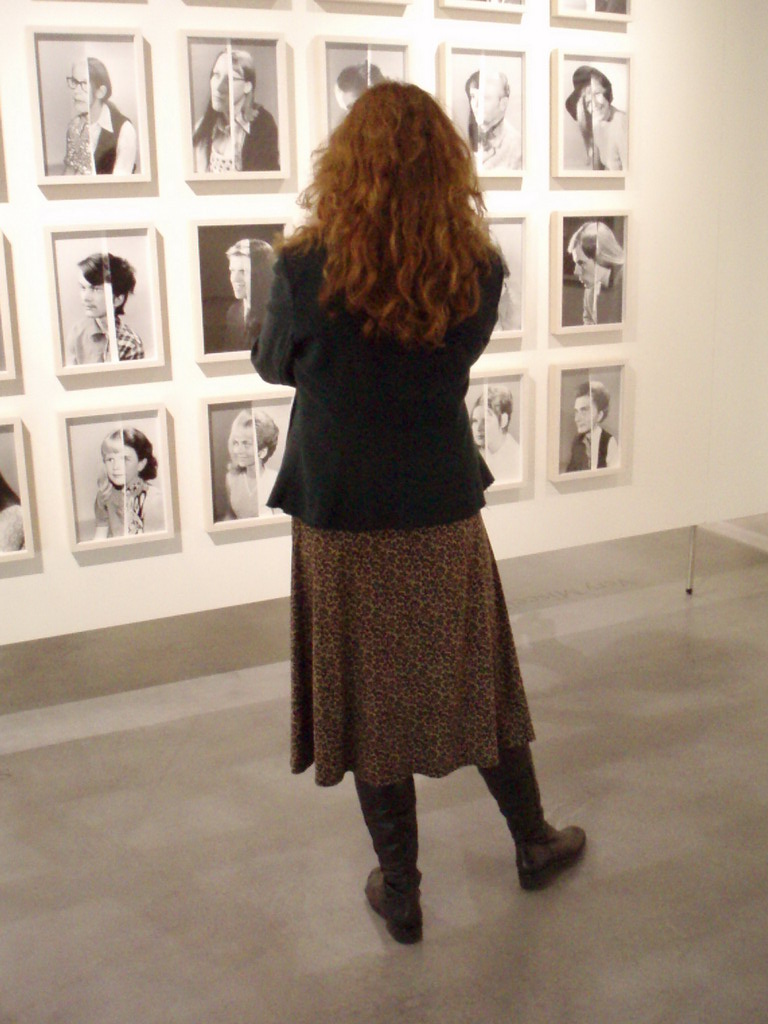
Photogenetic Drafts (1991) took a different approach. Schmid collected torn photographs found on the street and reassembled their fragments with pieces from other torn photographs, creating uncanny composite portraits that were at once recognisable as faces and deeply strange. The series played on the conventions of photographic portraiture while demonstrating the extraordinary resilience of the human visual system in its ability to read faces even from fragmentary and contradictory information.
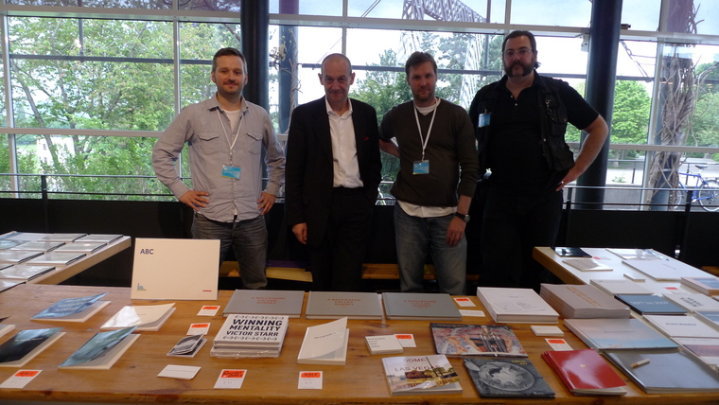
With the rise of the internet and digital photography, Schmid's project gained a new urgency and a vast new source material. Other People's Photographs (2008–2011) was a series of ninety-six print-on-demand books, each assembled from images harvested from public photo-sharing platforms and organised by category: pets, food, selfies, sunsets, tattoos, cars, and dozens more. The project was both a taxonomy of contemporary visual culture and an implicit commentary on the staggering volume and homogeneity of the images that humanity now produces every day. Published through Blurb, the books were themselves artifacts of the print-on-demand economy that was transforming the photobook landscape.
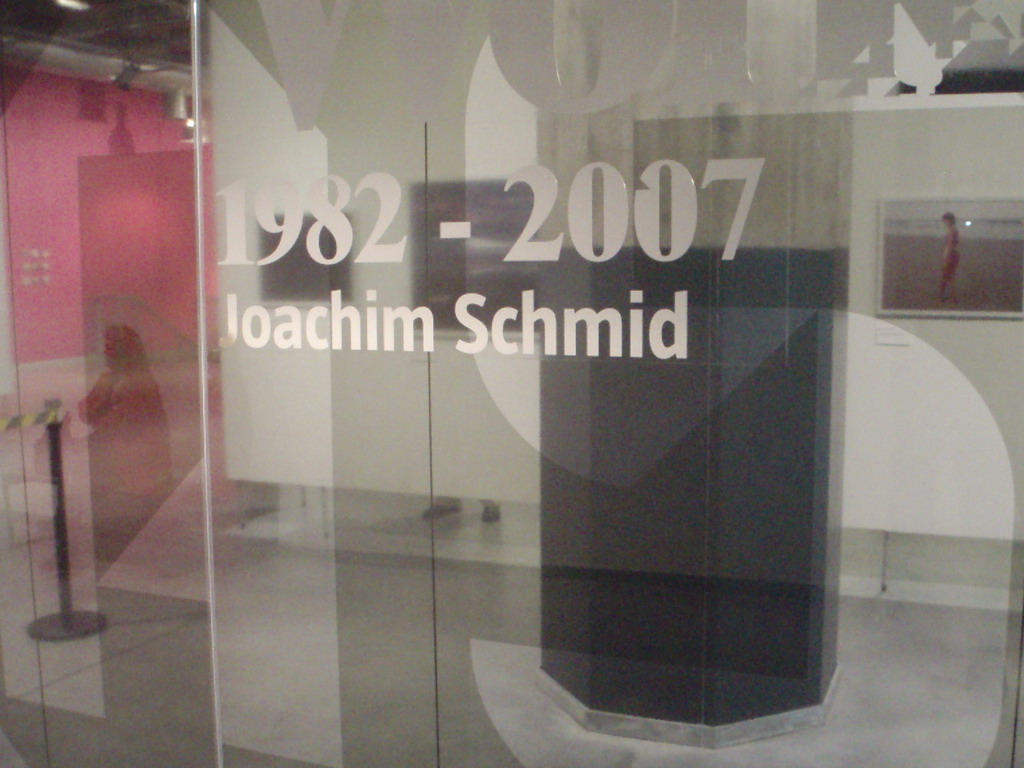
Schmid has exhibited widely in museums and galleries internationally, including the Museum of Modern Art in New York, the Photographers' Gallery in London, and numerous institutions across Europe. He has also written extensively as a critic and historian of photography, and his journal Schaden, which he edited from 1993 to 2003, was one of the most incisive critical publications on contemporary photography of its era. His critical writing complements his artistic practice, both addressing the same fundamental question: what does it mean to make photographs in a world that is already saturated with them?
Schmid's legacy is that of an artist who understood, earlier and more clearly than most, that the condition of photography in the modern world is one of radical surplus. His work anticipated the concerns that would become central to art and culture in the age of social media: the infinite reproducibility of images, the collapse of distinctions between professional and amateur, the relationship between individual expression and collective pattern, and the question of whether the act of looking at existing photographs might be as creative and as meaningful as the act of making new ones. In declaring that no new photographs need to be taken, Schmid did not seek to end photography but to expand our understanding of what photography already is.