Jeff Wall was born in 1946 in Vancouver, British Columbia, and has remained based in that city throughout his career, making it both his home and his primary subject. He studied art history at the University of British Columbia, completing a master's thesis on the Berlin Dada movement, and subsequently spent time in London at the Courtauld Institute of Art, immersing himself in the history of European painting. This deep engagement with art history — with Velázquez, Manet, Delacroix, and the traditions of nineteenth-century realism — would prove decisive for the form his art would take, distinguishing him from photographers who came to the medium through documentary or journalistic traditions.
Wall's breakthrough came in 1978 with The Destroyed Room, a large-format colour transparency mounted in a fluorescent lightbox and displayed in a shopfront window. The work was revolutionary on multiple levels. Its scale — nearly two and a half metres wide — asserted a physical presence that placed photography in direct competition with painting. Its luminous surface, backlit and glowing, gave the photographic image a material intensity it had never possessed in conventional print form. And its subject — a carefully staged scene of domestic destruction that explicitly referenced Delacroix's The Death of Sardanapalus — announced Wall's central ambition: to create photographs that engaged with the traditions of Western painting as an equal interlocutor rather than a subordinate medium.
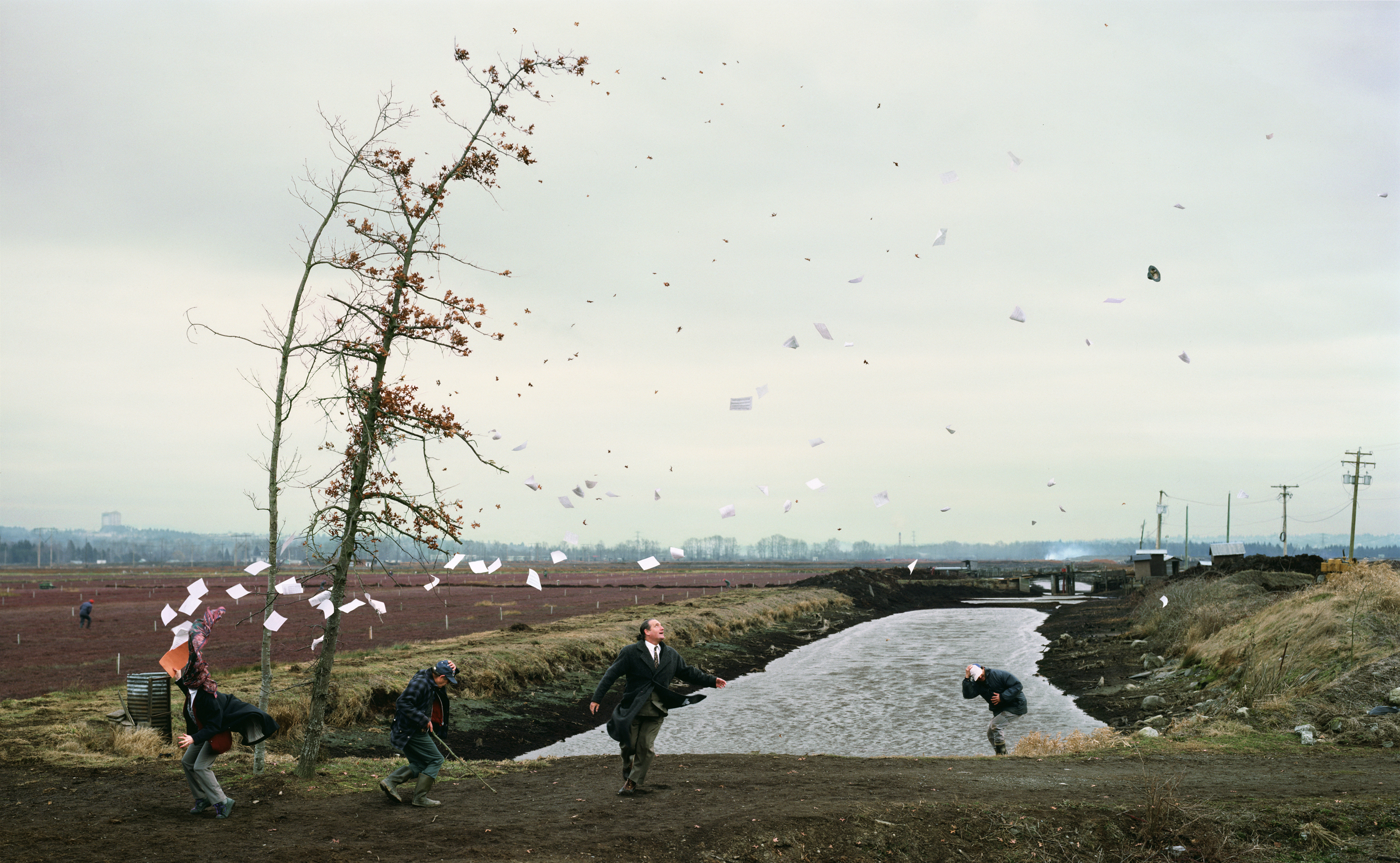
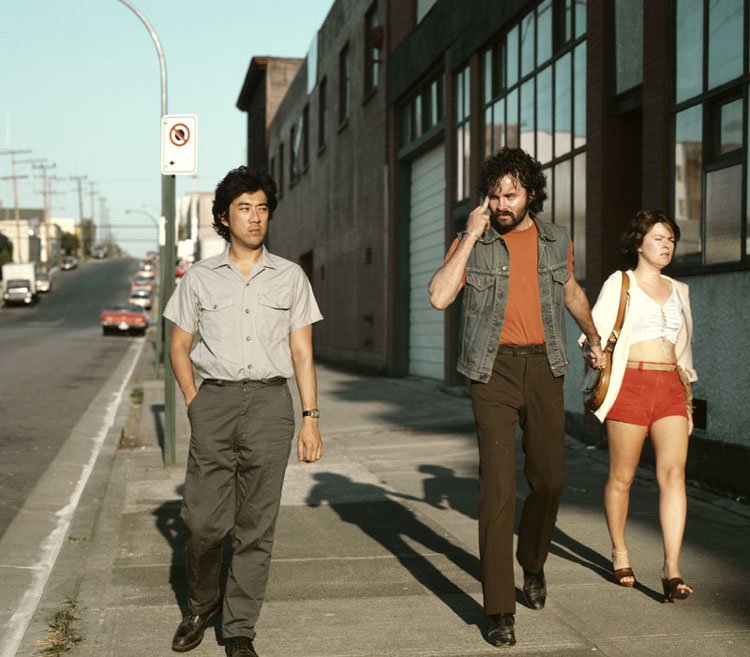
The lightbox format became Wall's signature, though he has also produced conventional silver gelatin prints and, in more recent decades, large-scale inkjet prints. His working method varies considerably from image to image. Some works, such as Mimic (1982) — which depicts a racially charged encounter on a Vancouver street — are carefully staged re-enactments of scenes he has witnessed, using actors and controlled lighting to reconstruct a moment of social tension with the apparent spontaneity of a street photograph. Others, such as A Sudden Gust of Wind (after Hokusai) (1993), are elaborate digital composites assembled from dozens of separate exposures over a period of months, the final image presenting a coherent scene that could never have existed as a single photographic instant.
Wall has described his practice as existing in the territory between documentary and cinematographic modes. His concept of near documentary refers to images that possess the appearance of unmediated observation while being, in fact, carefully constructed. This ambiguity — the viewer's uncertainty about whether a Wall photograph records a real event or stages a fictional one — is central to the work's meaning. It raises fundamental questions about the truth claims of photography, the relationship between appearance and reality, and the ways in which pictures shape our understanding of the world.
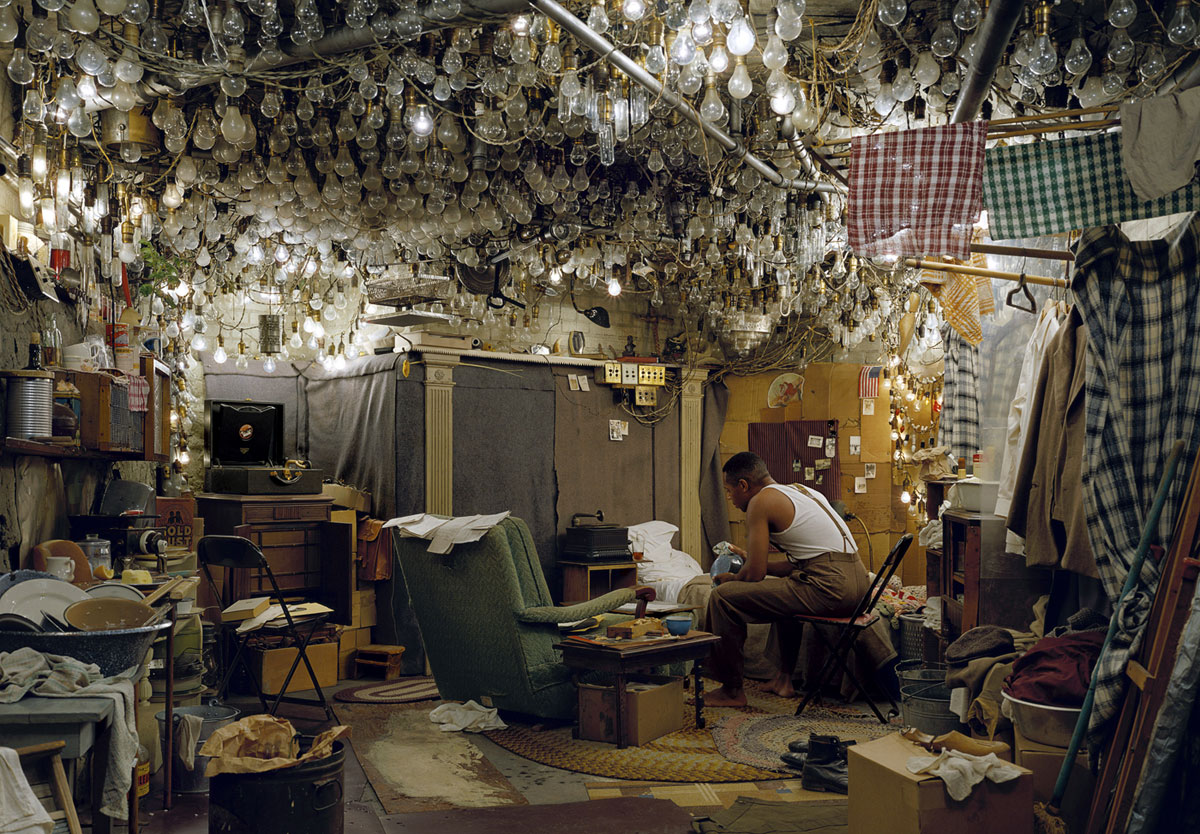
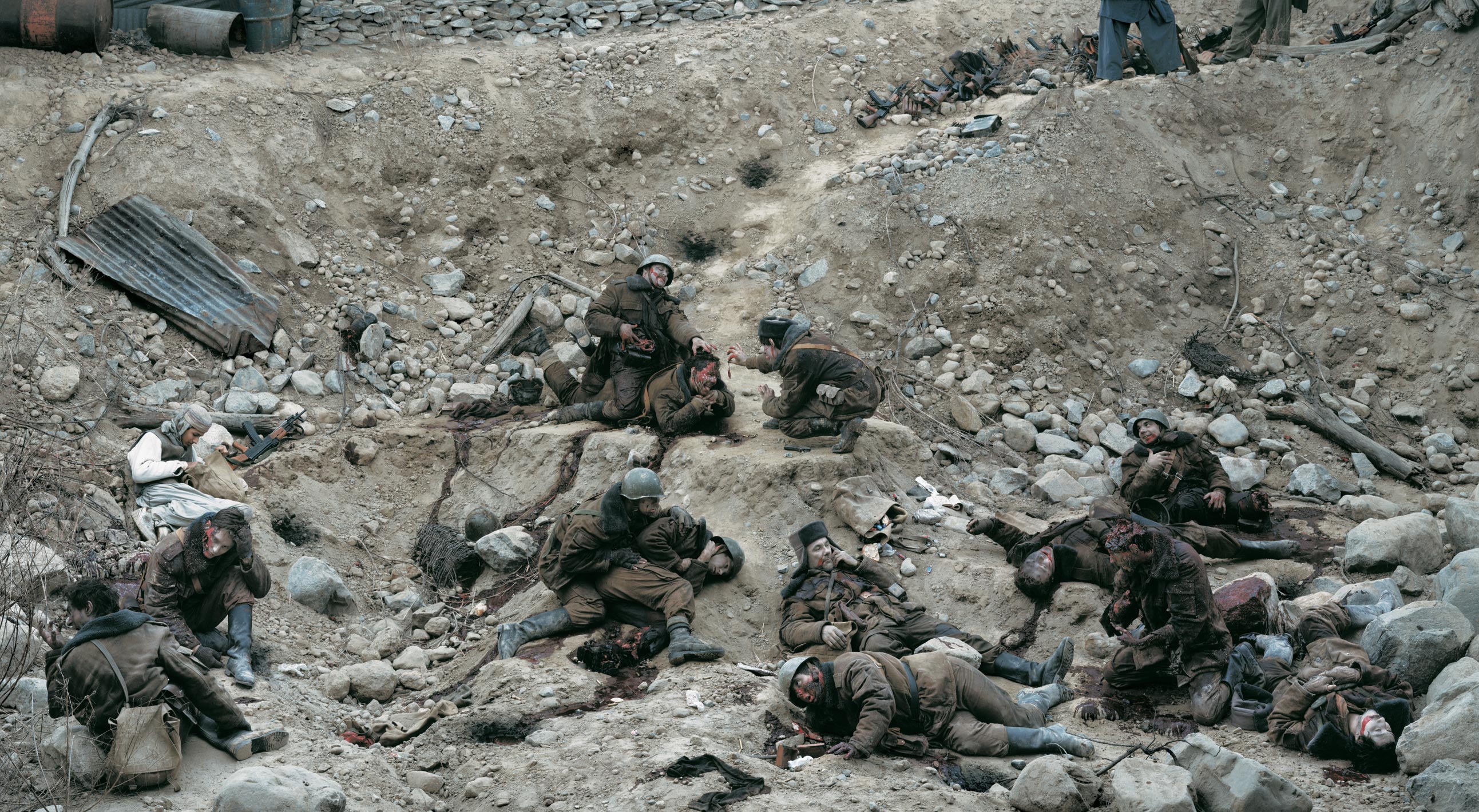
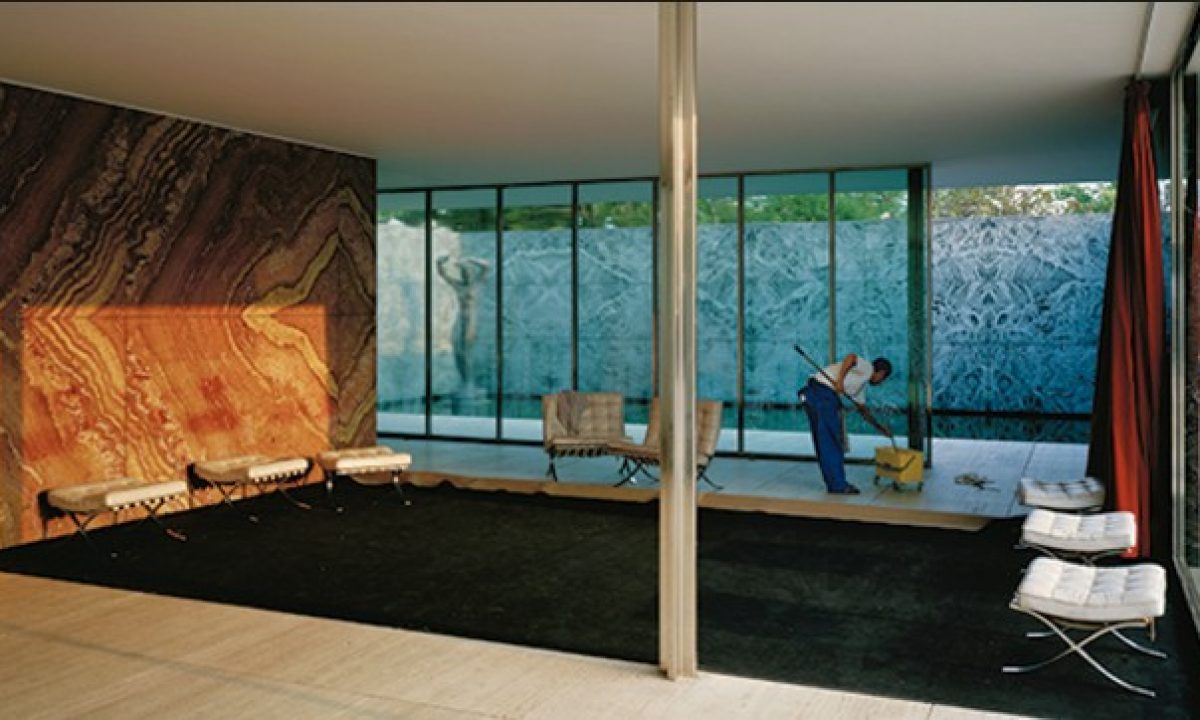
His subjects range widely: street encounters, domestic interiors, landscapes, architectural spaces, and literary scenes. Dead Troops Talk (1992) stages a hallucinated scene of Soviet soldiers in Afghanistan, the dead rising to converse amid the carnage of battle. After 'Invisible Man' by Ralph Ellison, the Prologue (1999–2001) reconstructs a scene from Ellison's novel with meticulous fidelity to the text. Morning Cleaning, Mies van der Rohe Foundation, Barcelona (1999) observes a window cleaner at work in a masterpiece of modernist architecture, finding in a routine act of labour a meditation on transparency, reflection, and the relationship between art and daily life.
Wall's intellectual rigour and his engagement with critical theory have made him one of the most written-about artists of his generation. He has published extensively on his own work and on art history more broadly, and his essays on the nature of photography, the concept of the tableau, and the relationship between modernism and contemporary art are widely cited. He has been the subject of major retrospectives at the Museum of Modern Art in New York, Tate Modern in London, the Art Institute of Chicago, and numerous other institutions worldwide.
Throughout his career, Wall has maintained a remarkably deliberate pace of production, completing relatively few works each year, each one the result of extended reflection and careful execution. This slow, considered approach stands in contrast to the rapid output that characterises much contemporary art photography, and it reflects Wall's conviction that the individual picture — the single, self-sufficient image that rewards extended contemplation — remains the fundamental unit of photographic art. His influence on subsequent generations of photographers and artists has been immense, helping to establish the conditions under which photography could take its place among the major art forms of the late twentieth and early twenty-first centuries.