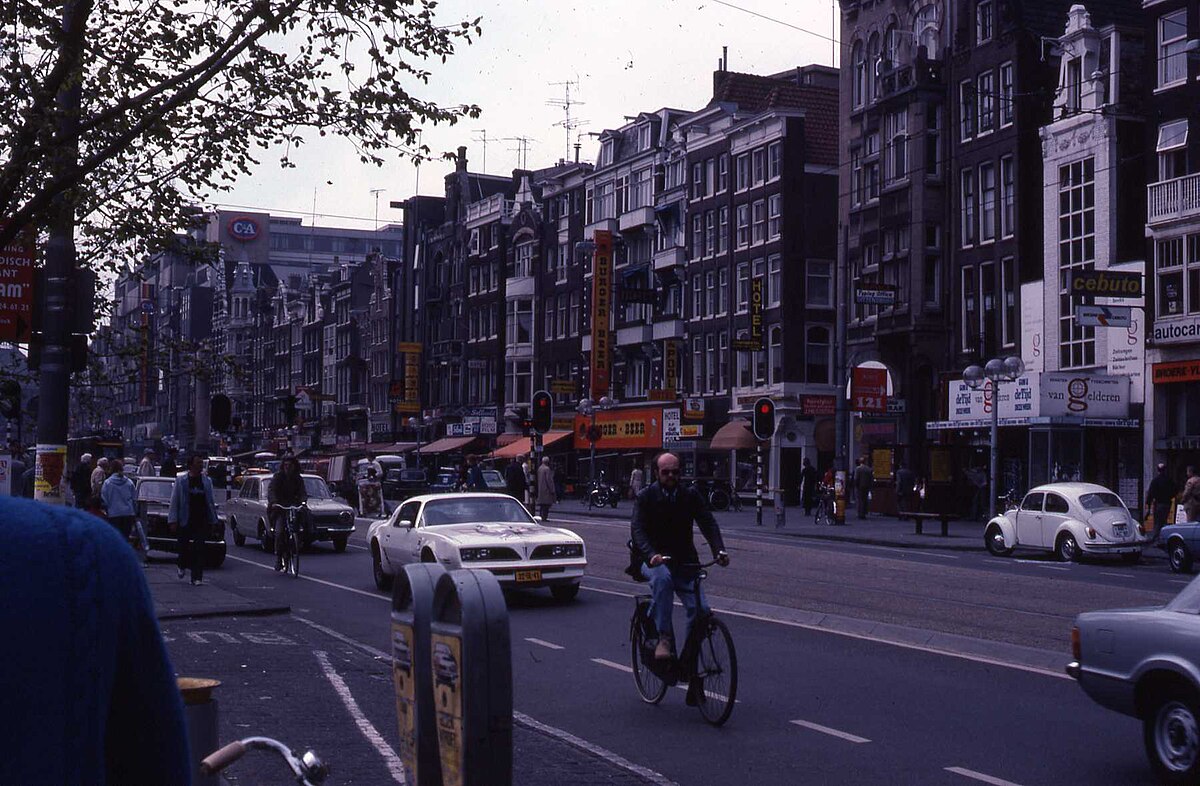
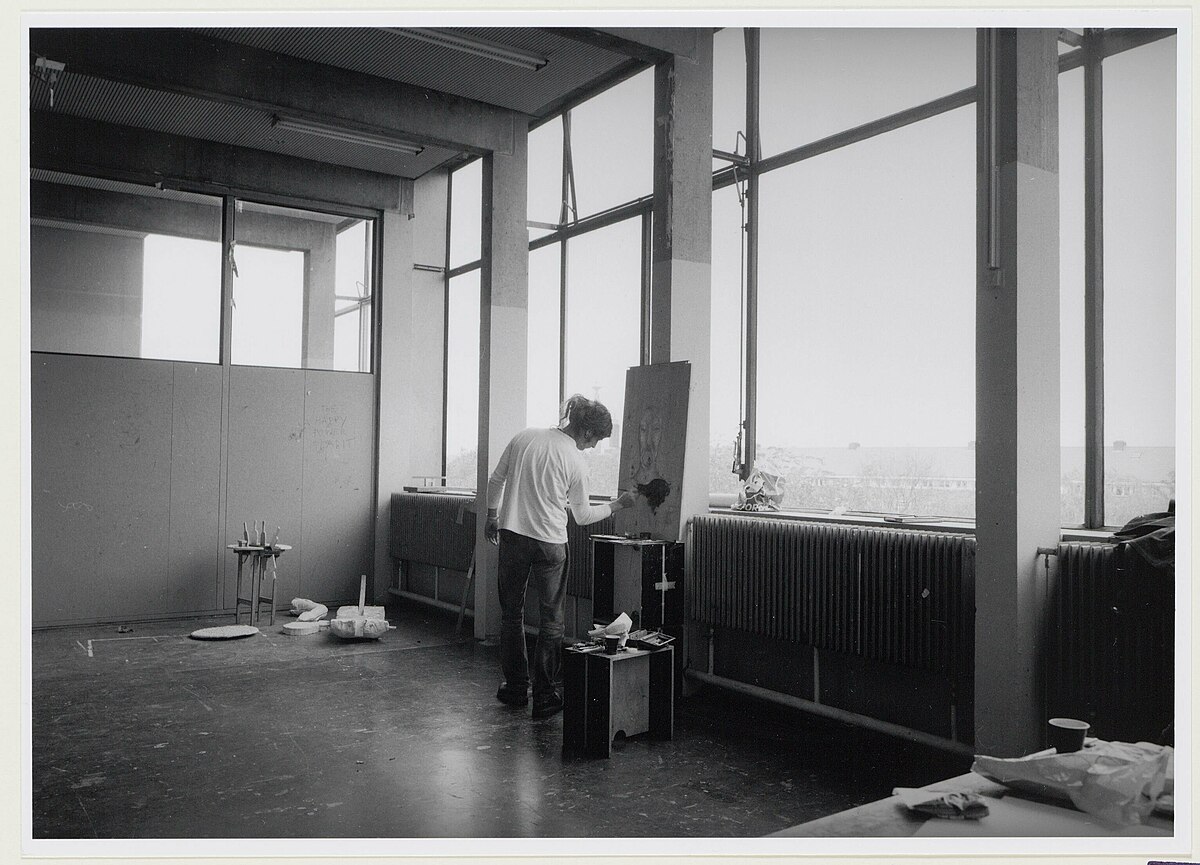
Hans Aarsman was born in 1951 in Amsterdam, and his early career followed a conventional path for a Dutch documentary photographer of his generation. He studied at the Gerrit Rietveld Academie and worked as a freelance photographer through the 1970s and 1980s, producing documentary images of Dutch life that appeared in newspapers and magazines. He was a skilled practitioner of the humanist documentary tradition, attentive to the rhythms of everyday life in the Netherlands and the small dramas that unfold on its streets and in its homes. His early work earned him recognition within the Dutch photography world, but it was his decision to abandon this practice that would make him one of the most provocative and intellectually stimulating figures in contemporary photography.
In the early 1990s, Aarsman made a decision that shocked the Dutch photography community: he announced that he was giving up photography. He had come to believe that the traditional documentary photograph — the image of the street, the portrait, the decisive moment — had exhausted its possibilities, that the sheer volume of images in the world had rendered the act of adding more to the pile both futile and intellectually dishonest. Rather than continuing to produce photographs, he would instead devote himself to reading them — to the analytical, forensic examination of existing images as objects of evidence, narrative, and meaning.
This radical reorientation led to some of the most original work in contemporary photography, even though much of it involved no camera at all. Aarsman became a writer, lecturer, and public intellectual whose subject was the photograph itself. His column in the Dutch weekly magazine Vrij Nederland, in which he subjected found photographs to painstaking analysis — reading their details, speculating about their contexts, constructing narratives from the evidence they contained — became one of the most widely followed features in Dutch media. His approach combined the rigour of forensic investigation with the imagination of a novelist and the wit of a stand-up comedian, transforming the act of looking at photographs into a form of intellectual entertainment.
Aarsman's analytical method was grounded in a simple but radical proposition: that every photograph contains far more information than either its maker or its intended audience typically recognises, and that the most interesting stories in a photograph are often not the ones the photographer intended to tell. By attending to the peripheral details of images — a reflection in a window, a brand name on a product, a shadow on a wall — Aarsman demonstrated that photographs could be read as rich, multilayered documents of social, economic, and cultural history. His work anticipated and in some ways prefigured the open-source intelligence methods that would later become central to investigative journalism and human rights documentation.
His book De Foto als Bewijs (The Photo as Evidence) and the ongoing lecture series that accompanied it became influential reference points for photographers, journalists, and artists interested in the evidentiary potential of images. Aarsman also embraced new technologies with characteristic enthusiasm, using Google Street View, satellite imagery, and social media platforms as sources of visual material for analysis. His work with these digital tools demonstrated that the principles of close reading he had developed for analogue photographs applied equally to the vast, unedited visual archives of the digital age.
Aarsman's influence on Dutch photography and visual culture has been substantial, though it is of a paradoxical kind: he became one of the most important figures in photography by refusing to take photographs. His work has challenged photographers to think more critically about what their images actually contain, to attend to the gap between intention and evidence, and to recognise that the act of looking is itself a creative and intellectually demanding practice. He has taught at the Gerrit Rietveld Academie and has been a regular presence at photography festivals and cultural events across Europe.