Hannah Starkey was born in 1971 in Belfast, Northern Ireland, during one of the most turbulent periods of the Troubles. She grew up in a city defined by conflict and division, an environment that instilled in her a heightened awareness of the ways in which public space is shaped by politics, gender, and power. She left Belfast as a young woman to study at Napier University in Edinburgh before completing her MA in photography at the Royal College of Art in London in 1997. It was during her time at the RCA that she developed the distinctive approach that would define her career — carefully staged photographs of women in ordinary urban settings that blur the boundary between documentary observation and cinematic fiction.
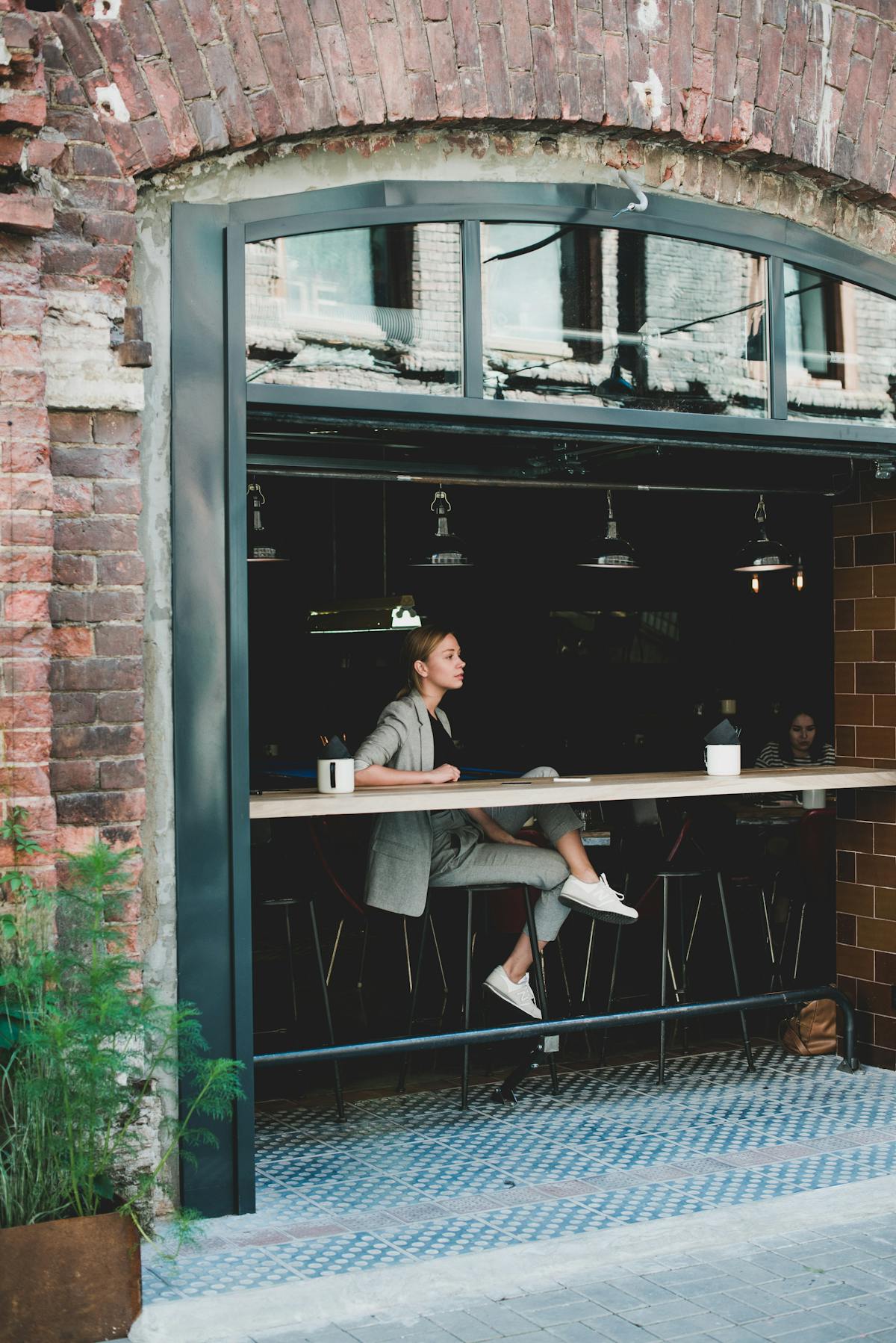
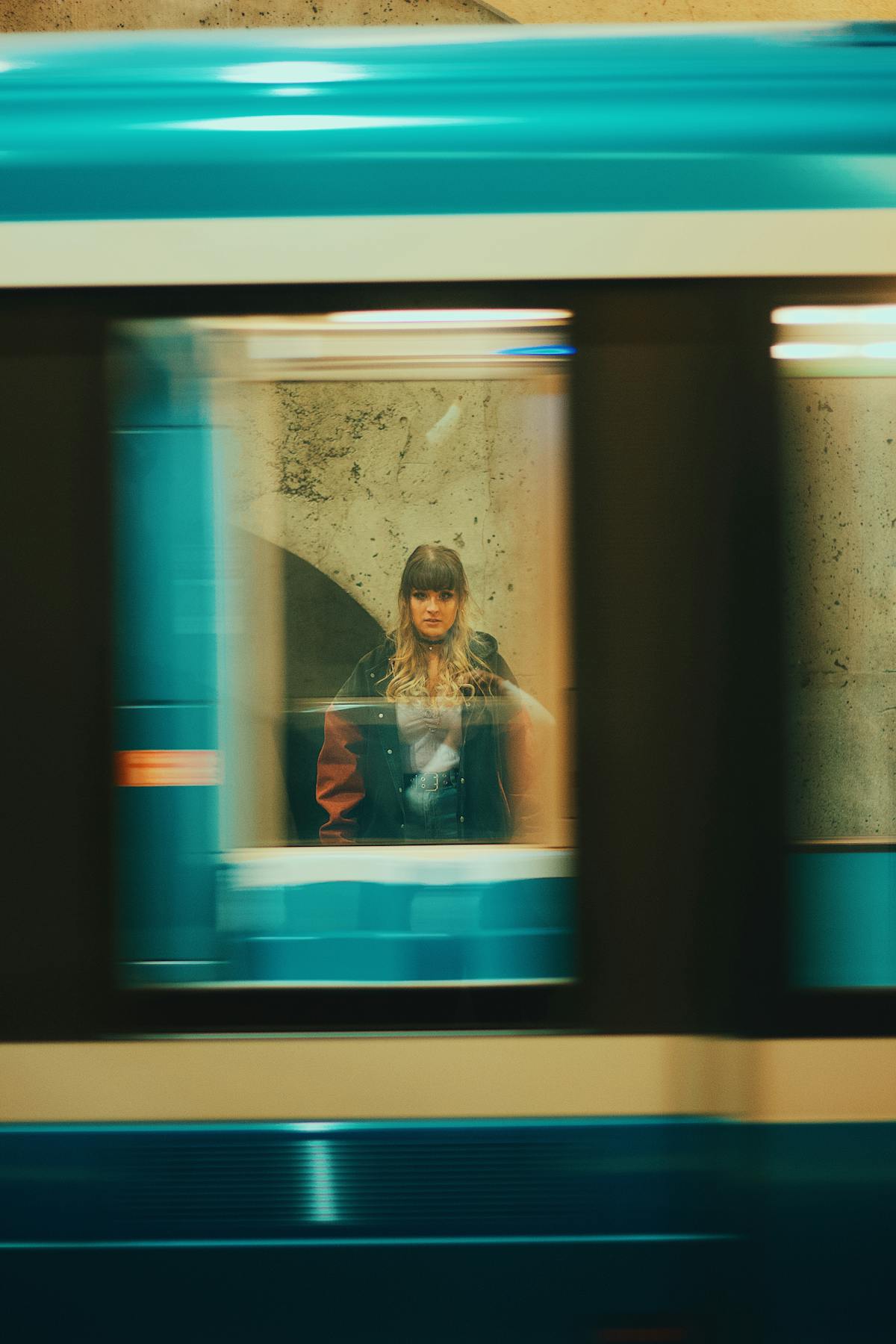
Starkey's work emerged at a moment when staged photography was gaining increasing prominence in the contemporary art world, with practitioners such as Jeff Wall, Cindy Sherman, and Gregory Crewdson demonstrating that the constructed image could possess as much truth and emotional power as the candid one. But Starkey's approach was distinct from these predecessors in important ways. Where Wall's tableaux were often large-scale and theatrically lit, and Sherman's self-portraits were exercises in postmodern masquerade, Starkey's images occupied a quieter, more ambiguous register. Her photographs looked, at first glance, like moments of ordinary life caught by a keen observer — a woman gazing through a café window, two friends talking in a launderette, a solitary figure on a bus. Only on closer inspection did the precision of their composition, lighting, and casting reveal them as carefully constructed fictions.
This ambiguity — between the staged and the observed, the fictional and the real — is central to Starkey's project. Her images deliberately appropriate the visual language of advertising, cinema, and fashion photography, the industries that have most powerfully shaped how women are represented in visual culture. By restaging these conventions in mundane, everyday settings and populating them with women who are neither models nor performers but ordinary people cast from the streets of London, Starkey creates a productive tension between the idealised image and lived reality. Her photographs ask how women navigate the visual regimes that surround them, how they construct and perform their identities in public space, and what it means to be both the subject and the object of the gaze.
The settings of Starkey's photographs are themselves significant. She works almost exclusively in the communal spaces of urban life — cafés, buses, shopping centres, launderettes, public toilets, hairdressers — the transitional, semi-public environments where women spend much of their daily lives but which are rarely considered worthy of artistic attention. By elevating these spaces to the status of the cinematic set, Starkey argues implicitly for their importance and for the importance of the women who inhabit them. Her work is feminist not through polemic but through attention — a sustained, generous, and intellectually rigorous engagement with the texture of women's everyday experience.
Since her graduation from the Royal College of Art, Starkey has exhibited widely in institutions including the Maureen Paley Gallery in London, the Tate, the Irish Museum of Modern Art, and the Photographers' Gallery. Her work has been collected by major public institutions, and she has received numerous awards and commissions. She has also been influential as a teacher and mentor, holding positions at the University of the Arts London and contributing to the development of a generation of younger photographers interested in the politics of representation.
Starkey's practice has evolved over more than two decades while remaining remarkably consistent in its core concerns. Her more recent work has expanded to address questions of race, class, and cultural diversity within the urban landscape, reflecting the changing demographics of twenty-first-century London. She has also explored the ways in which digital technology and social media have transformed the experience of being seen and of seeing oneself, adding new layers of complexity to her longstanding investigation of the relationship between women and the photographic image.