Gregory Crewdson was born in 1962 in Brooklyn, New York, and grew up in a middle-class household whose domestic life would later provide the emotional substrate for much of his work. His father was a psychoanalyst who practised from the family home, and Crewdson has spoken of lying on the floor as a child, trying to hear the muffled conversations of his father's patients through the floorboards — an experience that instilled in him a lifelong fascination with the hidden dramas that unfold behind closed doors. He studied photography at the State University of New York at Purchase and completed his MFA at Yale University in 1988, where he would later return as a professor, a position he has held for more than three decades.
Crewdson's early work was modest in scale but already hinted at the themes that would dominate his career. His first major series, Natural Wonder (1992–1997), depicted insects and small animals in suburban settings, combining the domestic and the natural in ways that were by turns beautiful and deeply unsettling. These tabletop-scale images demonstrated Crewdson's instinct for the uncanny — for the moment when the familiar becomes strange, when the ordinary surface of American life cracks open to reveal something darker and more mysterious beneath.
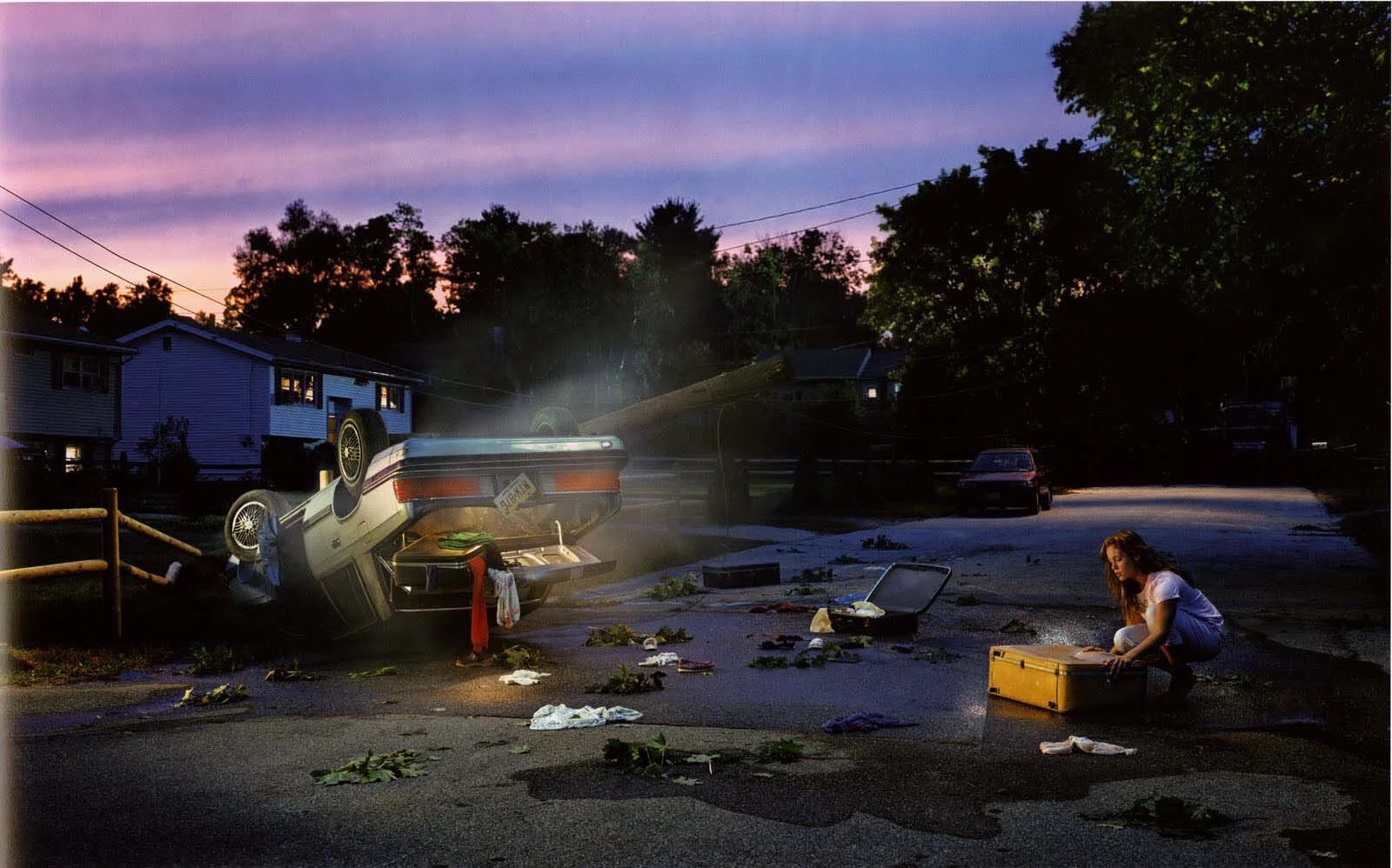
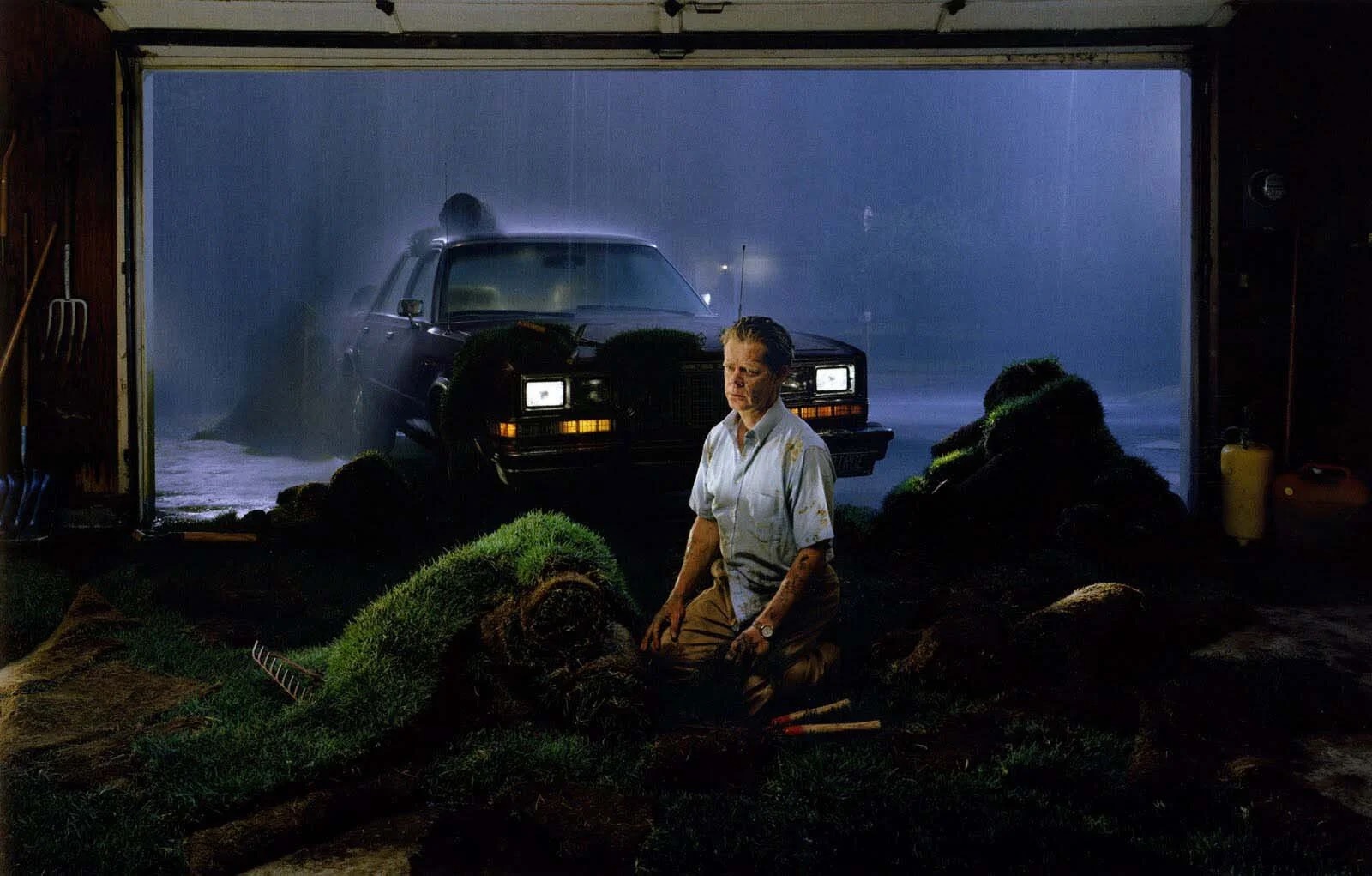
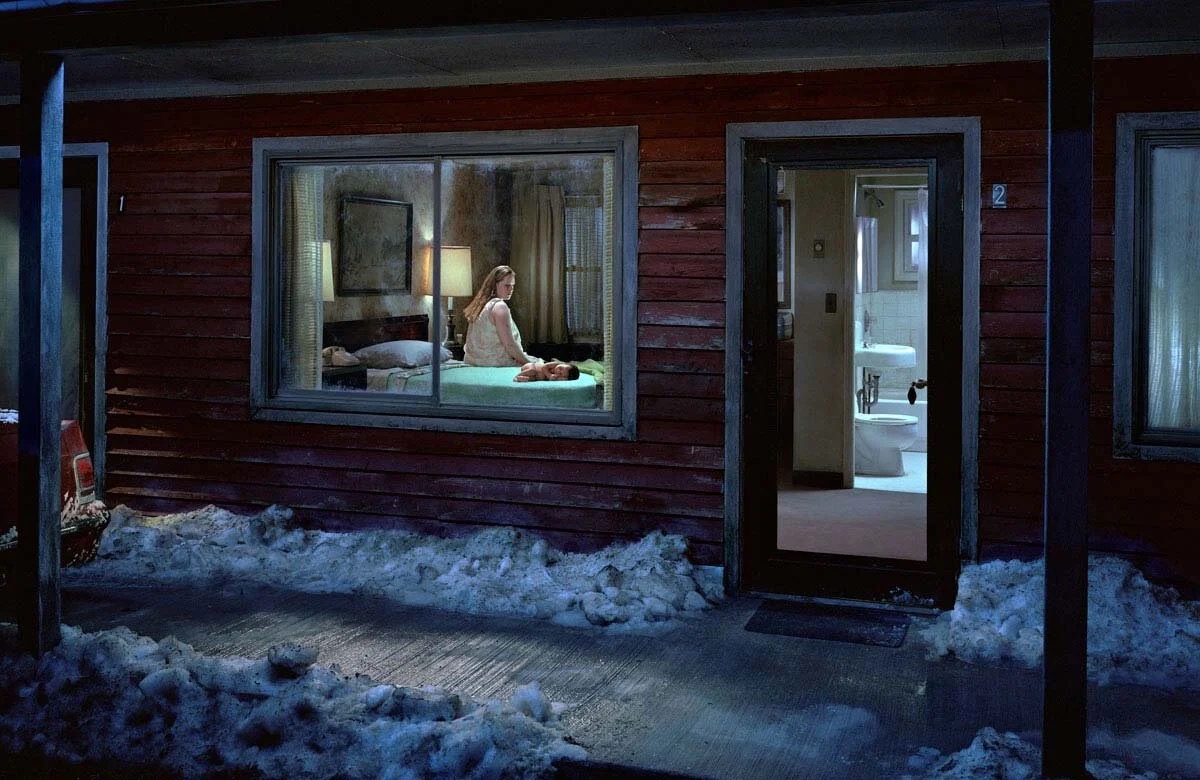
The series that established Crewdson's international reputation was Twilight (1998–2002), a body of work that took the suburban American landscape and subjected it to the production values of a Hollywood film. Each image was produced with a crew of dozens — lighting technicians, set designers, actors, makeup artists — and the resulting photographs possessed a cinematic scale and luminous intensity that was unprecedented in art photography. The images depicted suburban streets and domestic interiors suffused with an eerie, crepuscular light, inhabited by solitary figures caught in moments of ambiguous psychological crisis. The series drew comparisons to the films of David Lynch, Steven Spielberg, and Edward Hopper's paintings, but it possessed a distinctive atmosphere that was entirely Crewdson's own.
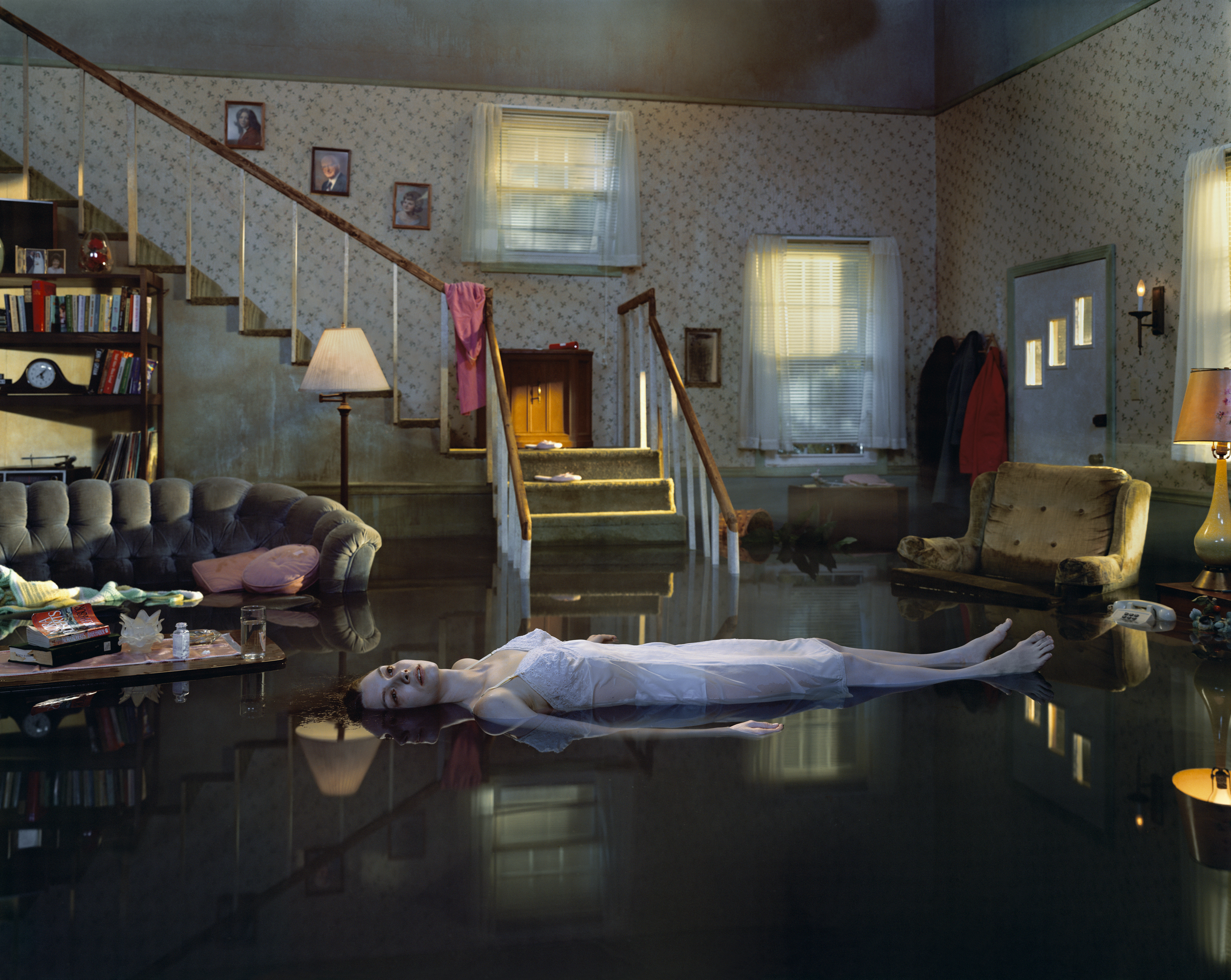
Beneath the Roses (2003–2008) expanded upon the ambitions of Twilight, producing images of even greater scale and narrative complexity. Shot primarily in the towns of Pittsfield and Lee in western Massachusetts, the series depicted a world of quiet desperation: a woman floating in a flooded living room, a man standing alone on a rain-slicked street, a figure lost in thought at a kitchen table. Each image suggested a narrative without resolving it, presenting the viewer with a mystery that could be felt but never fully explained. The production of each photograph was an enormous undertaking, requiring months of preparation and budgets that rivalled those of independent films.
Crewdson's working method is unique in the history of photography. He conceives each image as a complete visual narrative, creating detailed storyboards and working with a production designer to construct elaborate sets, often transforming real streets and interiors into carefully controlled environments. He uses large-format cameras and deploys cinematic lighting rigs to achieve the luminous, hyper-real quality that distinguishes his work. Notably, he does not look through the camera himself during the shoot; instead, he directs the production from a monitor, functioning more as a film director than a traditional photographer. This method has attracted both admiration and criticism, with some arguing that it represents a radical expansion of what photography can be, while others question whether the resulting images can still be called photographs in any meaningful sense.
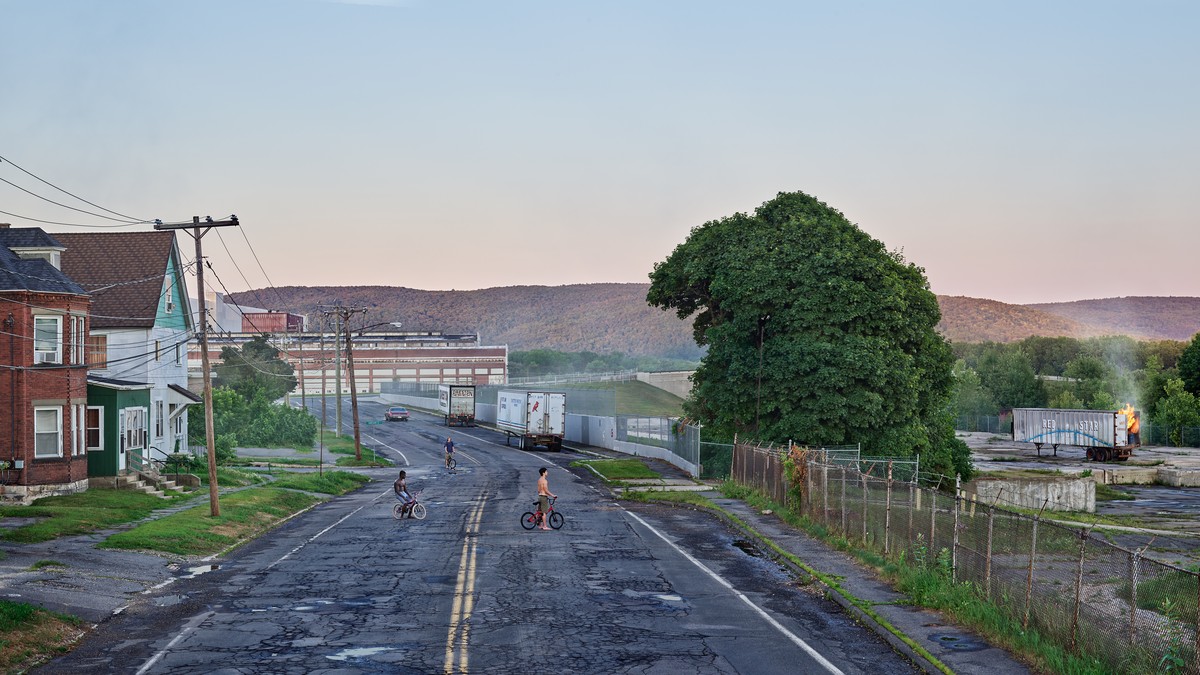
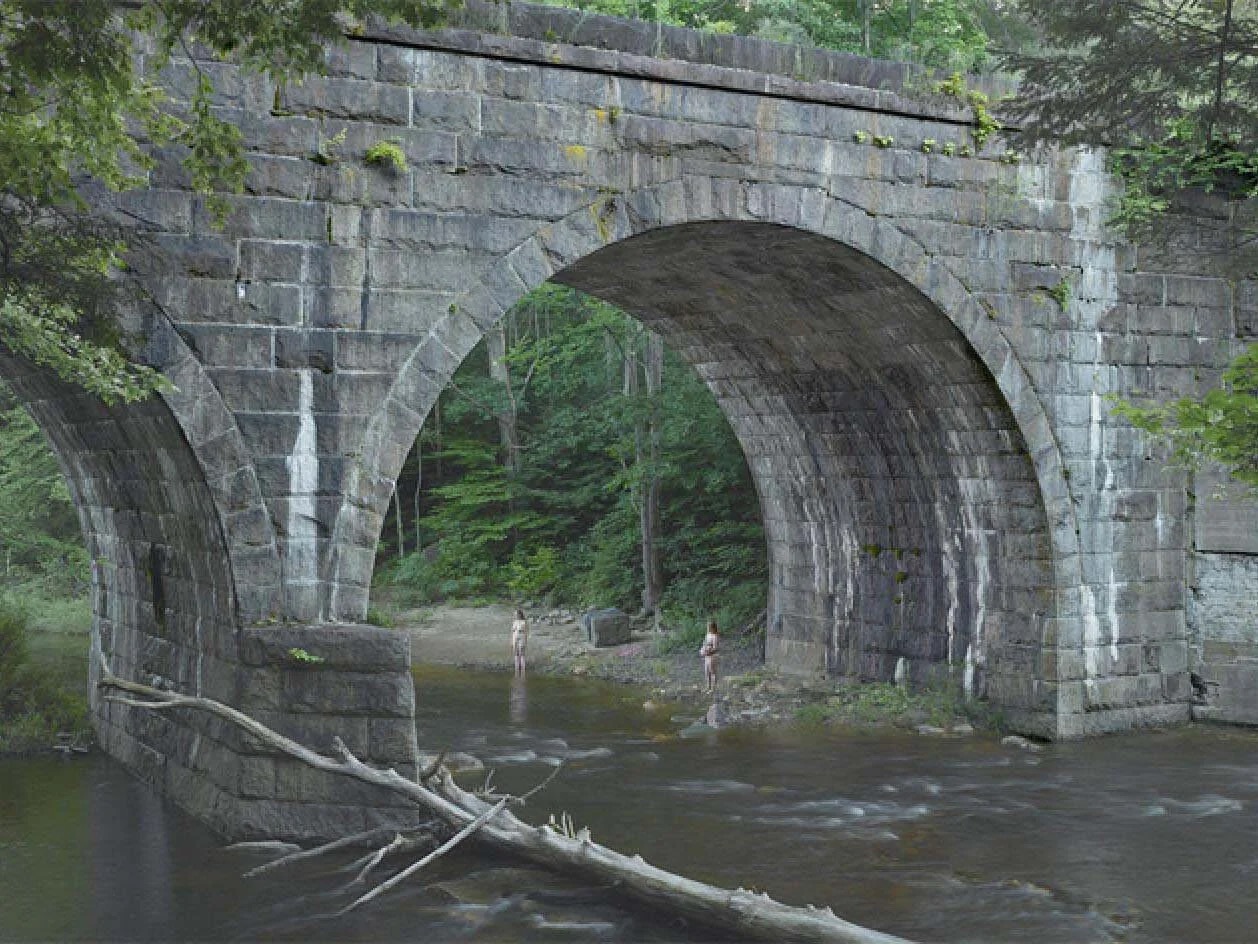
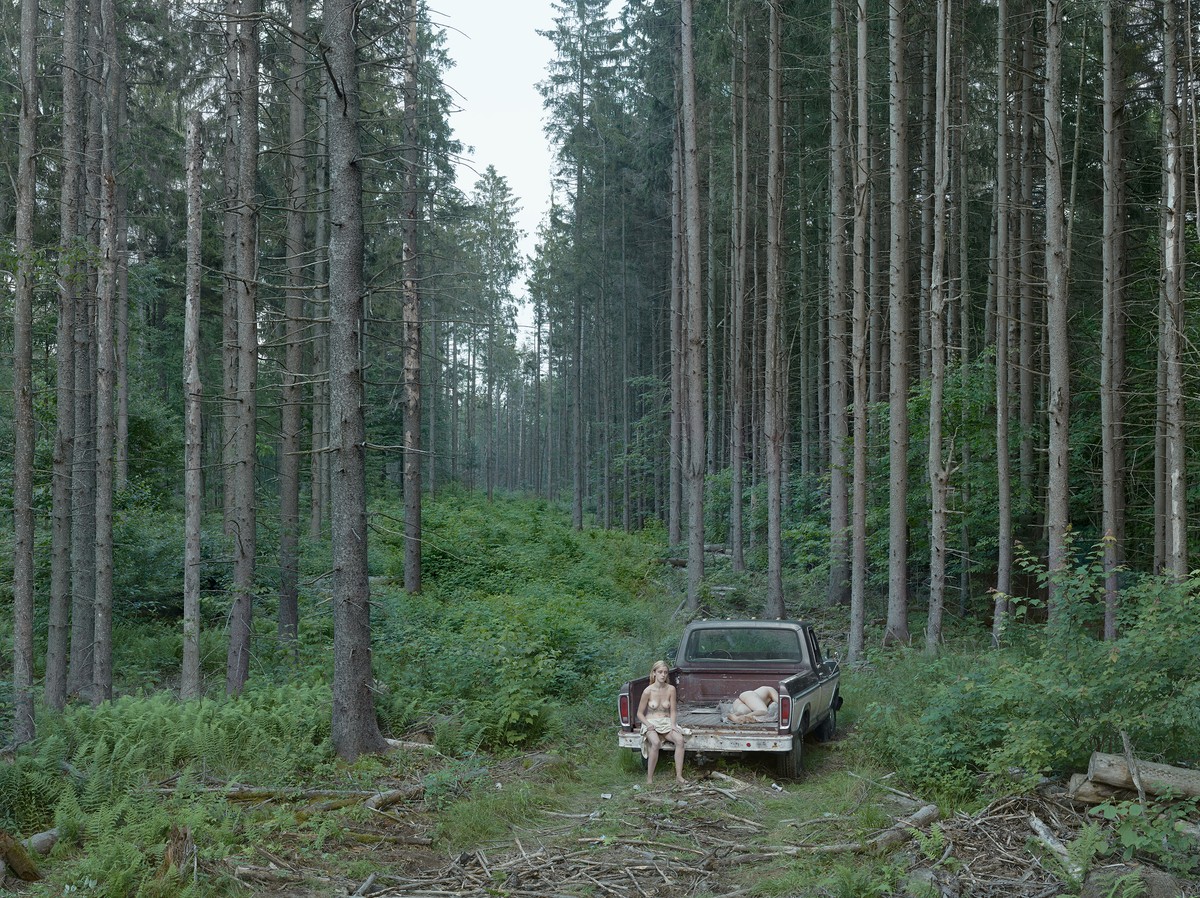
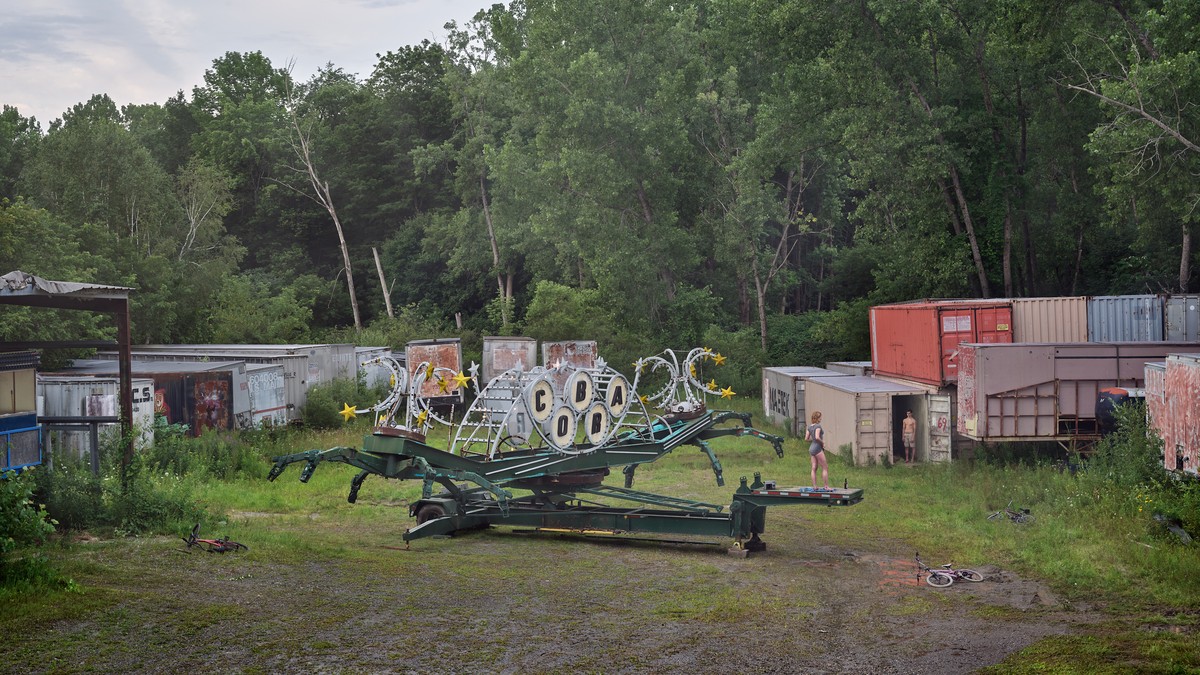
After the monumental scale of Beneath the Roses, Crewdson surprised many by shifting to a more intimate, pared-down approach. Cathedral of the Pines (2013–2014) was shot in the forests and modest homes of Becket, Massachusetts, using natural light and a smaller crew. The images retained the psychological intensity of his earlier work but achieved it through restraint rather than spectacle, suggesting a deeper and more personal engagement with his subjects. An Eclipse of Moths (2018–2019) continued this evolution, returning to the streets of Pittsfield with a mature command of atmosphere and narrative ambiguity.
Crewdson's influence on contemporary photography has been immense. He demonstrated that photography could absorb the production values, narrative ambitions, and visual language of cinema without ceasing to be photography — that a single still image could contain the emotional weight and visual complexity of an entire film. His work has been exhibited at major museums worldwide, including the Whitney Museum of American Art, the Gagosian Gallery, and the Photographers' Gallery in London. As a teacher at Yale, he has shaped the sensibilities of a generation of photographers who have absorbed his lessons about ambition, craft, and the mysterious power of the staged image.