Gordon Parks was born on November 30, 1912, in Fort Scott, Kansas, the youngest of fifteen children in a poor Black family living under the harsh realities of segregation. His father, Andrew Jackson Parks, was a tenant farmer, and the family scraped by with little money and fewer opportunities. Yet even as a boy, Parks possessed an innate curiosity and a quiet determination that would carry him through decades of adversity. His mother, Sarah Ross Parks, instilled in him a belief in dignity and self-worth that became the bedrock of his artistic vision. When she died in 1927, the fifteen-year-old was sent to live with a sister in Minnesota, only to be turned out of the house by his brother-in-law and left to survive on his own in the depths of the Great Depression.
Those years of hardship forged an extraordinary resilience. Parks drifted through a succession of menial jobs — busboy, piano player, waiter on the Northern Pacific Railroad — always watching, always absorbing the textures of American life around him. The turning point came in 1937, when he saw a portfolio of Farm Security Administration photographs in a magazine left behind on a train. The images of migrant workers and rural poverty struck him with the force of revelation. He walked into a pawnshop in Seattle and bought his first camera, a Voigtländer Brillant, for $7.50. With no formal training and no mentor, he began teaching himself to see through a lens, photographing the social landscape of the upper Midwest with a directness that was entirely self-made.
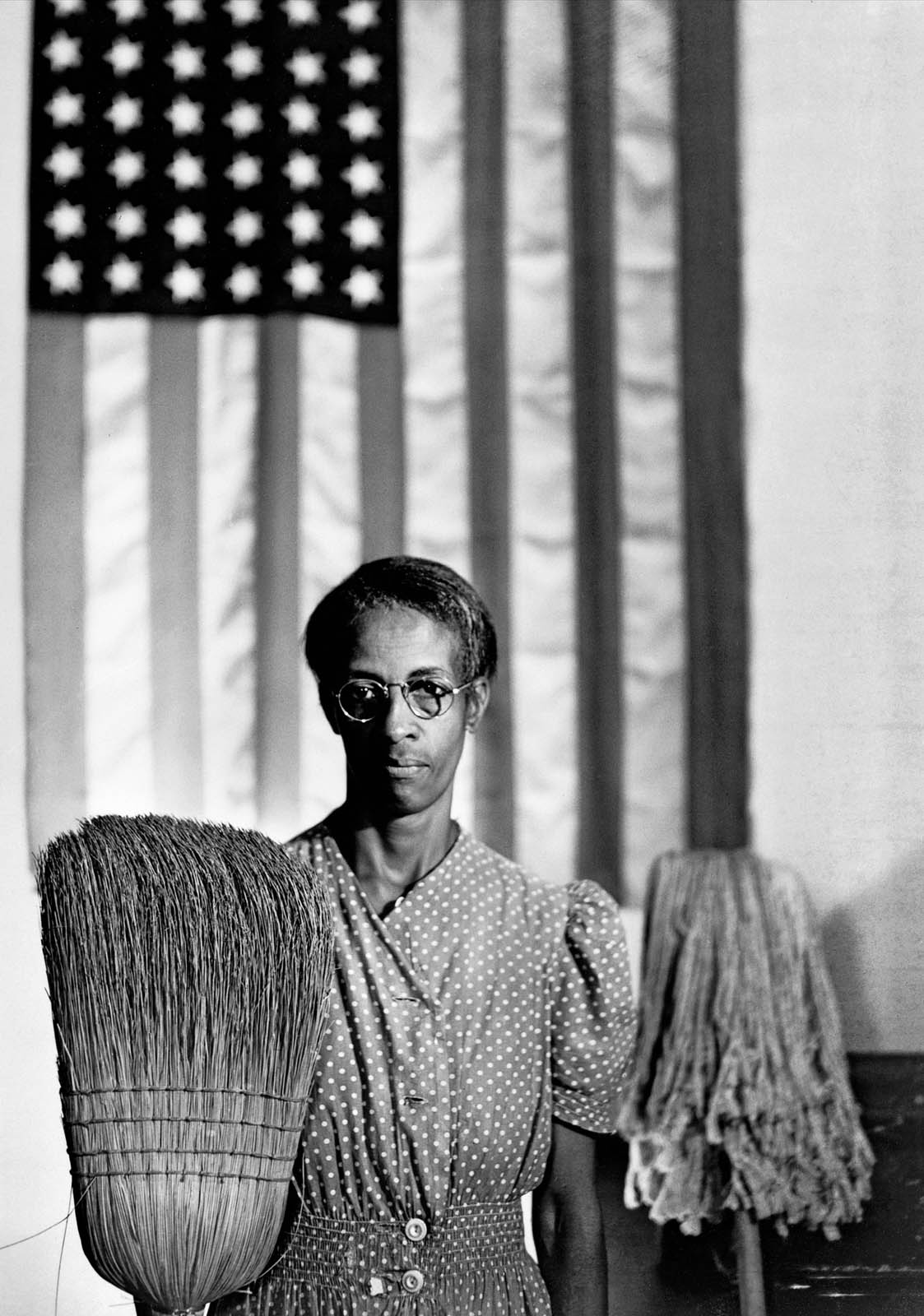
His talent attracted attention quickly. After winning a fellowship from the Julius Rosenwald Fund in 1942, Parks moved to Washington, D.C., to work under Roy Stryker at the Farm Security Administration. It was there that he created American Gothic, Washington, D.C., a portrait of government cleaning woman Ella Watson standing before the American flag with her mop and broom. The image deliberately echoed Grant Wood’s iconic painting, but where Wood had celebrated the stoic virtue of white rural America, Parks exposed the chasm between the nation’s ideals and the daily reality of racial inequality. The photograph became one of the most powerful and enduring images in the history of American photography.
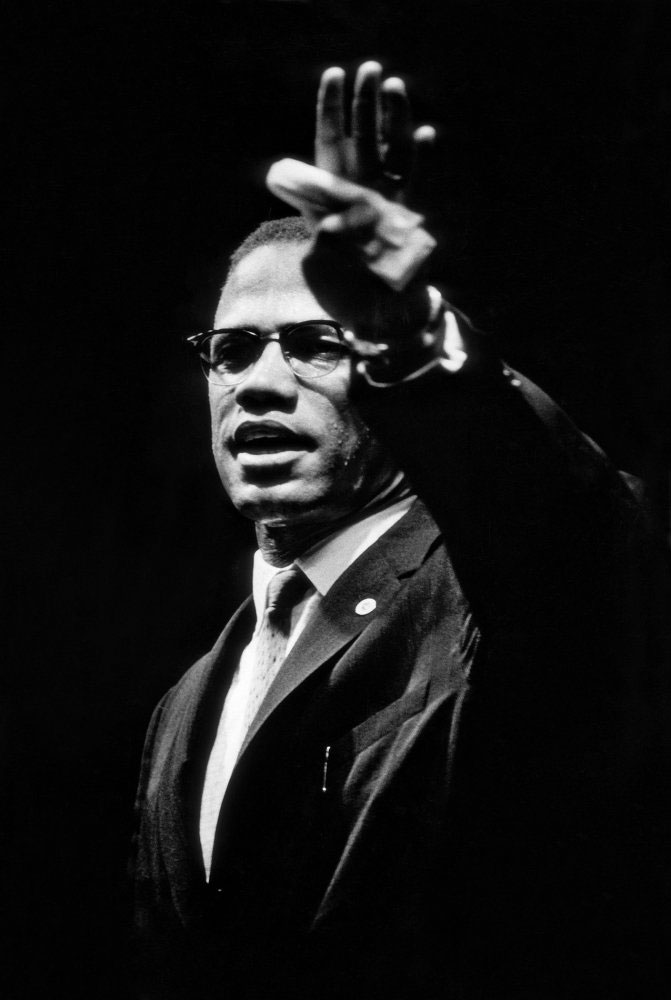
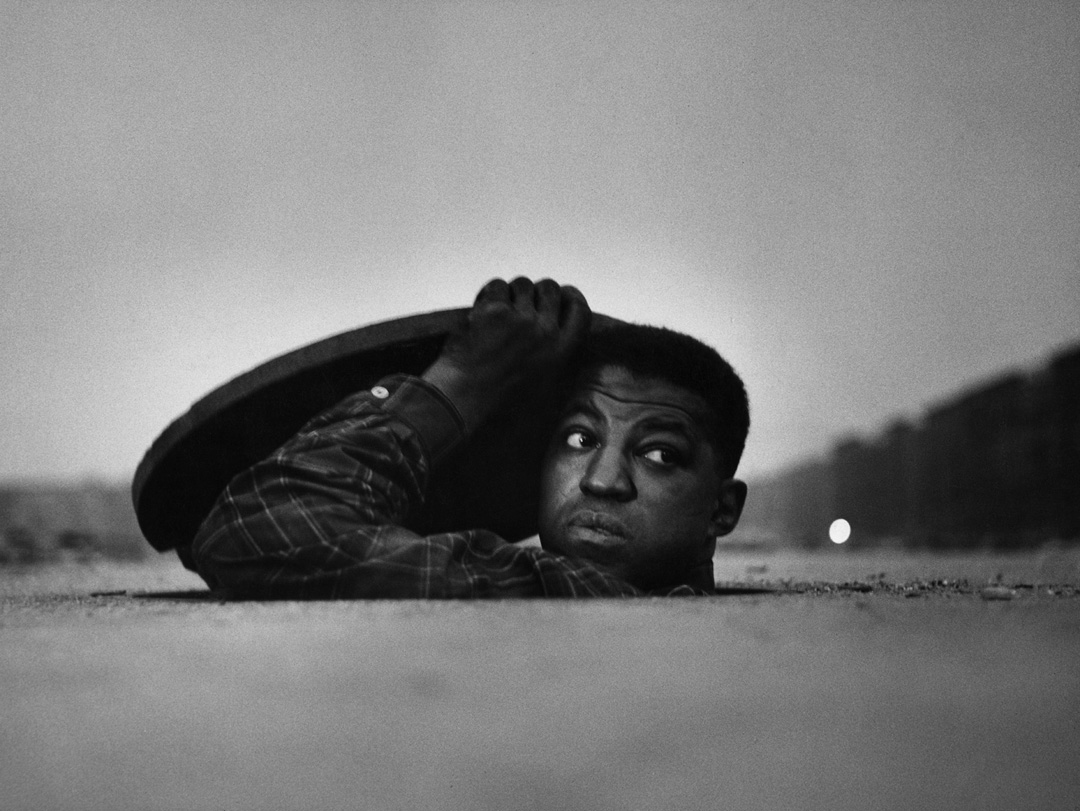
Following the dissolution of the FSA, Parks worked briefly for the Office of War Information and as a freelance fashion photographer before joining the staff of Life magazine in 1948, becoming its first Black photographer. Over the next two decades, he produced an astonishing body of work for the publication, covering subjects that ranged from high fashion in Paris to gang violence in Harlem, from the rise of the Nation of Islam and Malcolm X to the poverty of Brazilian favelas. His 1948 photo-essay on Harlem gang leader Red Jackson established a template for immersive, empathetic photojournalism, and his 1961 coverage of the boy Flavio da Silva in the slums of Rio de Janeiro moved readers so deeply that they raised enough money to bring Flavio to the United States for medical treatment.
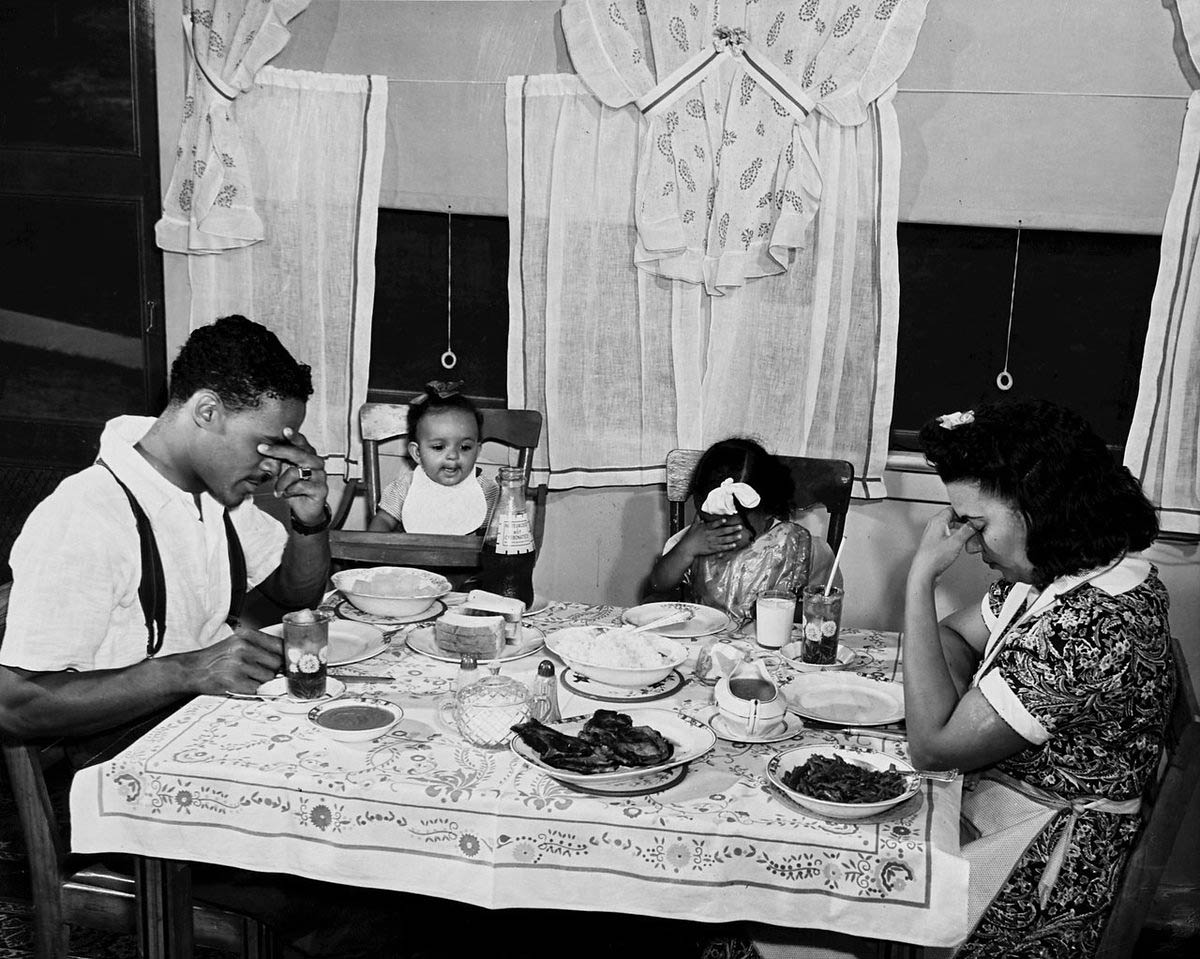
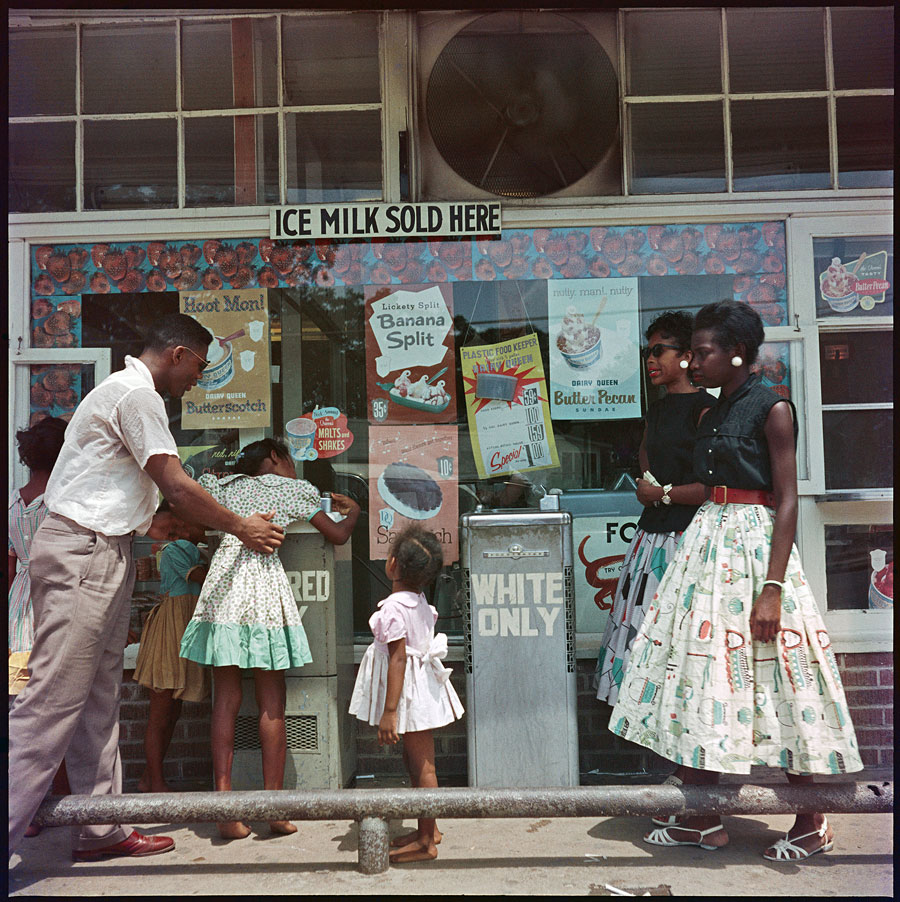
Parks’s range was extraordinary. He photographed Muhammad Ali with the intimacy of a confidant and the compositional precision of a painter. He documented the civil rights movement from the inside, capturing Martin Luther King Jr., Malcolm X, Stokely Carmichael, and the ordinary men and women whose courage powered the struggle. His 1956 series Segregation Story, shot in Mobile, Alabama, remains one of the most searing visual accounts of life under Jim Crow, its quiet rage underpinned by a deep compassion for his subjects. At the same time, he produced fashion editorials of elegant sophistication, proving that artistry knew no boundary of genre.
In 1969, Parks turned to filmmaking. His semi-autobiographical debut, The Learning Tree, adapted from his own novel, made him one of the first African Americans to write and direct a major Hollywood feature. Two years later, he directed Shaft (1971), a landmark film that ignited the Blaxploitation genre and turned Richard Roundtree into a cultural icon. The film’s commercial success — and its unforgettable theme by Isaac Hayes — demonstrated that Black stories could command mainstream audiences. Parks followed it with Shaft’s Big Score! in 1972 and continued to direct and produce into the 1980s.
But Parks was never content to be defined by a single medium. He composed symphonies, concertos, and sonatas, including the ballet Martin, a tribute to Martin Luther King Jr. He wrote novels — The Learning Tree, Shannon, and others — as well as volumes of poetry and several memoirs, among them A Choice of Weapons, Voices in the Mirror, and A Hungry Heart. Each book returned to the same essential themes: the struggle against injustice, the redemptive power of art, and the stubborn belief that beauty and truth were weapons more potent than hatred.
Gordon Parks died on March 7, 2006, in New York City, at the age of ninety-three. By then he had been honoured with more than fifty honorary degrees, the National Medal of Arts, and retrospectives at institutions including the Corcoran Gallery of Art and the International Center of Photography. His legacy endures not only in the images he made but in the example he set: a man who rose from desperate poverty with no formal education and fashioned himself, through sheer will and unrelenting vision, into one of the most versatile and consequential American artists of the twentieth century. He proved, as he always said, that the camera was a choice of weapons — and he wielded it with a mastery that changed the way the world saw itself.