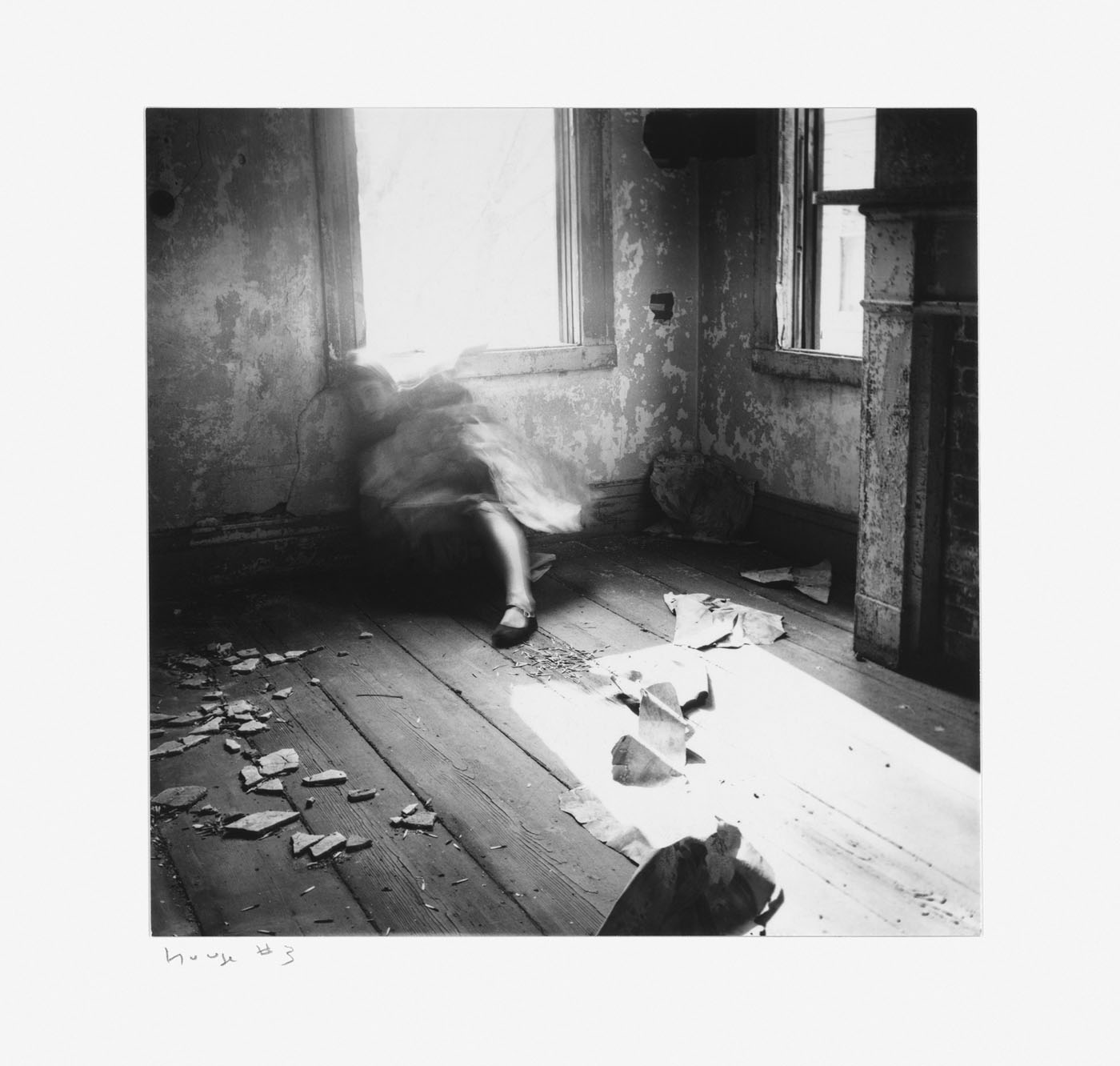
House #3, Providence, Rhode Island
1976
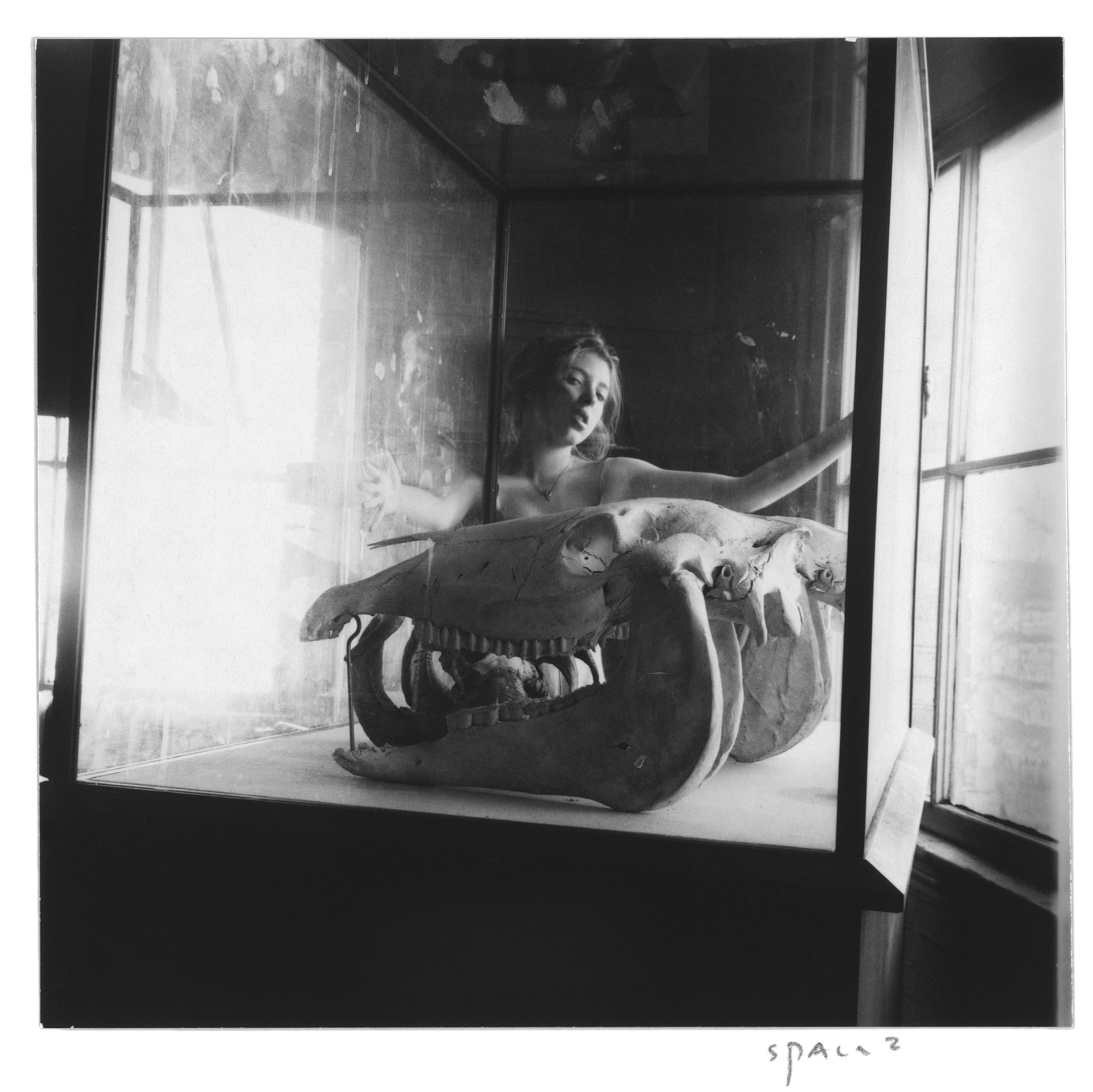
Space², Providence, Rhode Island
1976
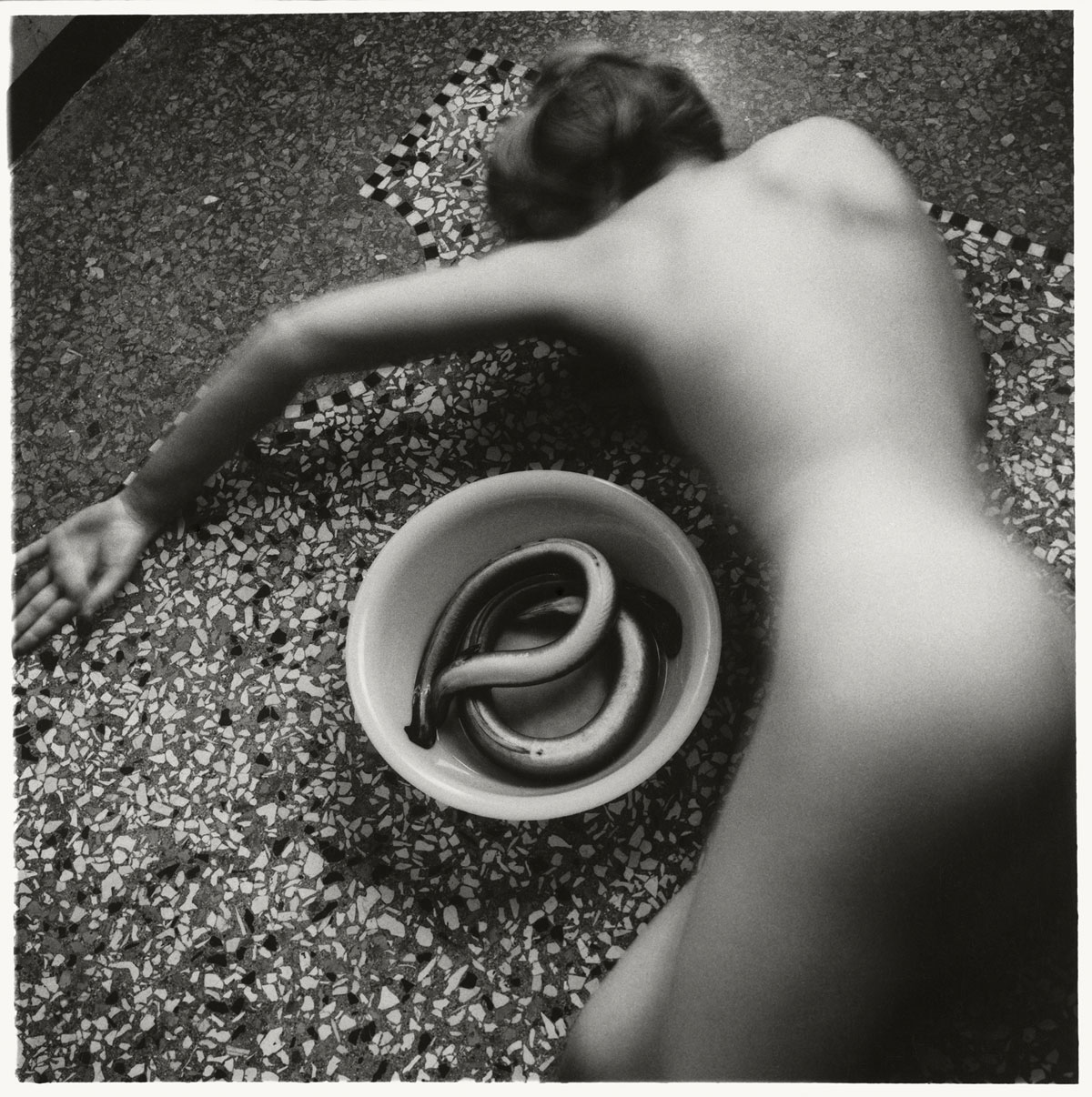
Self-Portrait with Eel, Rome
1978 (Eel Series)
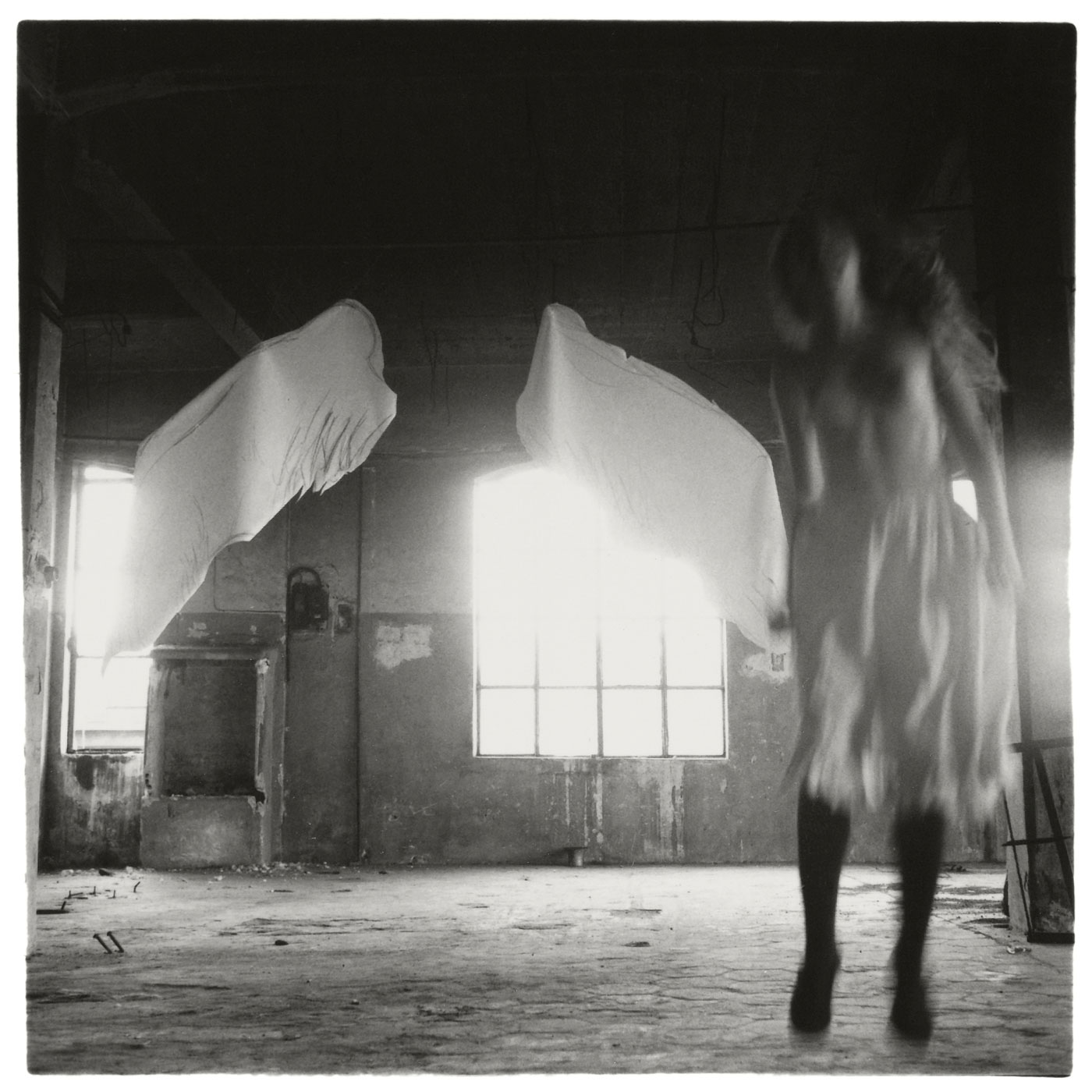
Angel Series, Rome
1977
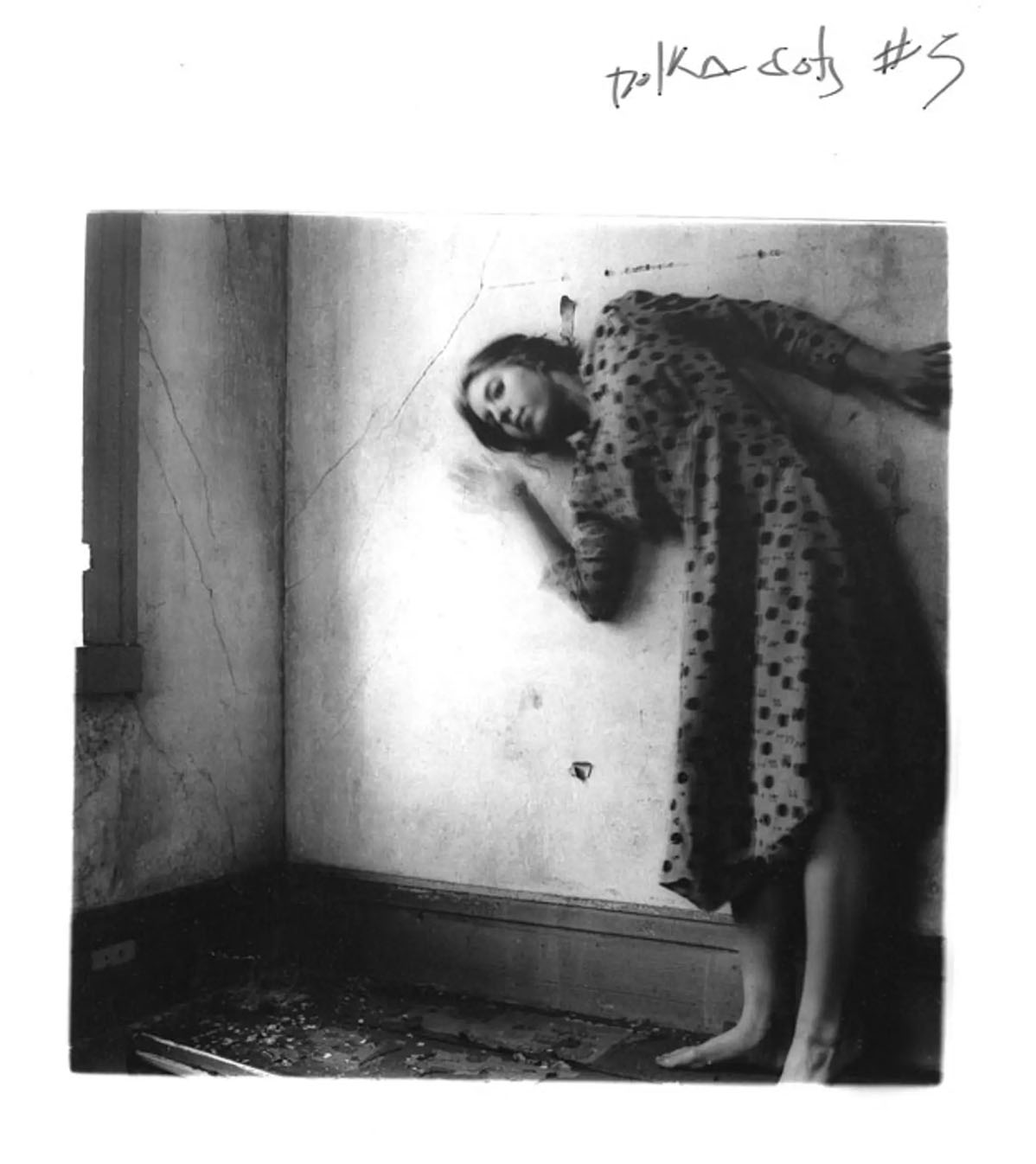
Polka Dots, Providence, Rhode Island
1976
The spectral prodigy whose blurred self-portraits in crumbling interiors explored the dissolution of identity with a poetic intensity that, in barely a decade of work, produced one of the most haunting and influential bodies of photography in the twentieth century.
1958, Denver, Colorado – 1981, New York City — American
House #3, Providence, Rhode Island
1976
Space², Providence, Rhode Island
1976
Self-Portrait with Eel, Rome
1978 (Eel Series)
Angel Series, Rome
1977
Polka Dots, Providence, Rhode Island
1976
Francesca Stern Woodman was born in 1958 in Denver, Colorado, into a family of artists. Her father, George Woodman, was a painter and ceramicist; her mother, Betty Woodman, was a celebrated ceramic artist whose work would be exhibited internationally. The household was steeped in art and aesthetics, and Francesca grew up surrounded by creativity, spending formative childhood years in both Colorado and Florence, Italy, where the family maintained a home. She received her first camera at the age of thirteen and began making self-portraits almost immediately — a practice that would define her entire body of work.
In 1975, at the age of sixteen, Woodman enrolled at the Rhode Island School of Design (RISD) in Providence, where she studied photography with Aaron Siskind and began producing the work that would establish her posthumous reputation. The abandoned houses and derelict buildings of Providence's industrial neighbourhoods became her primary settings — rooms with peeling wallpaper, cracked plaster, bare floorboards, and windows that admitted pale, diffused light. In these spaces, she staged her self-portraits using long exposures that rendered her figure blurred, ghostly, partially dissolved into the architecture itself.
The images she produced at RISD between 1975 and 1978 constitute one of the most remarkable bodies of student work in the history of art photography. Working primarily with a medium-format camera on a tripod, using available light and exposure times of several seconds, Woodman placed herself within decaying interiors and allowed movement during the exposure to blur her body into a spectral presence. She appeared emerging from walls, merging with peeling wallpaper, dissolving behind sheets of glass, or curling into corners like a figure in the process of vanishing. The photographs were at once self-portraits and performances, and they explored themes of visibility and invisibility, presence and absence, the body as both substance and shadow.
What distinguished Woodman's work from other photographers exploring the body and identity was the sophistication of her visual intelligence. She drew on a wide range of artistic traditions — the ethereal female figures of Pre-Raphaelite painting, the dream imagery of Surrealism, the spatial investigations of Gordon Matta-Clark, and the geometric rigour of Renaissance perspective — synthesising these influences into a visual language that was entirely her own. Her understanding of the relationship between the body and architectural space was extraordinary: in her photographs, the human figure does not merely inhabit a room but enters into a dialogue with it, becoming part of its structure, its decay, its silence.
In 1977, Woodman spent a year studying in Rome through RISD's European Honors Program, and the Italian period produced some of her most ambitious and technically accomplished work. The Roman photographs show a growing confidence in the use of props, costumes, and narrative staging, and they reveal Woodman's engagement with the classical tradition of the female figure in art — an engagement that was both reverential and subversive. She also produced a remarkable series of images using cyanotype (blueprint) printing, creating ghostly blue impressions of her body pressed directly against photosensitive paper.
After graduating from RISD in 1978, Woodman moved to New York City, where she struggled to establish herself in the commercial art world. She applied for grants, sought gallery representation, and worked on several ambitious projects, including a series of large-format photographs and an artist's book titled Some Disordered Interior Geometries, which was published in 1981 by a small Italian press. Despite the extraordinary quality of her work, recognition was slow to come, and the difficulty of building a career in the competitive New York art world compounded personal struggles with depression.
Francesca Woodman died on January 19, 1981, at the age of twenty-two. She left behind approximately 800 photographs produced over a working life of barely a decade. In the years following her death, her work gained increasing recognition through exhibitions and publications organised by her family and by curators who recognised the extraordinary depth and originality of her vision. Major retrospectives have been mounted at the Guggenheim Museum, Tate Modern, the San Francisco Museum of Modern Art, and numerous other institutions worldwide.
Her influence on subsequent generations of artists has been immense. Photographers working with the body, identity, and interior space — from Cindy Sherman to Francesca Woodman's direct inheritors in contemporary art photography — have acknowledged her as a foundational figure. What is most remarkable about Woodman's achievement is its completeness: despite her youth, she developed a visual language of extraordinary coherence and emotional depth, one that continues to resonate with viewers who encounter in her ghostly, luminous images an unforgettable meditation on the fragility of presence and the beauty of what is passing away.
I am interested in the way people relate to space, and I try to use my body as a medium for this. Francesca Woodman
The core body of self-portraits made in abandoned houses near RISD, in which Woodman's blurred figure merges with peeling wallpaper, bare walls, and decaying interiors to explore the dissolution of the body into architectural space.
Photographs made during Woodman's year in Italy, featuring her body in motion against Roman interiors and landscapes, engaging with the classical tradition of the female figure with both reverence and subversion.
Woodman's only published artist's book, combining photographs with geometric diagrams drawn from a Renaissance text on perspective, creating a dialogue between the body, space, and the mathematics of vision.
Born in Denver, Colorado, to artists George and Betty Woodman. Spends childhood years between Colorado and Florence, Italy.
Receives her first camera at age thirteen and begins making self-portraits.
Enrols at the Rhode Island School of Design and begins photographing in abandoned Providence houses.
Produces the House and Space² series, establishing the visual language of blurred figures in decaying interiors.
Spends a year in Rome through RISD's European Honors Program, producing the Angel series and cyanotype prints.
Graduates from RISD and moves to New York City to pursue her career as an artist.
Publishes Some Disordered Interior Geometries. Dies on January 19 in New York at the age of twenty-two.
First major posthumous exhibition at the Wellesley College Museum, beginning the process of recognition that continues to this day.
Major retrospective at the San Francisco Museum of Modern Art and the Guggenheim Museum, establishing Woodman as one of the most important photographers of the late twentieth century.
Interested in discussing photography, collaboration, or just want to say hello? I’d love to hear from you.
Contact →