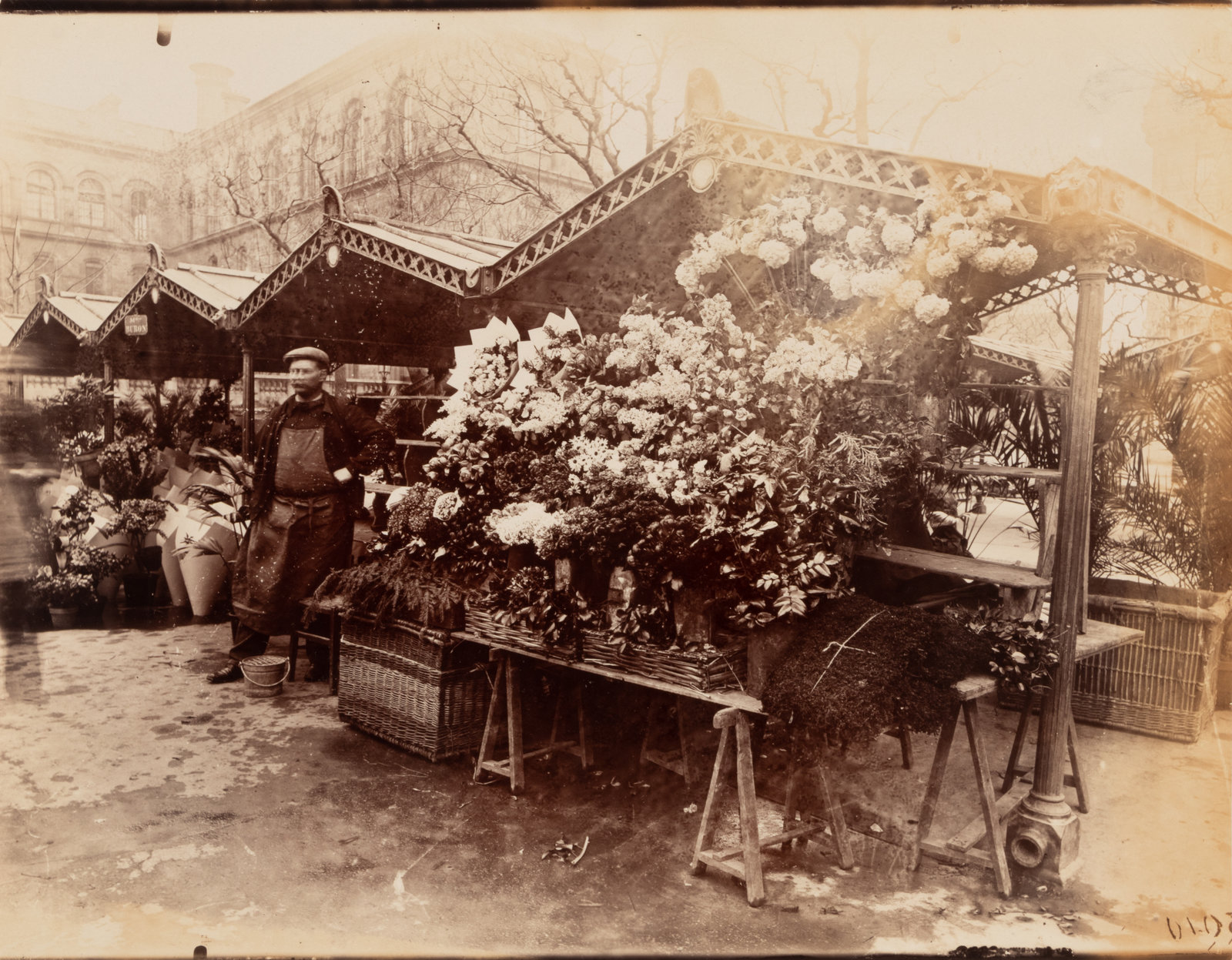
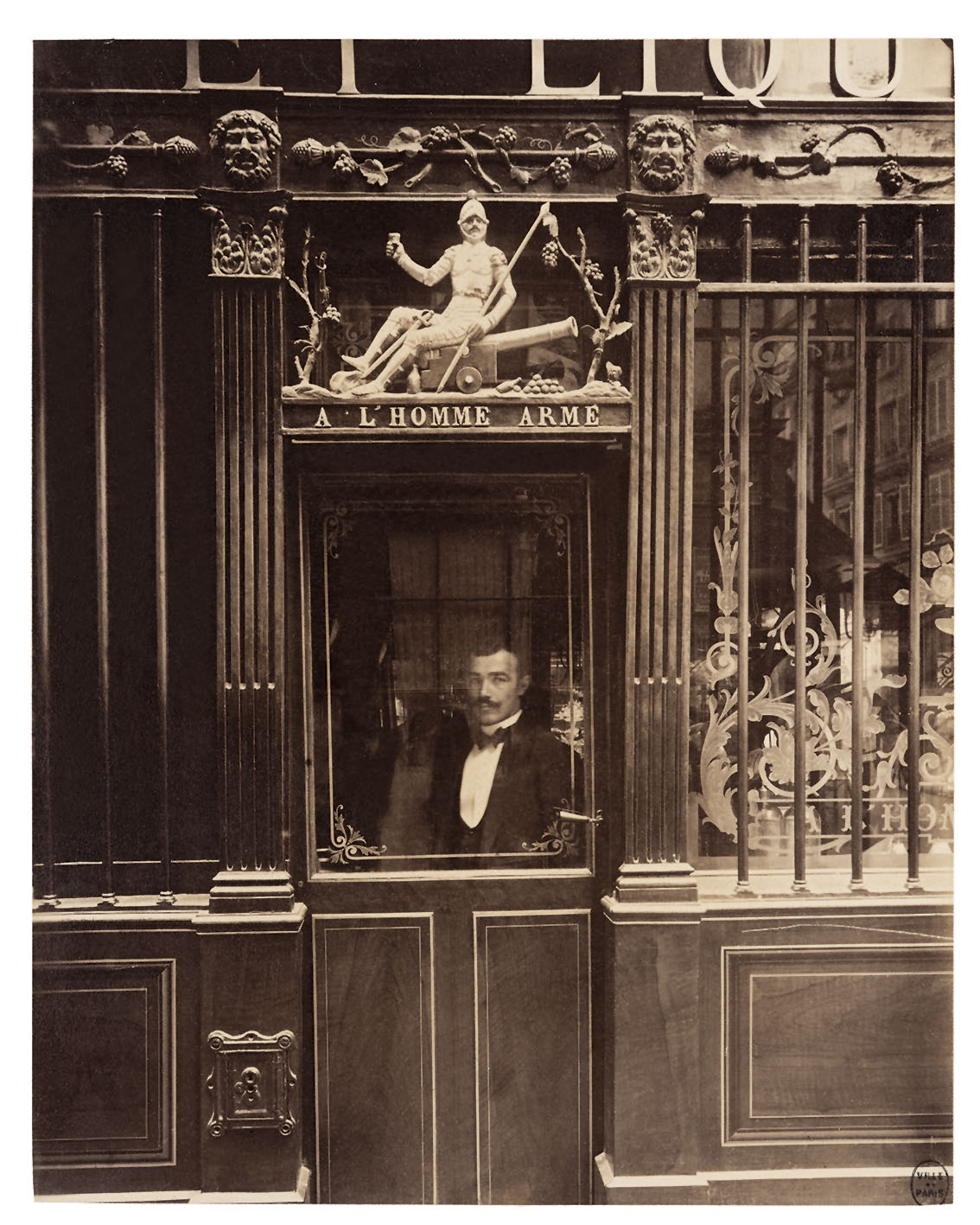
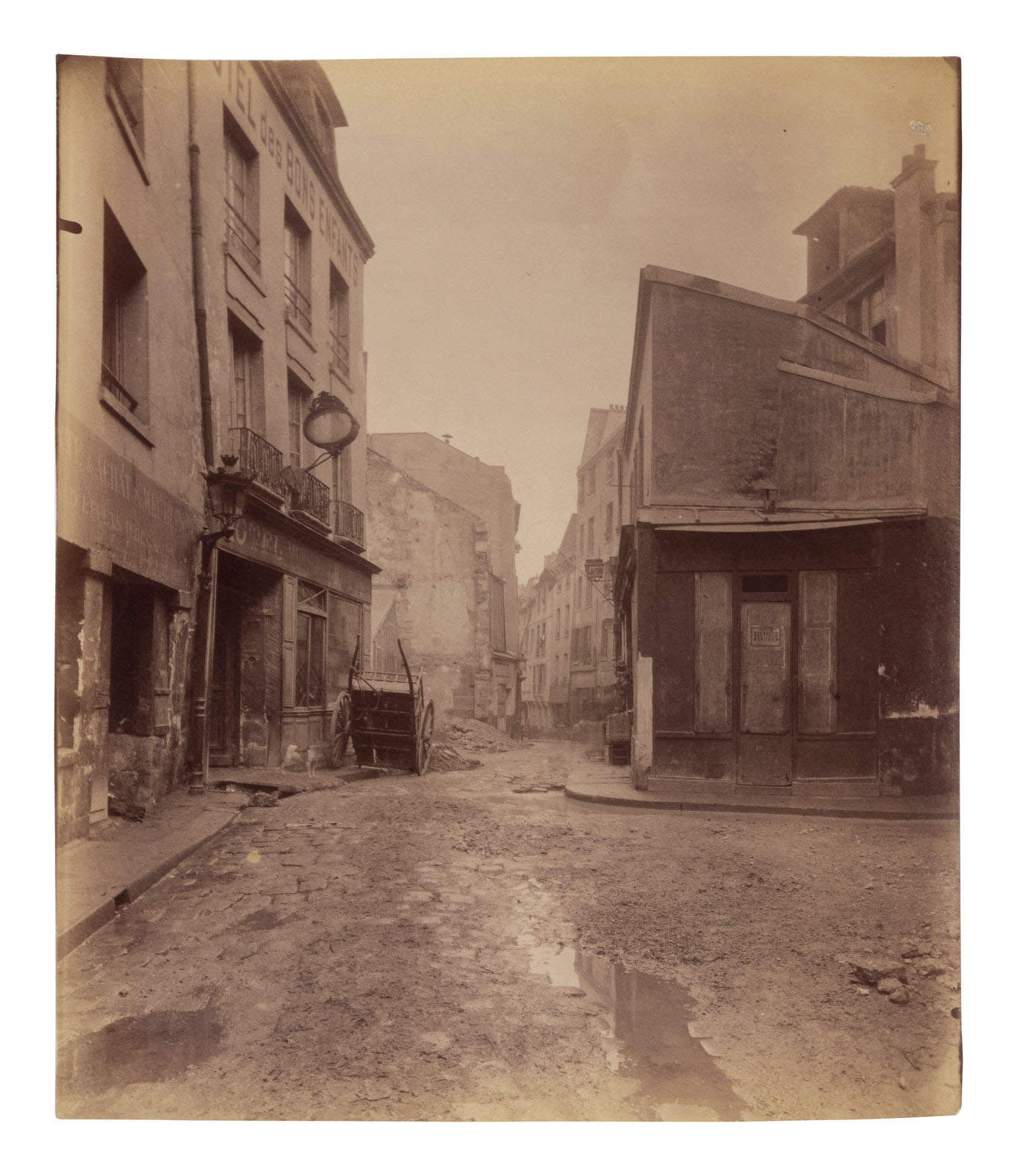
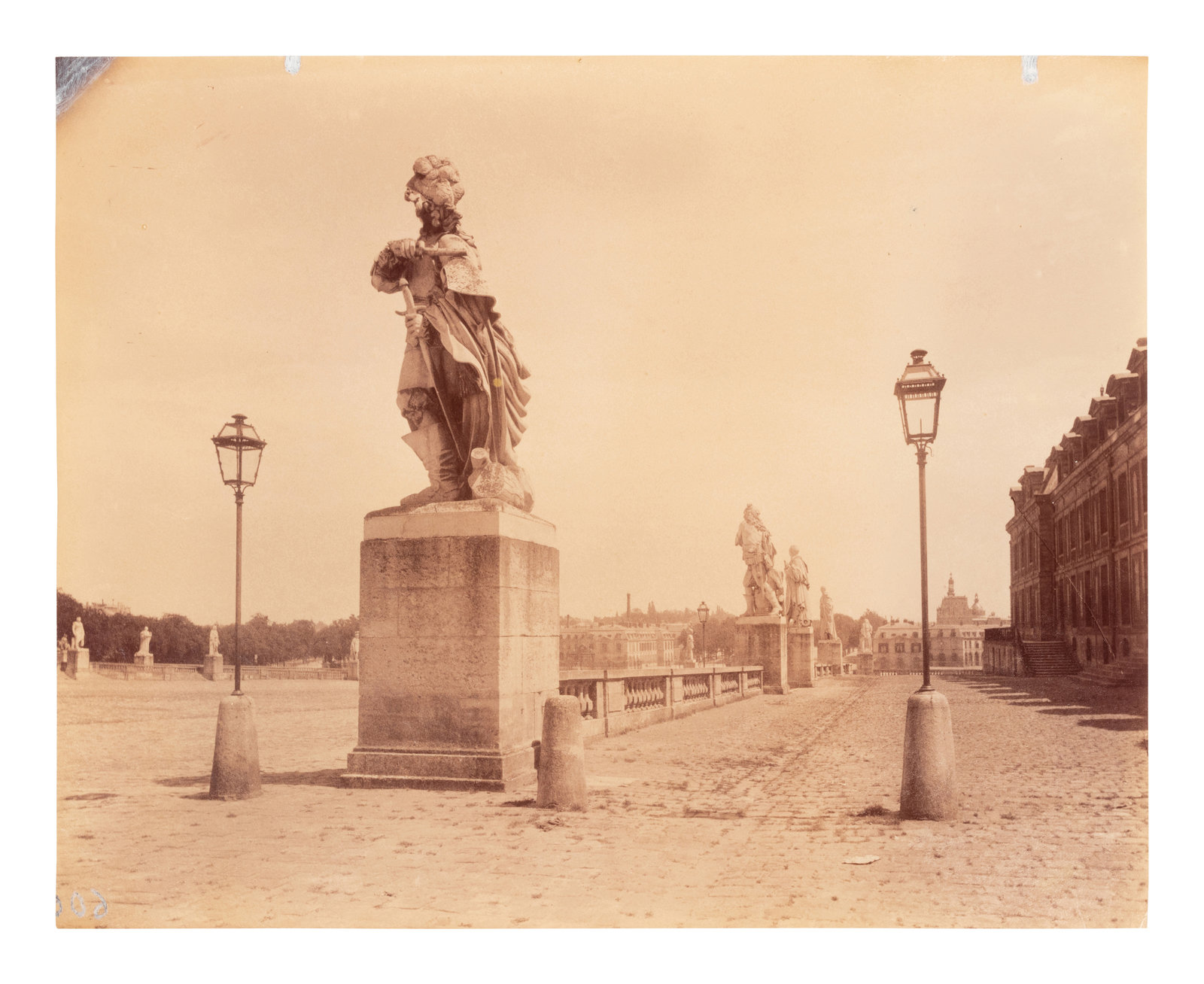
Jean-Eugène-Auguste Atget was born in 1857 in Libourne, a small town near Bordeaux in south-western France. Orphaned at an early age — both parents died before he was seven — he was raised by an uncle in the suburbs of Paris. His early life was marked by restlessness and a search for vocation that would continue for decades. As a young man he went to sea, serving as a cabin boy on merchant ships that sailed the Mediterranean and beyond. The experience gave him little in the way of direction but much in the way of solitude, and it was solitude that would define his character and, eventually, his art.
Returning to Paris, Atget enrolled at the Conservatoire d'Art Dramatique, hoping to make a career on the stage. He spent several years as an itinerant actor, touring the provinces with small theatrical companies, but success eluded him. He was by all accounts a competent but unremarkable performer, and by his late thirties he had largely abandoned the theatre. He tried his hand at painting, with similarly modest results. It was only around 1890, when he was already in his mid-thirties, that he took up photography — not as an art but as a trade. He set himself up as a commercial photographer, offering what he called "documents pour artistes" — documents for artists — reference photographs of Parisian scenes, architectural details, decorative ironwork, doorways, and street views that painters, illustrators, and set designers could use as source material for their own work.
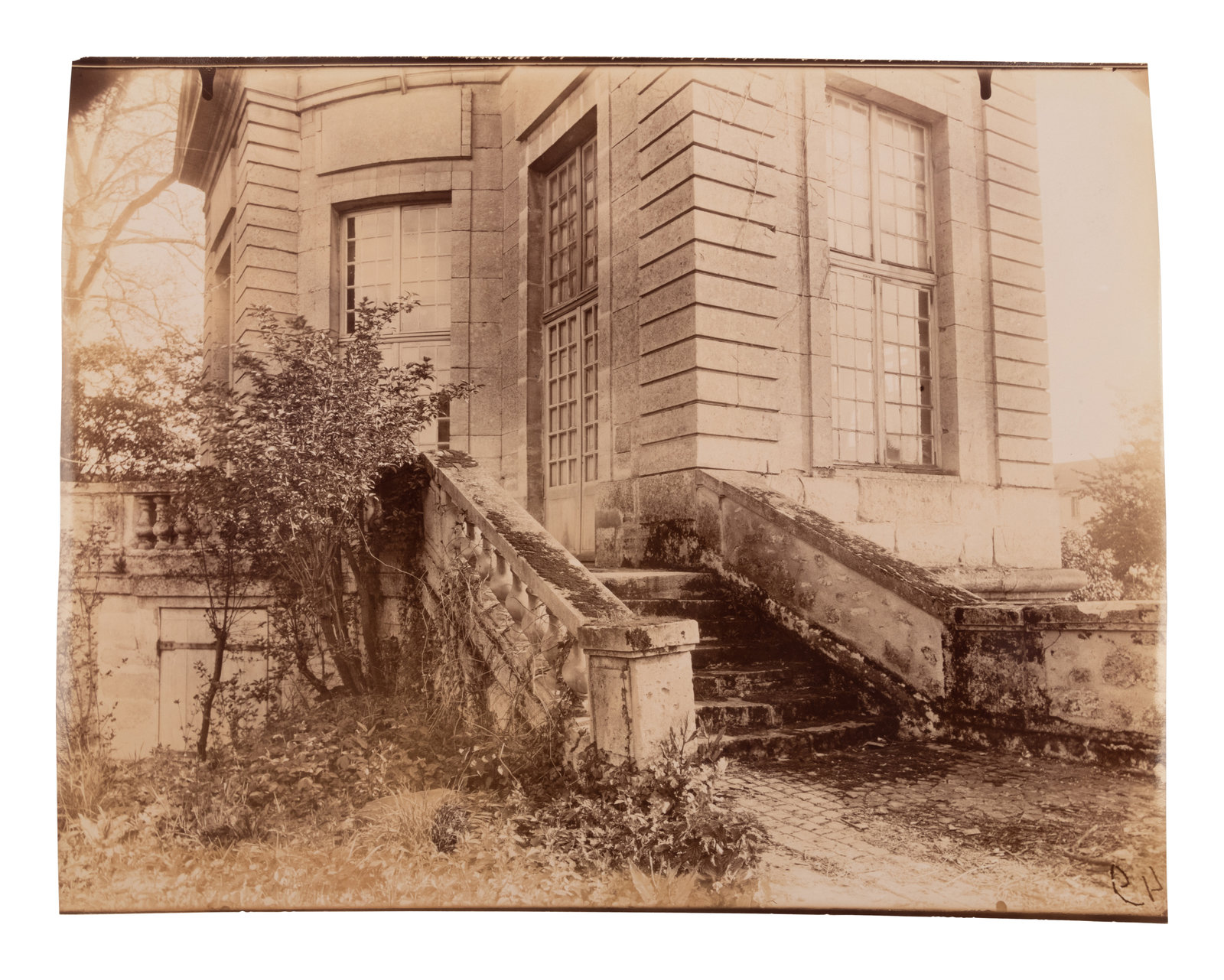
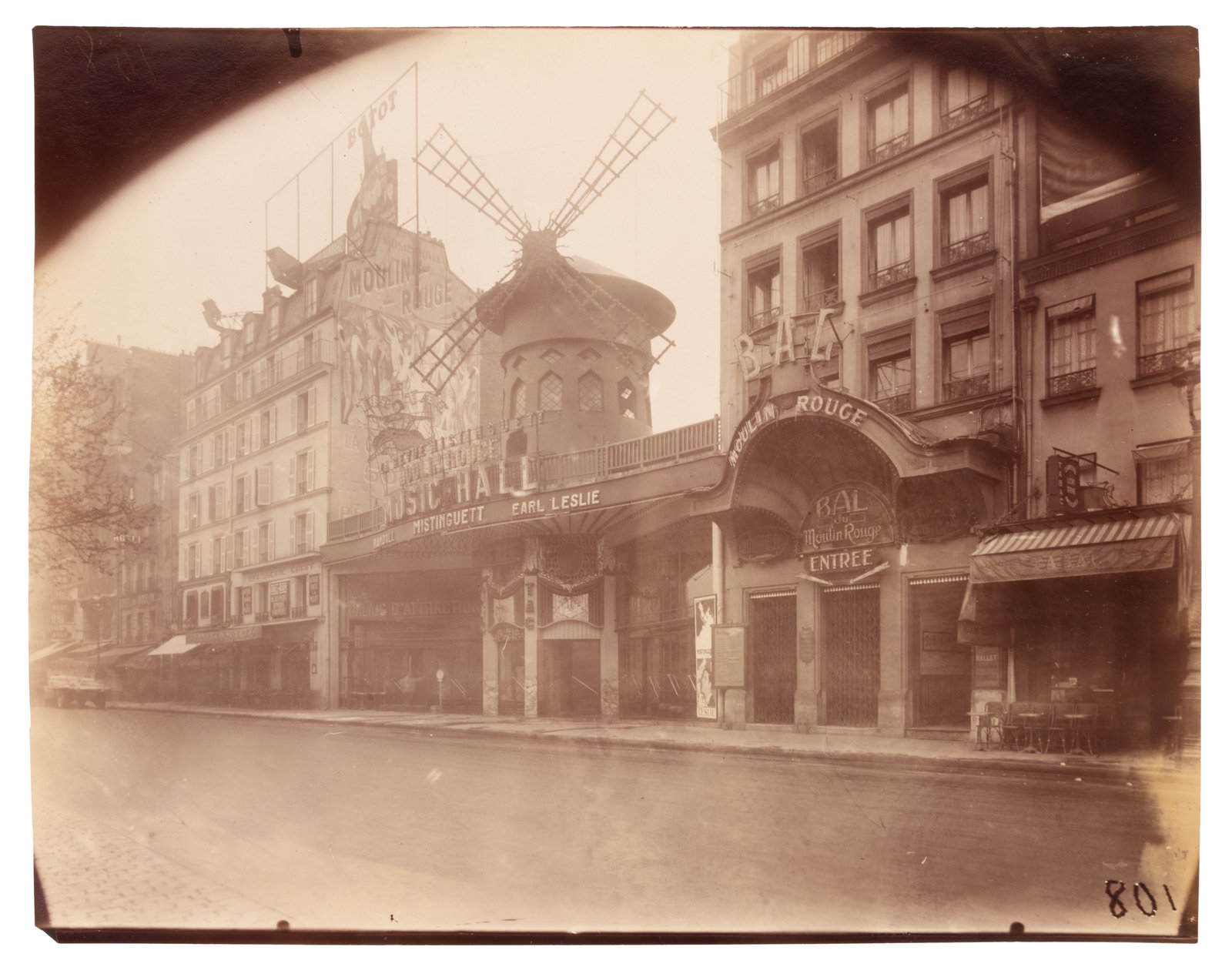
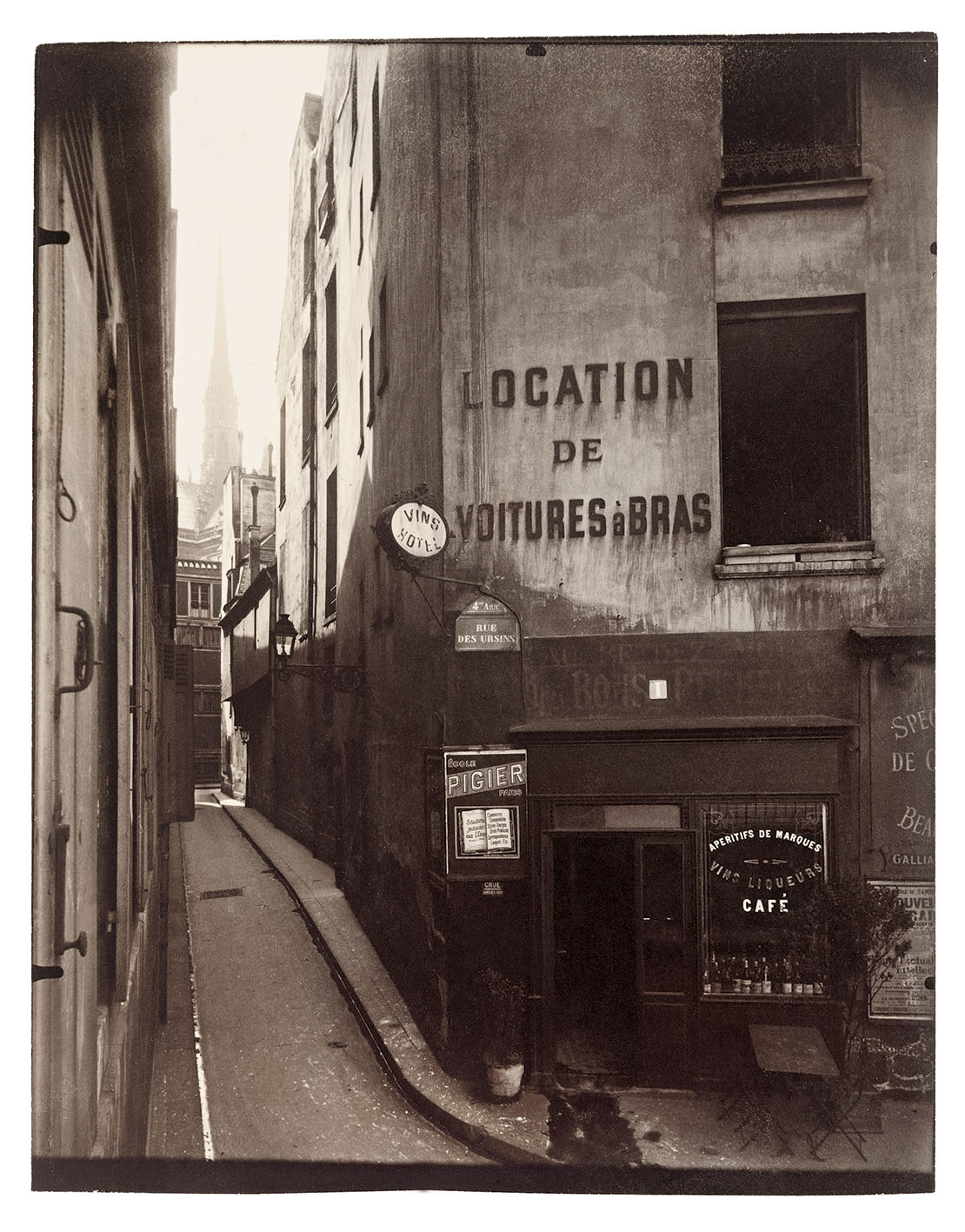
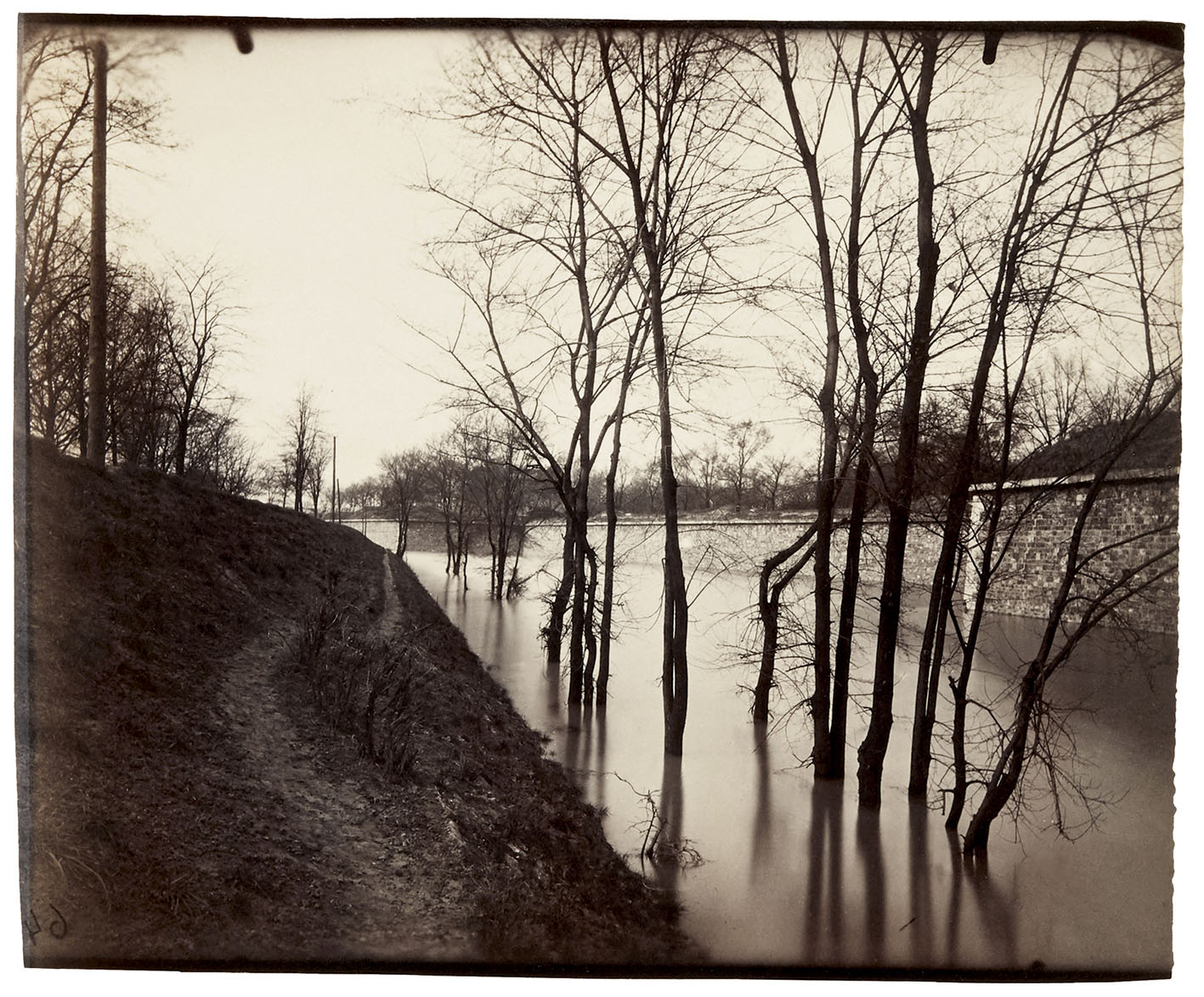
What began as a modest commercial enterprise gradually became an all-consuming mission. Working with a large-format bellows camera and glass-plate negatives — equipment that was already considered old-fashioned by the turn of the century — Atget set about documenting Paris with a thoroughness that bordered on obsession. He photographed the narrow medieval streets of the Marais and the Île de la Cité, the grand courtyards of aristocratic hôtels particuliers, the iron balconies and carved doorways of seventeenth-century buildings, the shopfronts of the Faubourg Saint-Germain, the stairways of Montmartre, and the tree-lined avenues of the public parks. He photographed at dawn, before the streets filled with traffic, and the resulting images possess an extraordinary stillness — Paris emptied of its inhabitants, its architecture standing in silent, luminous isolation.
Over the course of nearly three decades, Atget produced more than ten thousand negatives. He organised his work into thematic series — Topographie du vieux Paris, L'Art dans le vieux Paris, Environs, Paysages-Documents — and sold prints to institutions including the Bibliothèque nationale, the Musée Carnavalet, and the Bibliothèque historique de la Ville de Paris. He also received commissions from civic authorities concerned with recording buildings and streets slated for demolition under the vast modernisation programmes that were transforming the face of the city. Atget understood himself as a recorder, not an artist. He made no claims for his photographs beyond their documentary value, and he charged modest prices for his prints, which he sold from a sign on his door that read simply: "Documents pour Artistes."
It was the Surrealists who first recognised that Atget's photographs possessed a quality far beyond their documentary function. In the early 1920s, Man Ray, who had his studio in the same Montparnasse street where Atget lived, became aware of the old photographer's work and was struck by the dreamlike strangeness of his empty streets and enigmatic shop-window reflections. Four of Atget's photographs were published in the Surrealist journal La Révolution surréaliste in 1926 — reportedly over Atget's own objections, for he insisted that his images were nothing more than documents. The Surrealists saw in them something else entirely: a vision of the city as uncanny, spectral, haunted by absence, in which the familiar world of commerce and habitation was transformed into something mysterious and strange.
The decisive figure in Atget's posthumous reputation was the American photographer Berenice Abbott. In 1925, while working as Man Ray's darkroom assistant, Abbott visited Atget's studio and was overwhelmed by what she found. She began purchasing prints and urged others to recognise the importance of his work. When Atget died in poverty in August 1927 — shortly after the death of his longtime companion, Valentine Delafosse Compère — Abbott moved quickly to acquire his surviving archive of negatives and prints. She spent the next four decades championing his work, organising exhibitions, publishing portfolios, and writing about his achievement with passionate conviction. It was largely through Abbott's tireless advocacy that Atget's name survived at all.
In 1968, Abbott sold the Atget archive to the Museum of Modern Art in New York, where it became the subject of an exhaustive four-volume catalogue and a series of landmark exhibitions curated by John Szarkowski. Szarkowski's interpretation placed Atget firmly within the modernist photographic tradition, arguing that his apparently straightforward documentary images in fact embodied a radical and original way of seeing — one that anticipated the concerns of twentieth-century photography with the vernacular, the overlooked, and the poetic potential of the everyday. The MoMA exhibitions established Atget as one of the founding figures of modern photography.
Atget's influence has been vast and enduring. Walker Evans encountered his work in the late 1920s, shortly after returning from Paris, and the impact is visible throughout Evans's own career — the same frontality, the same attention to vernacular architecture and commercial signage, the same conviction that the ordinary, recorded with sufficient precision, becomes extraordinary. Lee Friedlander, Garry Winogrand, and the entire tradition of American street photography owe something to Atget's demonstration that the camera's truest subject is the world as it is found, unembellished and unposed. His shop-window photographs, with their layered reflections and ghostly superimpositions of interior and exterior, anticipate the conceptual and formal preoccupations of photographers working decades after his death. Atget remains the supreme example of the photographer as solitary witness — a man who spent a lifetime recording a world that was vanishing before his eyes, and whose quiet, meticulous images turned out to be among the most profound and influential ever made.