Elliott Erwitt was born Elio Romano Erwitz in Paris in 1928 to Russian Jewish émigré parents. His early childhood was spent in Milan, Italy, before his family emigrated to the United States in 1939, settling first in New York and then in Los Angeles. It was in Hollywood, of all places, that the young Erwitt first encountered photography, taking a job in a commercial darkroom while still a teenager. He developed photographs for movie stars and tourists, but he also began making his own images on the streets, absorbing through intuition what others learned through formal study — the understanding that a photograph could be simultaneously precise and playful, factual and poetic.
After studying at the Los Angeles City College and briefly at the New School for Social Research in New York, Erwitt was drafted into the United States Army in 1951. Even military service could not dampen his photographic instincts; he continued to shoot throughout his posting, turning the mundane routines of army life into small visual comedies. It was during this period that he came to the attention of Edward Steichen, then director of photography at the Museum of Modern Art, and of Robert Capa, the legendary war photographer and co-founder of Magnum Photos. Capa invited Erwitt to join Magnum in 1953, beginning an association that would last for the rest of his life and that gave him both a platform and the freedom to pursue his singular vision.
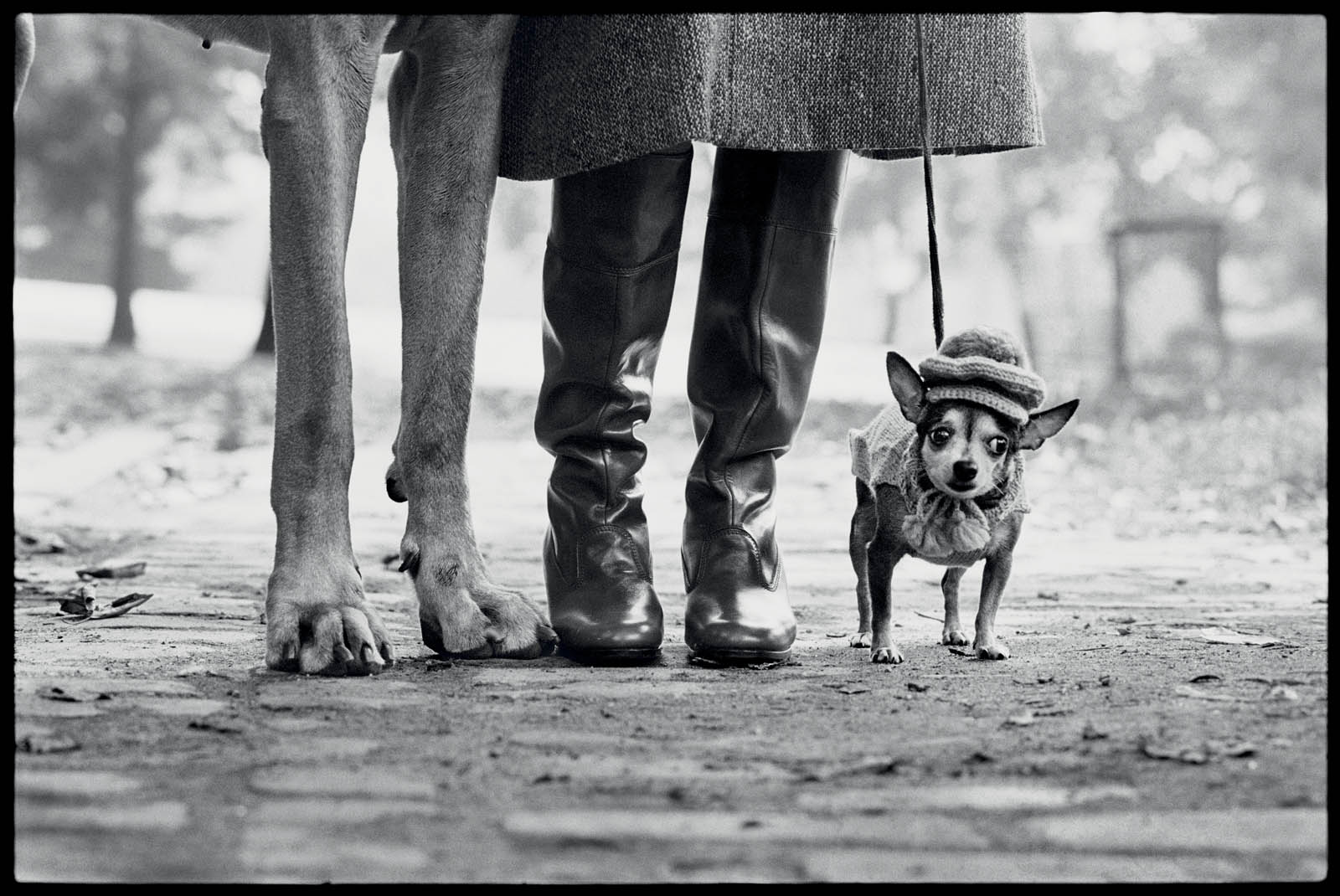
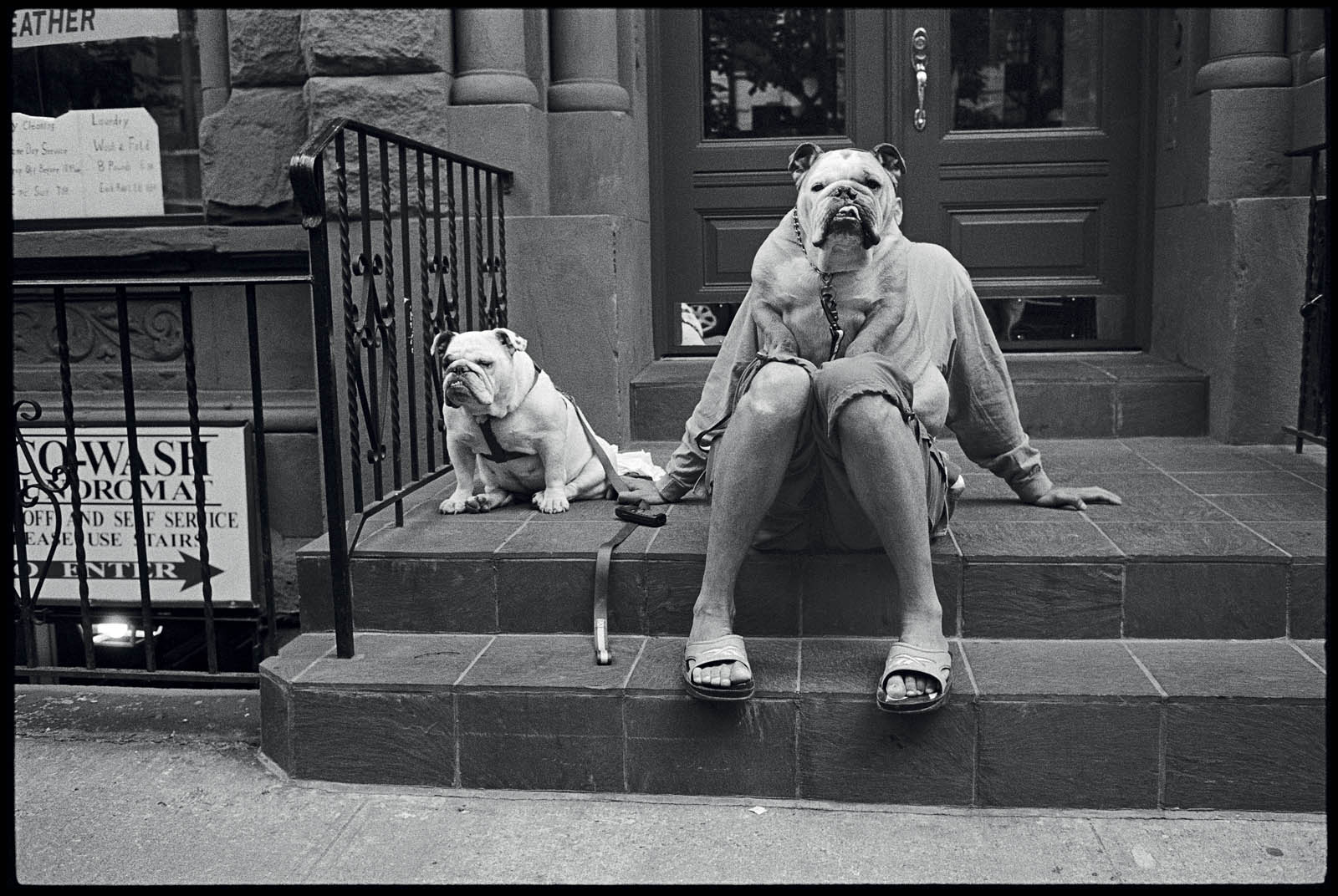
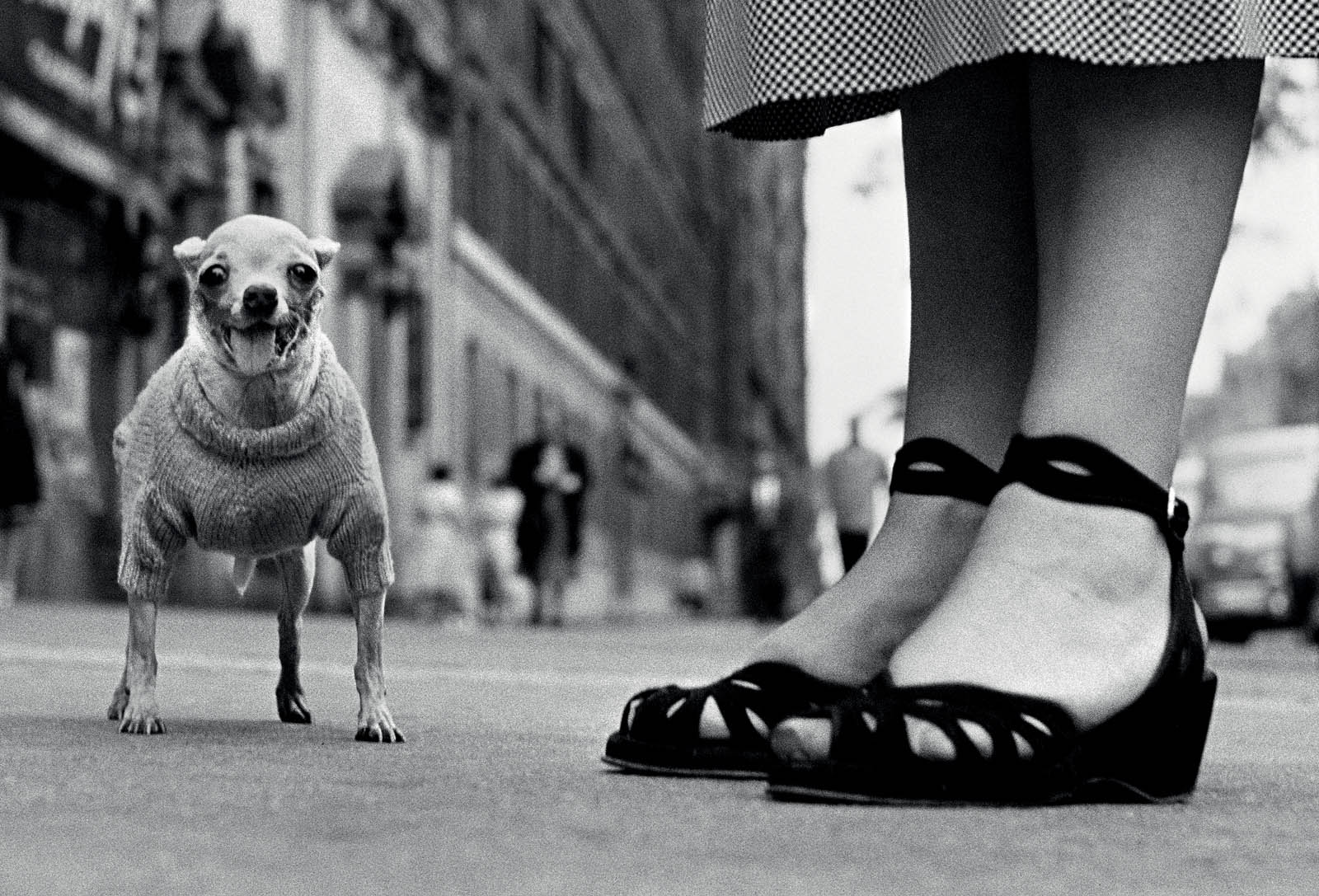
What distinguished Erwitt from his contemporaries at Magnum — photographers whose work tended toward the gravely heroic or the intensely humanistic — was his sense of humour. Erwitt understood that comedy and seriousness were not opposites but companions. His photographs of dogs, perhaps his most beloved body of work, exemplified this perfectly. He saw in canine behaviour a mirror of human absurdity: the pompous strut of a bulldog, the anxious trembling of a chihuahua beside a pair of enormous Great Dane legs, the stoic dignity of a mutt enduring its owner's affections. These were not sentimental animal pictures but shrewd observations about vanity, social hierarchy, and the comedy of coexistence, rendered with immaculate timing and compositional wit.
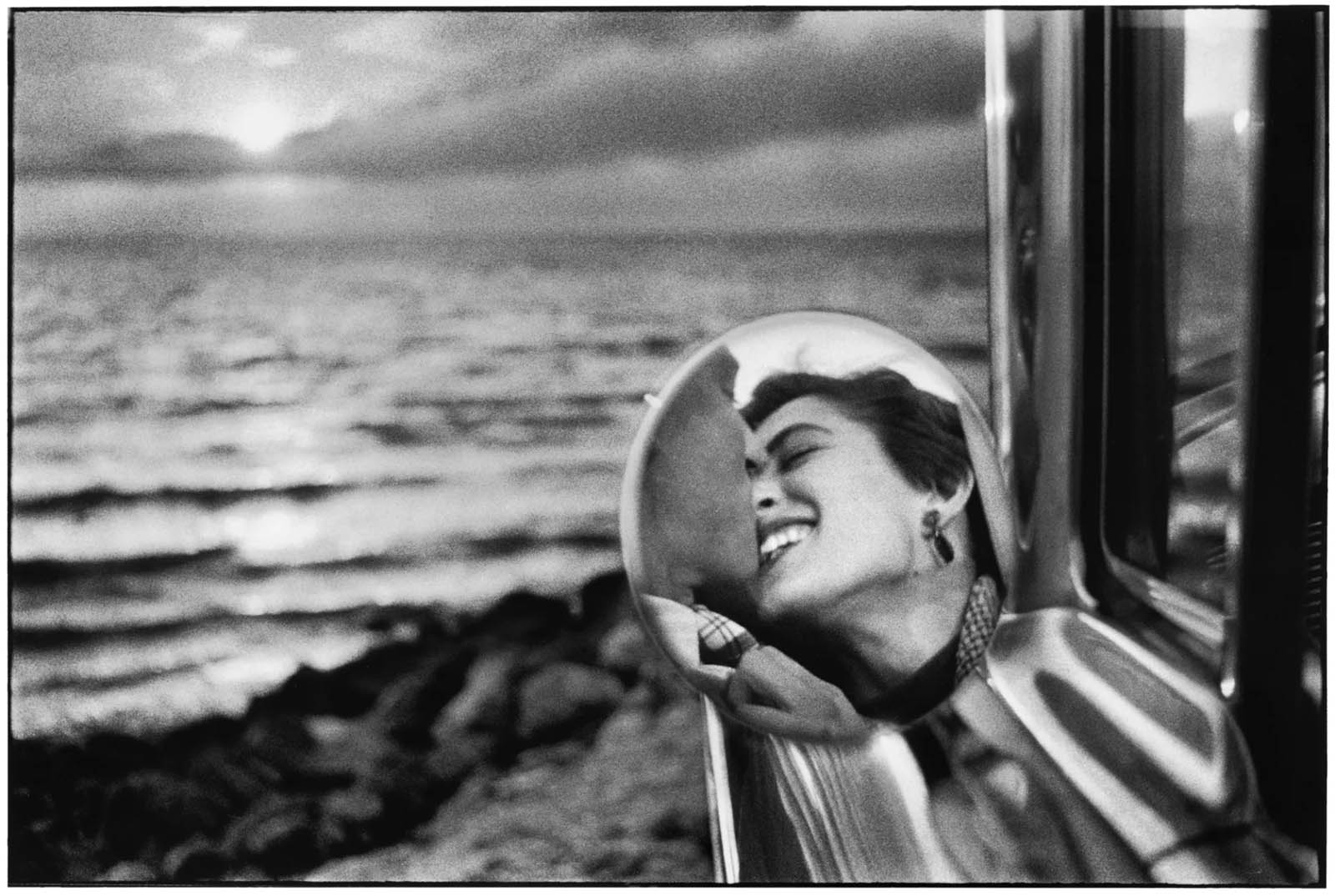
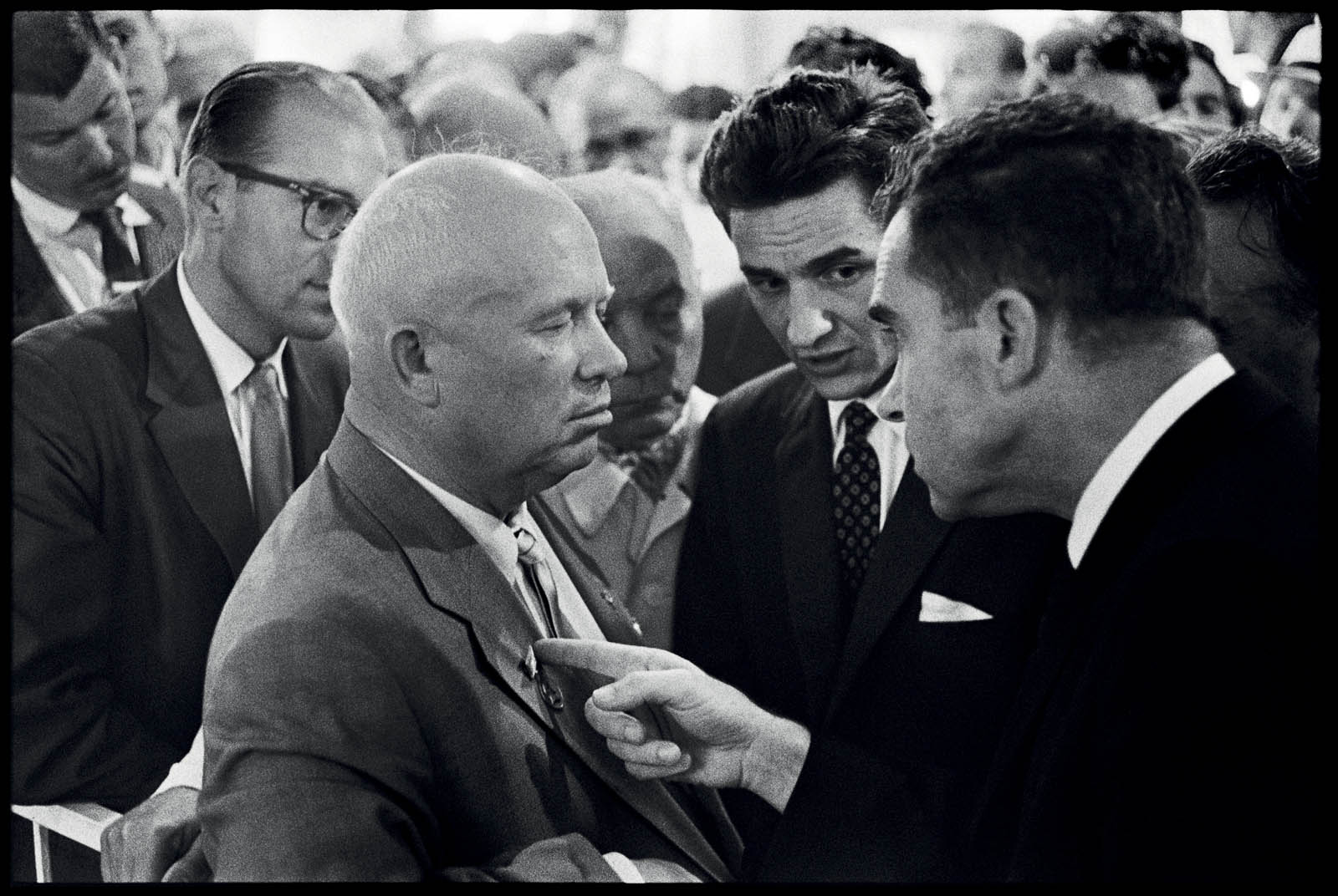
Erwitt's range, however, extended far beyond humour. His photograph of a couple kissing in a car's side mirror in Santa Monica in 1955 is one of the most tender and formally inventive images in postwar photography. His coverage of the Kitchen Debate between Richard Nixon and Nikita Khrushchev in Moscow in 1959 captured a moment of geopolitical theatre with the instincts of a political cartoonist. He photographed Jacqueline Kennedy grieving at her husband's funeral with a restraint and empathy that set his image apart from the thousands of others made that day. Erwitt moved between the comic and the solemn with a fluency that few photographers have ever matched.
As a member of Magnum, Erwitt worked prolifically in both editorial and commercial photography, serving as the agency's president three times. He shot advertising campaigns for major corporations, produced films and documentaries, and published more than twenty books. Yet he never abandoned his personal work — the street observations, the animal portraits, the quietly absurd juxtapositions that he discovered in the course of everyday life. He carried a camera at all times, a Leica usually, and he photographed with a speed and economy that made the complex look effortless. His best images appear inevitable, as though the scene had composed itself and merely waited for Erwitt to press the shutter.
Throughout his career, Erwitt resisted theoretical pronouncements about photography. He distrusted the language of art criticism and preferred to let his images speak without explanation. When pressed to articulate his method, he offered characteristically laconic advice: all you needed, he suggested, was good light, an interesting subject, and the ability to react quickly. The simplicity was, of course, deceptive. Behind Erwitt's apparent spontaneity lay decades of disciplined seeing, an encyclopaedic visual memory, and an understanding of human behaviour so acute that he could anticipate the comedic or poignant moment a fraction of a second before it occurred.
Erwitt's influence on photography is both visible and elusive. His work demonstrated that documentary photography need not be solemn to be serious, that wit was not the enemy of depth but could be its most effective vehicle. Photographers as diverse as Martin Parr, Bruce Gilden, and Matt Stuart have acknowledged his example, and his dog photographs alone have spawned an entire genre of affectionate, observant animal photography. He continued working into his nineties, his eye undimmed, his timing unerring.
Elliott Erwitt died in New York City on 29 November 2023, at the age of ninety-five. He left behind a body of work that spans seven decades and that constitutes one of the most joyful, humane, and technically accomplished achievements in the history of the medium. His photographs remind us that the world is endlessly funny, endlessly strange, and endlessly worth looking at — if only we have the wit to see it.