Edward Jean Steichen was born in 1879 in the village of Bivange, Luxembourg, and emigrated with his family to the United States as an infant, settling in Hancock, Michigan, before the family moved to Milwaukee, Wisconsin. His mother encouraged his artistic inclinations, and by the age of fifteen he had begun a four-year apprenticeship at a lithography firm while simultaneously pursuing painting and photography. His earliest photographs, produced in the late 1890s, were soft-focus, atmospheric studies influenced by the Pictorialist movement that sought to elevate photography to the status of fine art through the emulation of painterly effects — diffused light, moody tonalities, and carefully manipulated printing processes.
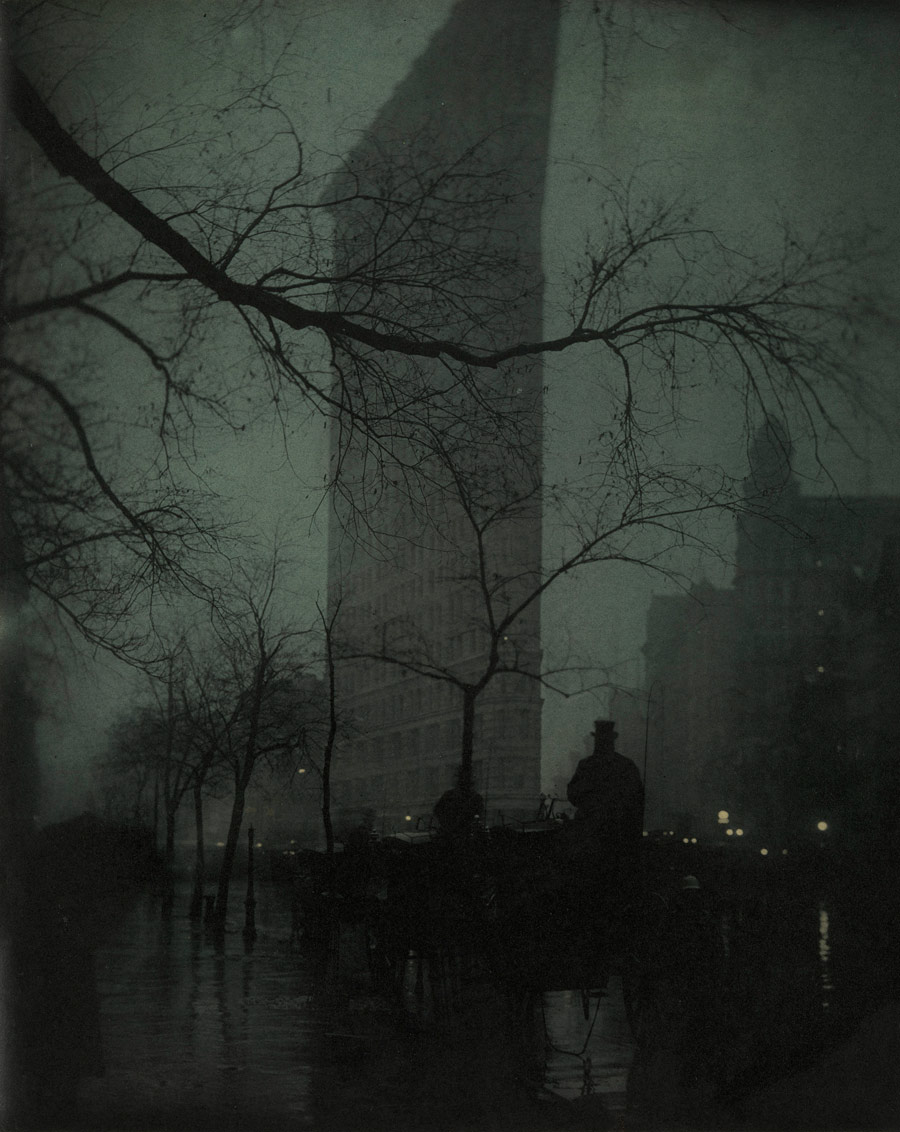
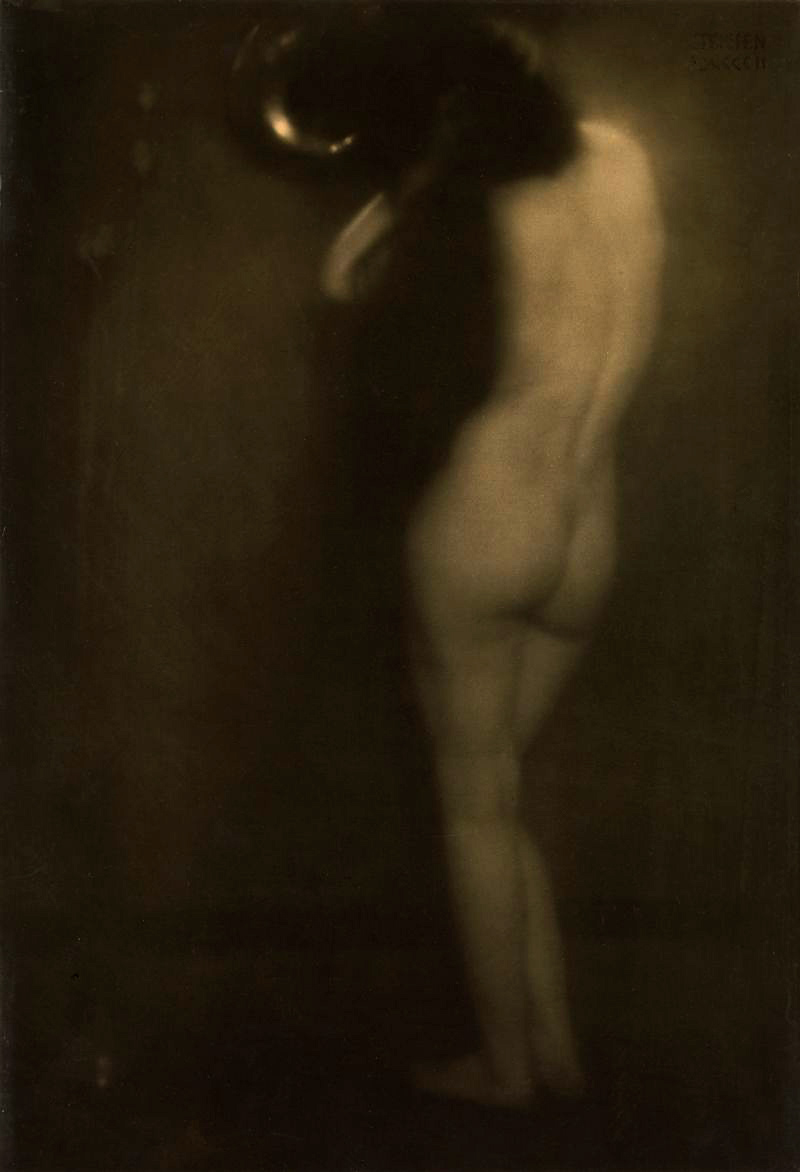
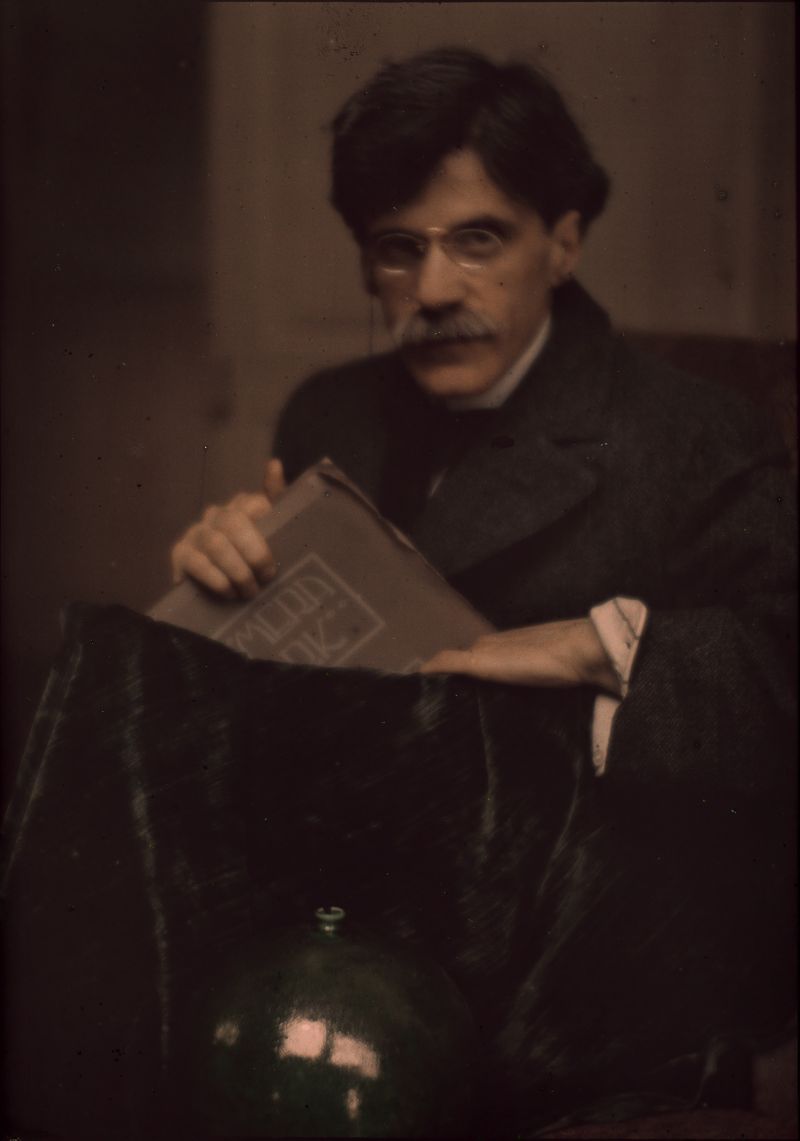
In 1900, on his way to Paris to study painting, Steichen stopped in New York and showed his photographs to Alfred Stieglitz, the towering figure of American art photography. Stieglitz was immediately impressed and purchased three prints, the beginning of a collaboration that would reshape the course of photography in America. Steichen became one of the founding members of the Photo-Secession, the group Stieglitz organised to promote photography as a fine art, and his work appeared prominently in Stieglitz's influential journal Camera Work. His Pictorialist masterpieces from this period — including The Flatiron (1904) and The Pond — Moonlight (1904), both photographs of exquisite tonal subtlety — rank among the finest achievements of the movement.
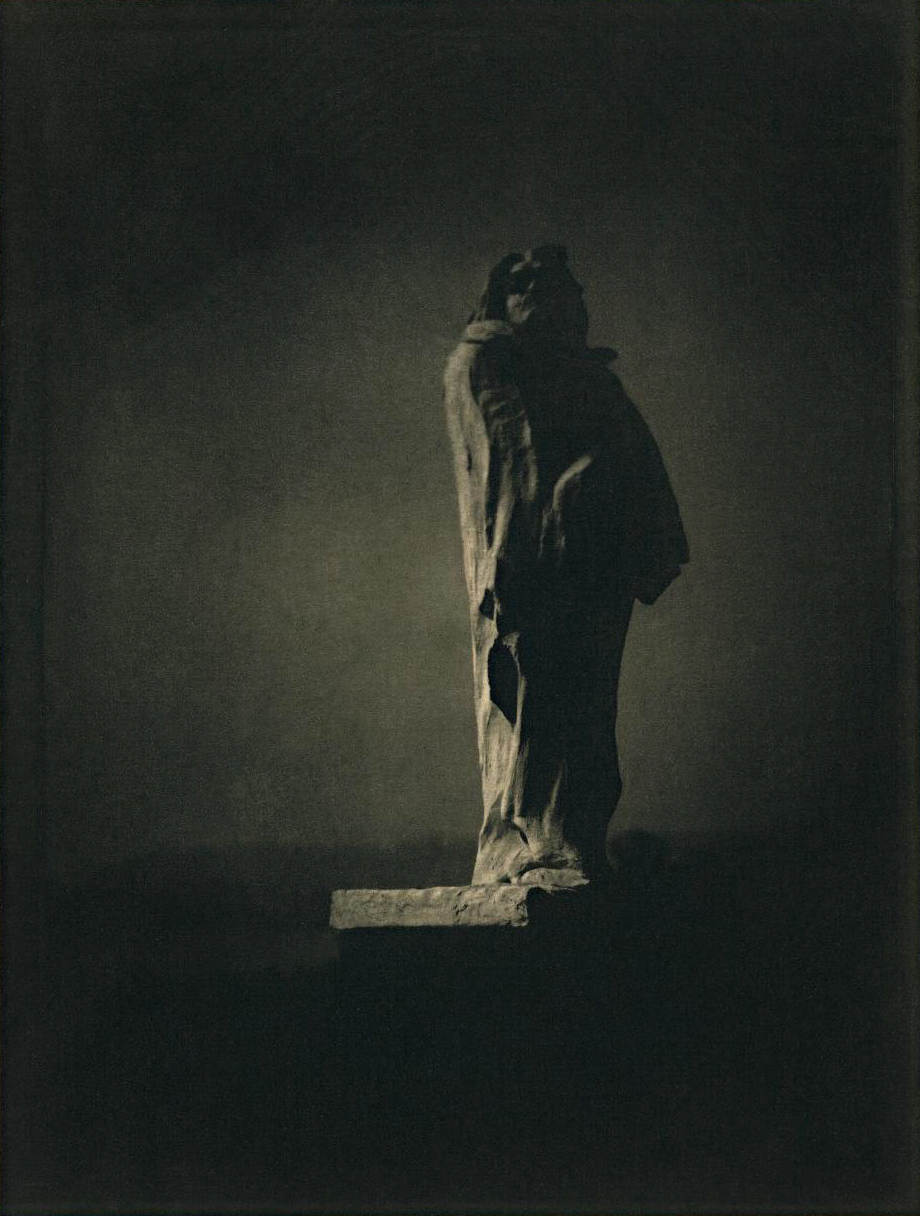
In Paris, Steichen immersed himself in the avant-garde art world, befriending Auguste Rodin and producing a celebrated series of portraits of the sculptor. He also played a crucial role in introducing European modern art to America, helping Stieglitz organise exhibitions of Matisse, Cézanne, and Picasso at the 291 Gallery in New York — shows that were among the first presentations of European modernism on American soil. Steichen's own work was evolving rapidly: he began to move away from the soft-focus aesthetics of Pictorialism toward a sharper, more direct style influenced by the modernist emphasis on clarity, form, and the intrinsic qualities of the photographic medium.
During the First World War, Steichen served as the chief of the photographic division of the American Expeditionary Forces, overseeing aerial reconnaissance photography in France. The experience transformed his understanding of photography's capabilities and purposes. After the war, he abandoned painting entirely, famously burning many of his canvases, and committed himself wholly to photography. In 1923, he was hired as chief photographer for Condé Nast Publications, producing fashion and portrait photographs for Vogue and Vanity Fair that defined the visual style of the Jazz Age and the era of Hollywood glamour.
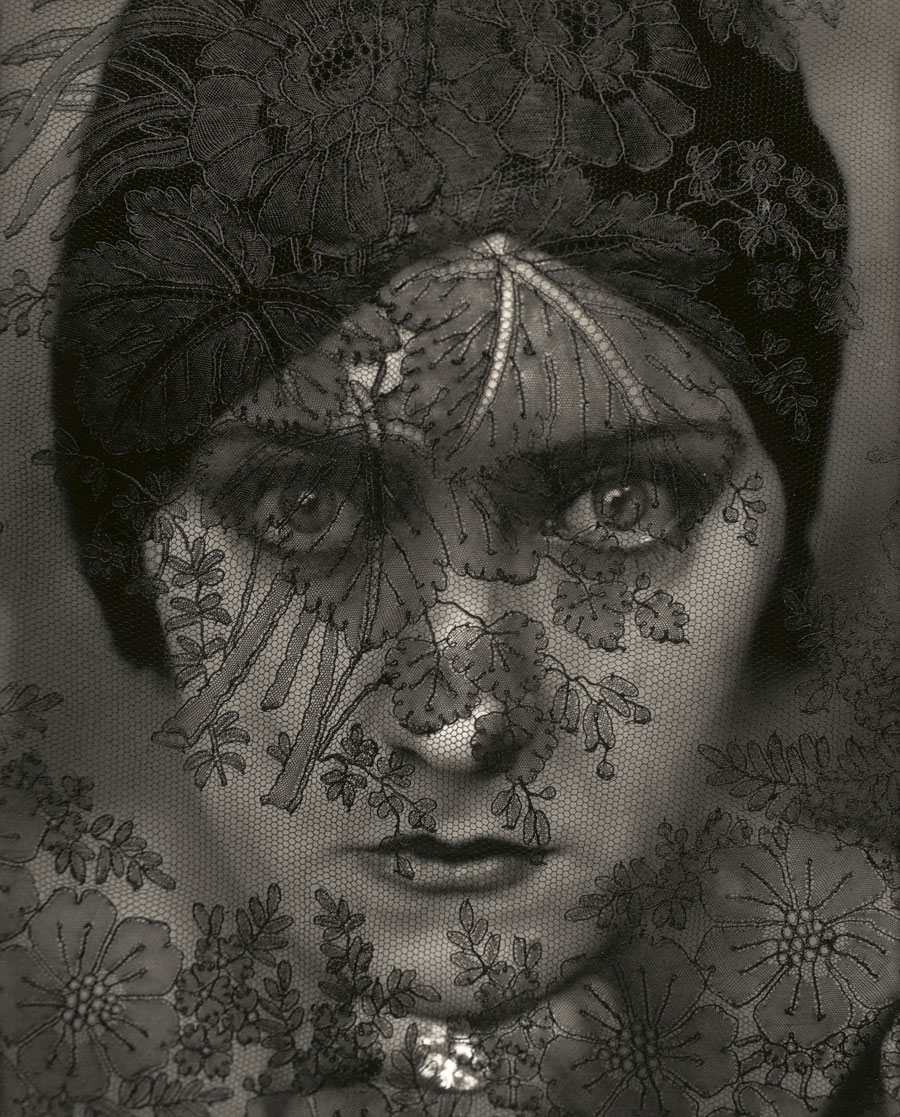
His commercial work of the 1920s and 1930s was revolutionary in its sophistication. Steichen brought the compositional intelligence and lighting mastery of a fine artist to the worlds of fashion and celebrity portraiture, creating images of Gloria Swanson, Greta Garbo, Charlie Chaplin, and dozens of other luminaries that remain among the most iconic portraits of the twentieth century. He pioneered the use of dramatic lighting, bold graphic compositions, and the integration of modern design principles into commercial photography, establishing a standard of excellence that elevated the entire field.
During the Second World War, Steichen served again, this time as director of the Naval Aviation Photographic Unit, overseeing combat photography in the Pacific theatre. The war deepened his conviction that photography's highest purpose was not aesthetic but communicative — its power to bridge the gaps between peoples, to reveal shared humanity, and to foster understanding across the divisions of culture, nation, and ideology.
This conviction found its fullest expression in The Family of Man, the landmark exhibition Steichen curated for the Museum of Modern Art in 1955, during his tenure as the museum's director of photography. Drawing on 503 photographs by 273 photographers from 68 countries, the exhibition presented a sweeping visual narrative of the human condition — birth, love, work, play, suffering, death, and renewal — arguing through images that the essential experiences of human life are universal. The exhibition was seen by more than nine million visitors as it toured the world, and the accompanying book has never gone out of print.
Steichen's career was without parallel in its range and reinvention. He excelled as a Pictorialist, a modernist, a commercial photographer, a military commander, a curator, and a humanist visionary. His willingness to embrace change — to abandon one mode of working when he felt its possibilities exhausted and to throw himself into the next with total commitment — set an example of artistic courage that few have matched. He died in 1973 at the age of ninety-four, having shaped the course of photography more profoundly than almost any other individual in the medium's history.