Edward Burtynsky was born in 1955 in St. Catharines, Ontario, a city in the industrial heartland of Canada's Niagara region. His parents were Ukrainian immigrants, and his father worked at the local General Motors plant — a detail of biography that would prove formative, for it was in the vast, roaring factories and the scarred landscapes of heavy industry that Burtynsky first encountered the subjects that would define his life's work. As a child, he was fascinated by the scale of manufacturing operations, and by the curious beauty that could be found in the patterns of industrial waste, the geometry of assembly lines, and the raw gashes that quarrying and mining carved into the earth.
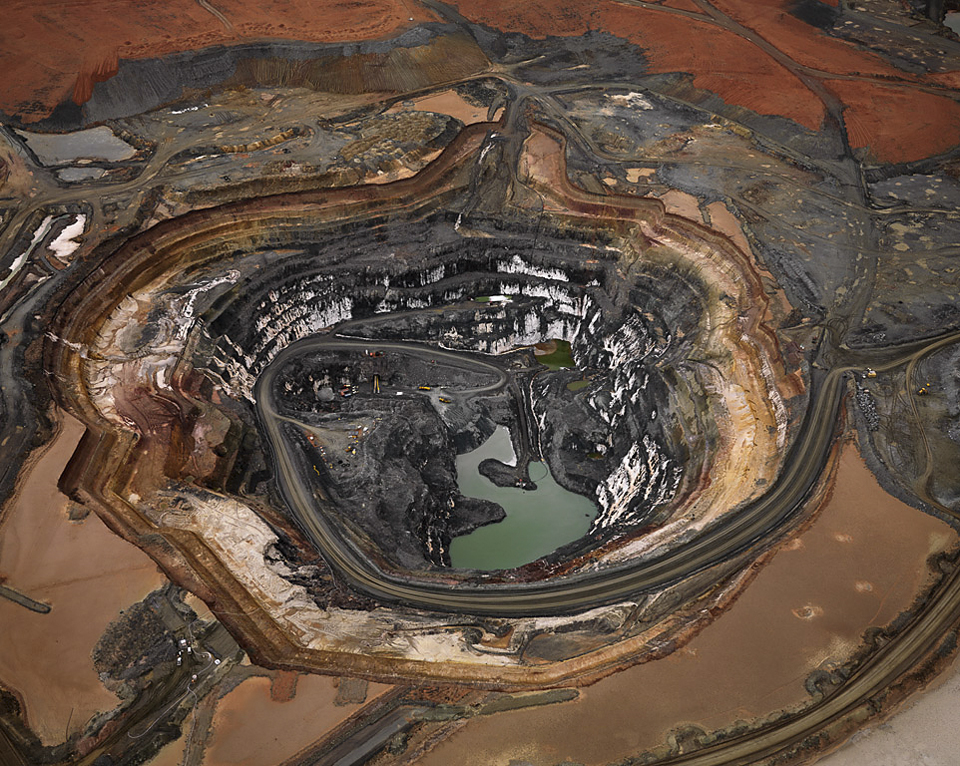
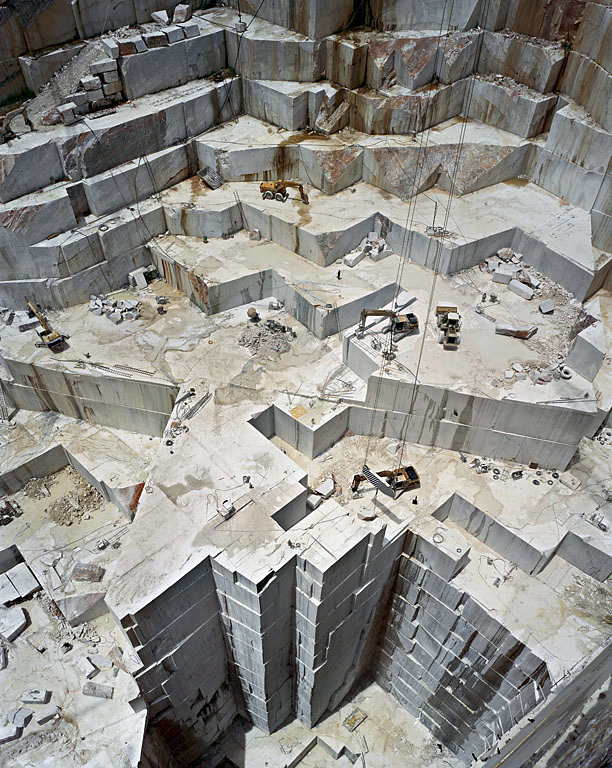
He studied graphic arts and photography at Ryerson University in Toronto, graduating in 1982, and quickly established himself as a photographer of unusual ambition. Where most photographers of the natural world sought out wilderness untouched by human activity, Burtynsky was drawn to the opposite: landscapes that had been profoundly altered, reshaped, and in many cases devastated by industrial processes. His earliest mature work documented the marble quarries of Vermont and the nickel mining operations of Sudbury, Ontario, and in these images a distinctive vision was already apparent — vast, meticulously composed photographs that transformed scenes of environmental destruction into images of unsettling, even seductive beauty.
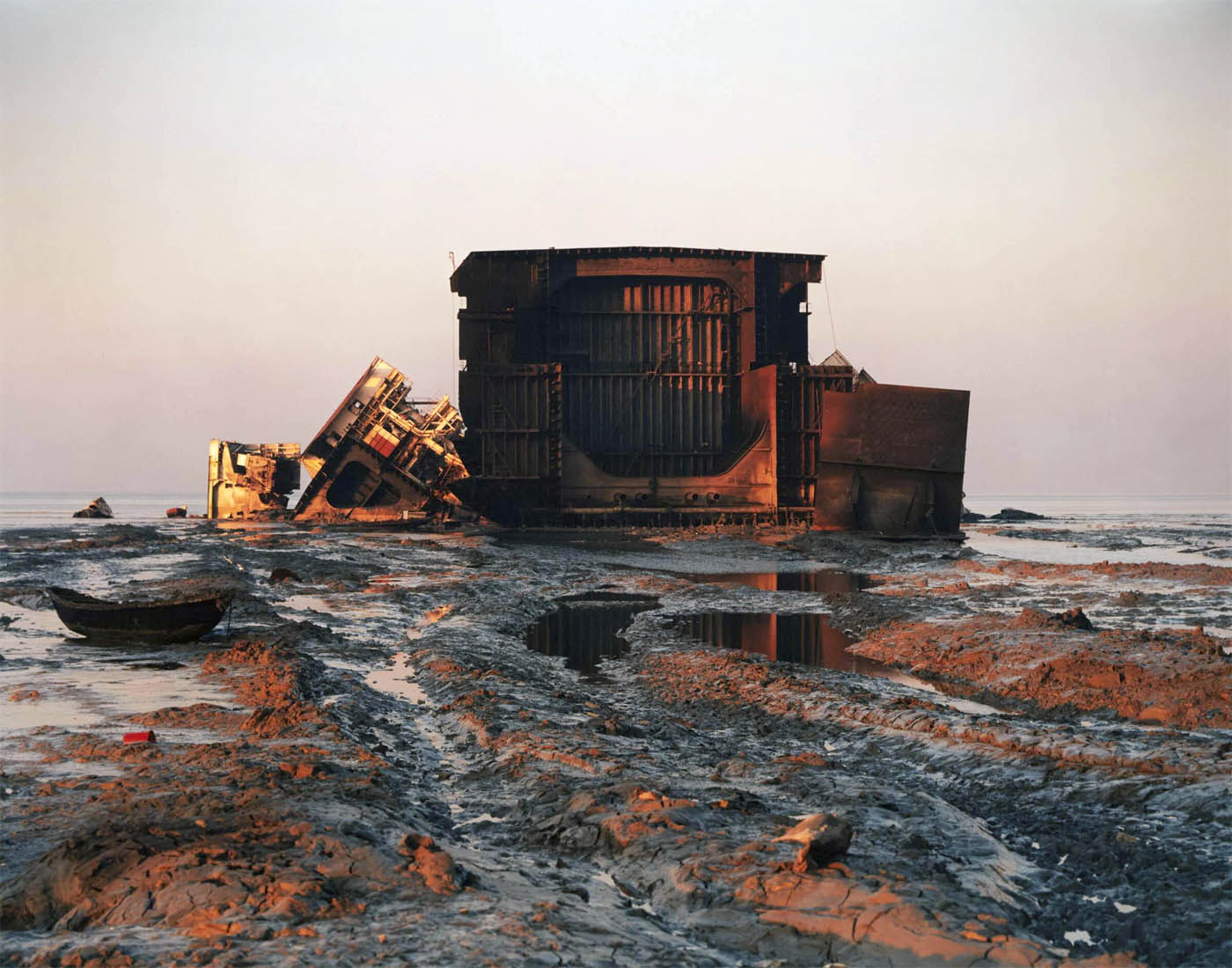
This tension between beauty and destruction became the central dialectic of Burtynsky's practice. His photographs are large-format, richly detailed, and composed with an almost painterly attention to colour, pattern, and scale. The nickel tailings of Sudbury flow in rivulets of toxic orange and red that recall the colour fields of Mark Rothko; the tire piles of California form geometric structures as imposing as any architectural monument; the shipbreaking yards of Bangladesh present tableaux of labour and wreckage that evoke the grandeur of nineteenth-century history painting. Burtynsky has spoken of his desire to create images that seduce the viewer first and disturb them second — to use beauty as a means of engagement rather than as an end in itself.
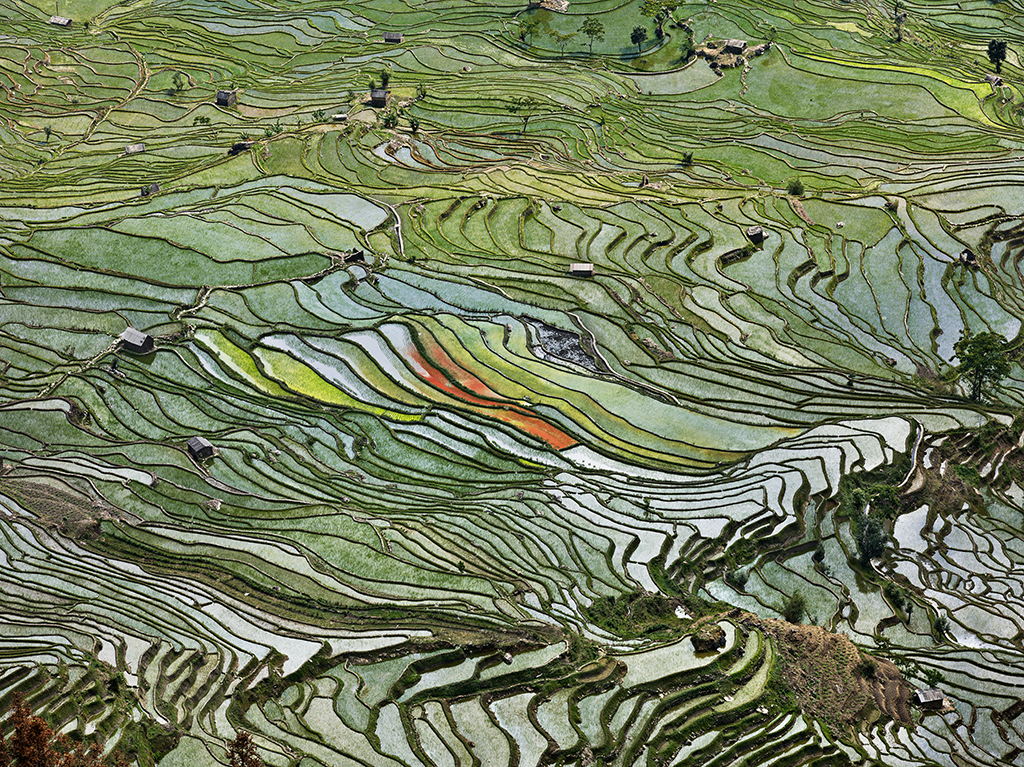
Throughout the 1990s and 2000s, Burtynsky undertook a series of monumental photographic projects that systematically documented the global infrastructure of extraction, production, and waste. His Quarries series (1991–2012) recorded the immense stone excavations of Vermont, Italy, Portugal, and China. The Oil series (2003–2009) traced the entire lifecycle of petroleum, from extraction through refining, distribution, consumption, and the landscapes of abandonment left behind when the oil runs out. The Water series (2007–2013) documented the damming, diversion, and depletion of freshwater resources across the globe, from the dried riverbeds of the Colorado Delta to the terraced rice paddies of southern China.
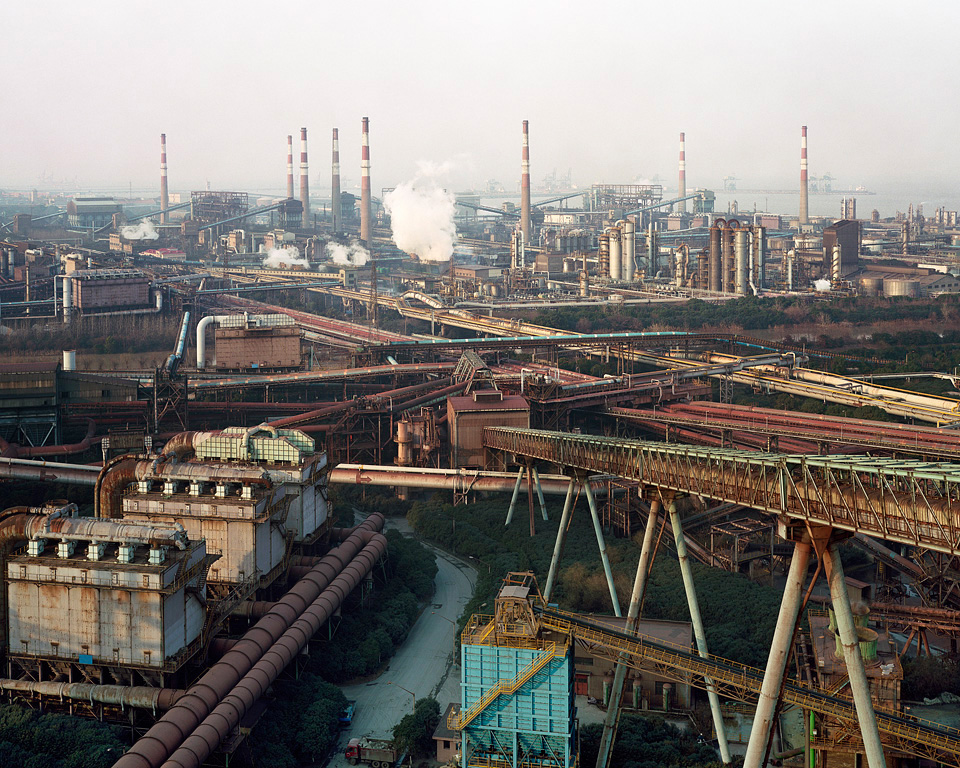
His work in China during the early 2000s produced some of his most powerful and widely exhibited images. The China series documented the unprecedented scale of the country's industrial transformation: factories employing thousands of workers in identical repetitive tasks, the construction of the Three Gorges Dam, and the systematic dismantling of entire cities to make way for new development. These photographs captured a civilisation remaking itself at a speed and scale never before witnessed in human history, and they established Burtynsky as one of the most important visual chroniclers of globalisation.
In 2006, the documentary film Manufactured Landscapes, directed by Jennifer Baichwal, followed Burtynsky through China and brought his work to a wider audience. The film's celebrated opening sequence — a single, unbroken tracking shot through an enormous Chinese factory — became an iconic image of the scale of contemporary manufacturing. Subsequent collaborations with Baichwal and filmmaker Nicholas de Pencier produced Watermark (2013) and Anthropocene: The Human Epoch (2018), extending Burtynsky's photographic vision into the moving image.
Burtynsky's photographs occupy a deliberately ambiguous moral position. He does not caption his images with statistics about pollution or habitat destruction; he does not include human subjects as symbols of suffering; he does not explicitly advocate for policy changes. Instead, he presents the evidence and trusts the viewer to draw conclusions. This restraint has drawn both admiration and criticism — some see it as a principled refusal to preach, others as an aestheticisation of catastrophe that risks turning environmental destruction into wall decoration. Burtynsky has argued that beauty is not a betrayal of his subject but a necessary strategy for commanding attention in an image-saturated world.
His work is held in the collections of more than sixty major museums worldwide, including the Museum of Modern Art, the Guggenheim, the National Gallery of Canada, and the Bibliothèque nationale de France. He is an Officer of the Order of Canada and has received numerous international awards for his contribution to photography and environmental awareness. His images remain among the most compelling visual documents of the Anthropocene — the geological epoch defined by humanity's transformation of the planet — and they pose a question that grows more urgent with each passing year: what are we doing to the only world we have?