Dan Eldon was born in London in 1970 to an English mother, Kathy Eldon, a journalist and media executive, and an American father, Mike Eldon, a management consultant. When Dan was seven, the family relocated to Nairobi, Kenya, a move that would shape every dimension of his creative life. Growing up in East Africa, surrounded by extraordinary landscapes, diverse cultures, and the vivid contrasts of post-colonial society, Dan developed an insatiable curiosity about the world and a restless need to document, collect, and transform everything he encountered into art.
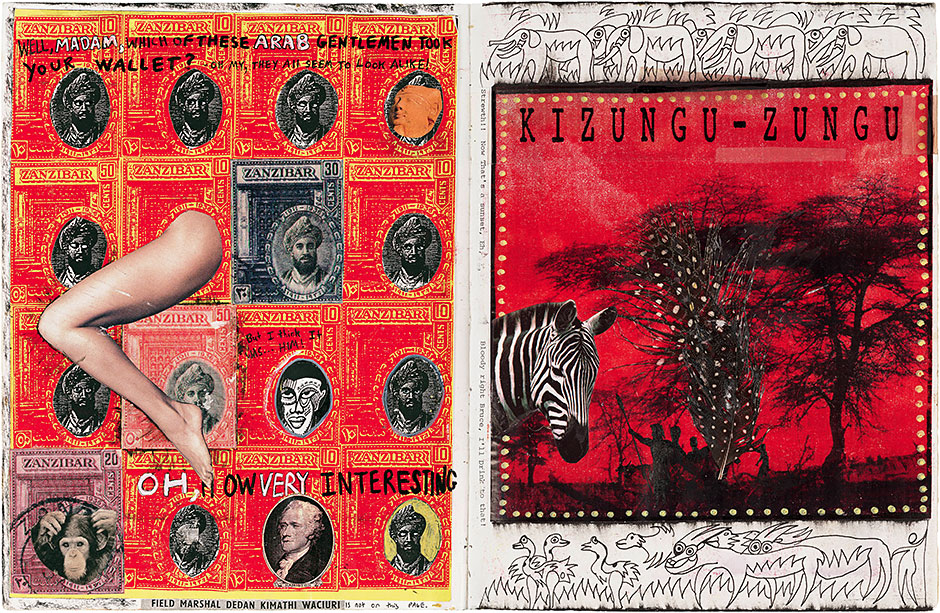
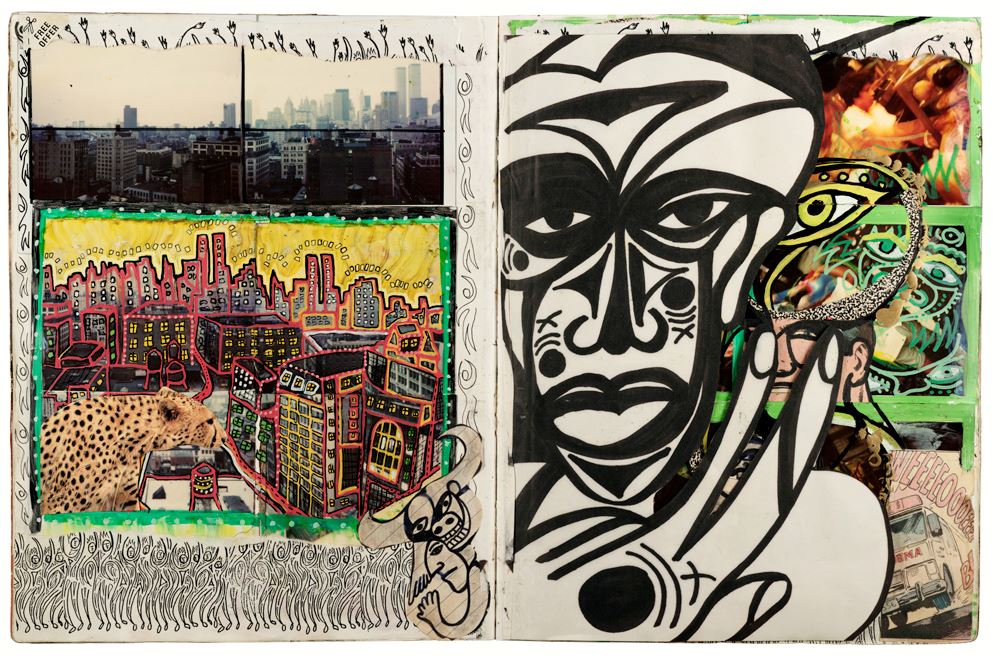
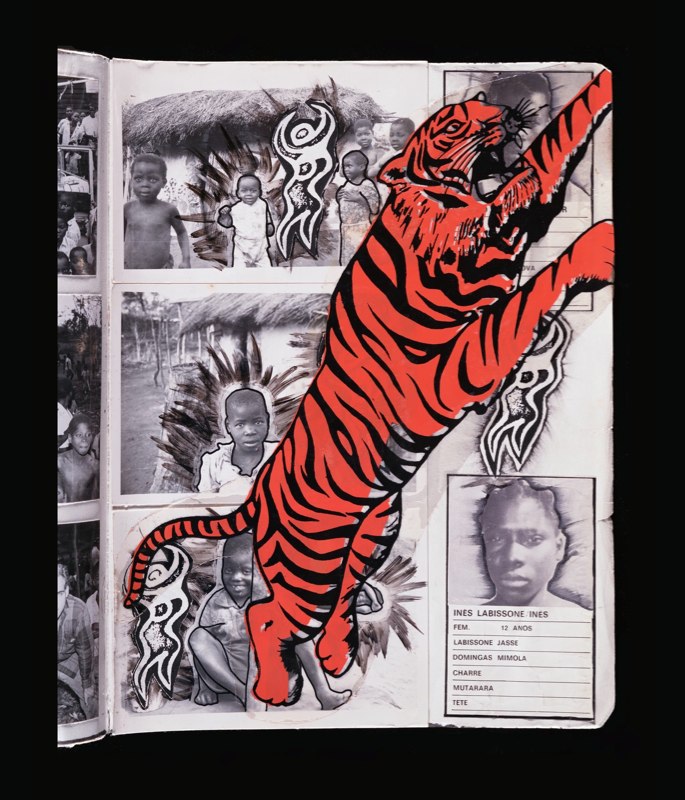
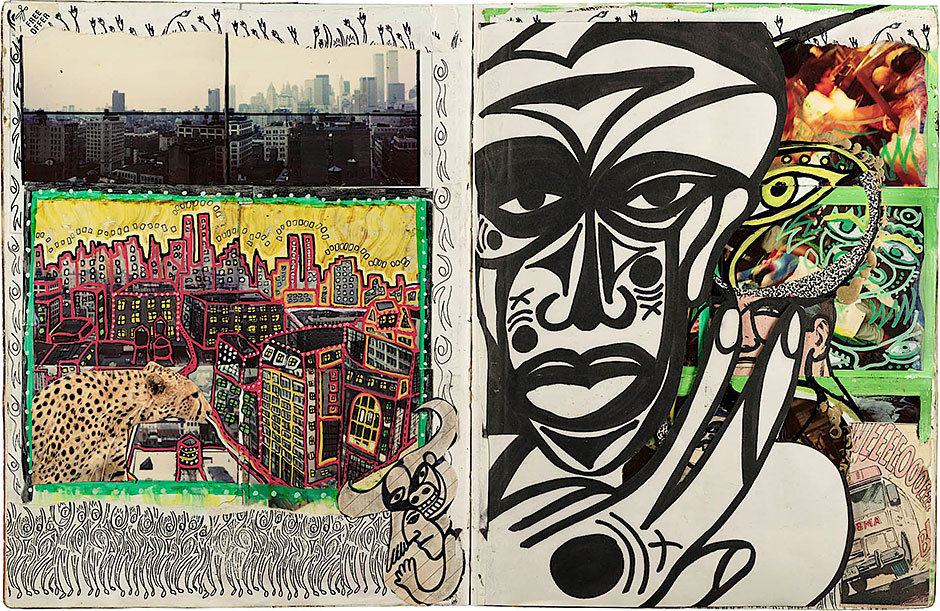
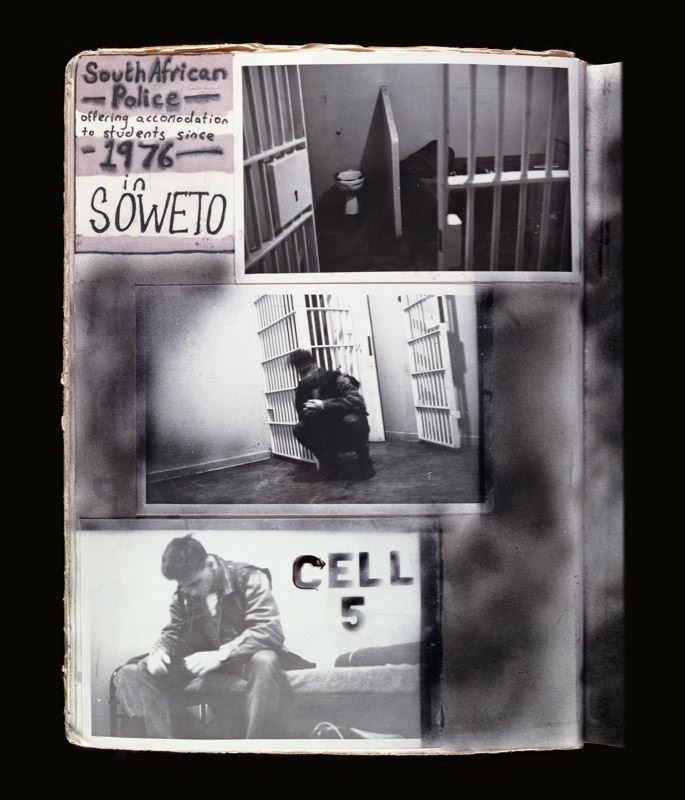
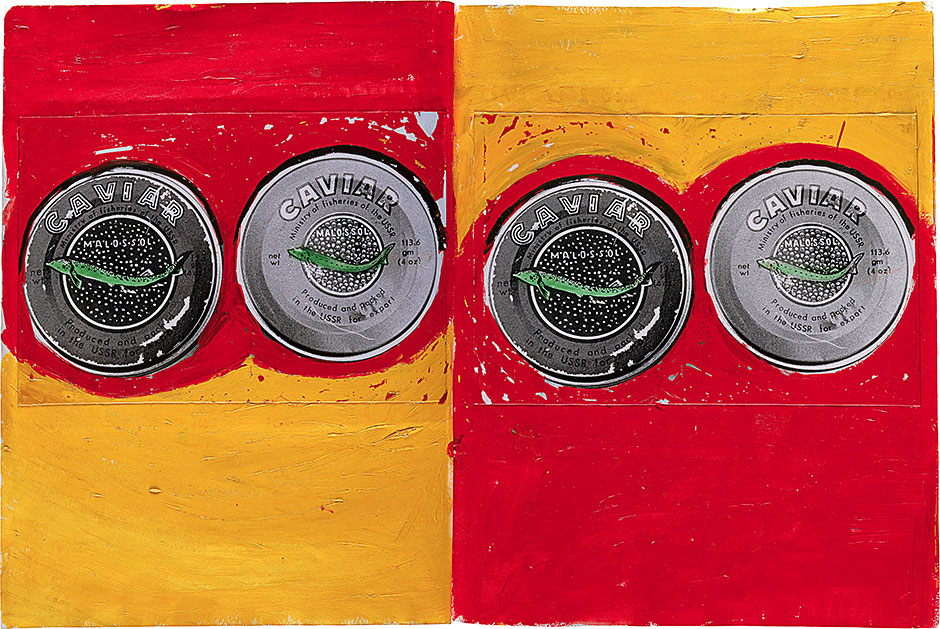
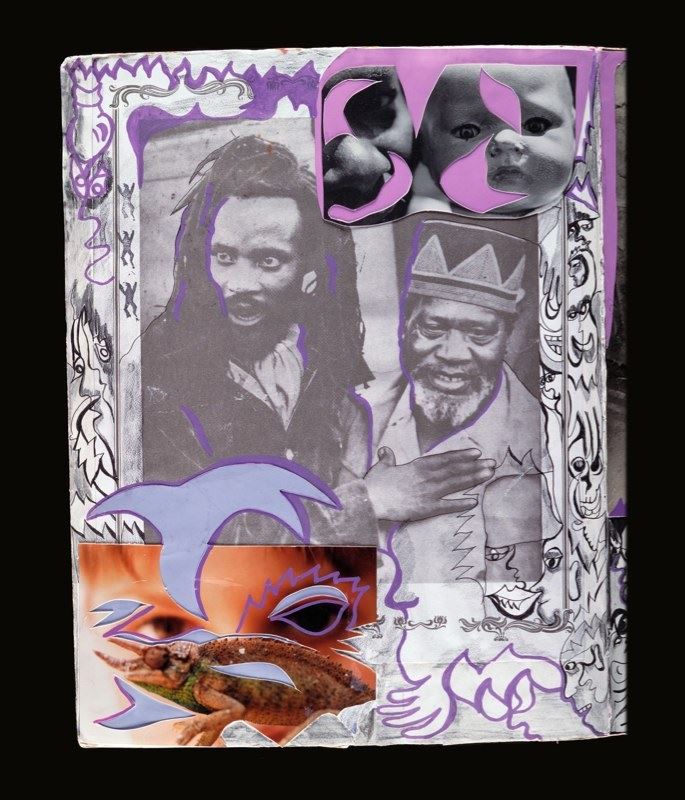
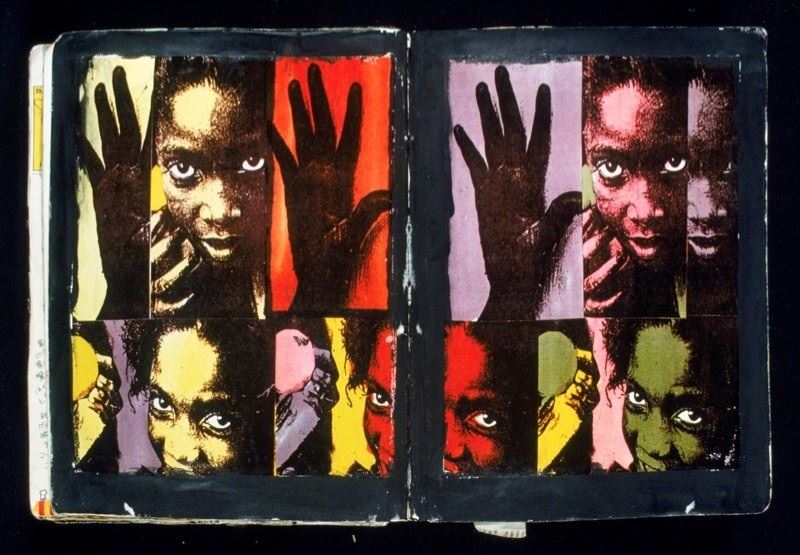
From his early teens, Dan began creating what would become the most remarkable aspect of his legacy: a series of visual journals — seventeen volumes in total — that combined photographs, drawings, paintings, found objects, maps, ticket stubs, pressed flowers, handwritten text, and collaged ephemera into densely layered compositions of extraordinary beauty and energy. These journals were not mere scrapbooks or diaries; they were works of mixed-media art that anticipated the visual vocabulary of contemporary art journals and the aesthetic of social media decades before those forms existed. Each page was a carefully considered composition, yet the overall effect was one of spontaneous, almost feverish creativity.
As a teenager in Nairobi, Dan organised a fundraising safari that raised money for famine relief in Mozambique, demonstrating the combination of adventurous spirit and social conscience that would characterise his short life. He attended the International School of Kenya and later studied at the UCLA in California, though his restlessness made him an uneven student. He was drawn more to experience than to the classroom, and he spent his time at university continuing to develop his journals, taking photographs, and planning the next journey.
In 1991, at the age of twenty-one, Dan began working as a photojournalist for Reuters news agency in Nairobi, covering the escalating crises in the Horn of Africa. His talent was immediately apparent: he possessed an instinctive ability to find the human story within the chaos of conflict and disaster, and his photographs combined the urgency of hard news with a compositional sophistication unusual in someone so young. He covered the Somali famine of 1992 with particular distinction, producing images that helped bring international attention to one of the worst humanitarian catastrophes of the late twentieth century.
Dan's photojournalism was inseparable from his broader artistic practice. While covering the famine and the subsequent military intervention, he continued to work on his visual journals, incorporating press passes, military insignia, and fragments of his own news photographs into collages that processed the trauma of what he was witnessing. The journals became a way of making sense of the senseless, of transforming horror into something that could be contemplated and understood. They occupied a space between reportage and art therapy, between documentary record and personal expression.
On 12 July 1993, Dan Eldon was killed in Mogadishu, Somalia, along with three other journalists — Hos Maina, Anthony Macharia, and Hansi Krauss — when an angry mob attacked them following a United Nations military operation. He was twenty-two years old. The circumstances of his death were a brutal reminder of the dangers faced by those who seek to bear witness in zones of conflict, and they underscored the courage that had defined Dan's brief career.
In the years following his death, Dan's mother Kathy Eldon devoted herself to preserving and sharing his legacy. The visual journals were published as The Journey Is the Destination: The Journals of Dan Eldon in 1997, and the book became an international sensation, inspiring artists, photographers, and young activists around the world. The Dan Eldon Foundation, later renamed Creative Visions Foundation, was established to support creative activists who use media and the arts to promote positive social change.
Dan Eldon's legacy is unique in the history of photography and visual art. He was not a photographer in the conventional sense, nor merely a journalist, nor simply a collage artist. He was all of these at once, and the power of his work lies precisely in its refusal to separate these impulses. His visual journals remain among the most inventive and emotionally powerful works of mixed-media art produced in the late twentieth century, and his photojournalism from Somalia stands as testimony to the human cost of conflict. That he accomplished all of this before his twenty-third birthday makes his story one of both inspiration and immeasurable loss.