Brian Griffin was born in 1948 in Birmingham, England, into a working-class family in the industrial heartland of the Midlands. His father worked in a factory, and the young Griffin grew up surrounded by the machinery, production lines, and manual labour that characterised post-war industrial Britain. This environment left an indelible mark on his imagination: the aesthetic of the factory floor, the drama of industrial processes, and the tension between the individual and the institution would become central themes of his photographic work. After leaving school, Griffin worked for several years in a factory himself before deciding to pursue photography, enrolling at the Manchester Polytechnic (now Manchester Metropolitan University), where he studied photography in the early 1970s.
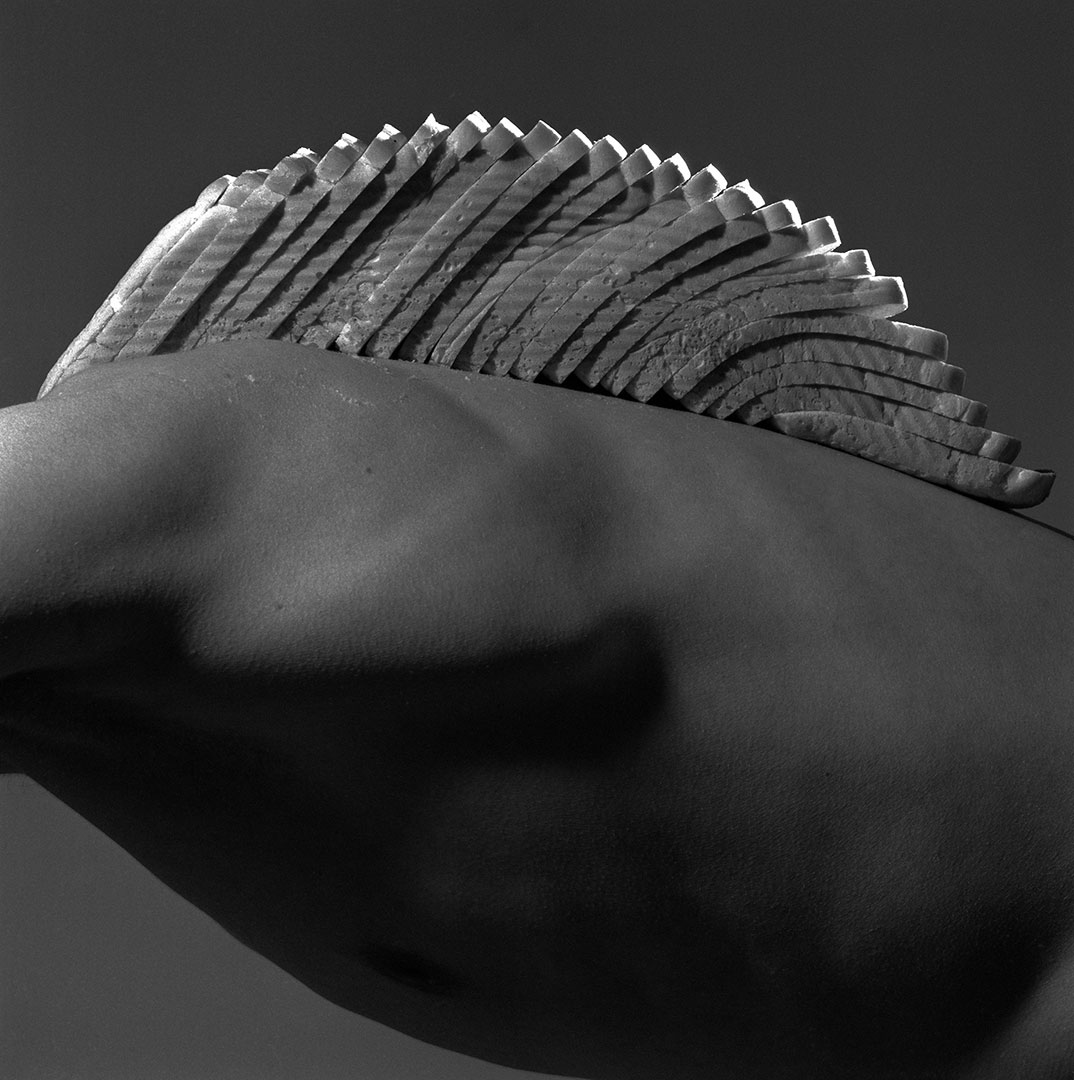
At Manchester, Griffin was exposed to the European art-photography tradition, and he was particularly influenced by the work of Bill Brandt, whose dramatic, high-contrast images of British society had demonstrated that photography could operate simultaneously as document and as art. He was also drawn to cinema — particularly the work of Ingmar Bergman, Federico Fellini, and the German Expressionists — and to painting, especially the Surrealists and the Northern European masters of light and shadow. These diverse influences converged in a visual sensibility that was unique in British photography: theatrical, dramatically lit, psychologically intense, and infused with a dark, often mordant wit.
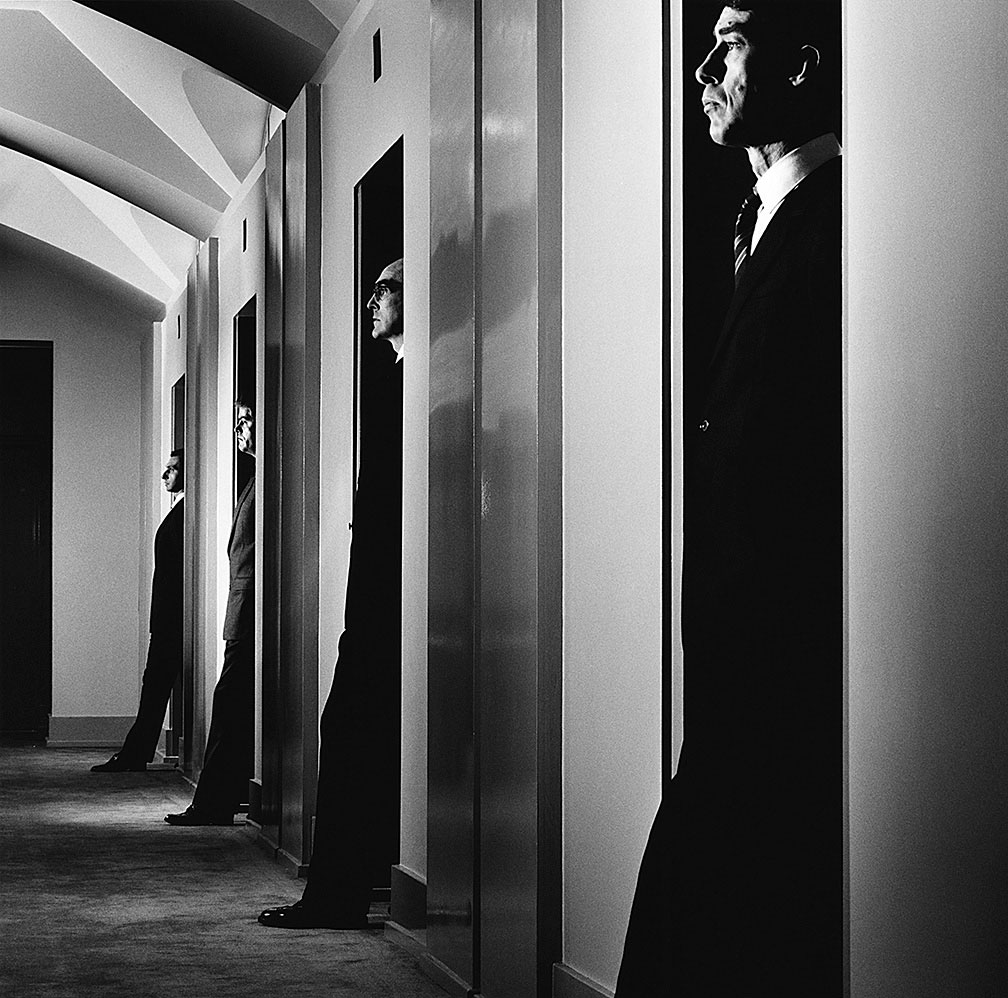
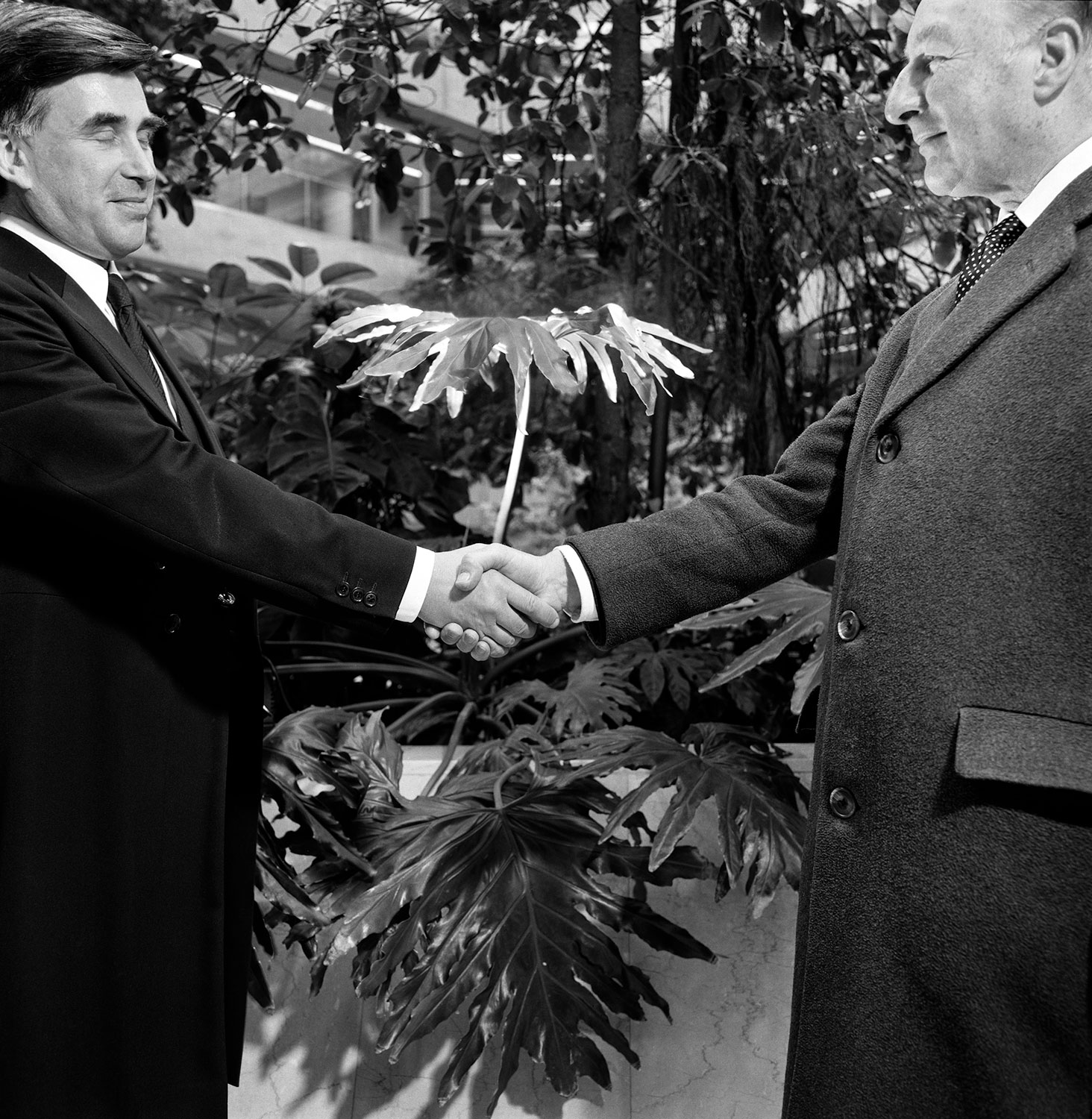
After graduating, Griffin moved to London and began working as a freelance photographer. His breakthrough came when he began shooting for Management Today, the British business magazine that, under the art direction of Roland Schenk, became an unlikely showcase for some of the most ambitious and inventive photography being produced in Britain during the 1980s. Griffin's covers and features for the magazine transformed the corporate portrait from a bland exercise in executive flattery into a theatrical production of extraordinary visual power. His businessmen and executives were not simply photographed; they were staged, lit, and directed like actors in a film noir, placed in surreal scenarios that commentated on the nature of corporate power, ambition, and masculinity.
A typical Griffin portrait from this period might show a suited executive striding through a fog-shrouded landscape, silhouetted against a dramatic sky, or seated in a vast, empty boardroom lit from below like a scene from an Expressionist film. The images drew on the visual vocabulary of cinema, painting, and theatre to create photographs that were simultaneously portraits of individuals and allegories of the culture of power. Griffin's corporate subjects were presented not as bland captains of industry but as figures of mythic dimensions — heroic, sinister, absurd, or all three at once. The effect was both flattering and unsettling, and it represented a radical rethinking of what commercial portraiture could achieve.
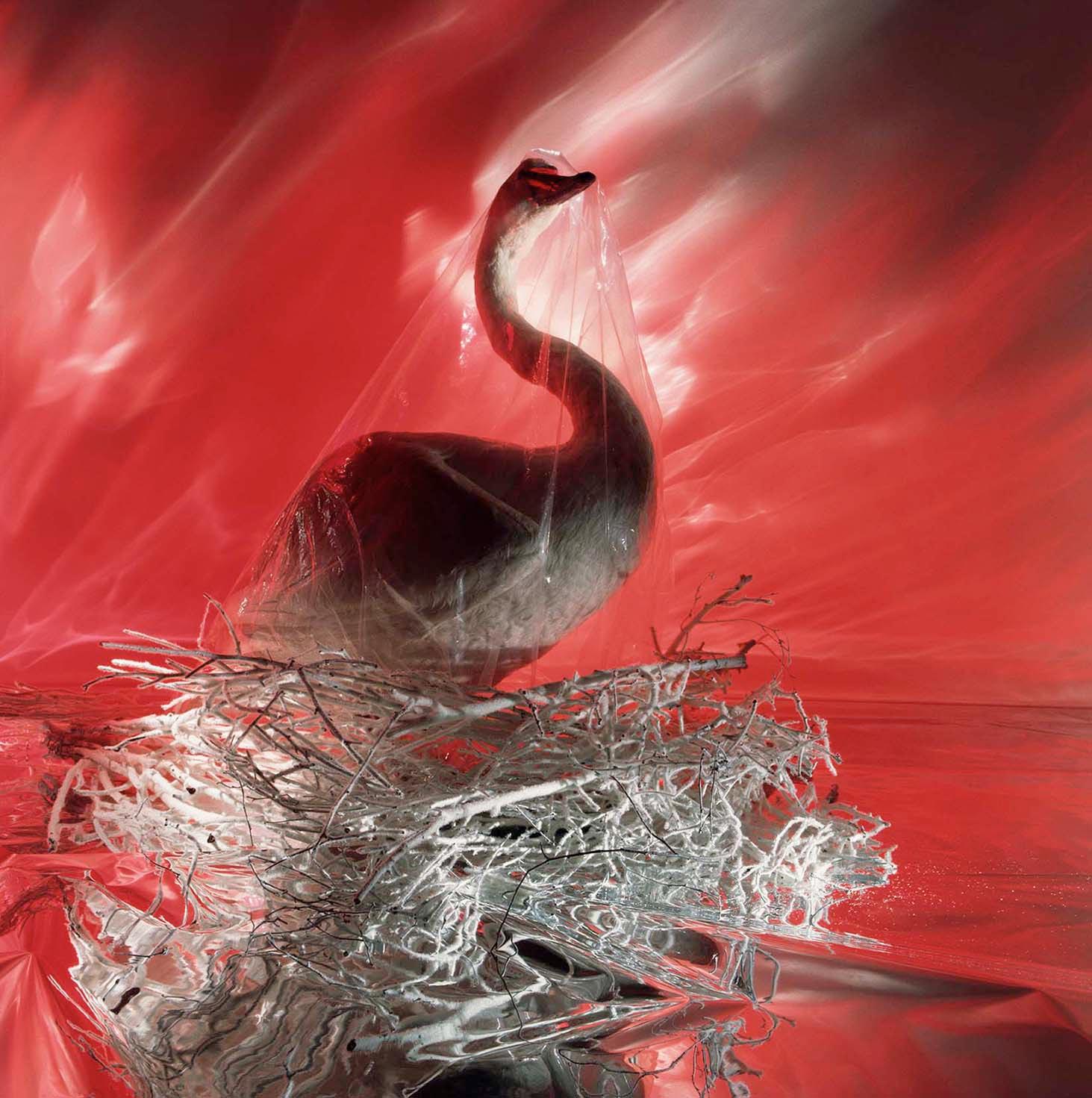
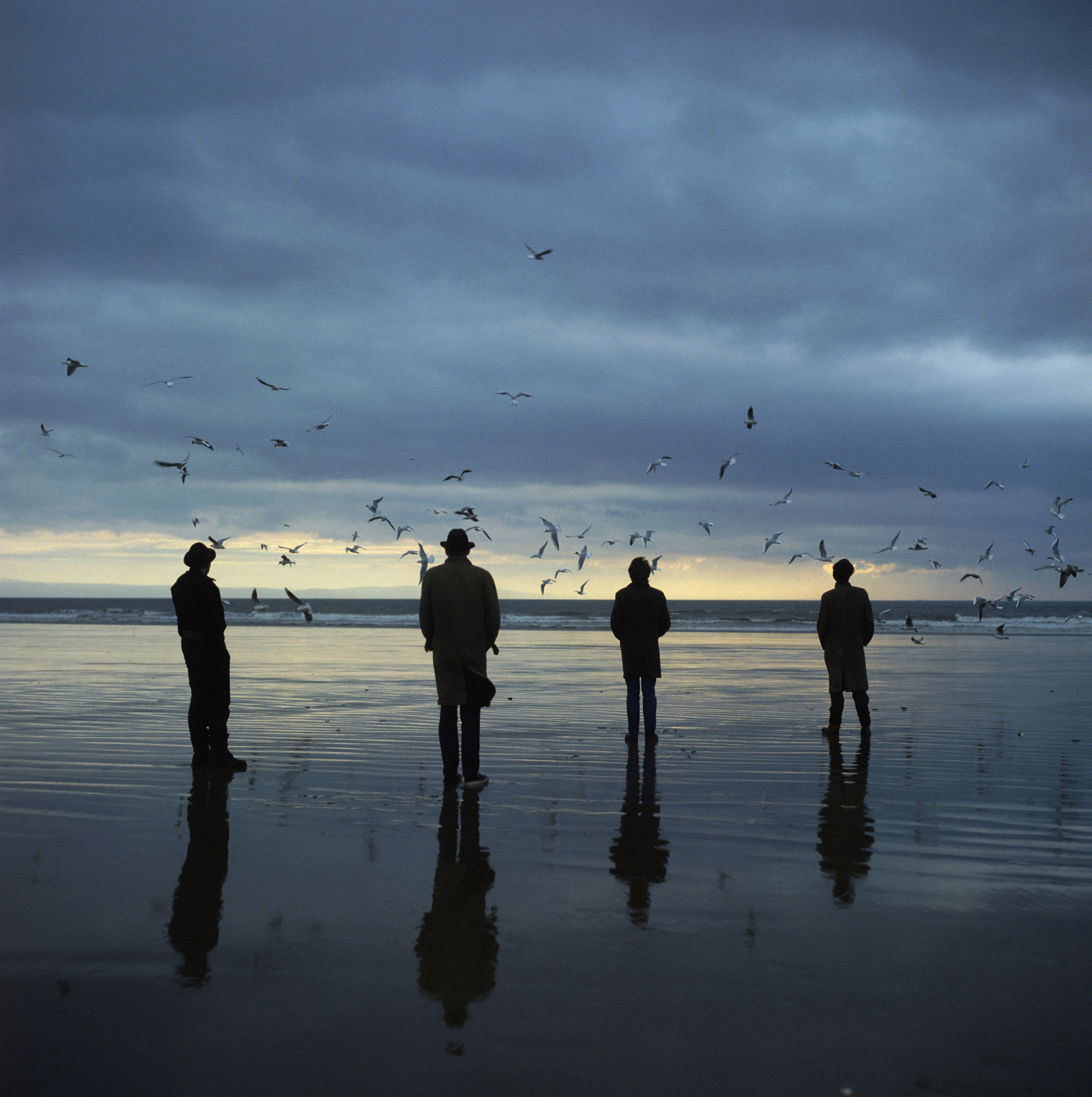
Alongside his corporate work, Griffin produced a substantial body of music photography during the late 1970s and 1980s, creating album covers and publicity images for bands including Depeche Mode, Echo & the Bunnymen, Iggy Pop, and The Stranglers. His music photography brought the same cinematic intensity to the world of popular culture, treating musicians as characters in elaborate visual narratives rather than simply as performers to be recorded. His album covers are among the most visually striking of the era, and they contributed to the broader visual culture of new wave and post-punk music.
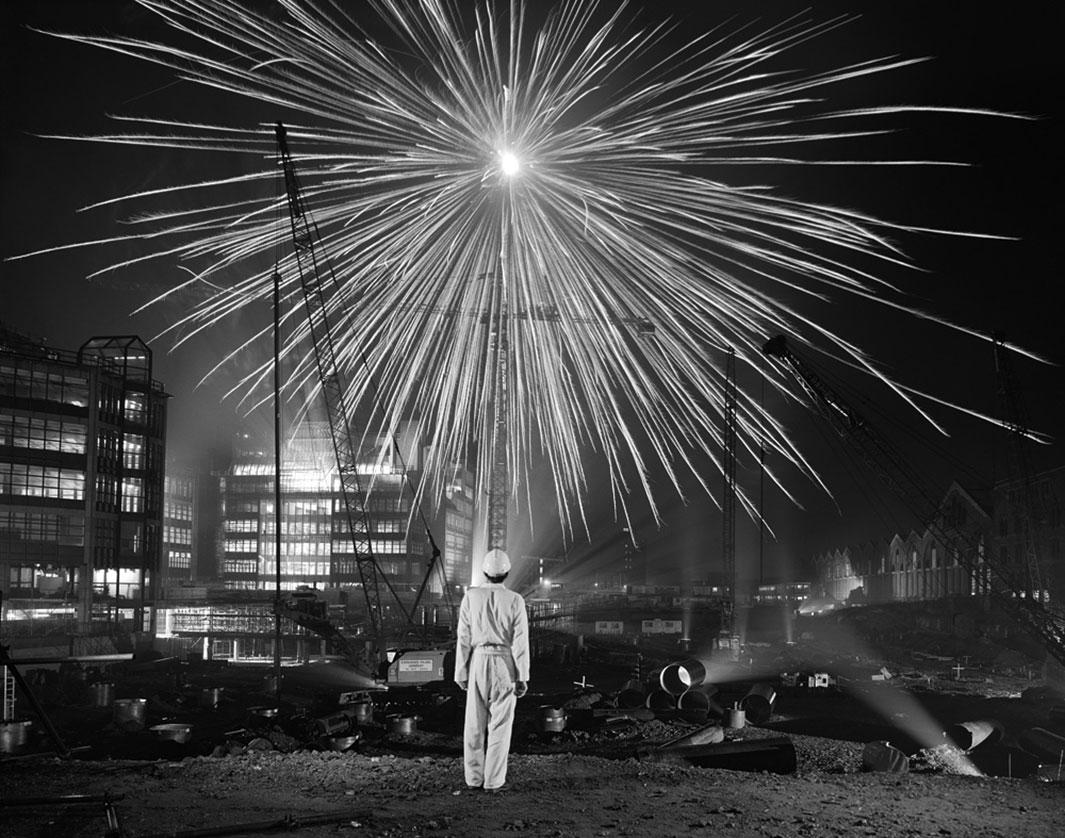
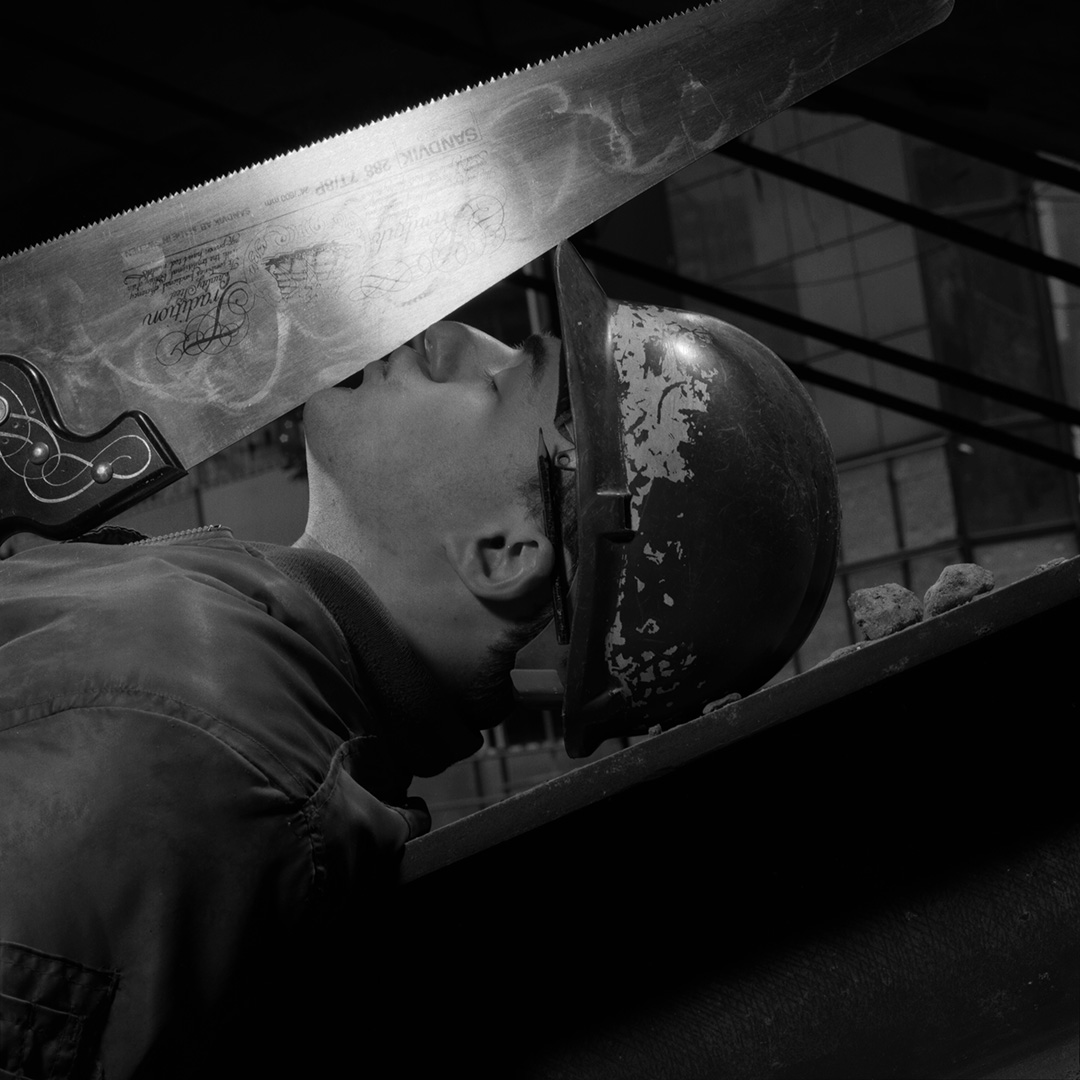
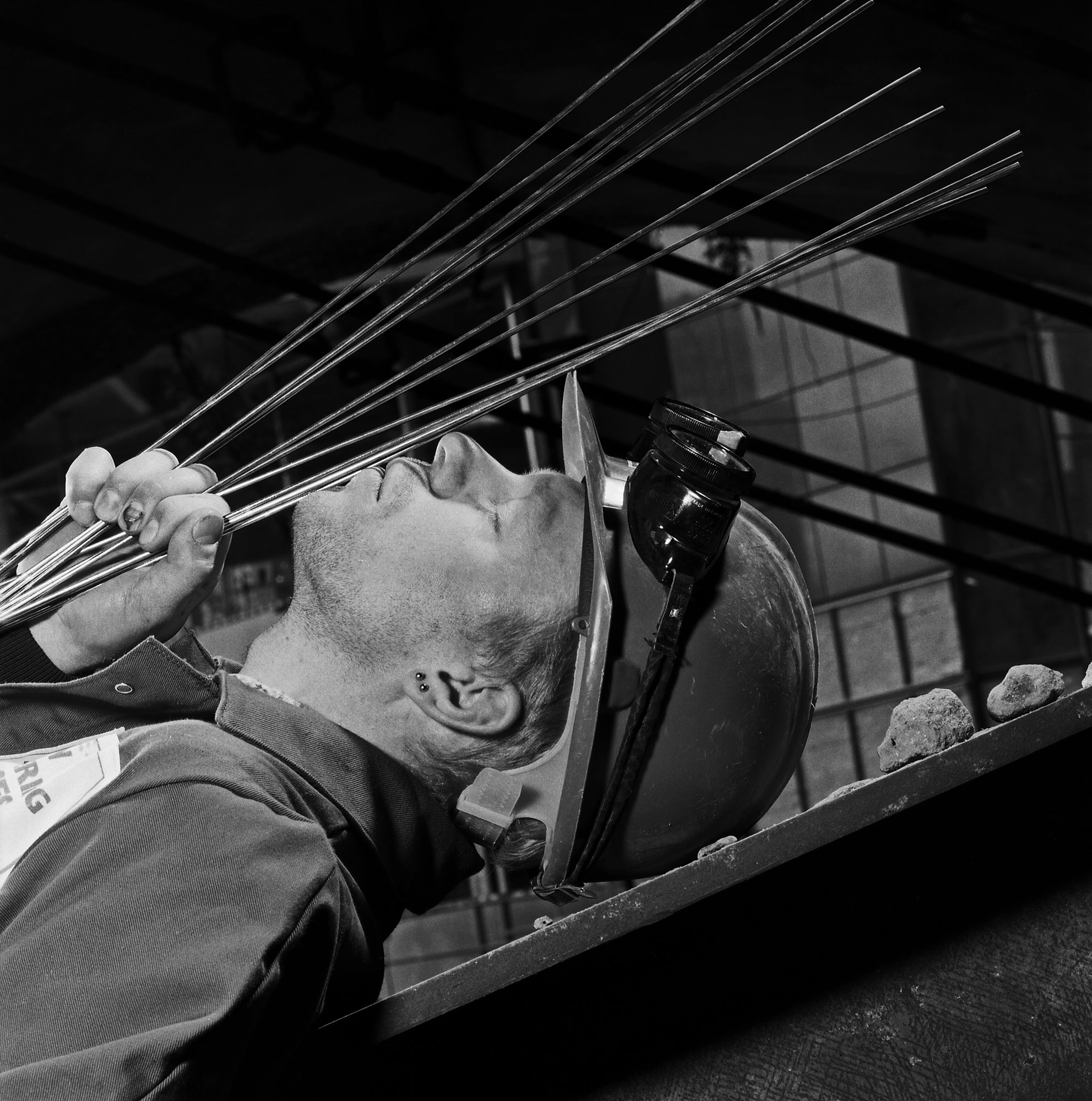
In 1986, Griffin published Work, a personal project that returned to the industrial landscapes and working lives of his Birmingham childhood. The images documented factory workers, miners, steelworkers, and labourers with a combination of documentary directness and theatrical staging that drew explicit parallels between the world of manual labour and the corporate world he had been photographing for Management Today. The project was both an act of personal excavation — a return to origins — and a broader meditation on the nature of work, power, and human dignity in late twentieth-century Britain.
Throughout the 1990s and 2000s, Griffin continued to evolve his practice, increasingly incorporating digital techniques and moving into film and multimedia work. He has produced short films, music videos, and gallery installations that extend the cinematic sensibility of his photographic work into new media. His photographs have been exhibited widely, including at the National Portrait Gallery in London, and his work is held in numerous public and private collections. In 2013, he was awarded an honorary fellowship of the Royal Photographic Society, recognising his contribution to British photography.
Griffin's influence on British editorial and corporate photography has been profound. Before his work, the corporate portrait was a formulaic exercise; after it, the genre was recognised as a legitimate arena for artistic ambition and social commentary. He demonstrated that commercial photography need not be subservient to its subject, and that the imaginative resources of fine art, cinema, and theatre could transform even the most prosaic assignment into a work of visual intelligence and emotional power. His legacy lies not only in his own remarkable body of images but in the expanded possibilities he created for every photographer who followed him into the boardroom, the editorial page, and the album cover.