Brassaï was born Gyula Halász on September 9, 1899, in Brassó, Transylvania, then part of the Austro-Hungarian Empire and now the Romanian city of Brașov. He would later take his pseudonym from the name of his birthplace — Brassaï meaning simply “from Brassó” — in a gesture that fused his identity with the place that shaped him, even as he spent the greater part of his life far from home. His father was a professor of French literature, and the family lived briefly in Paris when Gyula was a young child, planting the seed of a fascination with the French capital that would eventually consume his artistic life.
He studied art at the Budapest Academy of Fine Arts beginning in 1920, then moved to Berlin to continue his studies at the Akademische Hochschule in Charlottenburg, immersing himself in the turbulent cultural world of Weimar Germany. He encountered the work of the German Expressionists and developed a keen interest in drawing and sculpture, but it was the city itself — its nightlife, its streets, its restless energy — that captivated him most. In 1924, he made the move that would define his career: he settled in Paris, initially working as a journalist for Hungarian and German newspapers, writing about the cultural life of the city while exploring its streets on long nocturnal walks.
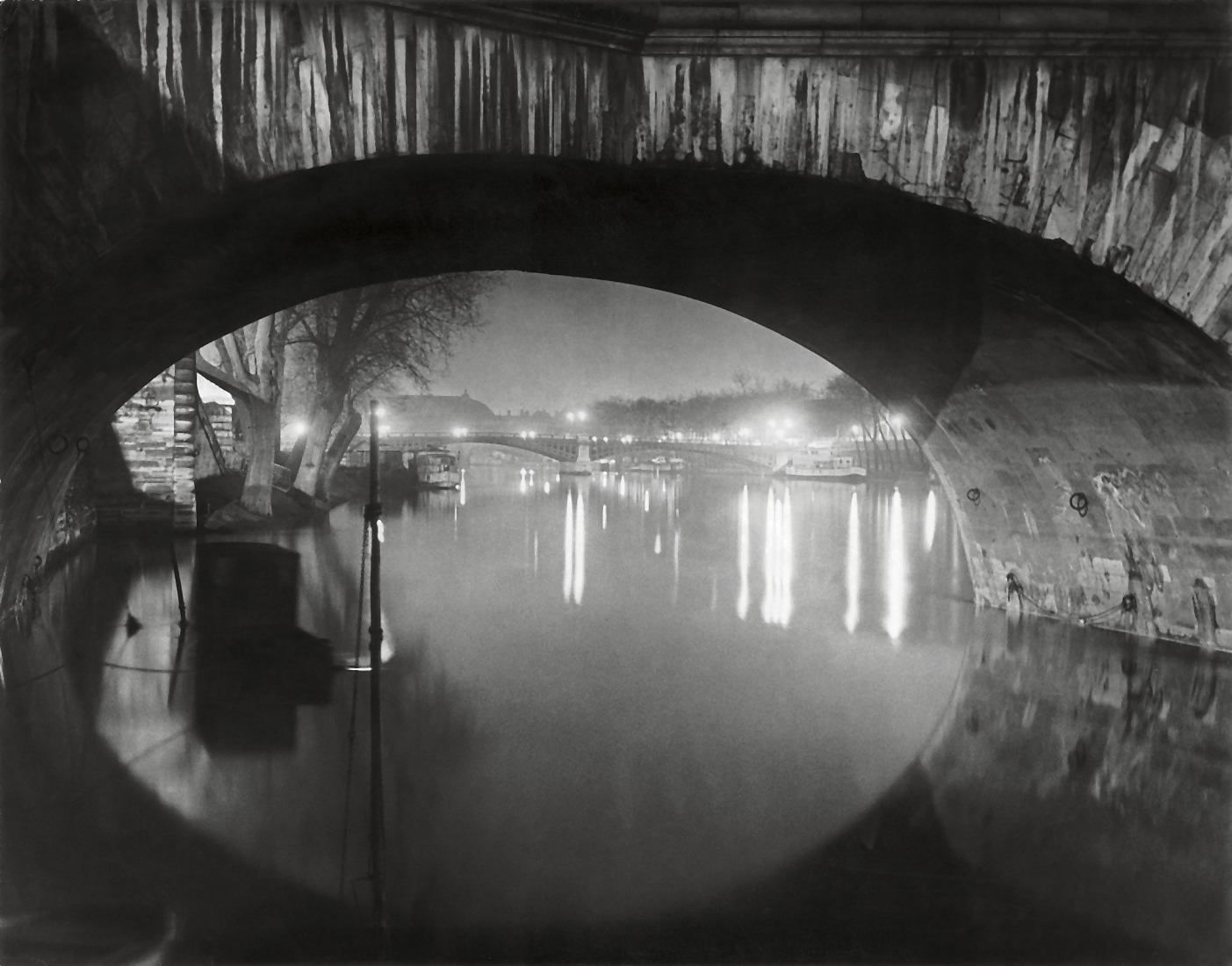
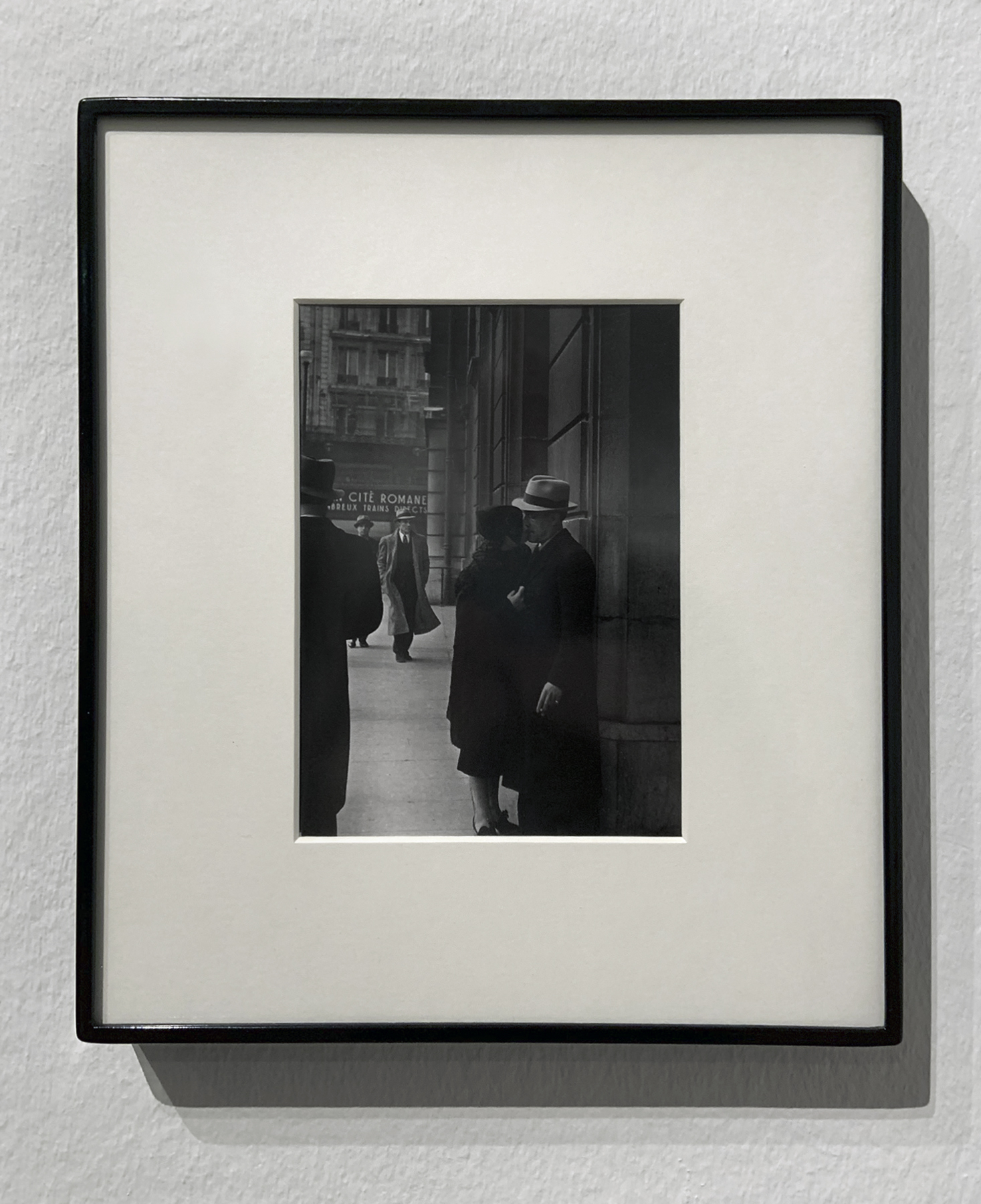
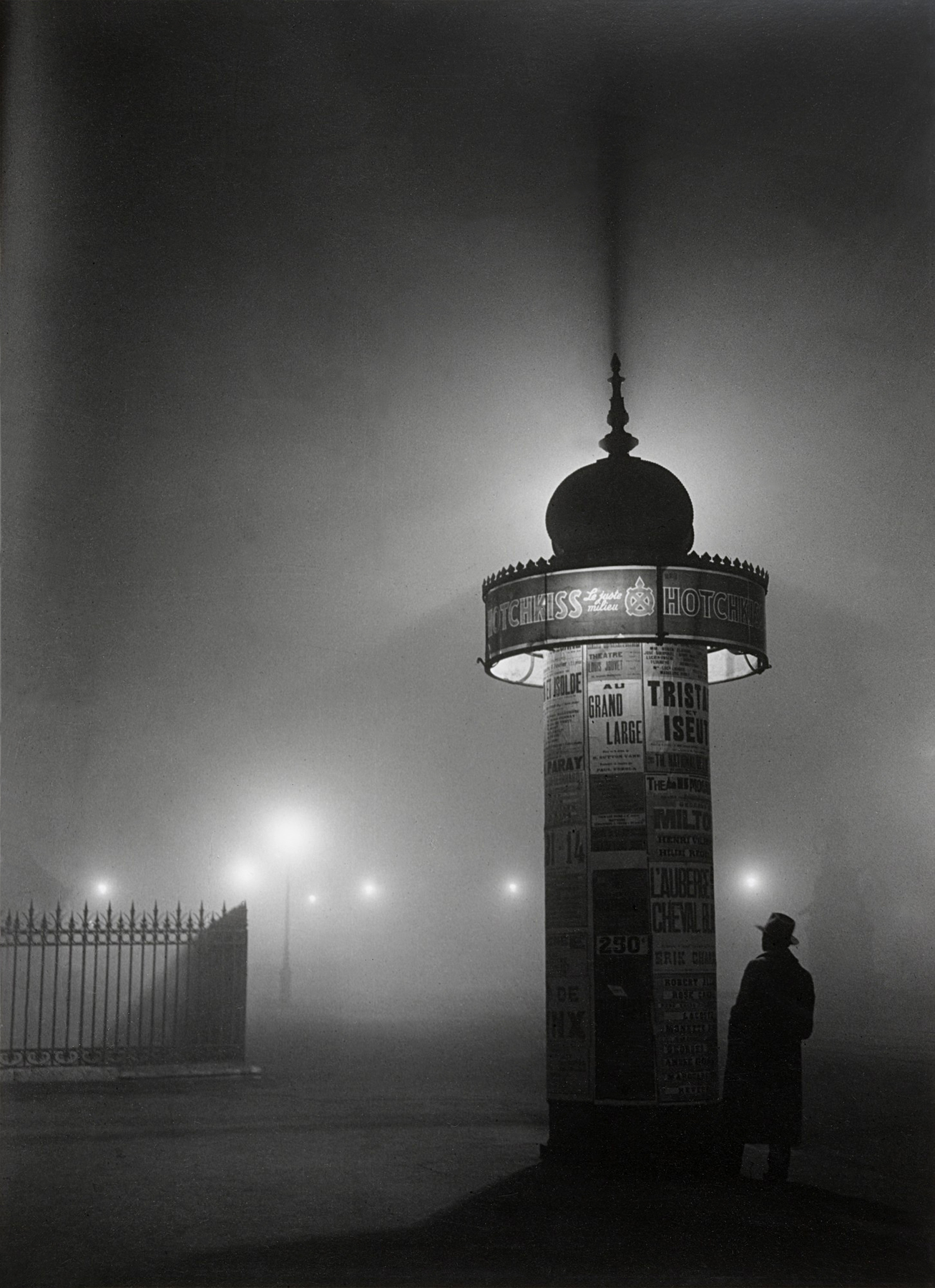
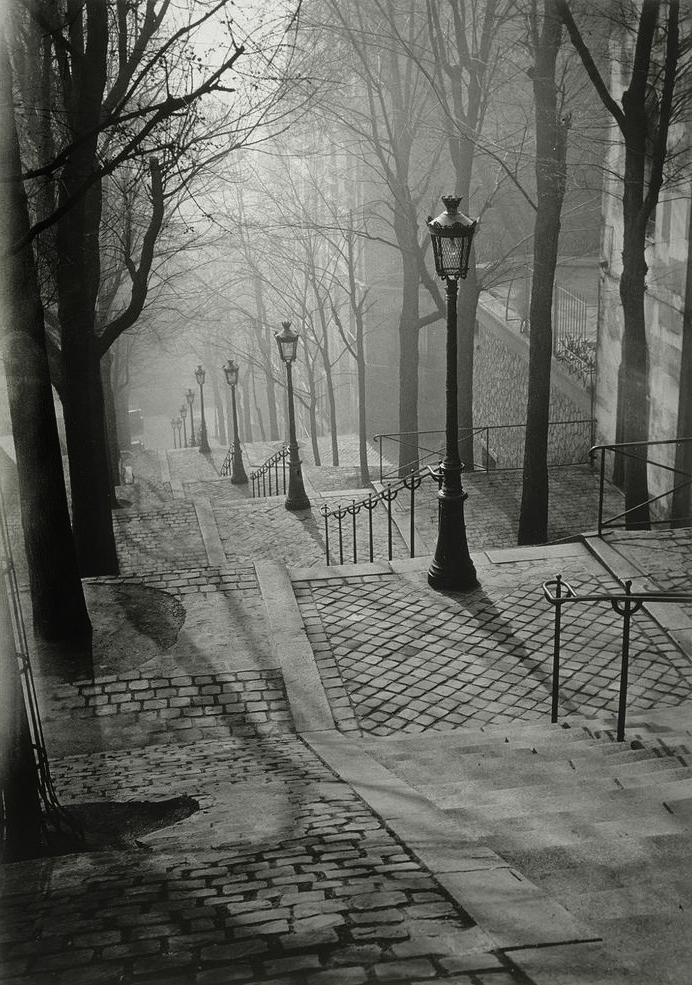
For several years Brassaï resisted photography, regarding it as a lesser medium compared to painting and drawing. It was his friend and fellow Hungarian expatriate André Kertész, already an accomplished photographer, who encouraged him to pick up a camera. Kertész lent him equipment and showed him the rudiments of the craft, and Brassaï quickly discovered that the camera was the perfect instrument for capturing what he had been observing on his nocturnal wanderings: the fog-shrouded bridges, the gas-lit boulevards, the lovers pressed together in doorways, the prostitutes and pimps and revellers who populated the city after dark. He began photographing Paris at night around 1930, prowling the streets with a plate camera and a heavy tripod, making long exposures that transformed the city into a theatre of light and shadow.
The result was Paris de Nuit, published in 1932 with a preface by the writer Paul Morand. The book was an immediate sensation. Its sixty-four photographs presented a Paris that most Parisians had never seen — or had seen only furtively, in passing: the shadowy interiors of brothels and opium dens, the dance halls of Montmartre, the street cleaners and tramps who owned the city between midnight and dawn. The images were technically extraordinary, their long exposures rendering fog and lamplight with an almost supernatural luminosity, but it was Brassaï’s eye for human drama that elevated the work beyond mere atmosphere. Each photograph told a story, and together they composed a portrait of a city that was at once seductive and melancholy, vibrant and doomed.
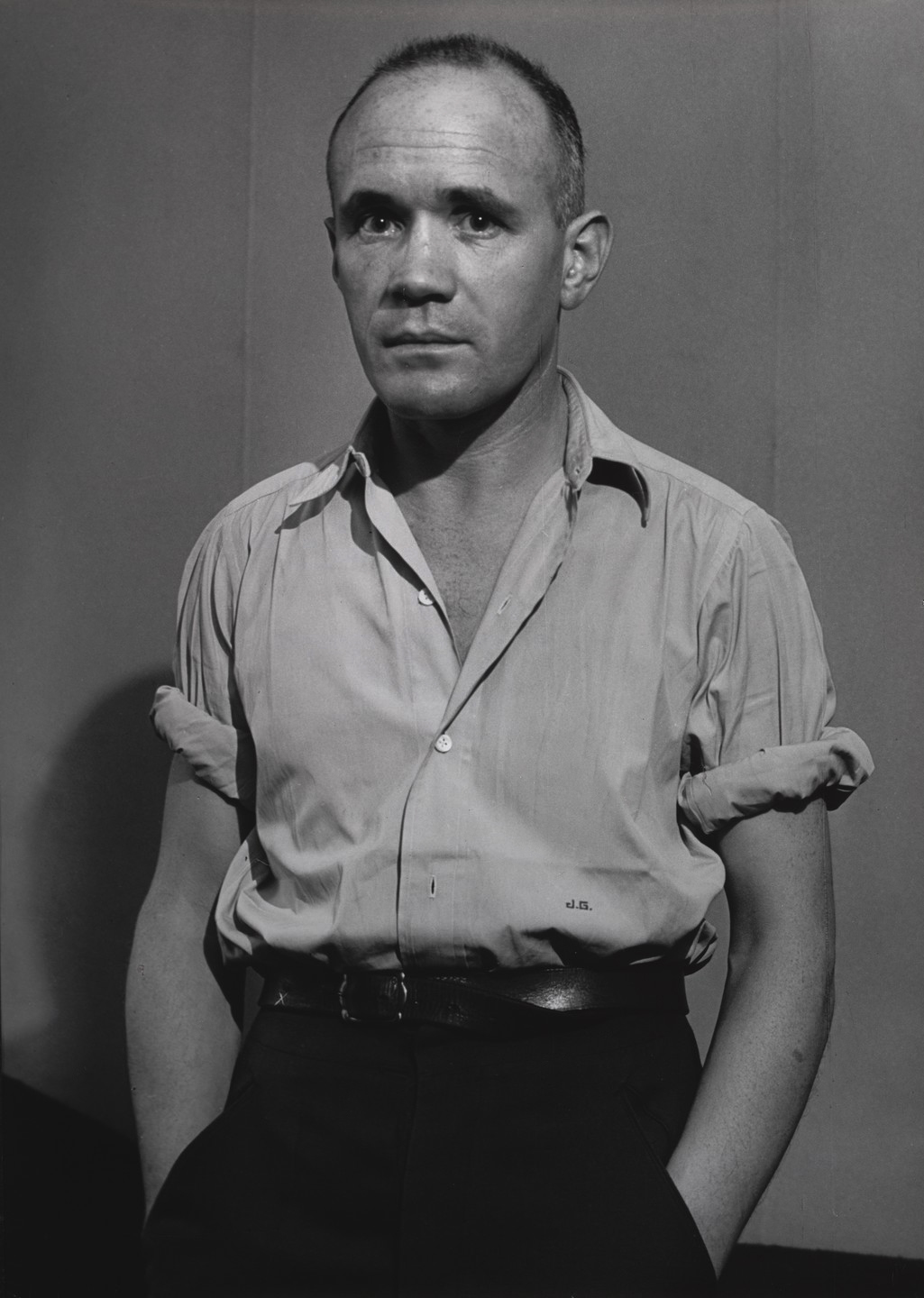
Paris de Nuit brought Brassaï into the orbit of the Surrealists and the Parisian avant-garde. He became close friends with Pablo Picasso, a relationship that began in 1933 and lasted thirty years, producing not only a remarkable series of photographic portraits but also the book Conversations with Picasso, published in 1964. He knew Salvador Dalí, Alberto Giacometti, and Henri Matisse, photographing them in their studios with an intimacy that reflected genuine friendship rather than journalistic assignment. The American writer Henry Miller, who arrived in Paris in the early 1930s and became one of Brassaï’s closest companions, famously called him “the eye of Paris” — a title that has clung to the photographer ever since.
During the German occupation of Paris in the Second World War, Brassaï refused to apply for a permit to photograph, effectively suspending his photographic work for the duration. Instead he turned to drawing and sculpture, and began work on a project that had been quietly occupying him for years: the systematic documentation of graffiti carved, scratched, and drawn on the walls of Paris. He had been photographing these anonymous markings since the early 1930s, fascinated by their raw expressive power — faces, figures, hearts, obscenities, and cryptic symbols etched into stone by unknown hands. The graffiti photographs, published as Graffiti in 1960, were decades ahead of their time, anticipating the art brut movement championed by Jean Dubuffet and prefiguring the pop art and street art revolutions that would follow.
Brassaï’s later career was characterised by a remarkable breadth of creative activity. He continued to photograph — publishing The Secret Paris of the 30s in 1976, a retrospective collection that expanded the world of Paris de Nuit with previously unseen images of opium dens, dance halls, and the Parisian underworld — but he also worked as a sculptor, a writer, a tapestry designer, and a filmmaker. His short film Tant qu’il y aura des bêtes won the prize for Most Original Film at the 1956 Cannes Film Festival. He wrote essays and memoirs with the same observational precision that distinguished his photographs, and his sculptures revealed a talent for three-dimensional form that extended naturally from his lifelong practice of drawing.
Brassaï died on July 8, 1984, at Beaulieu-sur-Mer on the French Riviera, at the age of eighty-four. A major retrospective at the Museum of Modern Art in New York in 1968 had already confirmed his international stature, and by the time of his death he was recognised as one of the most important and versatile visual artists of the twentieth century. His influence on the tradition of night photography is immeasurable — every photographer who has pointed a camera at a rain-slicked street after dark owes something to the Hungarian who adopted Paris as his home and, in return, gave the city its most haunting and enduring nocturnal portrait.