Bernd Becher was born in 1931 in Siegen, a small industrial city in the Rhineland region of western Germany, surrounded by the coal mines, steelworks, and ironworks that had shaped the economy and landscape of the region for over a century. As a child, he watched the industrial structures of his hometown begin to be demolished in the post-war modernisation of West Germany, and he felt an instinctive urge to record what was disappearing. He studied painting and lithography at the Staatliche Akademie der Bildenden Künste Stuttgart before turning to photography as the medium best suited to his documentary ambitions. Hilla Wobeser was born in 1934 in Potsdam, near Berlin, and studied photography at the Kunstakademie Düsseldorf. The two met while studying in Düsseldorf in 1957, married in 1961, and began a collaborative practice that would last for nearly five decades.
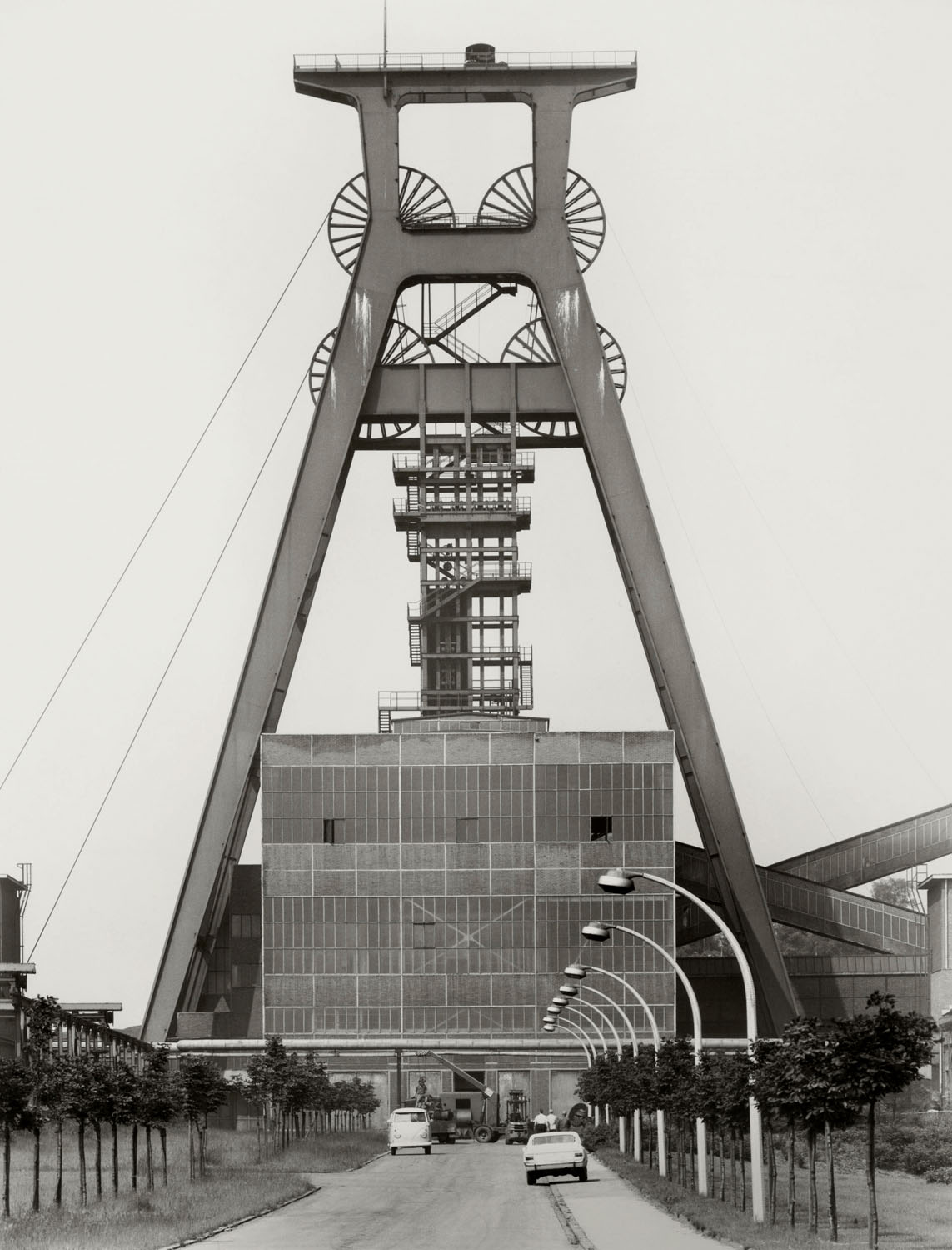
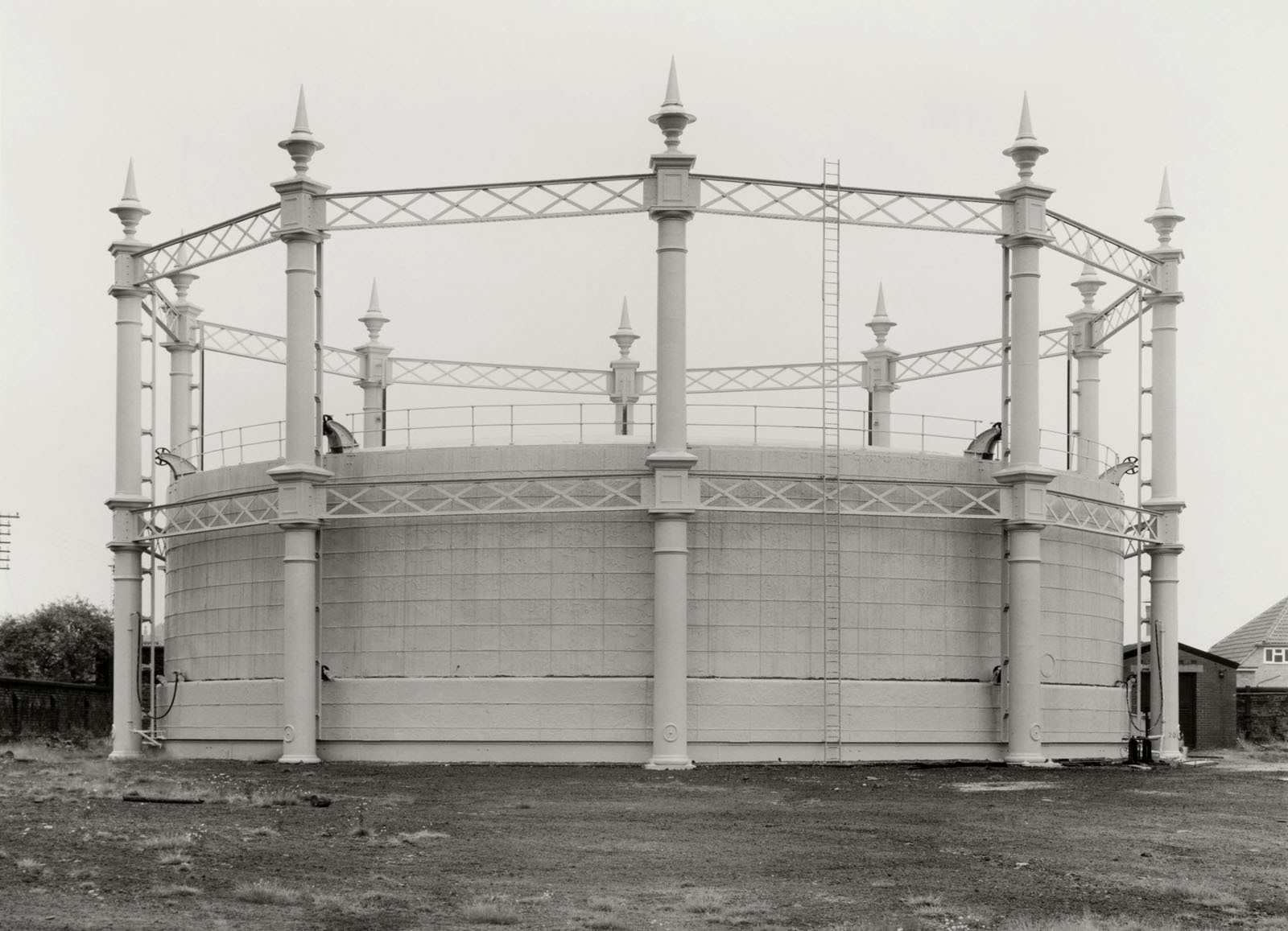
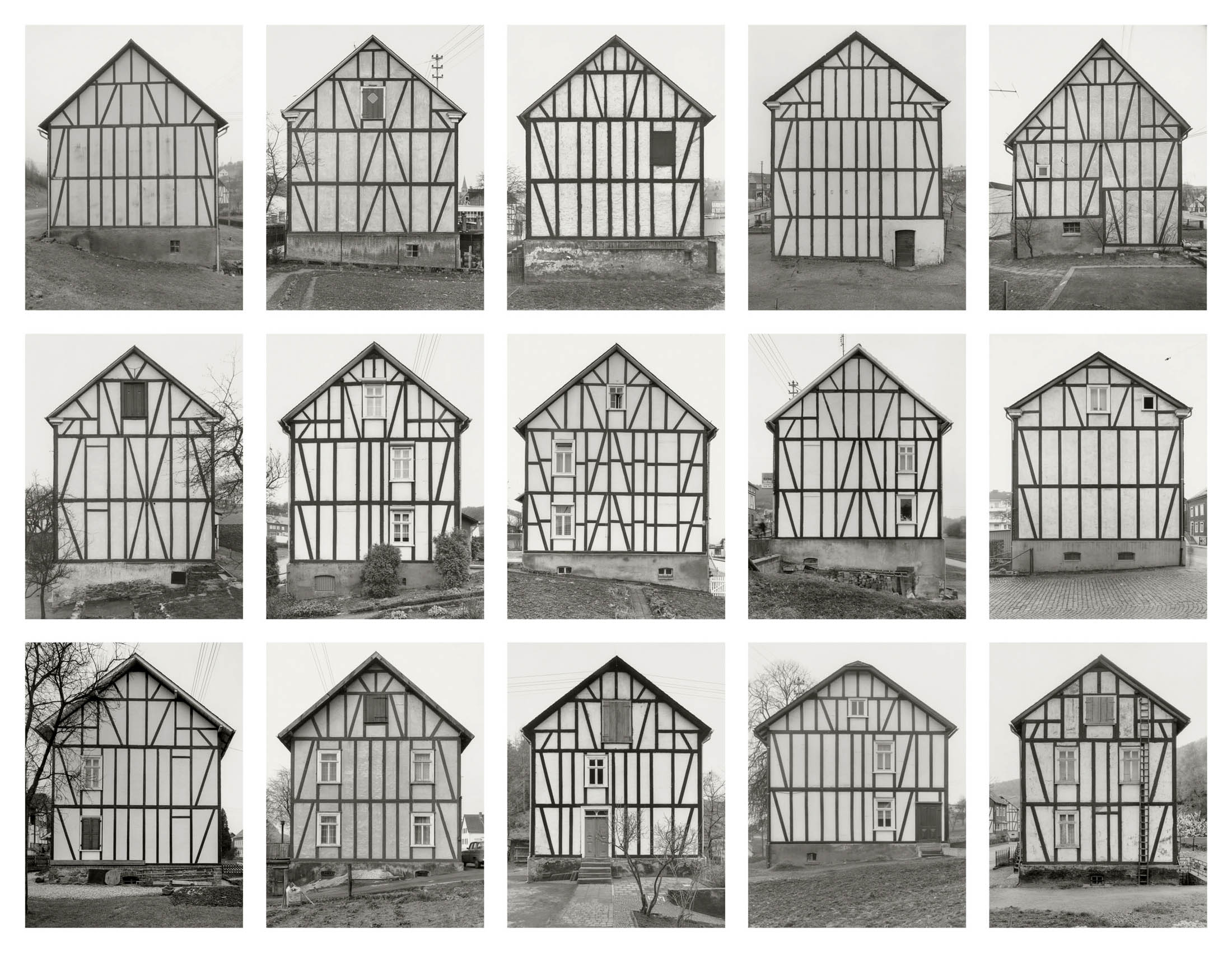
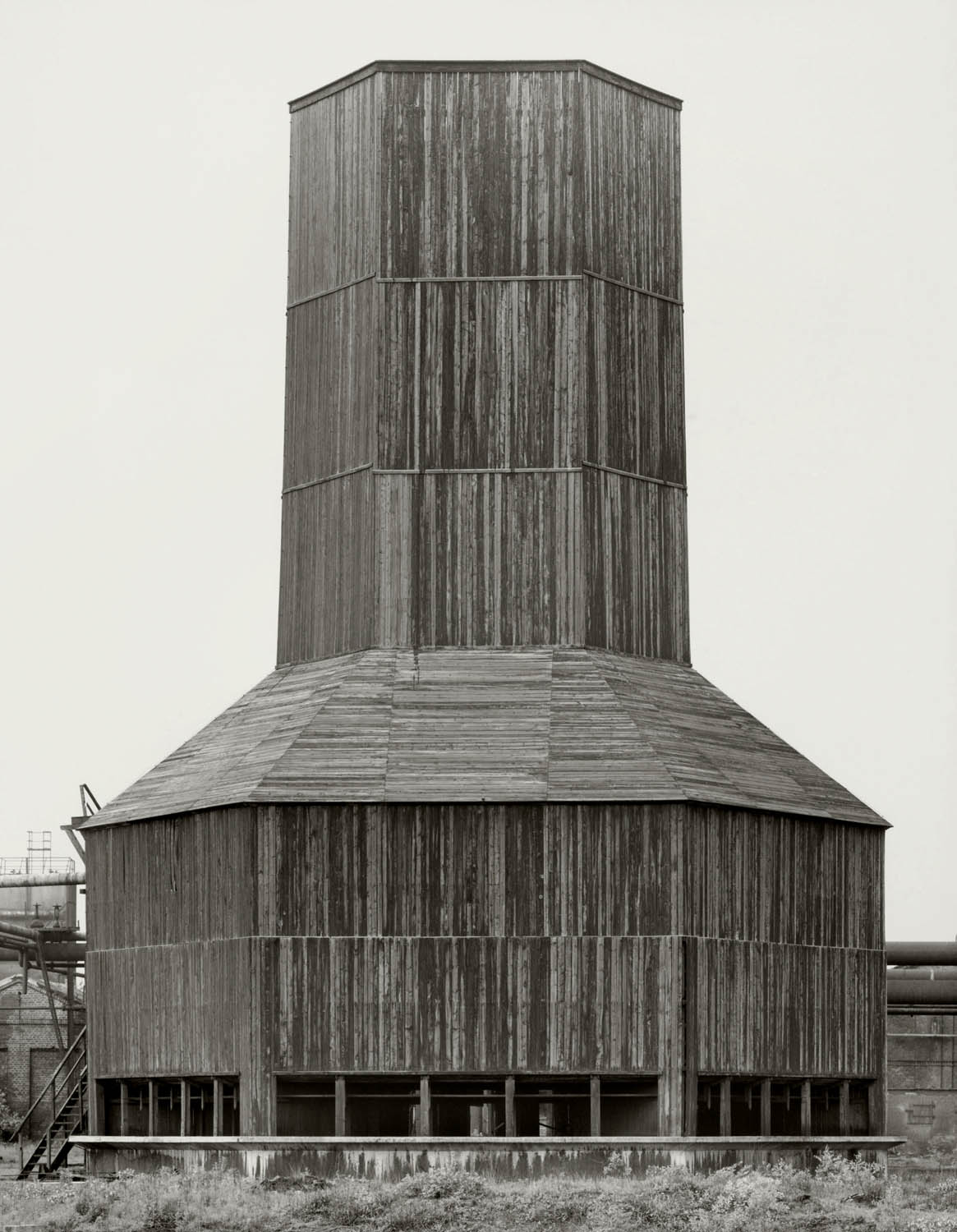
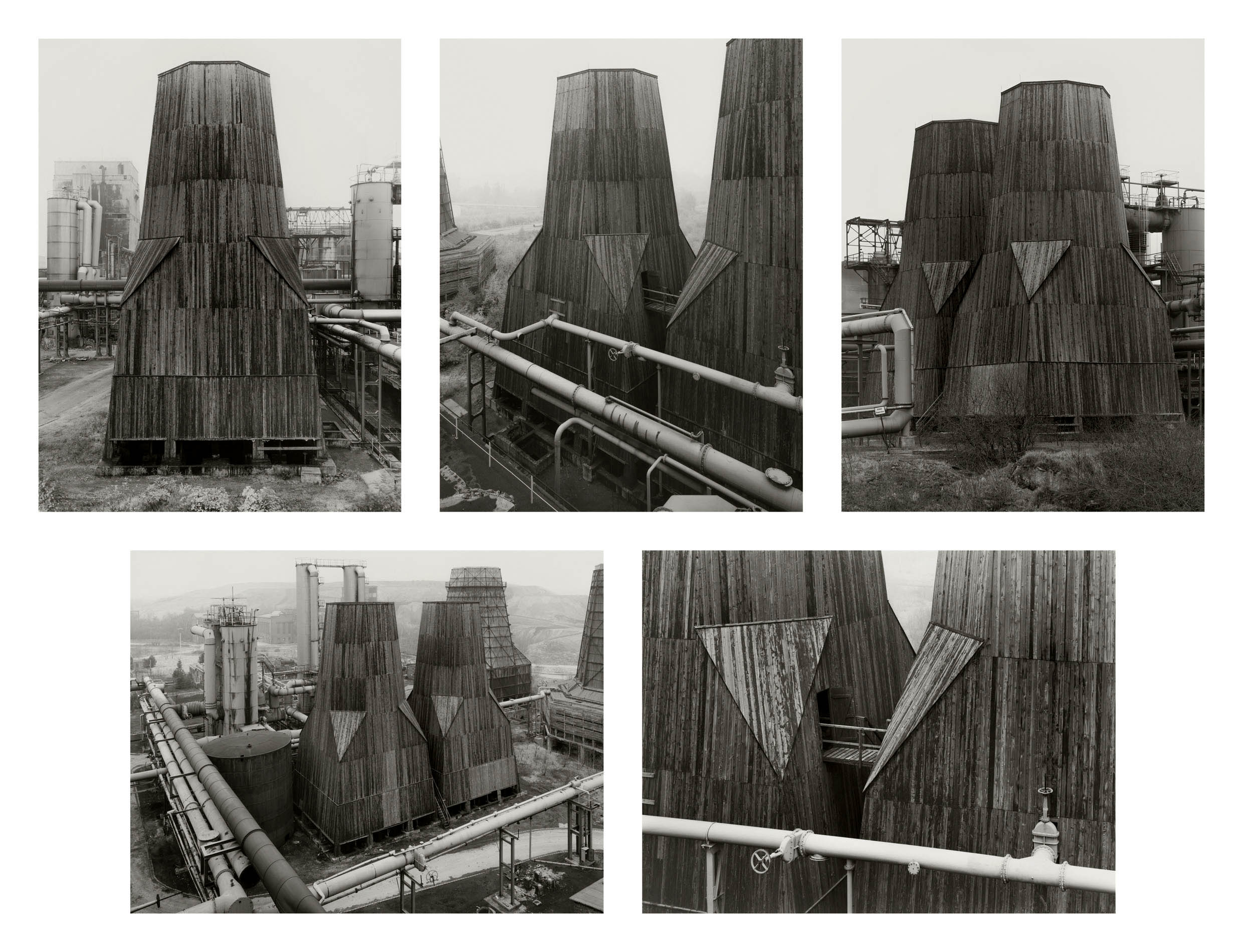
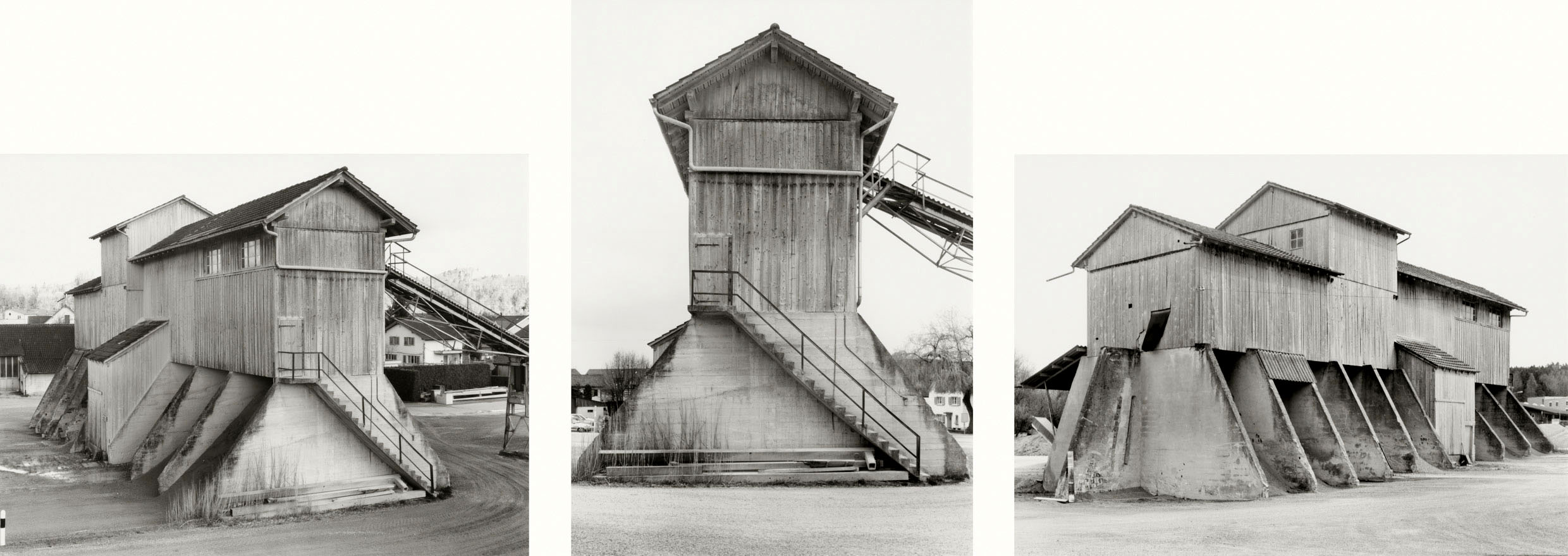
From the very beginning, the Bechers developed a working method of extraordinary discipline and consistency. They photographed industrial structures — water towers, blast furnaces, winding towers, gas holders, cooling towers, coal bunkers, grain elevators, and lime kilns — using a large-format camera mounted on a tripod, always in overcast light that eliminated shadows and produced an even, descriptive illumination. Each structure was photographed from a consistent vantage point, typically frontal and slightly elevated, with the building centred in the frame against a neutral sky. The resulting images were characterised by a clinical precision that stripped away all atmospheric and subjective qualities, presenting each structure as a pure object for contemplation and comparison.
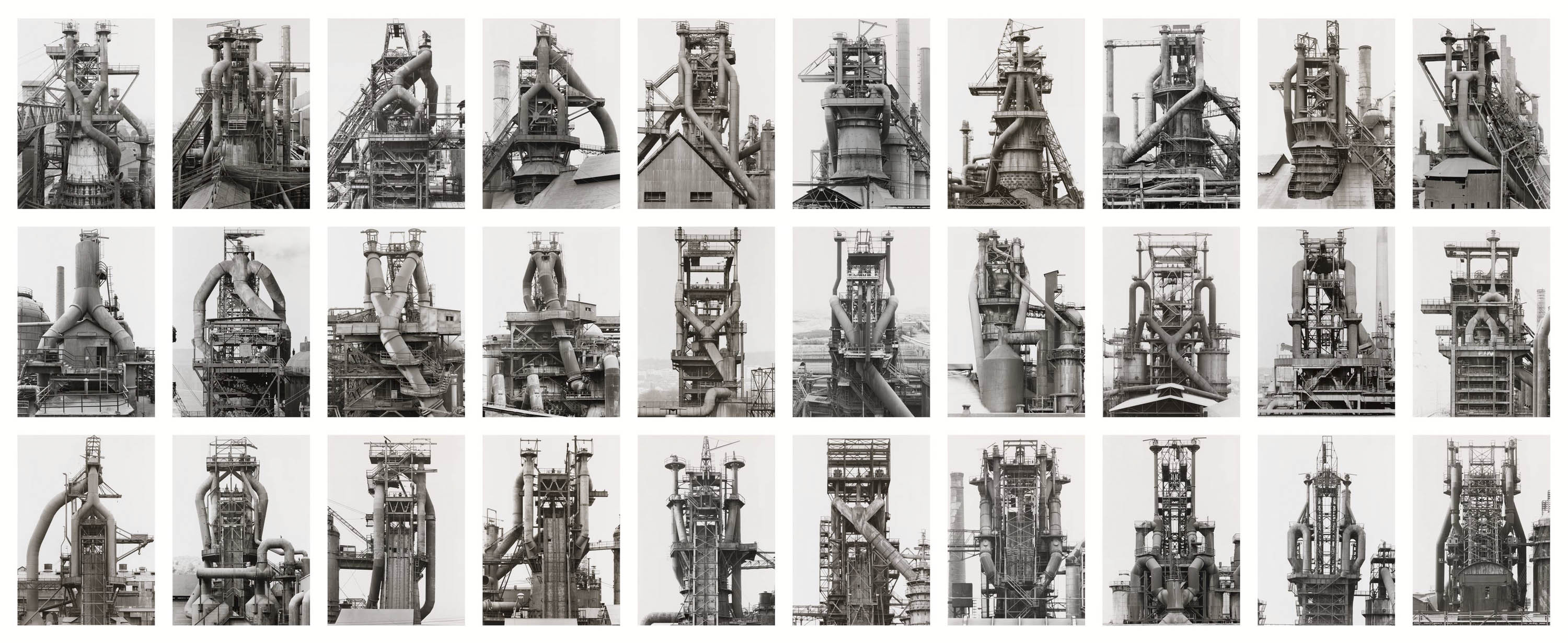
The Bechers then arranged their photographs into grids, typically of six, nine, or fifteen images, grouping structures of the same type together in what they called typologies. A grid of water towers, for example, would display a dozen different towers of the same basic form — a tank elevated on a supporting structure — arranged so that the viewer could perceive both the underlying similarity and the individual variations. This method drew explicitly on the tradition of comparative taxonomy in the natural sciences, and the Bechers sometimes referred to their subjects as anonymous sculptures — functional objects that, when isolated and presented with the right kind of attention, revealed an unexpected formal beauty and a rich vocabulary of engineering solutions to common problems.
The typological approach had profound implications for the status of photography within the art world. By presenting photographs in grids, the Bechers created works that functioned simultaneously as documents and as conceptual art. The individual images were descriptive records of specific structures; the typological grids were conceptual propositions about the nature of form, function, and industrial culture. This dual identity placed the Bechers' work at the intersection of photography, sculpture, and conceptualism, and it attracted the attention of the art world in ways that conventional documentary photography had rarely achieved. In 1970, their work was included in the Venice Biennale, and in 1991 they received the Golden Lion for Sculpture at the Biennale — a prize traditionally reserved for three-dimensional work, acknowledging the sculptural quality of their photographic project.
In 1976, Bernd Becher was appointed professor of photography at the Kunstakademie Düsseldorf, a position he held until 1996. His teaching was as rigorous and influential as his photographic practice. He attracted a generation of students who would become some of the most important photographers of the late twentieth and early twenty-first centuries: Andreas Gursky, Thomas Struth, Thomas Ruff, Candida Höfer, and Axel Hütte, among others. These photographers, collectively known as the Düsseldorf School or the Becher School, inherited from their teachers a commitment to large-format precision, typological thinking, and the presentation of photographs as works of art intended for the gallery wall rather than the printed page.
The Bechers' influence extended far beyond Düsseldorf. Their work provided a bridge between the documentary tradition of Walker Evans and August Sander — both of whom had used photography to create systematic records of the world — and the conceptual art movements of the 1960s and 1970s. They demonstrated that photography could be simultaneously descriptive and conceptual, documentary and artistic, and this insight opened the door for the extraordinary expansion of photographic art that characterised the last quarter of the twentieth century. Their typological method influenced not only photography but architecture, design, and the broader visual culture.
Bernd Becher died in 2007 in Rostock, and Hilla Becher continued to oversee their archive and exhibitions until her own death in 2015 in Düsseldorf. Their joint body of work, produced over nearly half a century of collaborative practice, constitutes one of the most sustained, disciplined, and influential projects in the history of photography. They recorded an industrial landscape that was vanishing even as they photographed it, and in doing so they created a visual archive of extraordinary comprehensiveness and beauty. But their legacy is not merely archival; it is philosophical. They showed that the most rigorous forms of looking could also be the most revelatory, and that the patient, systematic accumulation of images could produce insights that no single photograph, however brilliant, could achieve alone.