Alfredo Jaar was born in Santiago, Chile, in 1956, and grew up during a period of profound political upheaval that would fundamentally shape his understanding of the relationship between images, power, and human suffering. He studied film and architecture at the Instituto Chileno-Norteamericano de Cultura and the Universidad de Chile, a dual formation that equipped him with both a visual sophistication and a structural way of thinking about space, narrative, and the built environment. The experience of living under the Pinochet dictatorship from 1973 onward gave him an acute awareness of how images can be manipulated, suppressed, and weaponised by those in power — a theme that has remained central to his work for over four decades.
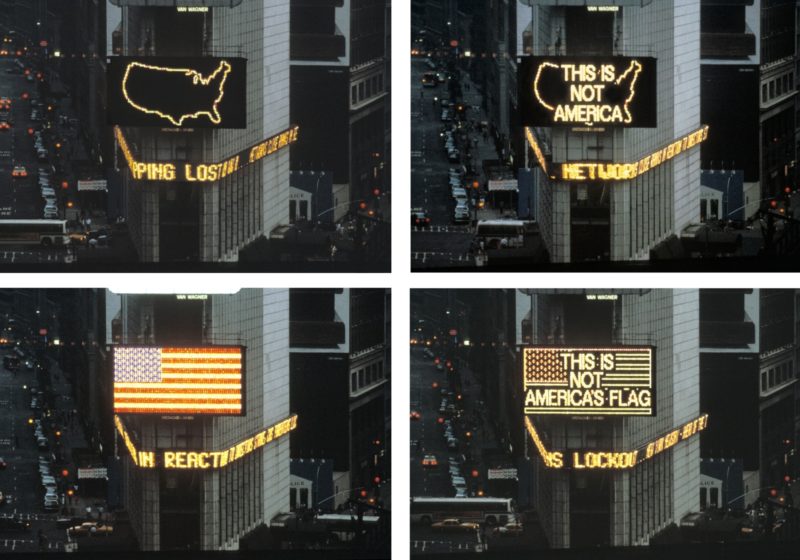
In 1982, Jaar moved to New York City, where he has been based ever since. His early work in New York drew on his architectural training to create installations and public interventions that addressed issues of economic inequality, political oppression, and the invisibility of the developing world within the media systems of the Global North. His 1987 piece A Logo for America, an electronic billboard displayed on the Spectacolor sign in Times Square, challenged the equation of the United States with the word "America" by projecting maps and text that reminded viewers of the entire hemisphere's claim to the name. The work was both a pointed political statement and an early example of Jaar's characteristic strategy of operating within the spaces of mass media and public spectacle in order to subvert them.
The formative experience of Jaar's career was his encounter with the aftermath of the Rwandan genocide of 1994. In August of that year, he travelled to Rwanda, where he witnessed firsthand the devastation wrought by the systematic murder of an estimated 800,000 Tutsi and moderate Hutu. The experience left him profoundly shaken and compelled him to confront a question that would occupy him for the next six years: how can images represent suffering without aestheticising it, without turning human catastrophe into spectacle, without reproducing the very indifference that allowed the genocide to occur? The result was The Rwanda Project, a cycle of over twenty distinct works produced between 1994 and 2000 that collectively represent one of the most sustained and ethically rigorous engagements with the politics of photographic representation in contemporary art.
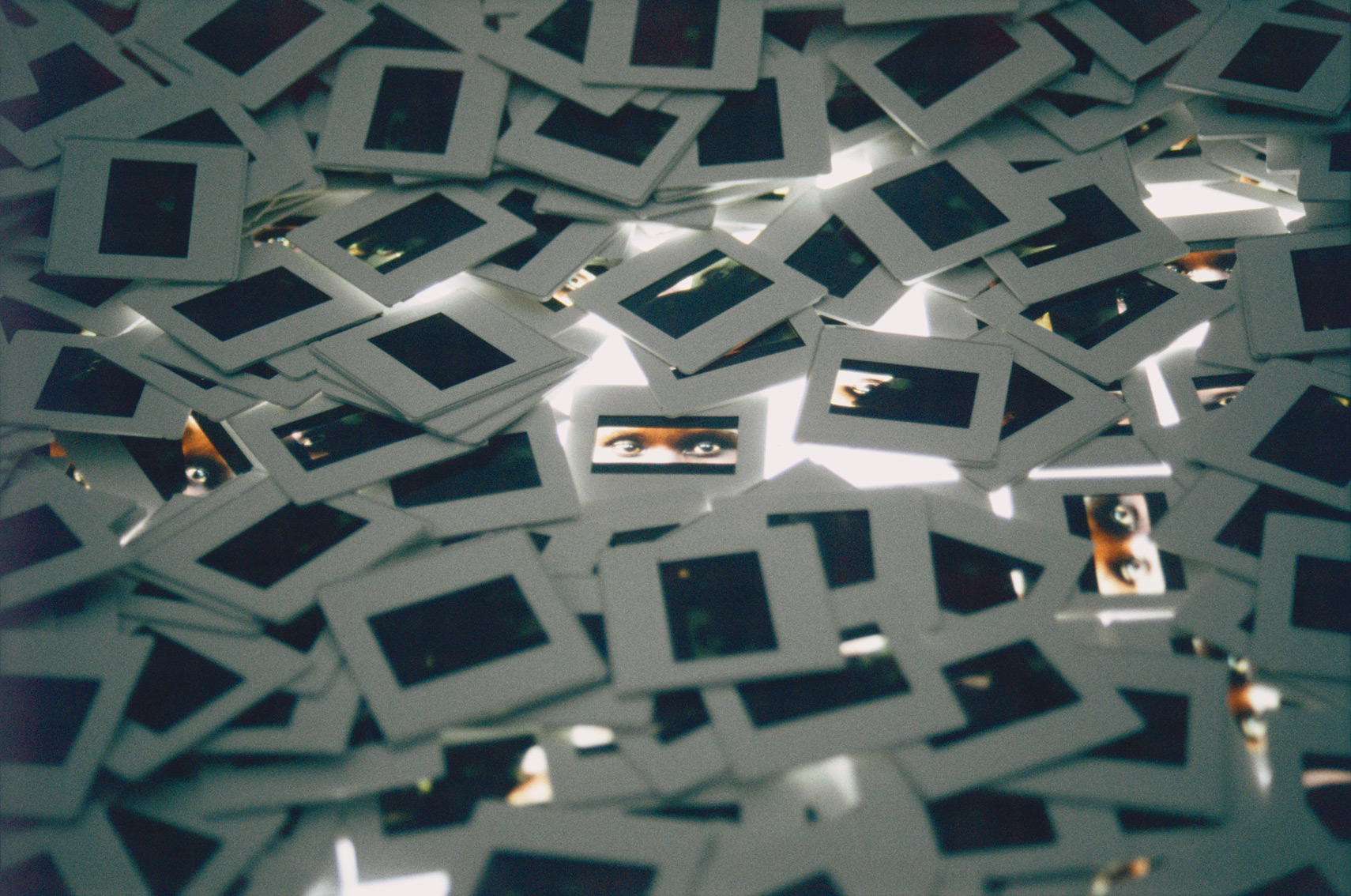
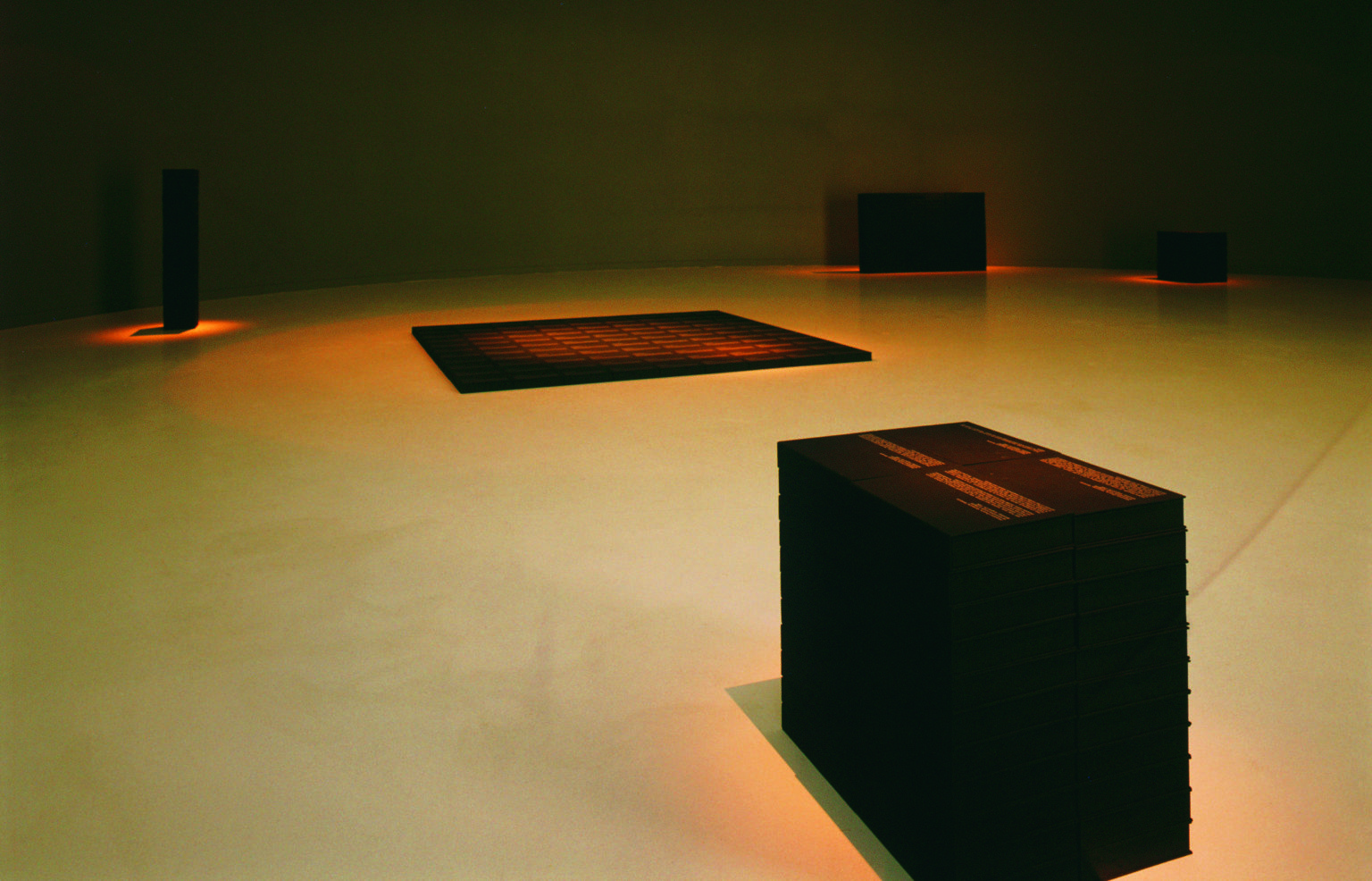
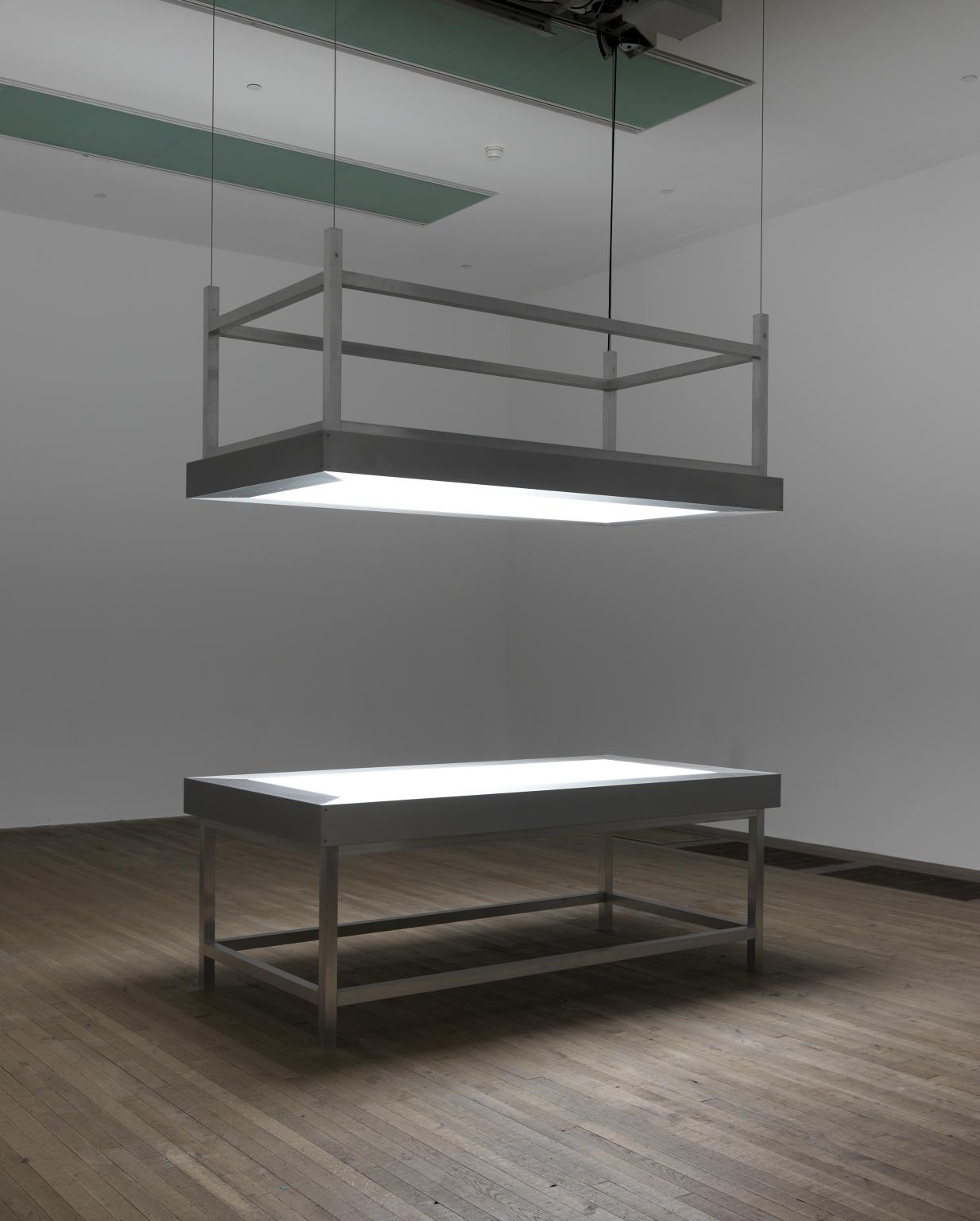
The works within The Rwanda Project are remarkably varied in form and approach, but they share a common refusal to use images of suffering in conventional ways. Real Pictures (1995) consists of hundreds of archival boxes, each containing a photograph that Jaar made in Rwanda but that the viewer never sees; instead, the surface of each box bears a text describing the image sealed within. The work confronts the viewer with the inadequacy of images to convey the reality of genocide and with the ethical implications of looking at photographs of atrocity. The Eyes of Gutete Emerita (1996) presents only the eyes of a woman who witnessed the murder of her husband and two sons, projected on a light table — a work of devastating simplicity that reduces the photographic encounter to its most elemental component: the act of witnessing.
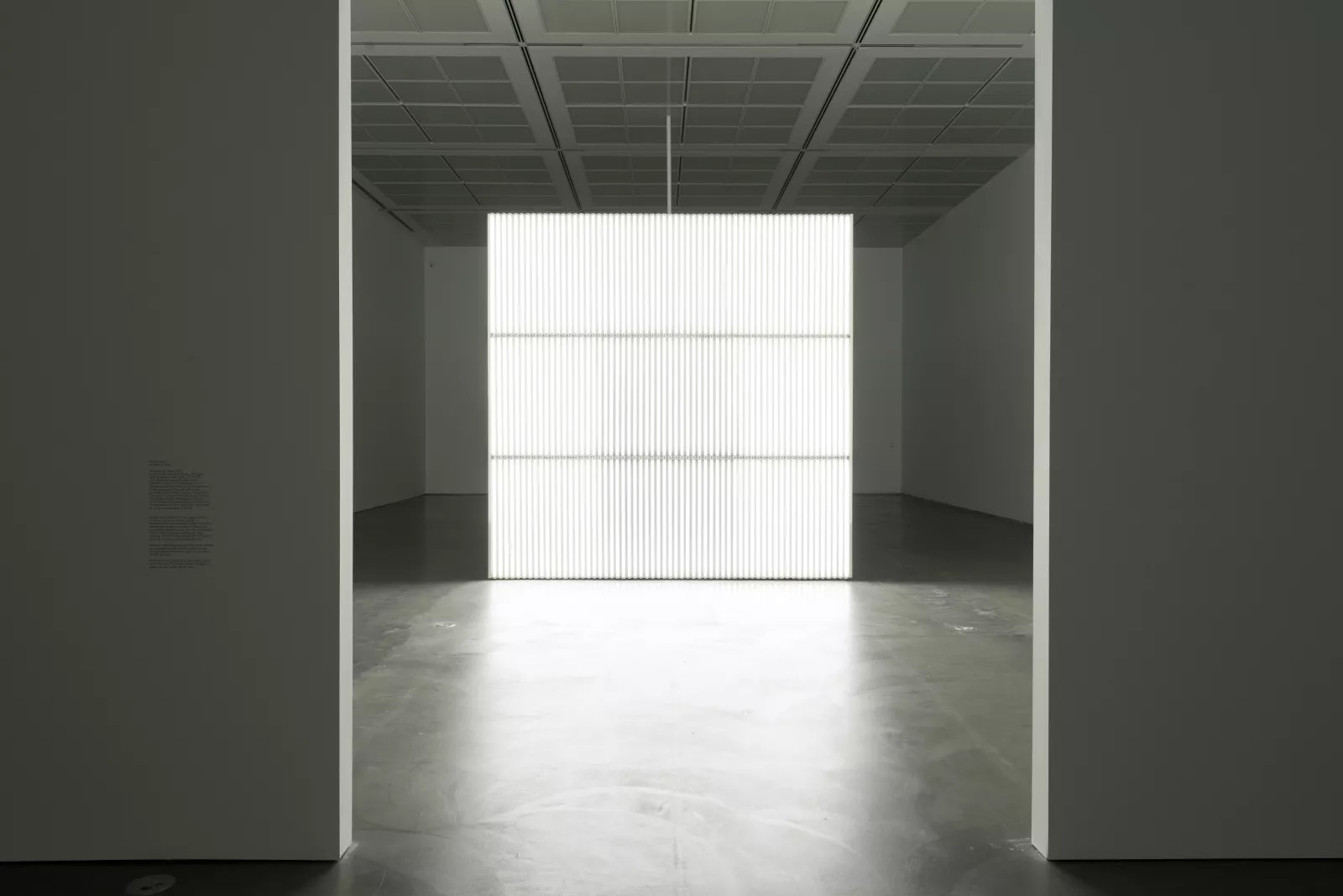
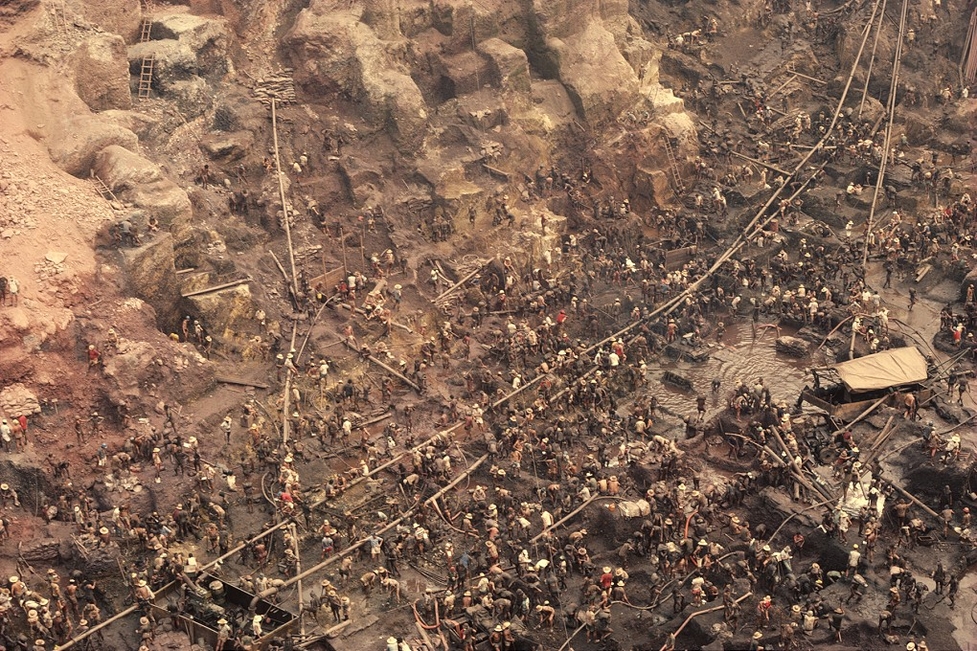
Beyond the Rwanda cycle, Jaar has produced a vast and diverse body of work spanning installation, photography, film, public art, and architectural interventions. His early project documenting the gold mines of Serra Pelada in Brazil (1985) juxtaposed images of hellish manual labour with the gleaming gold traded on the commodities exchange, making visible the human cost concealed within abstract economic transactions. Lament of the Images (2002), presented at Documenta 11, consisted of three illuminated texts describing instances of image suppression — Nelson Mandela's blinding by the lime quarry on Robben Island, the U.S. military's purchase of satellite imagery to prevent media access to Afghan war zones — followed by a blinding white screen that confronted the viewer with the experience of visual erasure.
Jaar's practice is distinguished by its intellectual rigour and its refusal of easy answers. He is deeply informed by the critical theory of Walter Benjamin, Susan Sontag, Roland Barthes, and Antonio Gramsci, and his work consistently interrogates the conditions under which images acquire meaning, the systems that determine which images circulate and which are suppressed, and the ethical responsibilities of both image-makers and viewers. His Sound of Silence (2006) is a meditation on the power and limits of a single photograph — Kevin Carter's Pulitzer Prize-winning image of a starving Sudanese child and a vulture — and the tragic fate of the photographer himself.
Throughout his career, Jaar has combined his artistic practice with teaching and public engagement. He has held positions at numerous institutions and has received many of the most prestigious awards in contemporary art, including the Hiroshima Art Prize, the Hasselblad Foundation International Award in Photography, and the MacDowell Medal. His work has been exhibited at the Venice Biennale, the São Paulo Biennial, Documenta, and in major museums worldwide. He continues to live and work in New York, producing installations and interventions that insist on the political and ethical dimensions of seeing.