Alex Webb was born in 1952 in San Francisco and raised in New England, the son of a diplomat. His early exposure to different cultures through his father's career planted the seeds of a lifelong fascination with the borderlands between worlds — geographical, cultural, and psychological. He first picked up a camera as a teenager and attended the Carpenter Center for the Visual Arts at Harvard University, where he studied history and literature while immersing himself in photography. It was during his time at Harvard that he attended a summer workshop at the Apeiron Workshops in Millerton, New York, where he studied with Bruce Davidson and began to develop the street-level, intensely observational approach that would define his career.
Webb began his professional career working in black and white, influenced by the humanist tradition of Henri Cartier-Bresson, Robert Frank, and the Magnum Photos cooperative that he had long admired. He joined Magnum as an associate member in 1976 and became a full member in 1979. His early work, produced on assignments in the American South and in the Caribbean, demonstrated a keen eye for the geometry of street life and an instinct for the decisive moment. But it was his conversion to colour photography in the late 1970s that transformed his practice and set him on the path to becoming one of the most distinctive colour photographers of his generation.
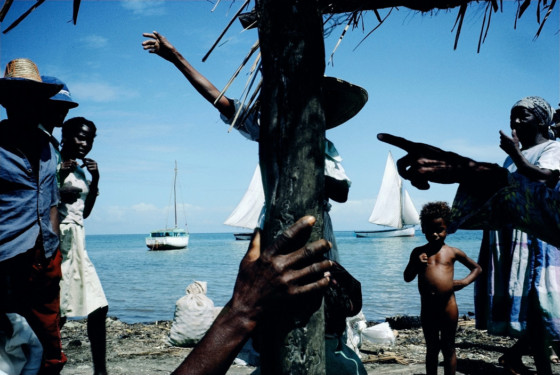
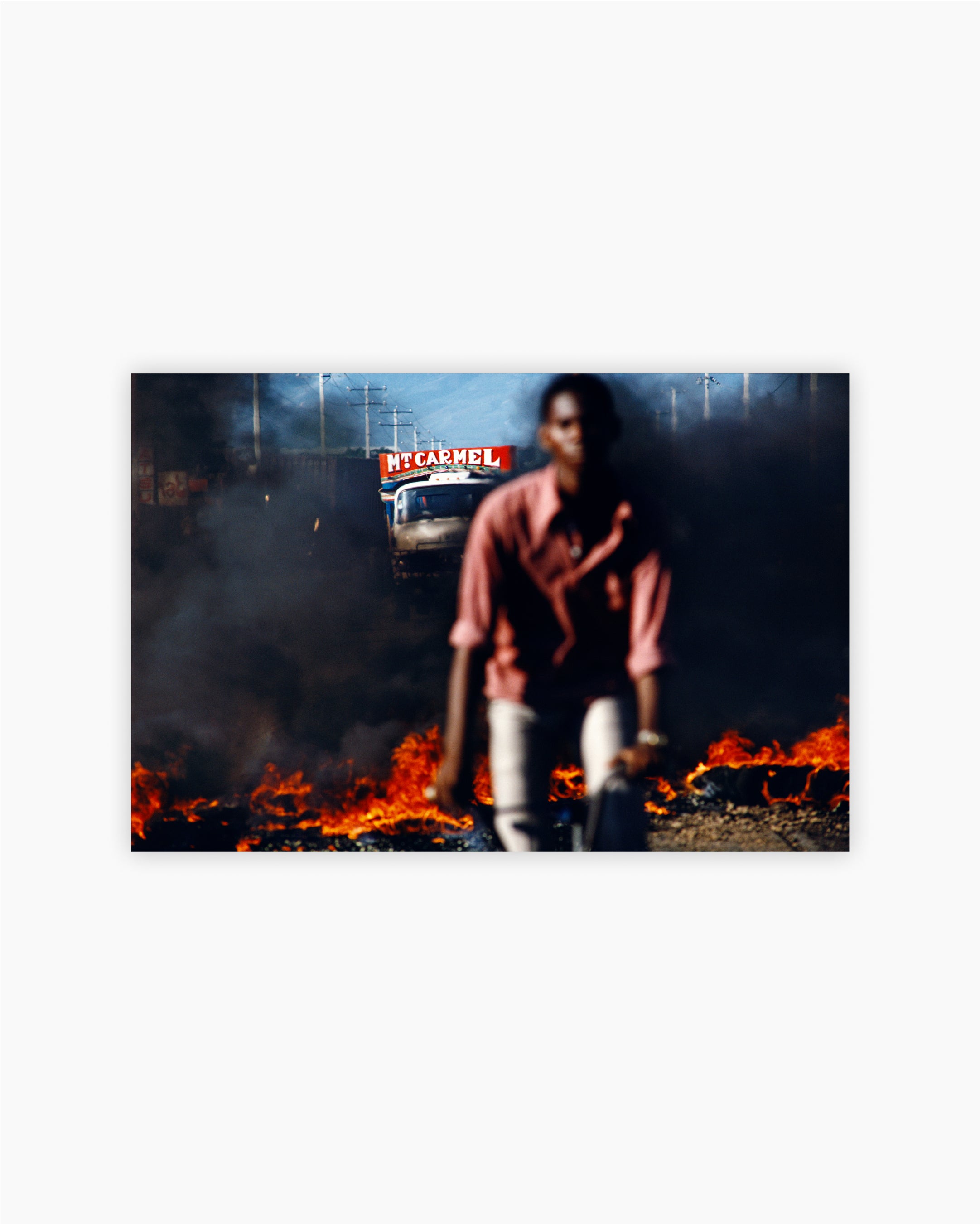
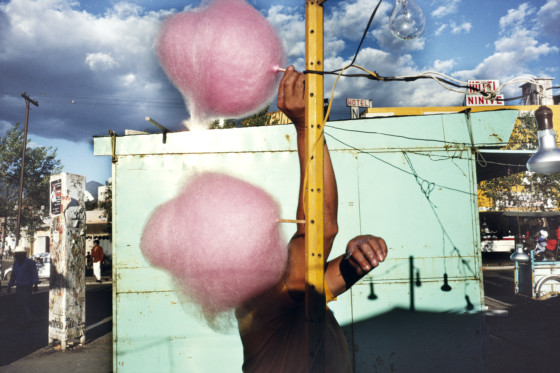
The shift to colour was catalysed by his encounters with the intense tropical light of Haiti, Mexico, and the Caribbean — environments in which the quality and saturation of colour carried emotional and narrative information that black and white could not convey. Working with Kodachrome film, Webb developed an approach to colour that was neither the cool, descriptive palette of Stephen Shore and the New Topographics tradition nor the lurid exaggeration of commercial photography. Instead, his colour was hot, dense, and deeply saturated, mirroring the sensory intensity of the tropical landscapes in which he worked. Reds, blues, greens, and yellows collided within his frames with an energy that was almost physical, creating images that seemed to vibrate with heat and life.
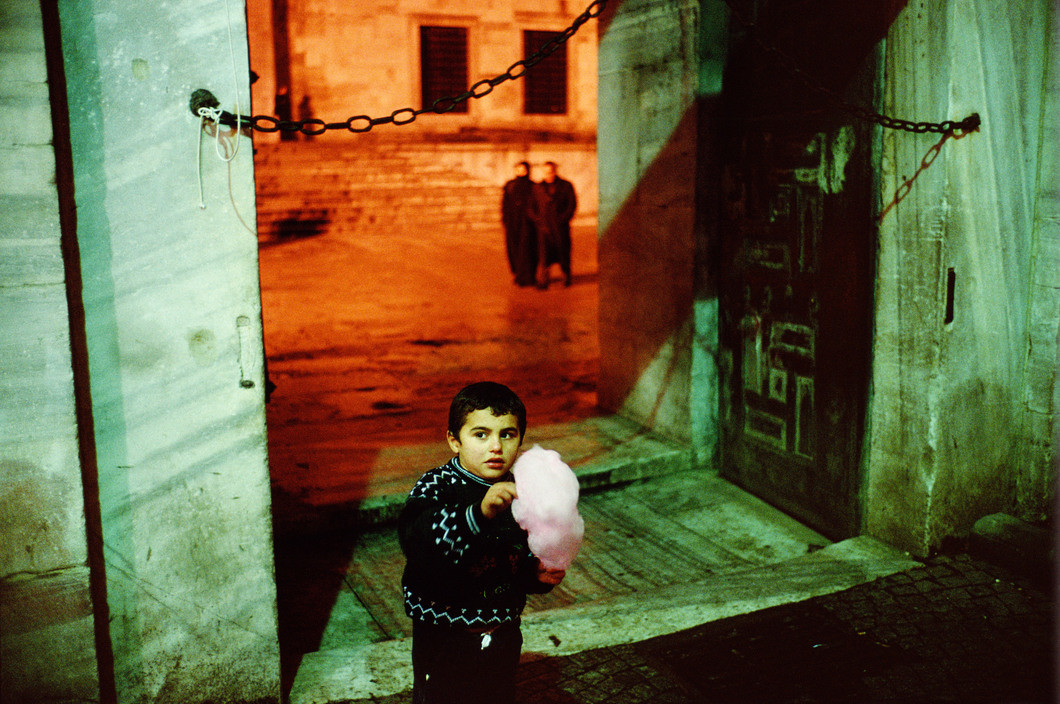
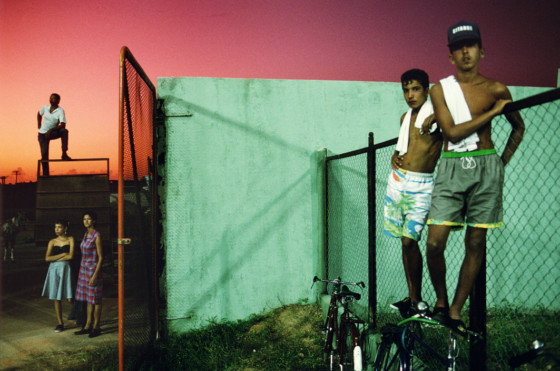
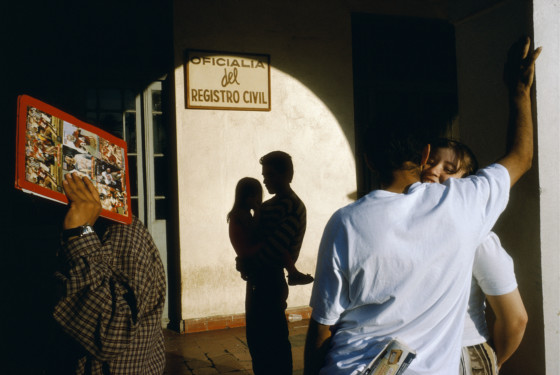
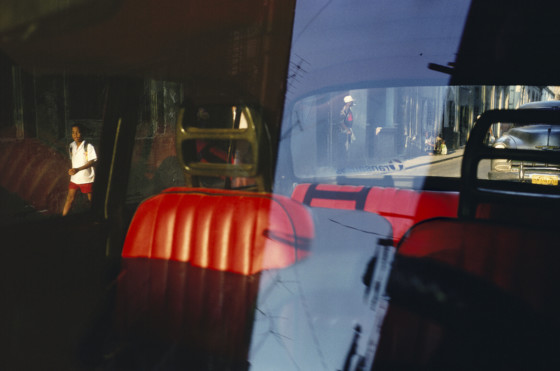
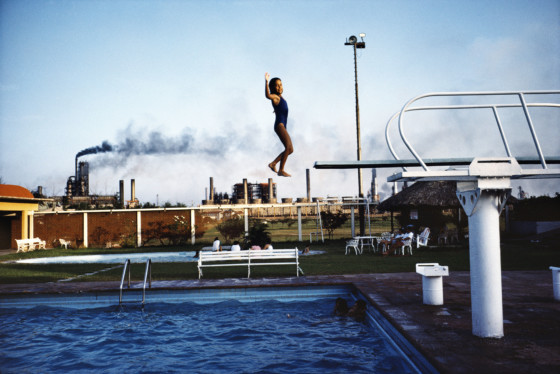
What distinguished Webb's mature work from that of other colour photographers was not only his palette but his extraordinary mastery of compositional layering. His photographs typically contain multiple planes of action, with figures, shadows, architectural elements, and fragments of signage arranged in dense, interlocking compositions that reward sustained attention. A single Webb photograph might contain a foreground figure caught in mid-gesture, a middle-ground scene unfolding through a doorway, and a background element — a wall, a painted sign, a splash of reflected light — that completes the visual circuit. These layers are held together not by narrative logic but by formal relationships of colour, line, and spatial tension, creating images that feel simultaneously spontaneous and architecturally precise.
Webb's major books trace a geography of engagement with the developing world and its borders. Hot Light/Half-Made Worlds (1986) brought together his early colour work from Mexico, Haiti, and the Caribbean into a landmark publication that announced his arrival as a major force in colour photography. Under a Grudging Sun (1989) documented the political turmoil and human suffering in Haiti with an unflinching yet deeply empathetic eye. Crossings (2003) explored the U.S.–Mexico border as a site of migration, desire, and cultural collision. The Suffering of Light (2011), a career-spanning retrospective volume, confirmed his standing as one of the most accomplished colour photographers in the history of the medium.
Throughout his career, Webb has maintained a commitment to working in the street, among people, in places where the visible world is charged with complexity and contradiction. He has photographed extensively in Cuba, returning repeatedly over decades to document a society in transition with a depth and nuance that few outsiders have achieved. His work in Istanbul explored the layered cultural geography of a city that straddles East and West. More recently, he has turned his lens to the streets of Brighton, England, and other European locations, demonstrating that his visual intelligence is not dependent on tropical light alone but is a fundamental way of seeing that can reveal the hidden density of any environment.
Webb is married to the photographer Rebecca Norris Webb, with whom he has collaborated on several book projects that combine his colour street work with her more introspective, nature-oriented imagery. Together they have produced Violet Isle (2009), a dual portrait of Cuba, and Memory City (2014), a meditation on the decline of Rochester, New York, once the home of Kodak. These collaborations reflect a willingness to extend his practice beyond the conventions of the solo monograph and to explore the possibilities of photographic dialogue.
Alex Webb's influence on contemporary street and colour photography has been profound. His work demonstrated that colour could be as rigorous and intellectually demanding as the black-and-white tradition that preceded it, and that the street photograph could achieve a degree of visual complexity previously associated with painting. His photographs continue to challenge viewers to see more deeply into the layered reality of the visible world, and his commitment to the act of looking — patient, persistent, and endlessly attentive — remains a standard against which contemporary street photography measures itself.