Henri Cartier-Bresson was born on 22 August 1908 in Chanteloup-en-Brie, a small town east of Paris, into a wealthy family whose fortune derived from the textile trade. The eldest of five children, he grew up surrounded by culture and privilege, developing an early passion for the visual arts. As a young man he was drawn to painting, and in 1927 he enrolled in the studio of the Cubist painter André Lhote, where he absorbed rigorous lessons in geometry, composition, and the architecture of the picture plane. Those principles — the golden section, the interplay of diagonal and curve, the decisive placement of forms within a frame — would remain the structural foundation of everything he later achieved with a camera.
His encounter with photography came through the Surrealists. The movement's emphasis on the marvellous within the everyday, on chance, automatism, and the poetry of the street, spoke directly to Cartier-Bresson's temperament. In 1931, after a transformative trip to the Ivory Coast, he purchased his first Leica camera — the compact, quiet 35mm rangefinder that would become virtually synonymous with his name. The Leica freed him from the tripod and the studio, allowing him to move through the world with the alertness of a hunter and the lightness of a flâneur. He later described the camera as a sketchbook, an instrument of intuition rather than deliberation.
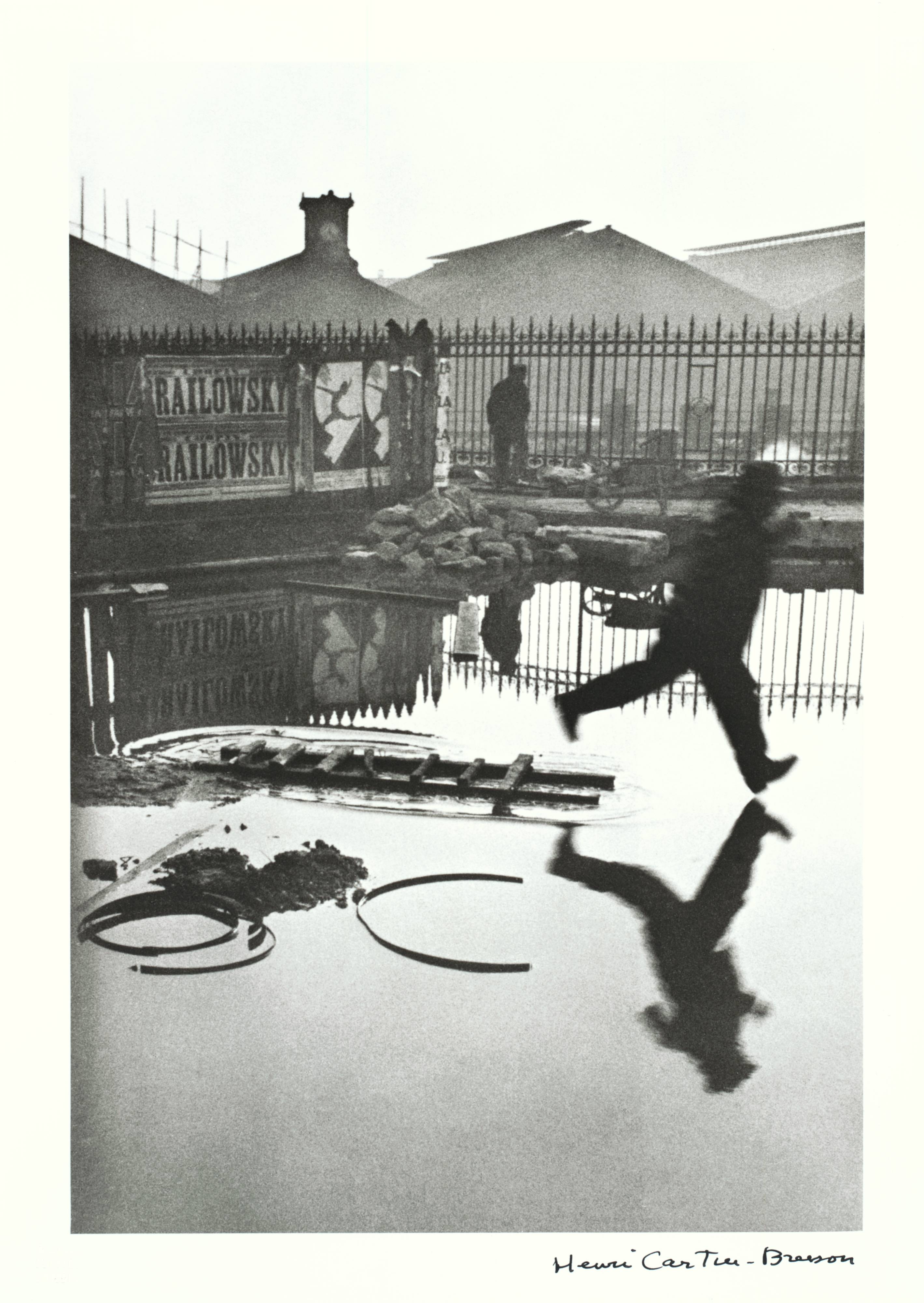
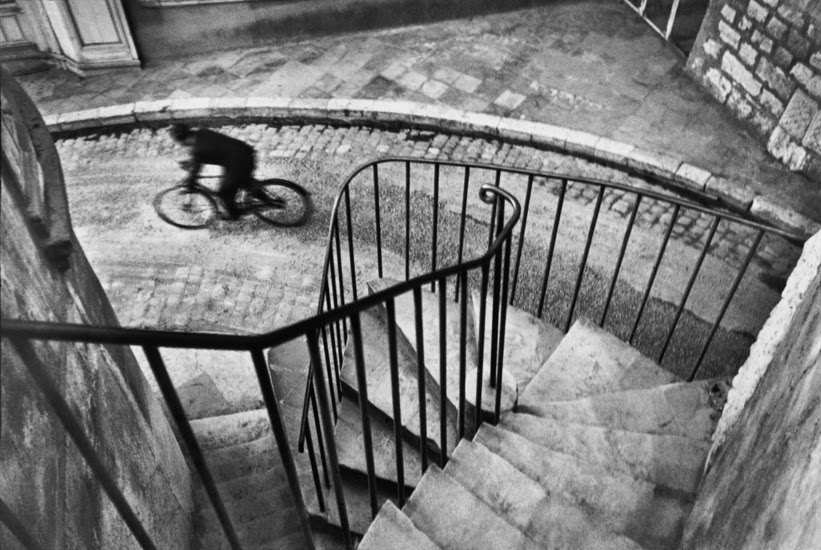
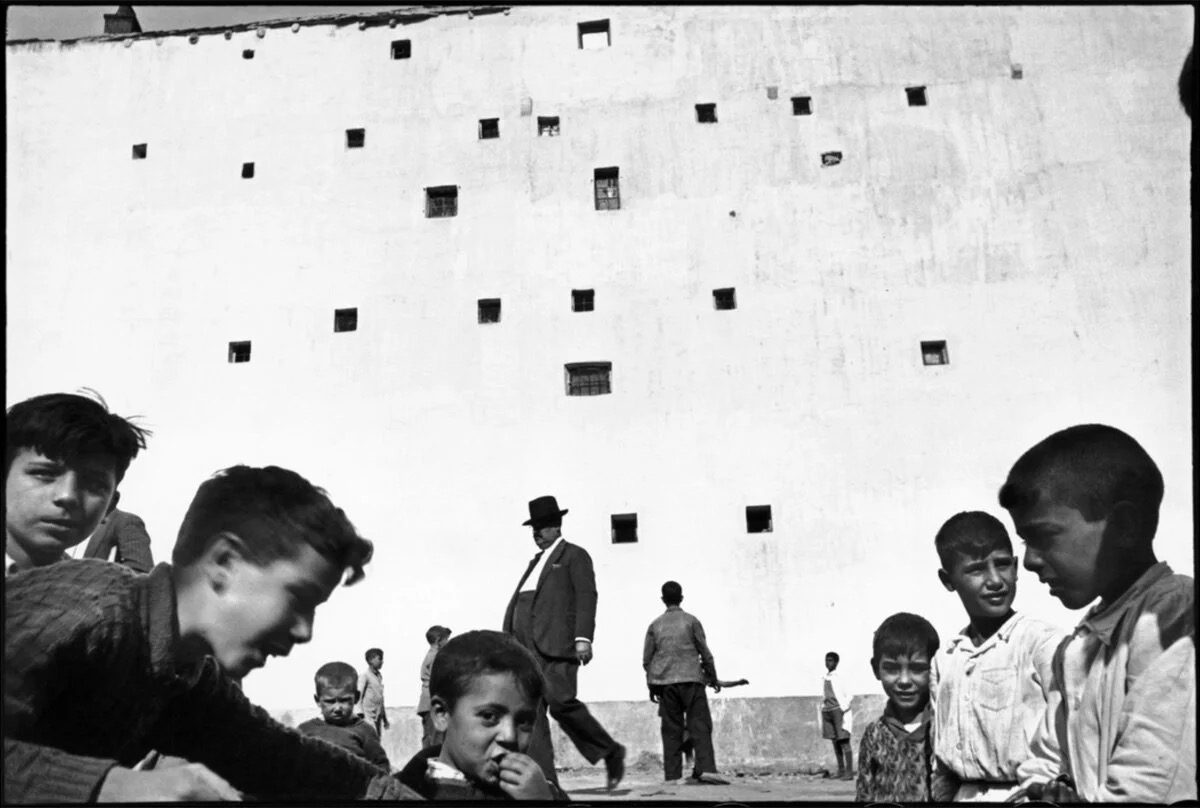
The early 1930s were a period of extraordinary creative ferment. Travelling through Spain, Italy, Mexico, and France, Cartier-Bresson produced a body of work that fused Surrealist sensibility with an unerring instinct for geometric composition and the rhythms of the street. Images such as Behind the Gare Saint-Lazare (1932), with its leaping figure frozen above a rain-flooded plaza, and Hyères (1932), with its cyclist streaking past an iron spiral staircase, established the visual vocabulary that would define his career: the fleeting gesture caught at the instant of maximum significance, the human figure in dynamic relationship to its architectural and social environment.
After working as an assistant to the filmmaker Jean Renoir in the mid-1930s, and spending three years as a prisoner of war during the Second World War (he escaped on his third attempt in 1943), Cartier-Bresson returned to photography with renewed purpose. In 1947, together with Robert Capa, David Seymour, George Rodger, and William Vandivert, he co-founded Magnum Photos, the revolutionary cooperative agency that gave photographers control over their own work and its distribution. Magnum became the most influential photographic agency of the twentieth century, and Cartier-Bresson's role as a co-founder cemented his position at the centre of the medium's post-war evolution.
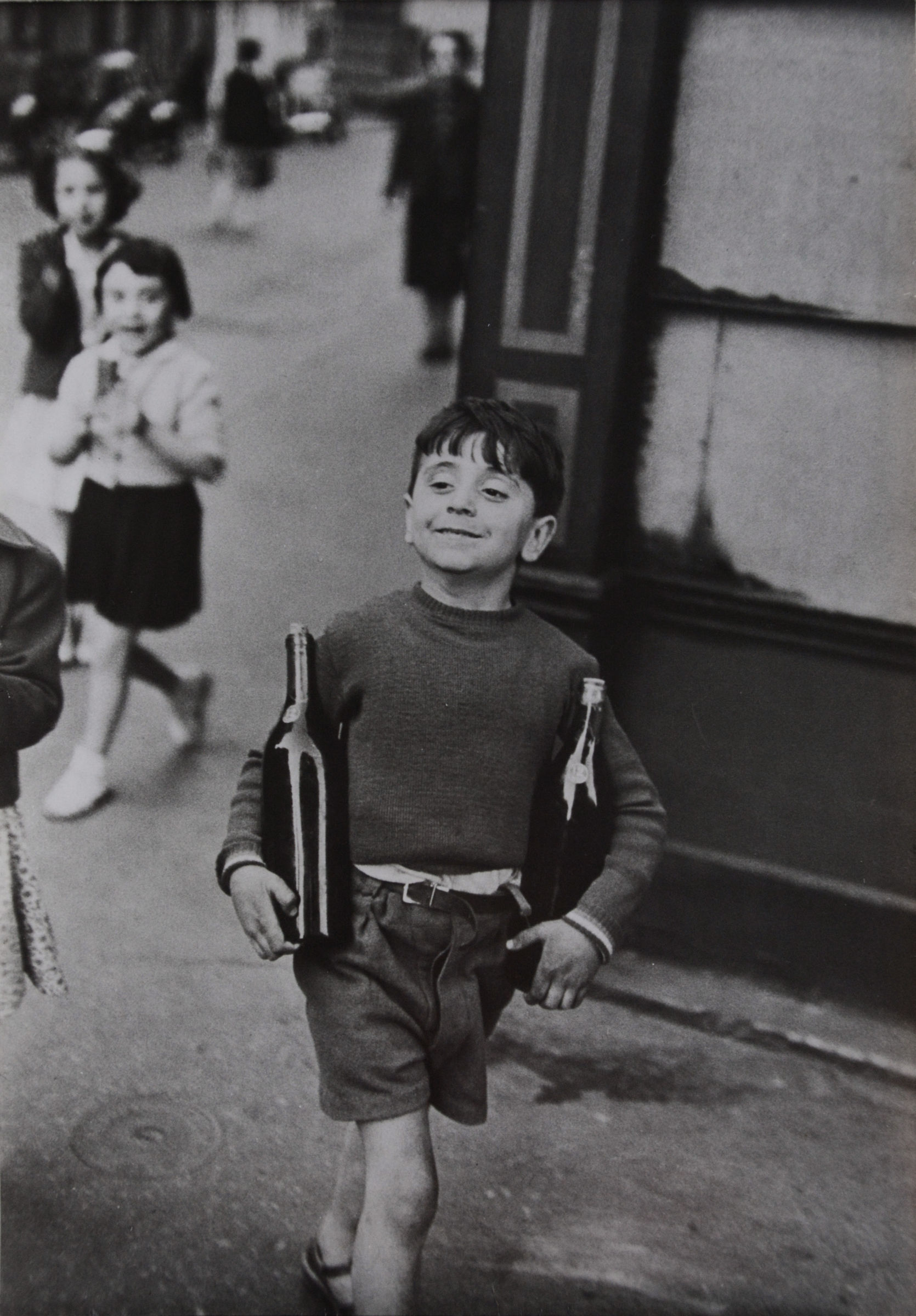
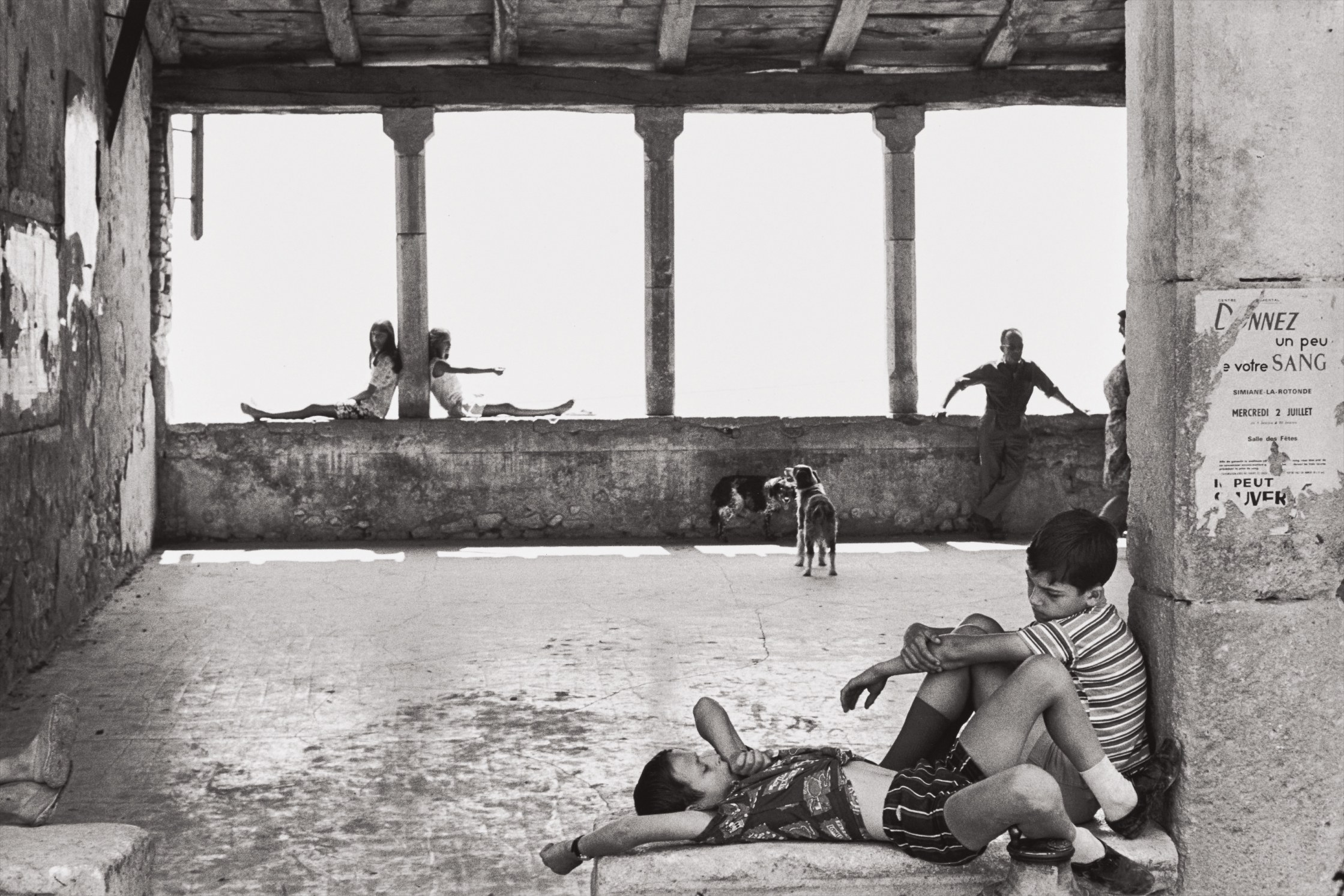
The publication of his landmark book Images à la Sauvette (published in English as The Decisive Moment) in 1952 was a defining event in the history of photography. The book's title, drawn from a statement by Cardinal de Retz, became the most famous concept in photographic theory: the idea that there exists, in every unfolding event, a single instant at which the elements of a scene achieve their most expressive arrangement, and that the photographer's task is to recognise and capture that instant with the speed and precision of a reflex. Cartier-Bresson's formulation transformed the way photographers thought about their craft and elevated the snapshot to the status of high art.
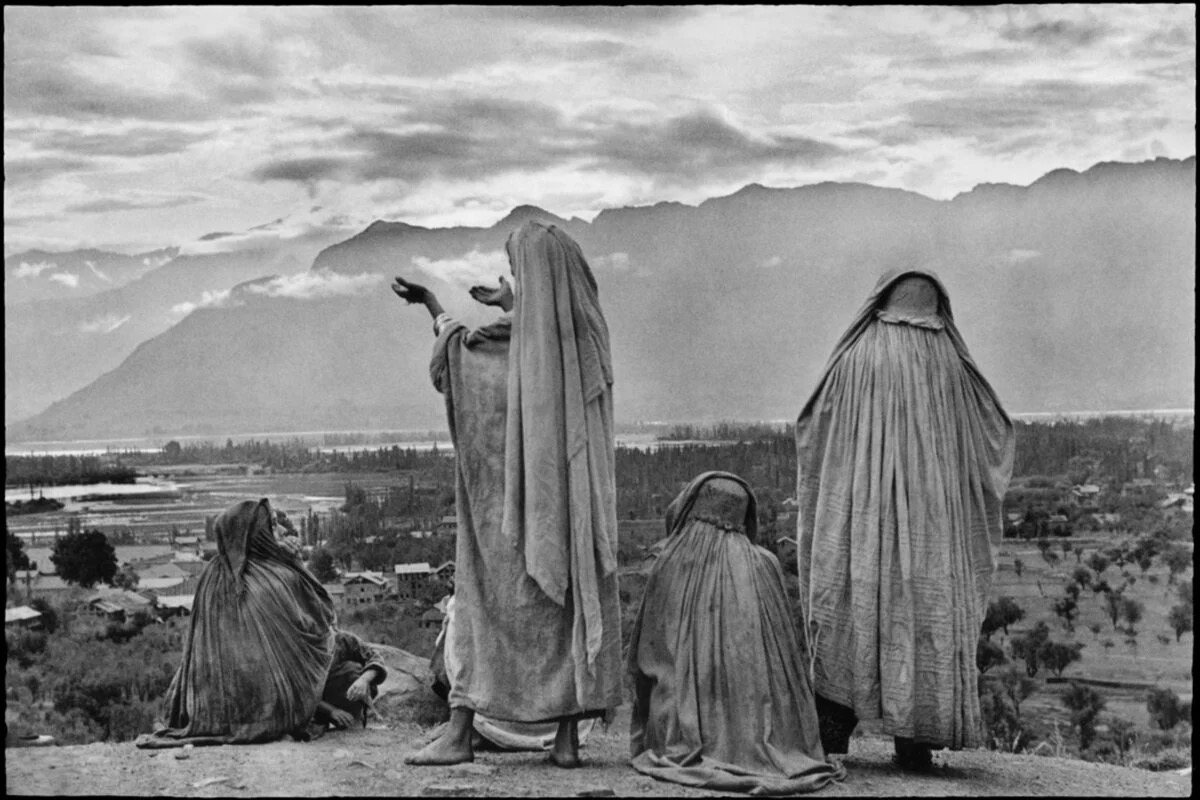
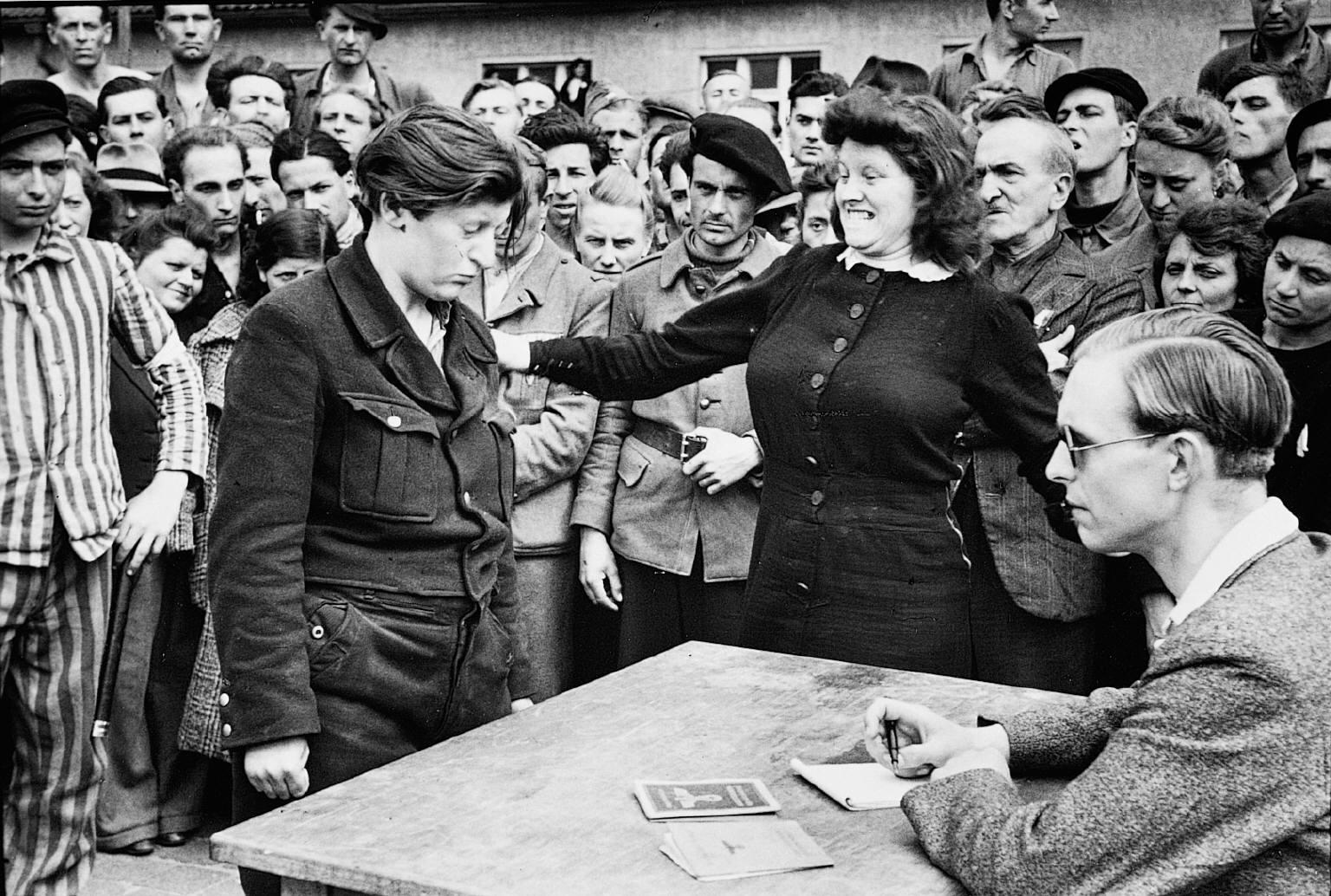
Through the 1950s and 1960s, working primarily for Magnum, Cartier-Bresson travelled the globe as a photojournalist of unparalleled sensitivity. He photographed Gandhi in India shortly before his assassination, documented the last days of the Kuomintang in China, captured the textures of everyday life in the Soviet Union, Indonesia, Cuba, and across Europe, and made penetrating portraits of Matisse, Giacometti, Sartre, Faulkner, and many other cultural figures of the age. His images from this period are remarkable for their ability to combine the informational rigour of photojournalism with the formal elegance of fine art, creating pictures that function simultaneously as historical documents and as autonomous aesthetic objects.
In the early 1970s, Cartier-Bresson largely withdrew from photography to return to his first love, drawing. He continued to draw and paint for the remaining decades of his life, producing a substantial body of graphic work that remains less well known than his photographs. He died on 3 August 2004 at his home in Montjustin, Provence, at the age of ninety-five. The Fondation Henri Cartier-Bresson, established in 2003 with his wife Martine Franck (herself a distinguished photographer), continues to preserve and promote his legacy. His influence on photography is immeasurable: virtually every street photographer, photojournalist, and documentary photographer of the past seventy years has worked, whether consciously or not, in the shadow of the decisive moment.